













With its throat locked, shipping giants flee in panic, and the global energy sector hangs in the balance.
2026-03-03 09:05:00
On Tuesday (March 3) during the Asian session, US crude oil prices rebounded after hitting a low. Iranian officials claimed they would block the Strait of Hormuz. US crude oil is currently trading at $71.33, with the price turning positive after falling by more than 1% at one point during the session.
In late February local time, the United States and Israel launched a joint military strike codenamed "Operation Epic Fury" with the aim of "stopping Iran's nuclear program and ballistic missile expansion." The strike used B-2 stealth bombers and high-precision guided weapons to carry out targeted killings of Iranian missile sites, command centers, and high-level decision-makers, resulting in the deaths of Iran's Supreme Leader Khamenei and nearly 50 high-ranking political and military leaders.
This military action directly triggered a core risk point in the global crude oil market—the Strait of Hormuz—and officially kicked off a supply crisis surrounding the world's "oil choke point."
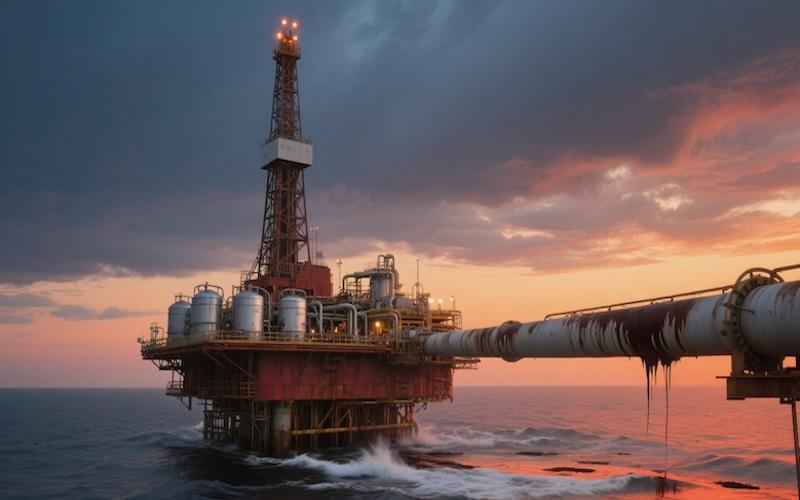
US President Trump has made it clear that the military action against Iran aims to destroy Iran's missile capabilities and naval power (10 Iranian ships have already been sunk). The operation could last four to five weeks, and the US is prepared for a "protracted war." US Defense Secretary Hergsays emphasized that the US military aims to completely destroy Iran's offensive missiles, production facilities, and security infrastructure, "ensuring that it will never possess nuclear weapons."
Iran retaliated swiftly after Khamenei's attack. Foreign Minister Araghchi condemned the assassination as a "religious crime" and denounced the US attack during nuclear negotiations as a "betrayal of diplomatic principles." Iran then launched a large-scale retaliation, firing a large number of missiles and drones at Israel and US military bases in the Persian Gulf, resulting in 11 Israeli deaths and 3 US military personnel killed and 5 wounded.
As the core trigger point of this crisis, the navigation status of the Strait of Hormuz has become the "Achilles' heel" of the global crude oil market.
According to data from the U.S. Energy Information Administration (EIA) in 2023, the strait carries an average of 20.9 million barrels of oil per day, accounting for 20.5% of global oil supply, making it the world's second-largest oil trade route. Gulf oil-producing countries such as Saudi Arabia, the UAE, Iraq, and Kuwait heavily rely on this route for their crude oil exports, with the majority destined for major Asian consuming countries like China, India, and Japan. More importantly, the strait lacks effective alternative shipping routes; a blockade of it would directly disrupt the core global crude oil supply chain.
On March 3, Ebrahim Jabari, an advisor to the commander of the Iranian Revolutionary Guard, made the clearest statement on the closure, announcing that "the Strait of Hormuz is closed" and vowing that "the Revolutionary Guard and the standing navy will set fire to any ships that attempt to pass through, and will not allow a single drop of oil to flow out of the region," while warning that "oil prices may rise to $200 per barrel in the coming days."
This strong statement is not just empty talk: since the outbreak of the conflict, shipping volume in the strait has plummeted by more than 70%, with the daily average of 140 ships passing through during peacetime reduced to only one crude oil tanker passing through on a single day; Iran has attacked at least five oil tankers, resulting in the death of one crew member, further exacerbating the risk aversion of shipping companies.
At the same time, the risks to passage through the Bab el-Mandeb Strait are escalating. As a crucial passage connecting the Red Sea, the Gulf of Aden, and the Indian Ocean, the strait carried 12% of global maritime oil trade and 8% of liquefied natural gas (LNG) transport in the first half of 2023. Potential disruptions to the strait would further increase energy transport costs on the Asia-Europe-Africa route, creating a "double choke point" of pressure.
Faced with the deteriorating security situation, the world's top shipping giants have taken extreme measures, further exacerbating the supply gap in crude oil transportation.
Danish shipping giant Maersk (considered a barometer of global trade) was the first to announce an indefinite suspension of all ship transit through the Strait of Hormuz and the Suez Canal route via the Bab el-Mandeb Strait. It also rerouted its core Middle East-India to Mediterranean and US East Coast routes to the Cape of Good Hope. This adjustment will extend transit times by 15-20 days, increase logistics costs by 30-40%, and warn of potential delays at Persian Gulf ports, advising traders to hedge against these risks.
Following suit, Hapag-Lloyd of Germany, CMA CGM of France, and MSC, the world's largest container shipping company, took similar actions: Hapag-Lloyd suspended all strait passage operations, and ships already in the relevant areas were ordered to call at the nearest safe port; CMA CGM instructed its ships in the Gulf region to go to designated refuge areas, suspended passage through the Suez Canal and diverted to the Cape of Good Hope, and expected to raise freight surcharges in the short term; MSC ordered its ships to go to safe areas and activated a 24-hour situation monitoring mechanism.
Peter Sander, chief analyst at shipping consultancy Xeneta, points out that the shipping industry is experiencing "contingency planning fatigue." Frequent sudden changes in the situation have rendered risk response plans ineffective. The irreplaceable role of maritime transport in global energy trade means that rising transportation costs will directly translate into crude oil terminal prices, strongly supporting global inflation. Furthermore, the surge in war risk premiums has further increased the hidden costs of crude oil transportation, forcing more small and medium-sized shipping companies to exit the region and exacerbating supply chain contraction.
The de facto shutdown of the Strait of Hormuz has triggered a sharp jump in global crude oil prices, and market concerns about supply shortages continue to escalate.
International investment bank JPMorgan Chase issued an urgent risk warning, stating that if the situation in the Middle East escalates into a full-blown military conflict, leading to a continued disruption of oil transportation through the Strait of Hormuz, Brent crude oil prices will likely climb to $120 per barrel.
According to the bank's calculations, the crude oil inventories of Gulf oil-producing countries can only maintain normal production capacity for about 25 days. Once the inventories are saturated, it will directly force a complete shutdown of regional crude oil production, creating an extreme scenario of a double disruption of "production and transportation".
Amrita Sen, founder of energy consultancy EnergyAspects, analyzed the situation from the perspective of market pricing logic. Although the probability of Iran completely blocking the Strait of Hormuz is low (the United States and Israel have the military advantage to quickly lift the blockade), the core driver is "asymmetric risk": the United States cannot completely prevent sporadic Iranian attacks on oil tankers. This uncertainty is enough to trigger extreme caution among shipping companies, leading to a significant decrease in the actual passage capacity of the Strait. This is the key logic driving the spiral of rising energy prices and transportation costs.
From the perspective of global market impact, even if the strait is only temporarily blocked, it will impact the crude oil market through three paths: first, it will directly reduce global crude oil supply, pushing up spot and futures prices;
Second, it increases shipping costs and war risk premiums, creating a cost-driven price increase.
Third, it disrupts the rhythm of the global supply chain, leading to an imbalance in the regional distribution of crude oil inventories and further amplifying price volatility.
For Asian countries that rely on Gulf crude oil imports, the double impact of supply shortages and soaring prices will be particularly significant, potentially forcing them to adjust their import structures or accept higher procurement costs.
Currently, the core uncertainty in the crude oil market remains focused on the duration and extent of the conflict. While the Trump administration has indicated the operation could last four to five weeks, it is prepared for a protracted conflict, and Secretary of State Rubio has emphasized that "the heaviest blows from the US military are yet to come."
On the Iranian side, Ali Larijani, a senior advisor to Khamenei, led an interim leadership committee. Conservative religious leaders and the Islamic Revolutionary Guard Corps took a hard line, refusing to negotiate with the United States and vowing to continue their counterattack.
In the early hours of March 3, the Israeli Air Force launched a new round of precision strikes against Tehran, destroying Iran's "propaganda and media center." At the same time, it detected Iranian missiles being launched at Israel and initiated interception, indicating that the conflict is continuing to escalate.
If the blockade of the Strait of Hormuz cannot be eased, or if Iran further attacks core infrastructure such as oil pipelines and transportation lines, global crude oil prices will approach extreme levels of $150 or even $200 per barrel, triggering a chain reaction of global inflation rebound and increased pressure on central banks to adjust monetary policy, casting a heavy shadow over the already fragile global economic recovery.
For participants in the crude oil market, in the short term, they need to pay close attention to the dynamics of cross-strait traffic, the resumption signals of shipping companies, and the strength of Iran's counterattack. In the medium to long term, they need to be wary of the profound impact of the normalization of geopolitical conflicts on the restructuring of the global crude oil supply chain. This game surrounding the "oil choke point" has become the core variable determining the direction of the global energy market in 2024.
Influenced by the overall lower opening and subsequent rebound of US stocks during the New York session, risk appetite in global equity markets improved, leading to an outflow of safe-haven funds from US Treasuries and a rapid rise in US Treasury yields. This, coupled with the rise in the US dollar index, put some pressure on gold and crude oil, creating a brief opportunity for a market correction.
Iranian Foreign Minister Araqchi called the US attack on Iran during nuclear negotiations a betrayal of diplomatic principles. He told state television that the assassination of Khamenei was a "religious crime" with serious consequences. Meanwhile, Larijani, secretary of Iran's Supreme National Security Council and advisor to the Supreme Leader, stated that Iran would not negotiate with the United States.
The ongoing conflict shows no signs of ending, which will continue to drive up crude oil and gold prices.
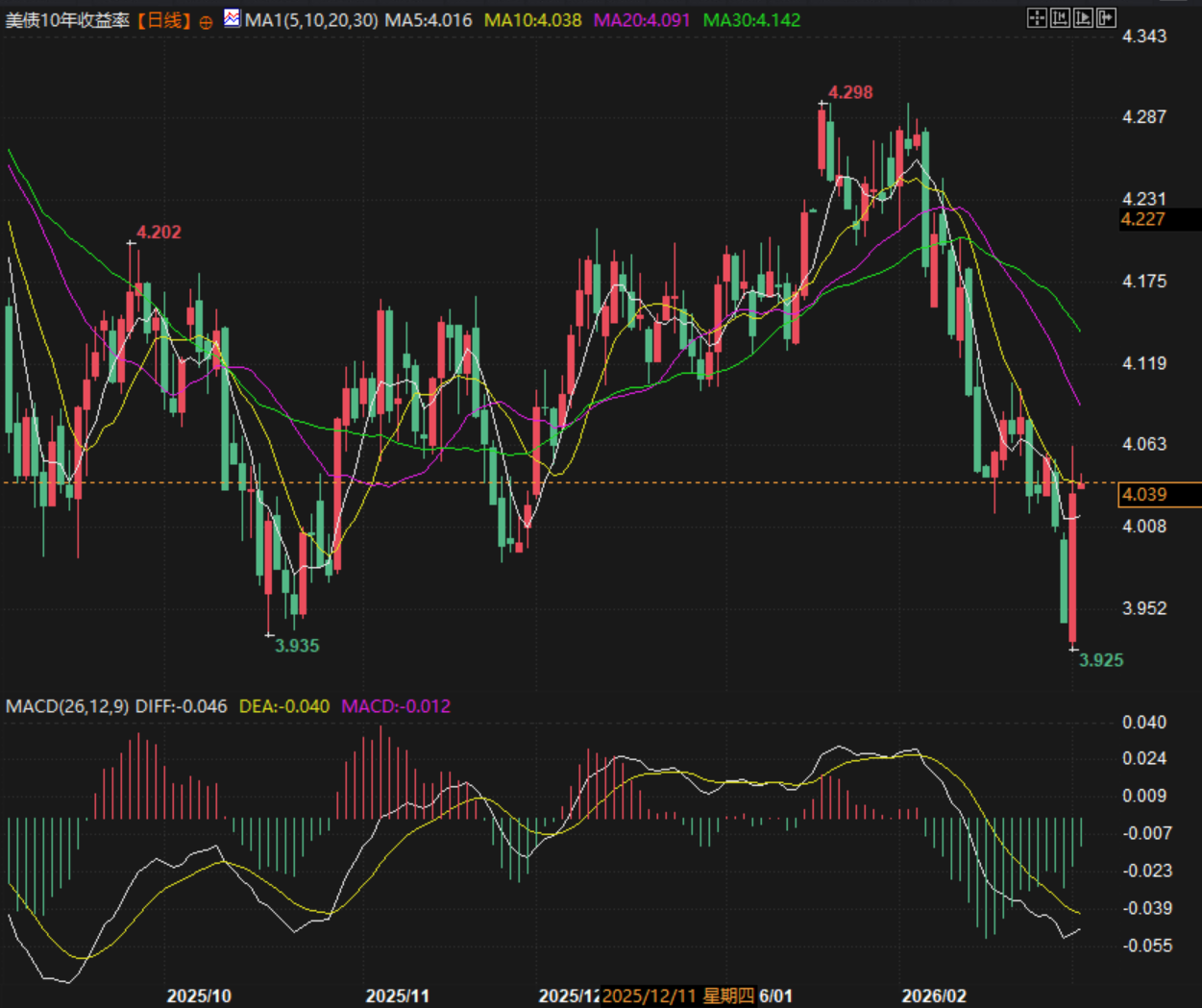
(Daily chart of 10-year US Treasury yield)
The US and Israel launched a joint decapitation strike during nuclear negotiations, and Israel continued to strike Iran, prompting a strong retaliation from Iran and the threat of blocking the Strait of Hormuz.
Shipping disruptions exacerbate supply anxieties, while pressure from US Treasury yields and the US dollar provides a brief opportunity for gold and crude oil to correct. US crude oil prices have rebounded after hitting a low, but with the war ongoing, upward pressure on oil prices will continue.
From a technical perspective, US crude oil futures prices opened higher and broke through the trading range, with the upper limit of the range around 70.50. This morning, a pullback was completed, and the price is currently fluctuating around the upper limit of the range. After the consolidation is complete, there is a chance for further upward movement. Support is at 70.5, and resistance is around 72.40.
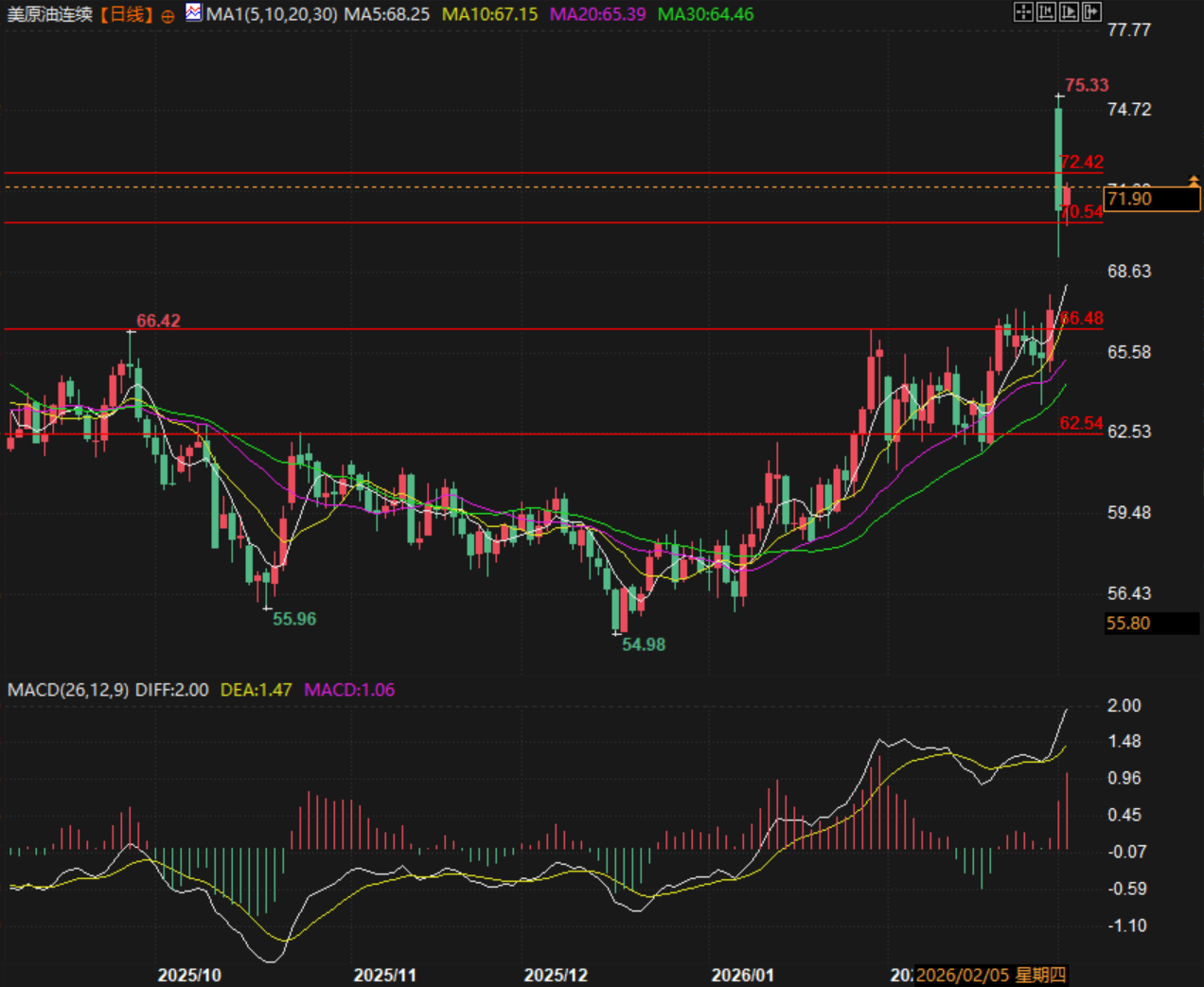
(US crude oil daily chart, source: FX678)
At 9:02 AM Beijing time, US crude oil futures were trading at $71.85 per barrel.
In late February local time, the United States and Israel launched a joint military strike codenamed "Operation Epic Fury" with the aim of "stopping Iran's nuclear program and ballistic missile expansion." The strike used B-2 stealth bombers and high-precision guided weapons to carry out targeted killings of Iranian missile sites, command centers, and high-level decision-makers, resulting in the deaths of Iran's Supreme Leader Khamenei and nearly 50 high-ranking political and military leaders.
This military action directly triggered a core risk point in the global crude oil market—the Strait of Hormuz—and officially kicked off a supply crisis surrounding the world's "oil choke point."
US President Trump has made it clear that the military action against Iran aims to destroy Iran's missile capabilities and naval power (10 Iranian ships have already been sunk). The operation could last four to five weeks, and the US is prepared for a "protracted war." US Defense Secretary Hergsays emphasized that the US military aims to completely destroy Iran's offensive missiles, production facilities, and security infrastructure, "ensuring that it will never possess nuclear weapons."
Iran retaliated swiftly after Khamenei's attack. Foreign Minister Araghchi condemned the assassination as a "religious crime" and denounced the US attack during nuclear negotiations as a "betrayal of diplomatic principles." Iran then launched a large-scale retaliation, firing a large number of missiles and drones at Israel and US military bases in the Persian Gulf, resulting in 11 Israeli deaths and 3 US military personnel killed and 5 wounded.
Strait blockade escalates: One-fifth of global oil shipments brought to a standstill
As the core trigger point of this crisis, the navigation status of the Strait of Hormuz has become the "Achilles' heel" of the global crude oil market.
According to data from the U.S. Energy Information Administration (EIA) in 2023, the strait carries an average of 20.9 million barrels of oil per day, accounting for 20.5% of global oil supply, making it the world's second-largest oil trade route. Gulf oil-producing countries such as Saudi Arabia, the UAE, Iraq, and Kuwait heavily rely on this route for their crude oil exports, with the majority destined for major Asian consuming countries like China, India, and Japan. More importantly, the strait lacks effective alternative shipping routes; a blockade of it would directly disrupt the core global crude oil supply chain.
On March 3, Ebrahim Jabari, an advisor to the commander of the Iranian Revolutionary Guard, made the clearest statement on the closure, announcing that "the Strait of Hormuz is closed" and vowing that "the Revolutionary Guard and the standing navy will set fire to any ships that attempt to pass through, and will not allow a single drop of oil to flow out of the region," while warning that "oil prices may rise to $200 per barrel in the coming days."
This strong statement is not just empty talk: since the outbreak of the conflict, shipping volume in the strait has plummeted by more than 70%, with the daily average of 140 ships passing through during peacetime reduced to only one crude oil tanker passing through on a single day; Iran has attacked at least five oil tankers, resulting in the death of one crew member, further exacerbating the risk aversion of shipping companies.
At the same time, the risks to passage through the Bab el-Mandeb Strait are escalating. As a crucial passage connecting the Red Sea, the Gulf of Aden, and the Indian Ocean, the strait carried 12% of global maritime oil trade and 8% of liquefied natural gas (LNG) transport in the first half of 2023. Potential disruptions to the strait would further increase energy transport costs on the Asia-Europe-Africa route, creating a "double choke point" of pressure.
Shipping giants halt operations: Crude oil supply chain faces structural disruption
Faced with the deteriorating security situation, the world's top shipping giants have taken extreme measures, further exacerbating the supply gap in crude oil transportation.
Danish shipping giant Maersk (considered a barometer of global trade) was the first to announce an indefinite suspension of all ship transit through the Strait of Hormuz and the Suez Canal route via the Bab el-Mandeb Strait. It also rerouted its core Middle East-India to Mediterranean and US East Coast routes to the Cape of Good Hope. This adjustment will extend transit times by 15-20 days, increase logistics costs by 30-40%, and warn of potential delays at Persian Gulf ports, advising traders to hedge against these risks.
Following suit, Hapag-Lloyd of Germany, CMA CGM of France, and MSC, the world's largest container shipping company, took similar actions: Hapag-Lloyd suspended all strait passage operations, and ships already in the relevant areas were ordered to call at the nearest safe port; CMA CGM instructed its ships in the Gulf region to go to designated refuge areas, suspended passage through the Suez Canal and diverted to the Cape of Good Hope, and expected to raise freight surcharges in the short term; MSC ordered its ships to go to safe areas and activated a 24-hour situation monitoring mechanism.
Peter Sander, chief analyst at shipping consultancy Xeneta, points out that the shipping industry is experiencing "contingency planning fatigue." Frequent sudden changes in the situation have rendered risk response plans ineffective. The irreplaceable role of maritime transport in global energy trade means that rising transportation costs will directly translate into crude oil terminal prices, strongly supporting global inflation. Furthermore, the surge in war risk premiums has further increased the hidden costs of crude oil transportation, forcing more small and medium-sized shipping companies to exit the region and exacerbating supply chain contraction.
Oil price surge expected: Institutions warn Brent crude may break $120
The de facto shutdown of the Strait of Hormuz has triggered a sharp jump in global crude oil prices, and market concerns about supply shortages continue to escalate.
International investment bank JPMorgan Chase issued an urgent risk warning, stating that if the situation in the Middle East escalates into a full-blown military conflict, leading to a continued disruption of oil transportation through the Strait of Hormuz, Brent crude oil prices will likely climb to $120 per barrel.
According to the bank's calculations, the crude oil inventories of Gulf oil-producing countries can only maintain normal production capacity for about 25 days. Once the inventories are saturated, it will directly force a complete shutdown of regional crude oil production, creating an extreme scenario of a double disruption of "production and transportation".
Amrita Sen, founder of energy consultancy EnergyAspects, analyzed the situation from the perspective of market pricing logic. Although the probability of Iran completely blocking the Strait of Hormuz is low (the United States and Israel have the military advantage to quickly lift the blockade), the core driver is "asymmetric risk": the United States cannot completely prevent sporadic Iranian attacks on oil tankers. This uncertainty is enough to trigger extreme caution among shipping companies, leading to a significant decrease in the actual passage capacity of the Strait. This is the key logic driving the spiral of rising energy prices and transportation costs.
From the perspective of global market impact, even if the strait is only temporarily blocked, it will impact the crude oil market through three paths: first, it will directly reduce global crude oil supply, pushing up spot and futures prices;
Second, it increases shipping costs and war risk premiums, creating a cost-driven price increase.
Third, it disrupts the rhythm of the global supply chain, leading to an imbalance in the regional distribution of crude oil inventories and further amplifying price volatility.
For Asian countries that rely on Gulf crude oil imports, the double impact of supply shortages and soaring prices will be particularly significant, potentially forcing them to adjust their import structures or accept higher procurement costs.
Outlook: A vicious cycle of escalating conflict and oil price volatility
Currently, the core uncertainty in the crude oil market remains focused on the duration and extent of the conflict. While the Trump administration has indicated the operation could last four to five weeks, it is prepared for a protracted conflict, and Secretary of State Rubio has emphasized that "the heaviest blows from the US military are yet to come."
On the Iranian side, Ali Larijani, a senior advisor to Khamenei, led an interim leadership committee. Conservative religious leaders and the Islamic Revolutionary Guard Corps took a hard line, refusing to negotiate with the United States and vowing to continue their counterattack.
In the early hours of March 3, the Israeli Air Force launched a new round of precision strikes against Tehran, destroying Iran's "propaganda and media center." At the same time, it detected Iranian missiles being launched at Israel and initiated interception, indicating that the conflict is continuing to escalate.
If the blockade of the Strait of Hormuz cannot be eased, or if Iran further attacks core infrastructure such as oil pipelines and transportation lines, global crude oil prices will approach extreme levels of $150 or even $200 per barrel, triggering a chain reaction of global inflation rebound and increased pressure on central banks to adjust monetary policy, casting a heavy shadow over the already fragile global economic recovery.
For participants in the crude oil market, in the short term, they need to pay close attention to the dynamics of cross-strait traffic, the resumption signals of shipping companies, and the strength of Iran's counterattack. In the medium to long term, they need to be wary of the profound impact of the normalization of geopolitical conflicts on the restructuring of the global crude oil supply chain. This game surrounding the "oil choke point" has become the core variable determining the direction of the global energy market in 2024.
US Treasury yields and a surge in the dollar suggest a trading window.
Influenced by the overall lower opening and subsequent rebound of US stocks during the New York session, risk appetite in global equity markets improved, leading to an outflow of safe-haven funds from US Treasuries and a rapid rise in US Treasury yields. This, coupled with the rise in the US dollar index, put some pressure on gold and crude oil, creating a brief opportunity for a market correction.
Iranian Foreign Minister Araqchi called the US attack on Iran during nuclear negotiations a betrayal of diplomatic principles. He told state television that the assassination of Khamenei was a "religious crime" with serious consequences. Meanwhile, Larijani, secretary of Iran's Supreme National Security Council and advisor to the Supreme Leader, stated that Iran would not negotiate with the United States.
The ongoing conflict shows no signs of ending, which will continue to drive up crude oil and gold prices.
(Daily chart of 10-year US Treasury yield)
Summary and Technical Analysis:
The US and Israel launched a joint decapitation strike during nuclear negotiations, and Israel continued to strike Iran, prompting a strong retaliation from Iran and the threat of blocking the Strait of Hormuz.
Shipping disruptions exacerbate supply anxieties, while pressure from US Treasury yields and the US dollar provides a brief opportunity for gold and crude oil to correct. US crude oil prices have rebounded after hitting a low, but with the war ongoing, upward pressure on oil prices will continue.
From a technical perspective, US crude oil futures prices opened higher and broke through the trading range, with the upper limit of the range around 70.50. This morning, a pullback was completed, and the price is currently fluctuating around the upper limit of the range. After the consolidation is complete, there is a chance for further upward movement. Support is at 70.5, and resistance is around 72.40.
(US crude oil daily chart, source: FX678)
At 9:02 AM Beijing time, US crude oil futures were trading at $71.85 per barrel.
- Risk Warning and Disclaimer
- The market involves risk, and trading may not be suitable for all investors. This article is for reference only and does not constitute personal investment advice, nor does it take into account certain users’ specific investment objectives, financial situation, or other needs. Any investment decisions made based on this information are at your own risk.

