March 4th Financial Breakfast: The Strait of Hormuz "chokes" global inflation, Fed rate cut expectations collapse, gold bulls suffer heavy losses, and oil prices surge by over 5%.
2026-03-04 07:22:08
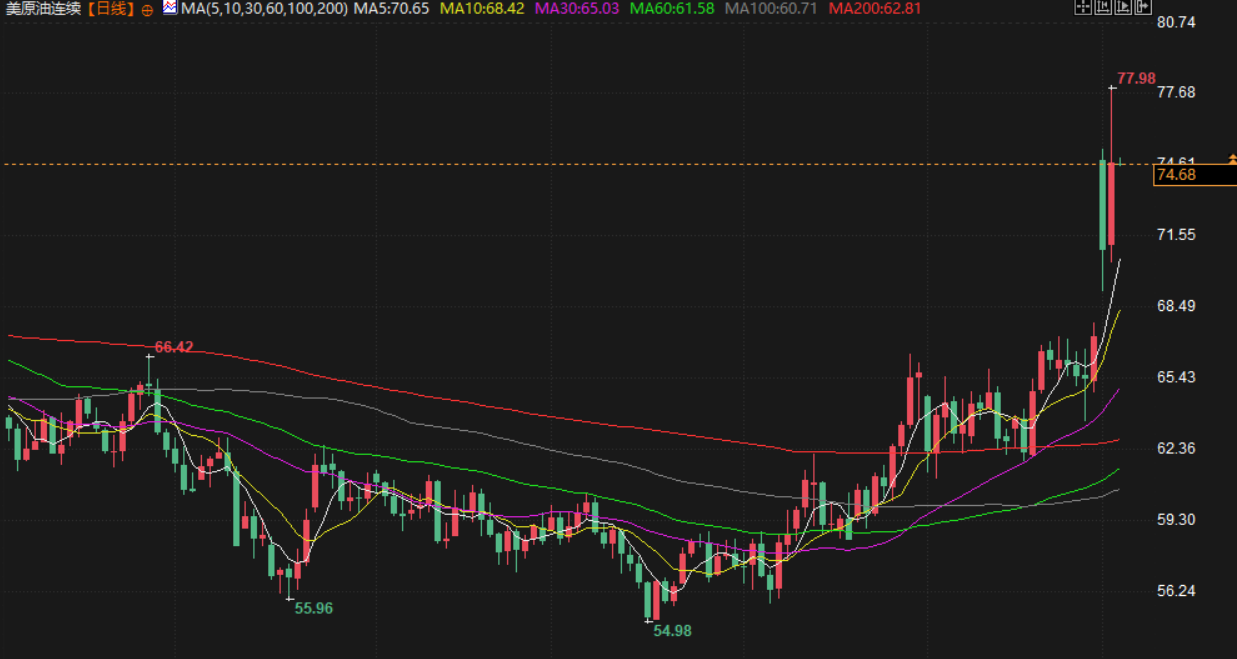
On Wednesday (March 4, Beijing time) in early Asian trading, spot gold was trading around $5,123 per ounce. Gold prices fell more than 4% on Tuesday, weighed down by a stronger dollar and a dimming prospect of interest rate cuts. The market's expectation for a Federal Reserve rate cut has been postponed from July to September. US crude oil was trading around $74.80 per barrel. Oil prices rose more than 5% on Tuesday as tensions in the Middle East escalated. Israeli and US forces launched heavy strikes against multiple targets in Iran, triggering retaliatory attacks by Iran in the Persian Gulf. The conflict has spread to Lebanon.

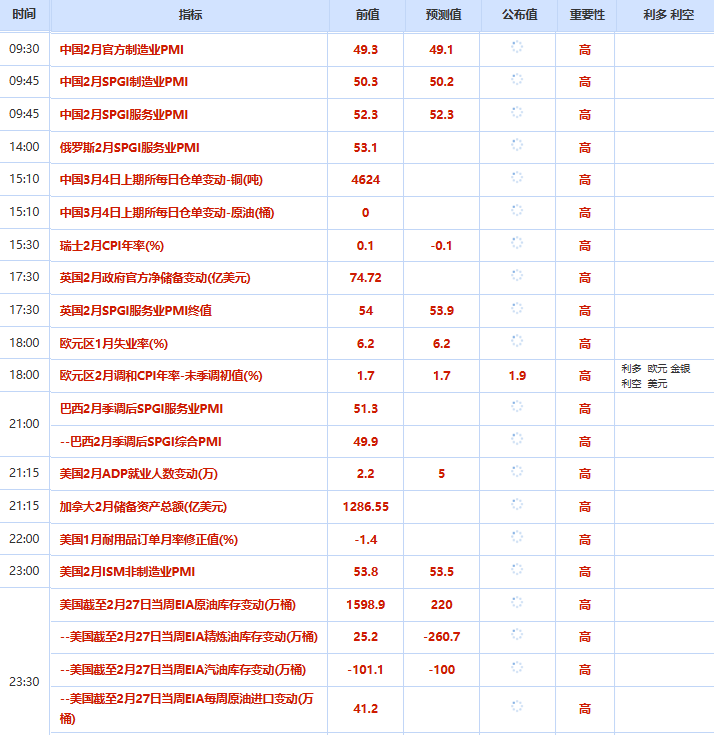
U.S. stocks closed sharply lower on Tuesday as investors worried that a prolonged conflict in the Middle East could push up inflation. The market saw a broad sell-off, with the Chicago Board Options Exchange Volatility Index (VIX) closing at its highest level since November. The Dow Jones Industrial Average fell 0.83% to 48,501.27; the S&P 500 fell 0.94% to 6,816.63; and the Nasdaq Composite fell 1.02% to 22,516.69.
The S&P 500 closed below its 100-day moving average for the first time since November 20, a move seen as a potential bearish signal. Meanwhile, investors are concerned about the impact of the four-day conflict on inflation as oil prices continue to surge.
Israeli and U.S. forces struck targets inside Iran, prompting retaliatory attacks in the Persian Gulf region, and the conflict has spread to Lebanon. Blackstone Group shares fell 3.8% due to a surge in redemptions on its flagship credit fund, BCRED.
Gold prices fell on Tuesday, with spot gold dropping more than 4% to $5,137.00 an ounce; U.S. gold futures closed down 3.5% at $5,123.70 an ounce, weighed down by a stronger dollar and a dimming prospect of interest rate cuts, despite market concerns that the Middle East conflict could be protracted and exacerbate inflation worries.
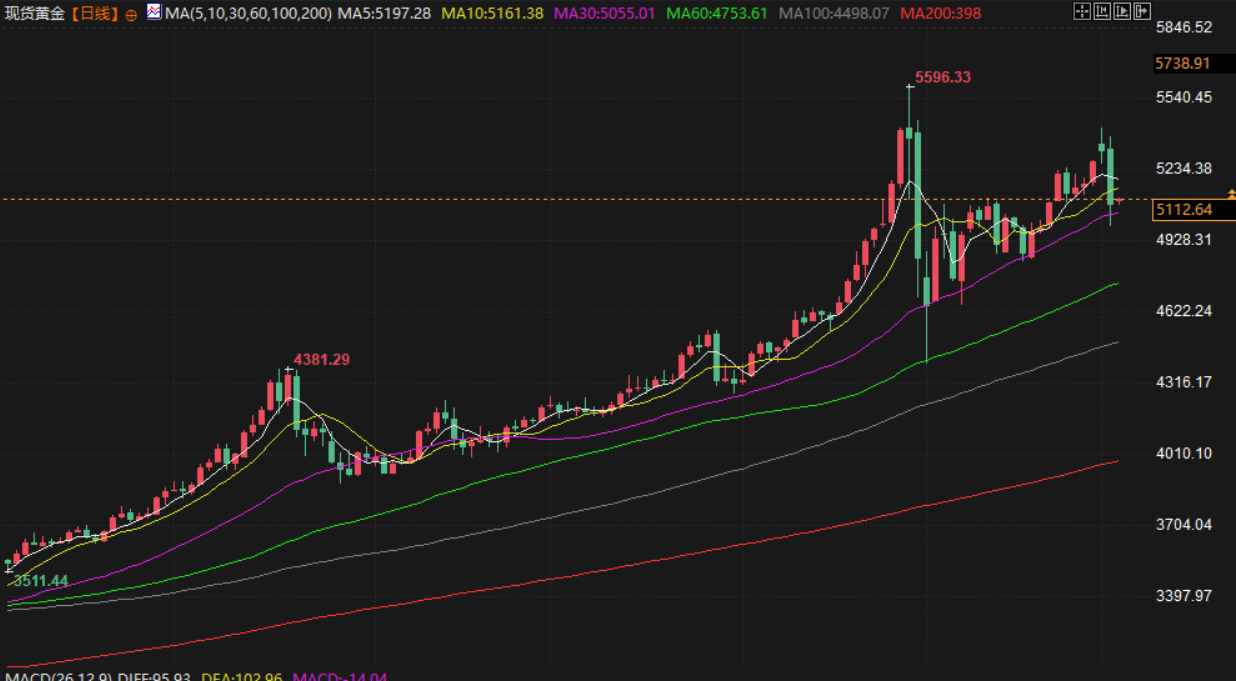
Market strategists point out that the decline in gold prices was mainly due to the market's pursuit of liquidity, with investors turning to cash. At the same time, the significant strengthening of the US dollar and the continuous rise in US Treasury yields have reduced the attractiveness of dollar-denominated gold to investors holding other currencies. However, analysts also believe that this decline may be temporary, and safe-haven flows driven by geopolitical risks should support gold prices rising in the future.
Geopolitically, the conflict with Iran has entered its fourth day, with the Strait of Hormuz being closed, causing benchmark crude oil prices to surge by more than 8%. Market analysts point out that damage to energy infrastructure and disruptions to tanker transport have increased the risk of continued strength in crude oil, natural gas, and refined product prices. This has exacerbated inflation concerns and delayed market expectations for central bank interest rate cuts, resulting in a lack of support for gold.
In other precious metals, spot silver plunged 6.6% to $83.50 an ounce; platinum fell more than 8%, and palladium also dropped more than 5%.
Oil prices surged more than 5% due to escalating conflict in the Middle East, reaching their highest level since January 2025. Brent crude futures rose $3.66 to settle at $81.40 a barrel, while WTI crude futures rose $3.33 to settle at $74.56 a barrel. Since the conflict began last Saturday, Brent crude prices have risen by a cumulative 12%.
Israeli and U.S. forces launched heavy strikes against multiple targets within Iran, prompting retaliatory attacks from Iran in the Persian Gulf, and the conflict has spread to Lebanon. Iraq, the Organization of the Petroleum Exporting Countries (OPEC)'s second-largest oil producer, has already cut production by nearly 1.5 million barrels per day due to disruptions to crude oil exports, and the reduction could more than double in the coming days. Iran, in turn, launched attacks on energy infrastructure and oil tankers in the Strait of Hormuz, which carries one-fifth of the world's oil and liquefied natural gas (LNG) shipments. With insurers cancelling ship insurance, global oil and gas shipping rates have soared, and tankers are avoiding the strait.
US President Trump stated that the US-Israeli airstrikes are expected to last four to five weeks, but could be extended. He claimed the military operation has destroyed numerous Iranian air and sea targets and predicted that Tehran will eventually lose its missile strike capability. Market analysts pointed out that Trump's remarks have led the market to anticipate that the situation may be resolved more quickly than previously feared.
In the oil sector, U.S. diesel futures surged about 10%, reaching their highest level since October 2023; U.S. gasoline futures rose nearly 4%, reaching their highest level since July 2024; and crack spreads, a measure of refining margins, also surged to their highest point since 2023. Furthermore, the premium of Brent crude over U.S. crude widened to nearly $8 per barrel, a new high since November 2022, which will support U.S. crude exports.
The dollar strengthened significantly, rising to multi-month highs against the euro, pound, and yen, as renewed inflation risks stemming from Middle East tensions fueled by downward revisions in market expectations for interest rate cuts by major central banks. The dollar index rose 0.5% to 98.995, after hitting a more than three-month high.
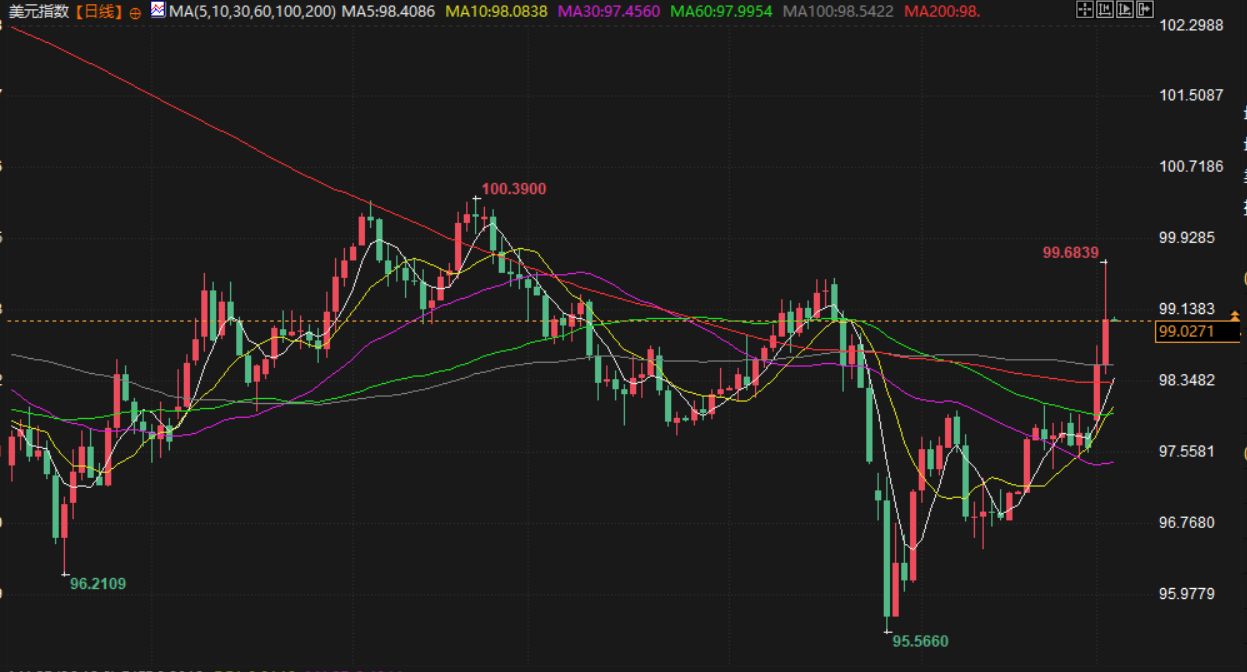
Oil prices surged due to the Middle East conflict, prompting traders to reassess the likelihood and timing of interest rate cuts by major central banks. Rising energy costs could push up consumer prices, particularly for economies heavily reliant on oil imports, making policymakers more cautious about easing monetary policy.
According to pricing in the federal funds rate futures market, the market's expectation for a Federal Reserve rate cut has been postponed from July to September, and expectations for the magnitude of the rate cut this year have narrowed to 46 basis points.
Against this backdrop, the United States, with its high energy self-sufficiency rate and generally robust economic data, is increasingly seen as a relatively safe haven. Europe and Japan, however, are more vulnerable to rising energy costs than the US, putting pressure on their currencies. The euro fell 0.6% to $1.1616, having earlier touched its lowest point since late November; the dollar rose 0.2% against the yen to 157.61 yen, after climbing to its highest point since January 23; and the pound fell 0.3% to $1.3361, hitting its lowest point since December.
Japan's Finance Minister stated that Japanese authorities are closely monitoring financial markets with a strong sense of urgency amid market volatility triggered by the Middle East conflict, and hinted at possible foreign exchange intervention. Some strategists warned that the current rally in the US dollar may be short-lived, and could quickly come to a halt if signs of a peaceful resolution emerge.
Bank of America remains highly vigilant against cyberattacks.
As the conflict with Iran escalates, US banks are on high alert for cyberattacks. Due to concerns that Iranian-linked hackers might launch low-level attacks, particularly distributed denial-of-service (DDoS) attacks that could cripple websites and systems, US financial institutions are strengthening their cybersecurity monitoring. US intelligence agencies have warned that such attacks are possible.
Macron: France's aircraft carrier Charles de Gaulle will be deployed in the Mediterranean.
On the evening of March 3 local time, French President Emmanuel Macron addressed the nation in a televised address, informing the French people of the latest developments regarding Iran and the Middle East, as well as France's position. In his address, Macron confirmed that the French aircraft carrier Charles de Gaulle would be deployed to the Mediterranean to address tensions in the Middle East and ensure the security of France and its allies. Furthermore, the domestic military security operation "Operation Sentinel" has been strengthened, and the government has reinforced security deployments at important facilities and key areas to address potential security threats and ensure the safety of the nation and its people. (CCTV News)
Iran's next Supreme Leader may not be elected until next week.
Sources say the final vote to elect a successor to Supreme Leader Khamenei may be postponed until next week, following Khamenei's funeral. The expert council responsible for electing the next Supreme Leader has already implemented the highest level of security measures during its meetings.
The Israeli military claims to have killed a senior commander of the Iranian Revolutionary Guard Corps in charge of Lebanese affairs.
The Israel Defense Forces (IDF) announced on March 3 that Daoud Alizadeh, acting commander of the Quds Force of the Iranian Islamic Revolutionary Guard Corps in Lebanon, was killed earlier that day in an Israeli airstrike on Tehran. The IDF stated that Alizadeh had assumed command of the Quds Force in Lebanon from Mohammad Reza Zahdi, who was killed in an Israeli attack on Damascus in April 2024. Alizadeh thus became the "highest-ranking Iranian commander responsible for Lebanese affairs." (CCTV News)
Trump claims Iran's military capabilities have been severely damaged, denies being "dragged into war" by Israel.
On March 3, local time, US President Trump met with German Chancellor Merz at the White House. Trump stated that the US had previously negotiated with Iran, but based on the progress of the negotiations, it judged that Iran was "prepared to launch a preemptive attack," including strikes against Israel and other countries. Therefore, the US decided to take "preemptive" military action. He denied being "dragged into war" by Israel, saying, "If anything, it was probably me pushing Israel's hand." Trump claimed that Iran's "almost all military capabilities have been destroyed," including its air force, air defense systems, radar and detection facilities, and its missile stockpile is rapidly declining. The US military is continuing to strike Iran's missile storage facilities and launch platforms, "and as we destroy all the launch platforms and stockpiled missiles, this capability will gradually disappear." (CCTV News)
Trump: Will cut off trade between the United States and Spain
During a meeting with German Chancellor Merz at the White House on March 3, local time, US President Trump criticized Spain for its "lack of cooperation" in the attack on Iran and announced that he would cut off all trade between the US and Spain, calling Spain "a terrible ally." Trump stated, "Spain has done a terrible job." He also said he had instructed Treasury Secretary Bessenter to "cut off all dealings with Spain." Trump added, "We're going to cut off all trade with Spain. We don't want to have anything to do with Spain." (CCTV News)
Iran launches its "National Economic Resilience Enhancement and Civil Defense Construction Plan under the State of Emergency"
On March 3 local time, Iranian First Vice President Aref issued instructions that the "National Economic Resilience Enhancement and Civil Defense Construction Plan under the State of Emergency" officially enter the implementation phase. (CCTV News)
The EU rejected Zelensky's proposal to directly link Ukraine's accession date to peace negotiations.
On March 3, local time, in response to Ukrainian President Zelensky's proposal to directly link the country's accession to the EU with the ongoing US-mediated peace negotiations, European Commission spokesperson Paula Pinho stated in Brussels that the EU cannot set a date for Ukraine's accession because doing so would violate EU rules. (CCTV News)
Iraq prepares to begin large-scale production cuts of 3 million barrels.
Iraq has begun shutting down production at the Rumaila oil field, a giant oil field operated by BP, according to sources familiar with the matter. The source stated that the field is being forced to close due to tankers' inability to leave the Persian Gulf, leading to the depletion of storage space. He indicated that if the situation continues, Iraq is prepared to reduce production by 3 million barrels per day. The Rumaila field is one of the world's largest oil fields, jointly managed by BP, Iraqi oil companies, and China National Petroleum Corporation (CNPC). According to BP data, Rumaila's daily production exceeded 1.4 million barrels in 2024, compared to approximately 1.2 million barrels per day at the beginning of last year. Previously, sources with direct knowledge of the situation revealed that Iraq had also halted crude oil exports from its semi-autonomous Kurdish region to the Turkish port of Cheyhan.
my country's total non-fossil energy consumption is comparable to that of the G7 countries.
Data released by the National Energy Administration shows that in 2025, my country's non-fossil energy consumption increased by approximately 160 million tons of standard coal equivalent compared to the previous year, accounting for 30% of the increase in non-fossil energy consumption during the 14th Five-Year Plan period. The share of non-fossil energy in primary energy consumption increased by approximately 1.9 percentage points, following a 1.9 percentage point increase in 2024, significantly exceeding the 20% target set in the 14th Five-Year Plan. my country's total non-fossil energy consumption is now comparable to that of the G7 countries, indicating an accelerated pace of low-carbon energy transformation. (National Energy Administration)
Goldman Sachs: Allocating to Chinese AI assets has become a necessary means to hedge against risks in traditional industries.
A Goldman Sachs report points out that Chinese AI is forming an investment theme independent of global technology stocks, with its potential economic benefits being severely underestimated. Allocating to Chinese AI assets has become a necessary means to hedge against risks in traditional industries. Unlike the US-dominated semiconductor and model layers, China possesses significant global comparative advantages in the fields of power, infrastructure, and physical AI. Currently, global funds allocate a very low percentage of their assets to Chinese AI (only 1.2% of their technology holdings). Once the capital market begins to correct this bias, it will create considerable room for capital inflows.
Key Focus Today
stock market
U.S. stocks closed sharply lower on Tuesday as investors worried that a prolonged conflict in the Middle East could push up inflation. The market saw a broad sell-off, with the Chicago Board Options Exchange Volatility Index (VIX) closing at its highest level since November. The Dow Jones Industrial Average fell 0.83% to 48,501.27; the S&P 500 fell 0.94% to 6,816.63; and the Nasdaq Composite fell 1.02% to 22,516.69.
The S&P 500 closed below its 100-day moving average for the first time since November 20, a move seen as a potential bearish signal. Meanwhile, investors are concerned about the impact of the four-day conflict on inflation as oil prices continue to surge.
Israeli and U.S. forces struck targets inside Iran, prompting retaliatory attacks in the Persian Gulf region, and the conflict has spread to Lebanon. Blackstone Group shares fell 3.8% due to a surge in redemptions on its flagship credit fund, BCRED.
Gold Market
Gold prices fell on Tuesday, with spot gold dropping more than 4% to $5,137.00 an ounce; U.S. gold futures closed down 3.5% at $5,123.70 an ounce, weighed down by a stronger dollar and a dimming prospect of interest rate cuts, despite market concerns that the Middle East conflict could be protracted and exacerbate inflation worries.
Market strategists point out that the decline in gold prices was mainly due to the market's pursuit of liquidity, with investors turning to cash. At the same time, the significant strengthening of the US dollar and the continuous rise in US Treasury yields have reduced the attractiveness of dollar-denominated gold to investors holding other currencies. However, analysts also believe that this decline may be temporary, and safe-haven flows driven by geopolitical risks should support gold prices rising in the future.
Geopolitically, the conflict with Iran has entered its fourth day, with the Strait of Hormuz being closed, causing benchmark crude oil prices to surge by more than 8%. Market analysts point out that damage to energy infrastructure and disruptions to tanker transport have increased the risk of continued strength in crude oil, natural gas, and refined product prices. This has exacerbated inflation concerns and delayed market expectations for central bank interest rate cuts, resulting in a lack of support for gold.
In other precious metals, spot silver plunged 6.6% to $83.50 an ounce; platinum fell more than 8%, and palladium also dropped more than 5%.
oil market
Oil prices surged more than 5% due to escalating conflict in the Middle East, reaching their highest level since January 2025. Brent crude futures rose $3.66 to settle at $81.40 a barrel, while WTI crude futures rose $3.33 to settle at $74.56 a barrel. Since the conflict began last Saturday, Brent crude prices have risen by a cumulative 12%.
Israeli and U.S. forces launched heavy strikes against multiple targets within Iran, prompting retaliatory attacks from Iran in the Persian Gulf, and the conflict has spread to Lebanon. Iraq, the Organization of the Petroleum Exporting Countries (OPEC)'s second-largest oil producer, has already cut production by nearly 1.5 million barrels per day due to disruptions to crude oil exports, and the reduction could more than double in the coming days. Iran, in turn, launched attacks on energy infrastructure and oil tankers in the Strait of Hormuz, which carries one-fifth of the world's oil and liquefied natural gas (LNG) shipments. With insurers cancelling ship insurance, global oil and gas shipping rates have soared, and tankers are avoiding the strait.
US President Trump stated that the US-Israeli airstrikes are expected to last four to five weeks, but could be extended. He claimed the military operation has destroyed numerous Iranian air and sea targets and predicted that Tehran will eventually lose its missile strike capability. Market analysts pointed out that Trump's remarks have led the market to anticipate that the situation may be resolved more quickly than previously feared.
In the oil sector, U.S. diesel futures surged about 10%, reaching their highest level since October 2023; U.S. gasoline futures rose nearly 4%, reaching their highest level since July 2024; and crack spreads, a measure of refining margins, also surged to their highest point since 2023. Furthermore, the premium of Brent crude over U.S. crude widened to nearly $8 per barrel, a new high since November 2022, which will support U.S. crude exports.
Foreign exchange market
The dollar strengthened significantly, rising to multi-month highs against the euro, pound, and yen, as renewed inflation risks stemming from Middle East tensions fueled by downward revisions in market expectations for interest rate cuts by major central banks. The dollar index rose 0.5% to 98.995, after hitting a more than three-month high.
Oil prices surged due to the Middle East conflict, prompting traders to reassess the likelihood and timing of interest rate cuts by major central banks. Rising energy costs could push up consumer prices, particularly for economies heavily reliant on oil imports, making policymakers more cautious about easing monetary policy.
According to pricing in the federal funds rate futures market, the market's expectation for a Federal Reserve rate cut has been postponed from July to September, and expectations for the magnitude of the rate cut this year have narrowed to 46 basis points.
Against this backdrop, the United States, with its high energy self-sufficiency rate and generally robust economic data, is increasingly seen as a relatively safe haven. Europe and Japan, however, are more vulnerable to rising energy costs than the US, putting pressure on their currencies. The euro fell 0.6% to $1.1616, having earlier touched its lowest point since late November; the dollar rose 0.2% against the yen to 157.61 yen, after climbing to its highest point since January 23; and the pound fell 0.3% to $1.3361, hitting its lowest point since December.
Japan's Finance Minister stated that Japanese authorities are closely monitoring financial markets with a strong sense of urgency amid market volatility triggered by the Middle East conflict, and hinted at possible foreign exchange intervention. Some strategists warned that the current rally in the US dollar may be short-lived, and could quickly come to a halt if signs of a peaceful resolution emerge.
International News
Bank of America remains highly vigilant against cyberattacks.
As the conflict with Iran escalates, US banks are on high alert for cyberattacks. Due to concerns that Iranian-linked hackers might launch low-level attacks, particularly distributed denial-of-service (DDoS) attacks that could cripple websites and systems, US financial institutions are strengthening their cybersecurity monitoring. US intelligence agencies have warned that such attacks are possible.
Macron: France's aircraft carrier Charles de Gaulle will be deployed in the Mediterranean.
On the evening of March 3 local time, French President Emmanuel Macron addressed the nation in a televised address, informing the French people of the latest developments regarding Iran and the Middle East, as well as France's position. In his address, Macron confirmed that the French aircraft carrier Charles de Gaulle would be deployed to the Mediterranean to address tensions in the Middle East and ensure the security of France and its allies. Furthermore, the domestic military security operation "Operation Sentinel" has been strengthened, and the government has reinforced security deployments at important facilities and key areas to address potential security threats and ensure the safety of the nation and its people. (CCTV News)
Iran's next Supreme Leader may not be elected until next week.
Sources say the final vote to elect a successor to Supreme Leader Khamenei may be postponed until next week, following Khamenei's funeral. The expert council responsible for electing the next Supreme Leader has already implemented the highest level of security measures during its meetings.
The Israeli military claims to have killed a senior commander of the Iranian Revolutionary Guard Corps in charge of Lebanese affairs.
The Israel Defense Forces (IDF) announced on March 3 that Daoud Alizadeh, acting commander of the Quds Force of the Iranian Islamic Revolutionary Guard Corps in Lebanon, was killed earlier that day in an Israeli airstrike on Tehran. The IDF stated that Alizadeh had assumed command of the Quds Force in Lebanon from Mohammad Reza Zahdi, who was killed in an Israeli attack on Damascus in April 2024. Alizadeh thus became the "highest-ranking Iranian commander responsible for Lebanese affairs." (CCTV News)
Trump claims Iran's military capabilities have been severely damaged, denies being "dragged into war" by Israel.
On March 3, local time, US President Trump met with German Chancellor Merz at the White House. Trump stated that the US had previously negotiated with Iran, but based on the progress of the negotiations, it judged that Iran was "prepared to launch a preemptive attack," including strikes against Israel and other countries. Therefore, the US decided to take "preemptive" military action. He denied being "dragged into war" by Israel, saying, "If anything, it was probably me pushing Israel's hand." Trump claimed that Iran's "almost all military capabilities have been destroyed," including its air force, air defense systems, radar and detection facilities, and its missile stockpile is rapidly declining. The US military is continuing to strike Iran's missile storage facilities and launch platforms, "and as we destroy all the launch platforms and stockpiled missiles, this capability will gradually disappear." (CCTV News)
Trump: Will cut off trade between the United States and Spain
During a meeting with German Chancellor Merz at the White House on March 3, local time, US President Trump criticized Spain for its "lack of cooperation" in the attack on Iran and announced that he would cut off all trade between the US and Spain, calling Spain "a terrible ally." Trump stated, "Spain has done a terrible job." He also said he had instructed Treasury Secretary Bessenter to "cut off all dealings with Spain." Trump added, "We're going to cut off all trade with Spain. We don't want to have anything to do with Spain." (CCTV News)
Iran launches its "National Economic Resilience Enhancement and Civil Defense Construction Plan under the State of Emergency"
On March 3 local time, Iranian First Vice President Aref issued instructions that the "National Economic Resilience Enhancement and Civil Defense Construction Plan under the State of Emergency" officially enter the implementation phase. (CCTV News)
The EU rejected Zelensky's proposal to directly link Ukraine's accession date to peace negotiations.
On March 3, local time, in response to Ukrainian President Zelensky's proposal to directly link the country's accession to the EU with the ongoing US-mediated peace negotiations, European Commission spokesperson Paula Pinho stated in Brussels that the EU cannot set a date for Ukraine's accession because doing so would violate EU rules. (CCTV News)
Iraq prepares to begin large-scale production cuts of 3 million barrels.
Iraq has begun shutting down production at the Rumaila oil field, a giant oil field operated by BP, according to sources familiar with the matter. The source stated that the field is being forced to close due to tankers' inability to leave the Persian Gulf, leading to the depletion of storage space. He indicated that if the situation continues, Iraq is prepared to reduce production by 3 million barrels per day. The Rumaila field is one of the world's largest oil fields, jointly managed by BP, Iraqi oil companies, and China National Petroleum Corporation (CNPC). According to BP data, Rumaila's daily production exceeded 1.4 million barrels in 2024, compared to approximately 1.2 million barrels per day at the beginning of last year. Previously, sources with direct knowledge of the situation revealed that Iraq had also halted crude oil exports from its semi-autonomous Kurdish region to the Turkish port of Cheyhan.
Domestic News
my country's total non-fossil energy consumption is comparable to that of the G7 countries.
Data released by the National Energy Administration shows that in 2025, my country's non-fossil energy consumption increased by approximately 160 million tons of standard coal equivalent compared to the previous year, accounting for 30% of the increase in non-fossil energy consumption during the 14th Five-Year Plan period. The share of non-fossil energy in primary energy consumption increased by approximately 1.9 percentage points, following a 1.9 percentage point increase in 2024, significantly exceeding the 20% target set in the 14th Five-Year Plan. my country's total non-fossil energy consumption is now comparable to that of the G7 countries, indicating an accelerated pace of low-carbon energy transformation. (National Energy Administration)
Goldman Sachs: Allocating to Chinese AI assets has become a necessary means to hedge against risks in traditional industries.
A Goldman Sachs report points out that Chinese AI is forming an investment theme independent of global technology stocks, with its potential economic benefits being severely underestimated. Allocating to Chinese AI assets has become a necessary means to hedge against risks in traditional industries. Unlike the US-dominated semiconductor and model layers, China possesses significant global comparative advantages in the fields of power, infrastructure, and physical AI. Currently, global funds allocate a very low percentage of their assets to Chinese AI (only 1.2% of their technology holdings). Once the capital market begins to correct this bias, it will create considerable room for capital inflows.
- Risk Warning and Disclaimer
- The market involves risk, and trading may not be suitable for all investors. This article is for reference only and does not constitute personal investment advice, nor does it take into account certain users’ specific investment objectives, financial situation, or other needs. Any investment decisions made based on this information are at your own risk.