With the shadow of cross-strait shipping disruption looming, can crude oil prices reach new highs after a three-day surge?
2026-03-04 17:45:02
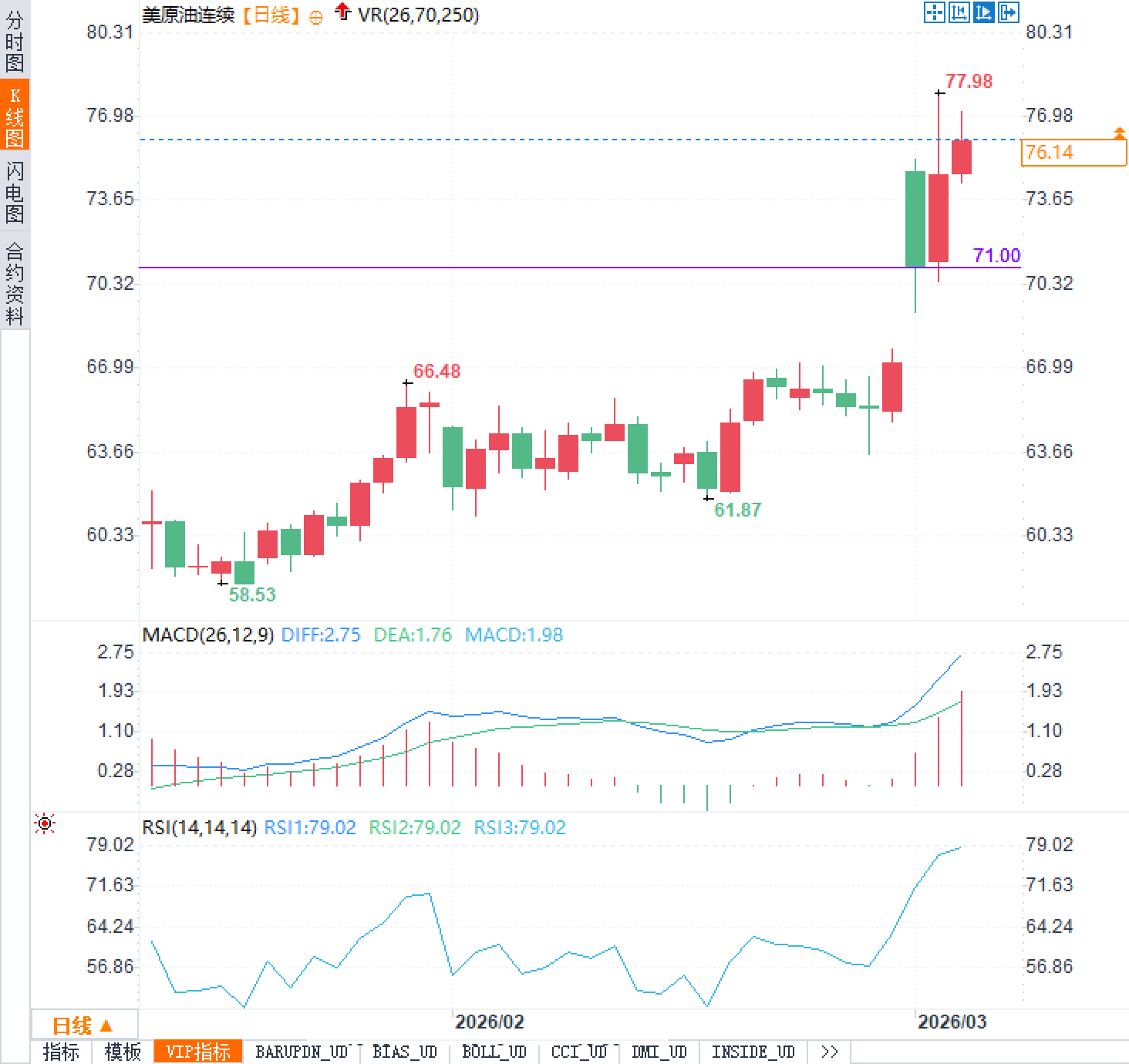
US crude oil prices attracted buying interest on Wednesday, March 4, pushing prices back to near their highest level since January 2025. The commodity is currently trading around $76.20, up more than 2% on the day, and is poised to continue the sharp upward momentum recorded over the past three days. Recent price action, reaching a high of $77.98, indicates strong market buying interest.
The escalating conflict between the US, Israel, and Iran has increased the risk of long-term disruptions to Middle Eastern oil supplies. The Strait of Hormuz is effectively facing closure, with the Iranian Revolutionary Guard warning that any ships attempting to pass through this strategic waterway could be attacked. This development has become a key factor supporting crude oil prices, as the strait handles approximately 20% of global oil shipments, and most maritime traffic is currently suspended. Shipping companies are avoiding the strait for security reasons, and insurance companies are either suspending coverage or significantly increasing premiums, further amplifying expectations of supply shortages.
The US stated that the Navy will protect shipping in the Middle East if necessary to avoid severe energy supply shortages. In addition, the US announced it will provide insurance guarantees for oil tankers transiting the Strait. These measures have provided some relief to the market, but due to high risk assessments, many shipping companies and insurance companies remain cautious, and actual resumption of passage will still take time.
The dollar is consolidating below its November 2025 highs, providing some support for dollar-denominated commodity prices such as crude oil . However, rising oil prices could reignite inflationary pressures, and traders have lowered their expectations for three Fed rate cuts in 2026, limiting the dollar's downside.
In terms of technical indicators, the MACD indicator shows a DIFF value of 2.75, a DEA value of 1.76, and a MACD value of 1.98, maintaining a positive alignment. The RSI indicator reached a high of 79.02, indicating an overbought signal, but the upward momentum is strong. The price has broken through several important resistance levels, the short-term trend is biased towards the bulls, and the overall upward channel remains intact.
Recent oil price data comparison:
| Commodity | Current Price (USD/barrel) | Recent High (USD/barrel) | Daily Change |
|------|----------------|------------------|----------|
| US Crude Oil | 76.14 | 77.98 | Over 2% |
Brent Crude Oil | 83.33 | 85.00 | Over 1.5% |
The stock has risen by about 15% so far this week, and has accumulated a gain of nearly 40% since the beginning of the year, reflecting the rapid accumulation of geopolitical risk premiums.
Considering both fundamentals and technical factors, US crude oil prices have the potential to continue rising in the current environment. Market participants still need to pay close attention to the latest developments in the Middle East. If supply disruptions persist, oil price volatility will further increase; conversely, if shipping gradually resumes, prices may face profit-taking pressure. The energy market is currently highly sensitive, and any new information could trigger significant fluctuations.
In summary, the US crude oil market is facing a geopolitically driven upward cycle, with price levels reflecting market concerns about supply stability. Future price movements will depend on the degree of conflict de-escalation and the recovery of global energy flows.
Frequently Asked Questions
Escalating conflict in the Middle East raises concerns about supply disruptions
The escalating conflict between the US, Israel, and Iran has increased the risk of long-term disruptions to Middle Eastern oil supplies. The Strait of Hormuz is effectively facing closure, with the Iranian Revolutionary Guard warning that any ships attempting to pass through this strategic waterway could be attacked. This development has become a key factor supporting crude oil prices, as the strait handles approximately 20% of global oil shipments, and most maritime traffic is currently suspended. Shipping companies are avoiding the strait for security reasons, and insurance companies are either suspending coverage or significantly increasing premiums, further amplifying expectations of supply shortages.
US response
The US stated that the Navy will protect shipping in the Middle East if necessary to avoid severe energy supply shortages. In addition, the US announced it will provide insurance guarantees for oil tankers transiting the Strait. These measures have provided some relief to the market, but due to high risk assessments, many shipping companies and insurance companies remain cautious, and actual resumption of passage will still take time.
Dollar consolidation and changes in Fed policy expectations
The dollar is consolidating below its November 2025 highs, providing some support for dollar-denominated commodity prices such as crude oil . However, rising oil prices could reignite inflationary pressures, and traders have lowered their expectations for three Fed rate cuts in 2026, limiting the dollar's downside.
Technical analysis shows that the bulls have a clear advantage.
In terms of technical indicators, the MACD indicator shows a DIFF value of 2.75, a DEA value of 1.76, and a MACD value of 1.98, maintaining a positive alignment. The RSI indicator reached a high of 79.02, indicating an overbought signal, but the upward momentum is strong. The price has broken through several important resistance levels, the short-term trend is biased towards the bulls, and the overall upward channel remains intact.
Recent oil price data comparison:
| Commodity | Current Price (USD/barrel) | Recent High (USD/barrel) | Daily Change |
|------|----------------|------------------|----------|
| US Crude Oil | 76.14 | 77.98 | Over 2% |
Brent Crude Oil | 83.33 | 85.00 | Over 1.5% |
The stock has risen by about 15% so far this week, and has accumulated a gain of nearly 40% since the beginning of the year, reflecting the rapid accumulation of geopolitical risk premiums.
Market Outlook and Risk Factors
Considering both fundamentals and technical factors, US crude oil prices have the potential to continue rising in the current environment. Market participants still need to pay close attention to the latest developments in the Middle East. If supply disruptions persist, oil price volatility will further increase; conversely, if shipping gradually resumes, prices may face profit-taking pressure. The energy market is currently highly sensitive, and any new information could trigger significant fluctuations.
In summary, the US crude oil market is facing a geopolitically driven upward cycle, with price levels reflecting market concerns about supply stability. Future price movements will depend on the degree of conflict de-escalation and the recovery of global energy flows.
Frequently Asked Questions
Question 1: What is the mechanism by which the Strait of Hormuz affects crude oil prices?
A: This strait is a crucial node in the global oil supply chain, handling approximately one-fifth of the world's oil flows. Any disruption to transportation immediately creates market expectations of supply shortages, driving prices up rapidly. While the current disruption is not an official closure, shipping companies have significantly reduced passage due to safety and insurance concerns, directly amplifying the risk premium effect. Combined with the recent escalation of the conflict, this mechanism has already led to several consecutive days of rising oil prices, and without substantial relief in the short term, prices will continue to receive strong support.
Question 2: Will the protective measures provided by the United States be able to quickly restore oil transportation?
A: While the U.S. Navy's protection and insurance guarantee policies provide policy support, the actual recovery depends on the risk assessments of shipowners and insurance companies. It is still in its early stages, and most market participants are choosing to operate cautiously. Therefore, oil prices are likely to remain high in the short term until actual ship traffic returns to normal before a significant change is seen. This policy helps avoid extreme panic, but it cannot immediately eliminate the premium caused by geopolitical uncertainty.
Question 3: How do rising oil prices affect the Federal Reserve's monetary policy expectations?
A: Higher oil prices will be passed on to consumer price levels, increasing the risk of rising inflation. Therefore, the market has adjusted its expectations for the Federal Reserve's interest rate cut path, shifting from a more aggressive easing stance to a more cautious one. This, in turn, supports the dollar exchange rate and indirectly affects the dynamics of commodity markets, including crude oil, creating a certain interaction. Traders have reduced their bets on multiple rate cuts in 2026, reflecting the close linkage between oil prices and macroeconomic policy.
Question 4: What do current technical indicators suggest about the future development of crude oil?
A: The positive signal from the MACD indicator suggests that bullish forces are in control, while the RSI reading near 80 warns investors of the potential risk of a pullback after overbought conditions. Combined with the recent strong breakout shown on the candlestick chart, prices are likely to test higher resistance levels in the short term, but profit-taking and subsequent volatility should be watched out for. Overall, the convergence of technical and fundamental factors supports a bullish trend in oil prices within the current range until a clear turning point occurs in geopolitical events.
Question 5: What are the core risks that investors should pay attention to in the current oil market environment?
A: The primary risk lies in the speed of the escalation of the Middle East conflict. If retaliatory strikes escalate, the disruption in the Straits could be prolonged, increasing oil price volatility. Secondly, adjustments to the Federal Reserve's policy path could indirectly suppress commodity price increases through the dollar channel. Furthermore, technical overbought signals suggest a possible short-term correction.
- Risk Warning and Disclaimer
- The market involves risk, and trading may not be suitable for all investors. This article is for reference only and does not constitute personal investment advice, nor does it take into account certain users’ specific investment objectives, financial situation, or other needs. Any investment decisions made based on this information are at your own risk.