India is facing an oil shortage, but Russian oil is stepping in to fill the gap, potentially saving the Middle East supply chain.
2026-03-05 12:30:39
The US-Israeli strikes against Iran have triggered Iranian retaliation, bringing shipping in the Strait of Hormuz to a near standstill and blocking approximately 20% of the world's oil and a significant amount of natural gas. India, the world's third-largest crude oil importer, has an import dependency rate of 88-90%, with about 40-50% of its crude oil imported from the Middle East (mainly Iraq, Saudi Arabia, the UAE, and Kuwait) via the Strait of Hormuz. If the conflict continues for more than 10-15 days, Indian refineries will face severe challenges in supplying their oil. The government and refining companies have activated contingency plans and are actively seeking alternative sources.
Russia seized the opportunity and publicly stated its readiness to fill the gap. Deputy Prime Minister Alexander Novak recently stated, "We have received signals that India is once again paying attention to increasing its imports of Russian crude oil, and we are prepared to meet the additional demand." An official from the Russian Embassy in New Delhi went even further, saying, "If energy supplies continue to be disrupted, we are prepared to fully fulfill India's energy needs."
Russia's intervention to alleviate energy pressures and reduce crude oil risk premiums to some extent limit the upside potential of oil prices. However, the bottom support remains strong in the face of the Middle East conflict, and the path of least resistance for oil prices still leans towards the upside. On Thursday (March 5), US crude oil prices fluctuated upwards and are currently trading around $77.15 per barrel, with a daily increase of approximately 3.35%.
Industry sources revealed that approximately 9.5 million barrels (9.5 million barrels) of Russian crude oil are currently stored in floating tankers in waters near India (Indian Ocean and Arabian Sea), and can be unloaded and delivered within weeks, quickly easing inventory pressure on Indian refineries. Russia is also preparing to increase liquefied natural gas (LNG) supplies. Previously, India mainly relied on Qatar for LNG, but Qatar Energy has suspended production due to the Iranian drone attack.
Russia says it can help India meet up to 40% of its crude oil demand with significant discounts and a safer transport route that avoids the Hormuz.
India imports approximately 5-5.6 million barrels of crude oil per day, of which about 2.5-2.7 million barrels pass through the Hormuz, accounting for nearly half of total imports. In early 2026, influenced by the US-India trade agreement, India significantly reduced its purchases of Russian crude oil (falling to approximately 1.1 million barrels per day in February, far below the 2025 peak of over 2 million barrels per day), while the Middle Eastern share rose to approximately 55%. The Hormuz disruption directly impacted this structure, forcing India to restart its diversification strategy.
According to Kpler data, India's total commercial crude oil inventory, strategic petroleum reserves, and tankers en route amount to approximately 100 million barrels, which could cover about 40-45 days of demand should the Strait of Hormuz be completely disrupted.
A government source added that crude oil reserves are approximately 25 days' worth, and refined petroleum products such as gasoline and diesel are approximately 25 days' worth, totaling a buffer of about 50 days. Strategic reserve facilities (Mangrol, Padur, and Visakhapatnam) provide an additional 9.5 days' worth of protection, but the actual available amount depends on the market.
In the short term, inventory can stabilize supply, but if the conflict lasts for more than a month, it will be necessary to rely on alternative imports. Otherwise, the decline in refinery operating rates and the rise in fuel prices will be transmitted to inflation and economic growth.
India imports approximately 54-60% of its LNG via the Hormuz, with Qatar being the primary supplier (India being Qatar's second-largest buyer). Qatar Energy suspended production due to the conflict, drastically reducing its supply.
Russia has stated its readiness to fill the LNG gap, but transportation distances and infrastructure limitations make short-term substitution difficult. The Asian and European LNG markets have already been severely impacted, and soaring prices will further increase India's energy import costs.
Turning to Russia could quickly alleviate supply pressure, reduce costs by utilizing discounted crude oil, and avoid the risks associated with the Hormuz oil spree. However, caution is warranted regarding US-India relations: the Trump administration previously pressured India to reduce its purchases of Russian oil as a concession to the trade agreement. A significant buyback could reignite diplomatic tensions. Indian oil ministers and officials are assessing their "commercial decision-making" space, emphasizing monitoring prices and availability.
As one of the biggest victims of the Strait of Hormuz disruption, India is accelerating its efforts to secure additional supplies from Russia. A commitment of 9.5 million barrels of ready-to-ship crude oil and LNG provides a short-term buffer, but the 40-45 day inventory limit serves as a reminder of the risks of long-term reliance on the Middle East. Russia is seizing the opportunity to expand its market share, with significant discounts and geographical advantages, but India needs to balance geopolitical costs and avoid a deterioration in trade relations with the United States. The global energy landscape is being reshaped by conflict, and Asian importers may accelerate their diversification efforts.
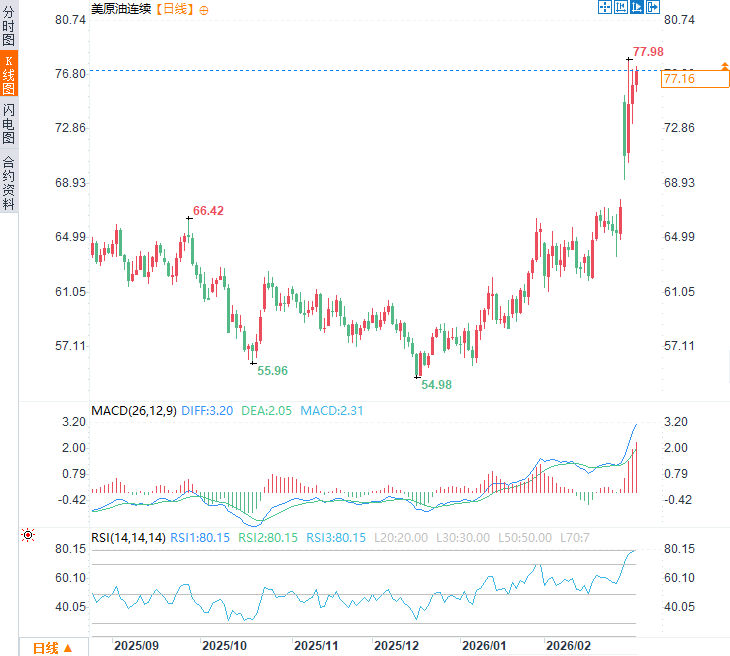
(US crude oil daily chart, source: FX678)
At 12:30 Beijing time, US crude oil futures were trading at $77.48 per barrel.
Russia seized the opportunity and publicly stated its readiness to fill the gap. Deputy Prime Minister Alexander Novak recently stated, "We have received signals that India is once again paying attention to increasing its imports of Russian crude oil, and we are prepared to meet the additional demand." An official from the Russian Embassy in New Delhi went even further, saying, "If energy supplies continue to be disrupted, we are prepared to fully fulfill India's energy needs."
Russia's intervention to alleviate energy pressures and reduce crude oil risk premiums to some extent limit the upside potential of oil prices. However, the bottom support remains strong in the face of the Middle East conflict, and the path of least resistance for oil prices still leans towards the upside. On Thursday (March 5), US crude oil prices fluctuated upwards and are currently trading around $77.15 per barrel, with a daily increase of approximately 3.35%.
Russia responded quickly, with 9.5 million barrels of crude oil already in place.
Industry sources revealed that approximately 9.5 million barrels (9.5 million barrels) of Russian crude oil are currently stored in floating tankers in waters near India (Indian Ocean and Arabian Sea), and can be unloaded and delivered within weeks, quickly easing inventory pressure on Indian refineries. Russia is also preparing to increase liquefied natural gas (LNG) supplies. Previously, India mainly relied on Qatar for LNG, but Qatar Energy has suspended production due to the Iranian drone attack.
Russia says it can help India meet up to 40% of its crude oil demand with significant discounts and a safer transport route that avoids the Hormuz.
India is highly dependent on the Hormuz, and its import structure is fragile.
India imports approximately 5-5.6 million barrels of crude oil per day, of which about 2.5-2.7 million barrels pass through the Hormuz, accounting for nearly half of total imports. In early 2026, influenced by the US-India trade agreement, India significantly reduced its purchases of Russian crude oil (falling to approximately 1.1 million barrels per day in February, far below the 2025 peak of over 2 million barrels per day), while the Middle Eastern share rose to approximately 55%. The Hormuz disruption directly impacted this structure, forcing India to restart its diversification strategy.
Current status of Indian crude oil inventories, assessment of 40-45 day buffer capacity.
According to Kpler data, India's total commercial crude oil inventory, strategic petroleum reserves, and tankers en route amount to approximately 100 million barrels, which could cover about 40-45 days of demand should the Strait of Hormuz be completely disrupted.
A government source added that crude oil reserves are approximately 25 days' worth, and refined petroleum products such as gasoline and diesel are approximately 25 days' worth, totaling a buffer of about 50 days. Strategic reserve facilities (Mangrol, Padur, and Visakhapatnam) provide an additional 9.5 days' worth of protection, but the actual available amount depends on the market.
In the short term, inventory can stabilize supply, but if the conflict lasts for more than a month, it will be necessary to rely on alternative imports. Otherwise, the decline in refinery operating rates and the rise in fuel prices will be transmitted to inflation and economic growth.
LNG supply disruptions and Qatar's production halt exacerbate pressure.
India imports approximately 54-60% of its LNG via the Hormuz, with Qatar being the primary supplier (India being Qatar's second-largest buyer). Qatar Energy suspended production due to the conflict, drastically reducing its supply.
Russia has stated its readiness to fill the LNG gap, but transportation distances and infrastructure limitations make short-term substitution difficult. The Asian and European LNG markets have already been severely impacted, and soaring prices will further increase India's energy import costs.
Opportunities and Concerns for India's Shift Towards Russia
Turning to Russia could quickly alleviate supply pressure, reduce costs by utilizing discounted crude oil, and avoid the risks associated with the Hormuz oil spree. However, caution is warranted regarding US-India relations: the Trump administration previously pressured India to reduce its purchases of Russian oil as a concession to the trade agreement. A significant buyback could reignite diplomatic tensions. Indian oil ministers and officials are assessing their "commercial decision-making" space, emphasizing monitoring prices and availability.
Editor's Summary
As one of the biggest victims of the Strait of Hormuz disruption, India is accelerating its efforts to secure additional supplies from Russia. A commitment of 9.5 million barrels of ready-to-ship crude oil and LNG provides a short-term buffer, but the 40-45 day inventory limit serves as a reminder of the risks of long-term reliance on the Middle East. Russia is seizing the opportunity to expand its market share, with significant discounts and geographical advantages, but India needs to balance geopolitical costs and avoid a deterioration in trade relations with the United States. The global energy landscape is being reshaped by conflict, and Asian importers may accelerate their diversification efforts.
(US crude oil daily chart, source: FX678)
At 12:30 Beijing time, US crude oil futures were trading at $77.48 per barrel.
- Risk Warning and Disclaimer
- The market involves risk, and trading may not be suitable for all investors. This article is for reference only and does not constitute personal investment advice, nor does it take into account certain users’ specific investment objectives, financial situation, or other needs. Any investment decisions made based on this information are at your own risk.