Escalating US-Iran conflict threatens Strait of Hormuz blockade; soaring oil prices reignite inflationary trading?
2026-03-05 14:29:28
According to the APP, due to the ongoing conflict between the US and Iran and the risk of the Strait of Hormuz being blocked, tensions in the global energy supply chain have intensified, causing oil prices to fluctuate significantly and enter a high-volatility range.
As of the morning session on March 5, 2026, Brent crude oil prices rose to approximately $84.00 per barrel, a single-day increase of over 2.2%, while WTI crude oil also rose to around $77.50 per barrel.
This surge in prices is mainly due to the Iranian Revolutionary Guard's threat to attack ships passing through the strait, which handles about 20% of the world's oil shipments. Shipping traffic in the strait has dropped by nearly 90% since before the conflict, and several shipping giants have suspended related operations.
Meanwhile, gold prices failed to effectively capture safe-haven demand, remaining range-bound between $5100 and $5180 per ounce. Although geopolitical conflicts typically benefit gold, this time safe-haven funds mainly flowed back into the US dollar index , with the DXY hovering around 99.1, strong but not yet breaking through the 100 mark.
This phenomenon is strikingly similar to the sentiment at the beginning of the Russia-Ukraine conflict, when safe-haven demand initially pushed up the dollar while gold remained relatively restrained. Inflation trading has resurfaced and become the focus of the market. High oil prices are directly driving up energy costs, the market is repricing global inflationary pressures, and expectations for a Federal Reserve rate cut have been further delayed.
New York Federal Reserve President John Williams recently commented on the impact of the conflict, stating, "It is too early to assess the impact of the Iranian conflict on the U.S. economy. Oil price fluctuations will be transmitted through energy prices, financial market conditions, and asset prices. Although the U.S. economy's dependence on imported oil has decreased significantly, we still need to closely monitor the impact of the persistence of oil price volatility on the inflation outlook."
If the US dollar index fails to break through the 100 mark and maintain its strength, the logic of geopolitical risks and inflation narratives may be disproven by the market. Once there are signs of easing conflict or a rapid recovery in supply, downward pressure on oil prices will quickly emerge, and global asset prices will face further divergence.
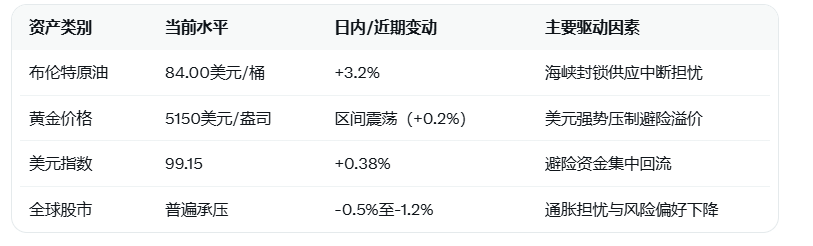
Energy-related sectors and commodity-exporting currencies are likely to continue to benefit, while highly valued technology stocks and emerging market assets face greater downward pressure. The following is a comparison of the performance of major assets as of March 5, 2026:
In the long run, this incident once again demonstrates the suddenness and asymmetry of geopolitical risks in global asset pricing. Supply chain disruptions not only affect energy prices but may also be transmitted to a wider range of commodities through increased transportation costs.
Editor's Summary: The Strait of Hormuz risk triggered by the US-Iran conflict has pushed oil prices into a high-volatility trajectory and reignited inflation trading. However, gold's traditional safe-haven role has been partially replaced by a strong US dollar, further exacerbating global asset divergence. Investors need to continue to monitor the duration of the conflict, the progress of shipping recovery, and the role of the dollar's performance in validating the narrative.
Frequently Asked Questions
Q: How important is the Strait of Hormuz to global oil supply?
A: This strait is the only maritime passage for Persian Gulf oil exports, with approximately 21 million barrels of crude oil passing through daily, accounting for one-fifth of global seaborne oil trade. Severe disruption would directly impact the supply of major importing countries in Asia and Europe, causing drastic short-term fluctuations in global oil prices and affecting downstream industries through increased energy costs.
Q: Why did gold fail to rise significantly during this period of risk aversion and instead remain volatile?
A: Safe-haven funds are prioritizing a return to dollar assets, primarily due to the dollar's liquidity advantage as the global reserve currency, and the fact that rising oil prices are driving up inflation expectations, leading to a tighter Federal Reserve interest rate cut path and a stronger dollar index that is suppressing gold prices. Similar to the early stages of the Russia-Ukraine conflict, gold often lags behind the dollar's performance, and this time the pattern is highly consistent.
Q: How will rising oil prices affect global inflation and monetary policy?
A: A $10 increase in the price of oil per barrel typically pushes up the US CPI by about 0.2-0.4 percentage points. High oil prices will be fully transmitted to fuel, transportation, and production costs, and coupled with supply chain pressures, may lead to an upward revision of global inflation expectations for 2026, forcing central banks to maintain higher interest rates for longer and delaying easing cycles.
Q: What role does the strong US dollar play in the current geopolitical situation?
A: The US dollar has become the preferred safe-haven asset due to its high liquidity and safe-haven characteristics. If the DXY continues to stay above 99 and approaches 100, it will strengthen the US dollar's pricing power over commodities, further differentiating global assets: benefiting US stocks and bonds, while suppressing emerging market currencies and commodity-exporting economies.
Q: What asset allocation strategies should investors adopt in the current environment?
A: We recommend moderately increasing allocations to the energy sector and defensive assets, while strictly controlling position size. It is necessary to closely monitor the recovery of cross-strait shipping, OPEC developments, and statements from Federal Reserve officials. If the US dollar breaks through 100 or the conflict eases, oil prices and inflation trading may cool rapidly; conversely, we need to prepare for a more prolonged energy crisis and the impact of asset rebalancing.
As of the morning session on March 5, 2026, Brent crude oil prices rose to approximately $84.00 per barrel, a single-day increase of over 2.2%, while WTI crude oil also rose to around $77.50 per barrel.
This surge in prices is mainly due to the Iranian Revolutionary Guard's threat to attack ships passing through the strait, which handles about 20% of the world's oil shipments. Shipping traffic in the strait has dropped by nearly 90% since before the conflict, and several shipping giants have suspended related operations.
Meanwhile, gold prices failed to effectively capture safe-haven demand, remaining range-bound between $5100 and $5180 per ounce. Although geopolitical conflicts typically benefit gold, this time safe-haven funds mainly flowed back into the US dollar index , with the DXY hovering around 99.1, strong but not yet breaking through the 100 mark.
This phenomenon is strikingly similar to the sentiment at the beginning of the Russia-Ukraine conflict, when safe-haven demand initially pushed up the dollar while gold remained relatively restrained. Inflation trading has resurfaced and become the focus of the market. High oil prices are directly driving up energy costs, the market is repricing global inflationary pressures, and expectations for a Federal Reserve rate cut have been further delayed.
New York Federal Reserve President John Williams recently commented on the impact of the conflict, stating, "It is too early to assess the impact of the Iranian conflict on the U.S. economy. Oil price fluctuations will be transmitted through energy prices, financial market conditions, and asset prices. Although the U.S. economy's dependence on imported oil has decreased significantly, we still need to closely monitor the impact of the persistence of oil price volatility on the inflation outlook."
If the US dollar index fails to break through the 100 mark and maintain its strength, the logic of geopolitical risks and inflation narratives may be disproven by the market. Once there are signs of easing conflict or a rapid recovery in supply, downward pressure on oil prices will quickly emerge, and global asset prices will face further divergence.
Energy-related sectors and commodity-exporting currencies are likely to continue to benefit, while highly valued technology stocks and emerging market assets face greater downward pressure. The following is a comparison of the performance of major assets as of March 5, 2026:
In the long run, this incident once again demonstrates the suddenness and asymmetry of geopolitical risks in global asset pricing. Supply chain disruptions not only affect energy prices but may also be transmitted to a wider range of commodities through increased transportation costs.
Editor's Summary: The Strait of Hormuz risk triggered by the US-Iran conflict has pushed oil prices into a high-volatility trajectory and reignited inflation trading. However, gold's traditional safe-haven role has been partially replaced by a strong US dollar, further exacerbating global asset divergence. Investors need to continue to monitor the duration of the conflict, the progress of shipping recovery, and the role of the dollar's performance in validating the narrative.
Frequently Asked Questions
Q: How important is the Strait of Hormuz to global oil supply?
A: This strait is the only maritime passage for Persian Gulf oil exports, with approximately 21 million barrels of crude oil passing through daily, accounting for one-fifth of global seaborne oil trade. Severe disruption would directly impact the supply of major importing countries in Asia and Europe, causing drastic short-term fluctuations in global oil prices and affecting downstream industries through increased energy costs.
Q: Why did gold fail to rise significantly during this period of risk aversion and instead remain volatile?
A: Safe-haven funds are prioritizing a return to dollar assets, primarily due to the dollar's liquidity advantage as the global reserve currency, and the fact that rising oil prices are driving up inflation expectations, leading to a tighter Federal Reserve interest rate cut path and a stronger dollar index that is suppressing gold prices. Similar to the early stages of the Russia-Ukraine conflict, gold often lags behind the dollar's performance, and this time the pattern is highly consistent.
Q: How will rising oil prices affect global inflation and monetary policy?
A: A $10 increase in the price of oil per barrel typically pushes up the US CPI by about 0.2-0.4 percentage points. High oil prices will be fully transmitted to fuel, transportation, and production costs, and coupled with supply chain pressures, may lead to an upward revision of global inflation expectations for 2026, forcing central banks to maintain higher interest rates for longer and delaying easing cycles.
Q: What role does the strong US dollar play in the current geopolitical situation?
A: The US dollar has become the preferred safe-haven asset due to its high liquidity and safe-haven characteristics. If the DXY continues to stay above 99 and approaches 100, it will strengthen the US dollar's pricing power over commodities, further differentiating global assets: benefiting US stocks and bonds, while suppressing emerging market currencies and commodity-exporting economies.
Q: What asset allocation strategies should investors adopt in the current environment?
A: We recommend moderately increasing allocations to the energy sector and defensive assets, while strictly controlling position size. It is necessary to closely monitor the recovery of cross-strait shipping, OPEC developments, and statements from Federal Reserve officials. If the US dollar breaks through 100 or the conflict eases, oil prices and inflation trading may cool rapidly; conversely, we need to prepare for a more prolonged energy crisis and the impact of asset rebalancing.
- Risk Warning and Disclaimer
- The market involves risk, and trading may not be suitable for all investors. This article is for reference only and does not constitute personal investment advice, nor does it take into account certain users’ specific investment objectives, financial situation, or other needs. Any investment decisions made based on this information are at your own risk.