March 6th Financial Breakfast: Interest Rate Cut Expectations Cool Down, Gold Price Falls Below $5100 Awaits Non-Farm Payrolls; Supply Disruption Panic Sparks Fuel Prices
2026-03-06 07:24:33
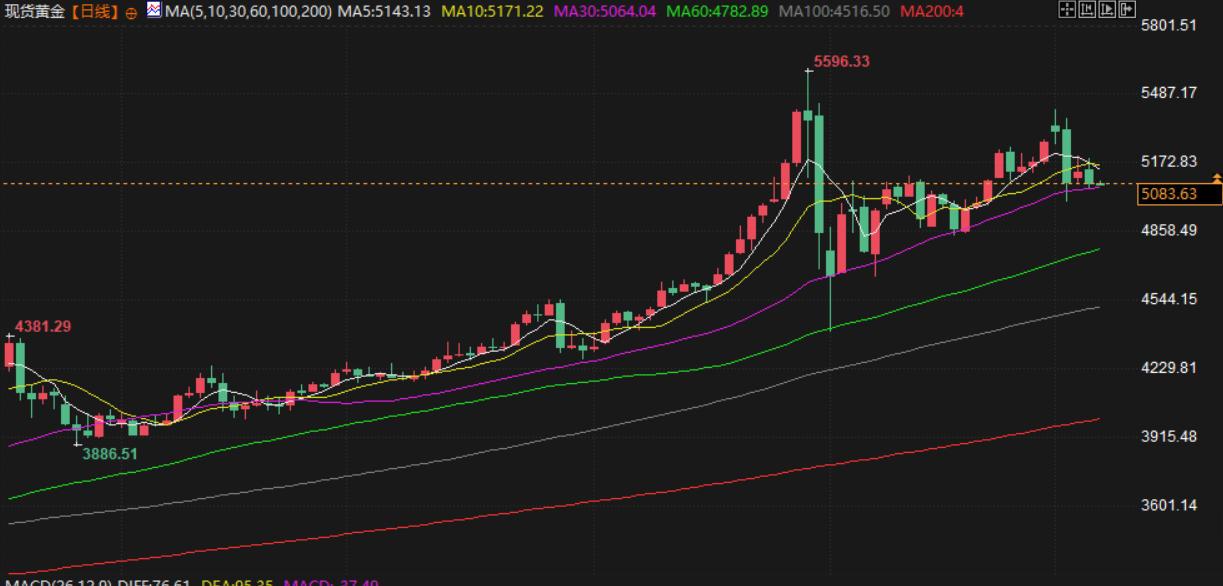
On Friday (March 6, Beijing time) in early Asian trading, spot gold was trading around $5,086 per ounce. Gold prices fell on Thursday, mainly due to pressure from rising US Treasury yields and a stronger dollar, which significantly weakened expectations of a Fed rate cut. The market awaited non-farm payroll data. US crude oil was trading around $79.25 per barrel. Oil prices surged nearly 4% on Thursday as the escalating conflict between the US and Israel and Iran disrupted oil supplies and transportation in the Middle East, forcing some major oil-producing countries to cut production.

U.S. stocks closed lower on Thursday. The Dow Jones Industrial Average fell 1.61% to 47,954.74 points; the S&P 500 fell 0.56% to 6,830.71 points; and the Nasdaq Composite fell 0.26% to 22,748.99 points.
As the Middle East conflict entered its sixth day, oil prices continued to climb to multi-month highs, exacerbating market concerns about inflationary pressures and economic growth prospects, while expectations of a Federal Reserve interest rate cut also garnered significant attention. Michael Antonelli, market strategist at Baird Private Wealth Management, stated that oil price movements are key to understanding the stock market decline, as the market assesses the duration of the conflict and its potential economic impact, influenced by concerns that the conflict is spreading to more countries and disrupting oil supplies through the Strait of Hormuz.
In terms of sectors, the S&P 500's industrial, materials, and healthcare sectors all fell by more than 2%, while the passenger airline sector plummeted by 5.4%, with Southwest Airlines falling by 6.9%. However, energy stocks bucked the trend and strengthened due to expectations that rising oil prices would boost revenue, with the S&P energy sector rising by 0.6% and Chevron shares rising by 3.9%. Technology stocks also rose slightly by 0.4%, with Broadcom rising by 4.8% due to optimistic revenue forecasts for AI chips.
On the economic data front, initial jobless claims in the US remained unchanged last week. However, Steve Ricchiuto, chief economist at Mizuho Securities, pointed out that stronger-than-expected ISM manufacturing and services data boosted expectations for non-farm payrolls. These signs of economic improvement may reduce the likelihood of a Federal Reserve rate cut; the market currently expects a rate cut of about 40 basis points this year, lower than the 50 basis points expected before the conflict. Furthermore, declines in financial stocks such as JPMorgan Chase and Goldman Sachs dragged down the Dow Jones Industrial Average. Although Wall Street outperformed European and Asian markets this week due to a rebound in technology stocks, with the Nasdaq Composite Index rising 0.36% since the conflict began, investors are still closely watching any reports that the conflict is nearing its end, especially given the potential for wider concerns if oil prices reach $100 per barrel.
Gold prices reversed course on Thursday, giving back earlier gains, mainly due to pressure from rising U.S. Treasury yields and a stronger dollar, although safe-haven demand triggered by escalating conflict in the Middle East had initially provided support for gold prices.
The Middle East conflict entered its sixth day, with the US-Israeli coalition escalating its military action against Iran. Market concerns that the conflict could push up oil prices and inflation, thereby weakening expectations for a Federal Reserve interest rate cut. Bart Melek, global head of commodities strategy at TD Securities, said that the inflationary risks from rising oil prices and climbing US Treasury yields are generally unfavorable for gold.
Spot gold fell 1.2% to $5,076.59 an ounce, after hitting a high of $5,194.59 an ounce during the session; the dollar index rose 0.5%, making dollar-denominated gold more expensive for overseas buyers; the yield on the 10-year U.S. Treasury note climbed to a three-week high, also increasing the opportunity cost of holding gold.
However, Melek pointed out that signs of a sharp rise in the US fiscal deficit and macroeconomic uncertainty continue to support the fundamentals of gold.
On the economic data front, initial jobless claims in the US remained unchanged last week, while layoffs in February fell sharply. The latest report from the Federal Reserve showed a slight increase in recent economic activity, continued price increases, and stable employment levels. The market widely expects the Federal Reserve to keep interest rates unchanged at its policy meeting on March 18th, and investors are closely watching Friday's US February jobs report for further clues about the interest rate path.
In other precious metals, spot silver fell 1.8% to $81.91; platinum fell 1.1% to $2,125.10; and palladium fell 2.4% to $1,634.15.
Oil prices rose on Thursday, mainly due to the escalating conflict between the US, Israel, and Iran, which disrupted oil supplies and transportation in the Middle East, forcing some major oil-producing countries to cut production.
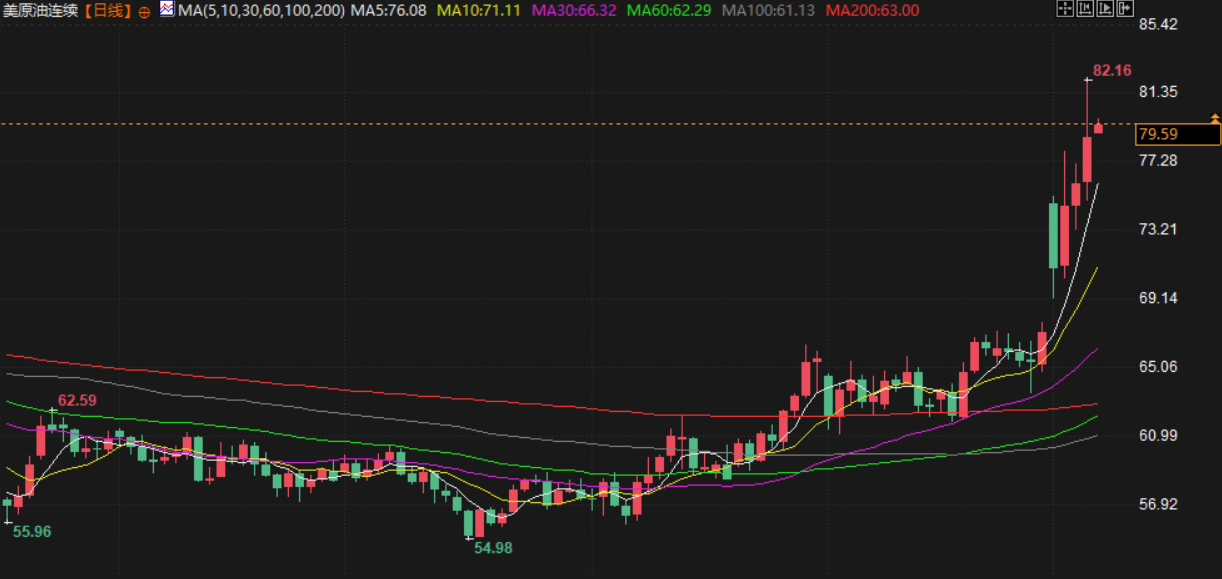
Brent crude futures rose about 5% on Thursday, marking their fifth consecutive day of gains, while U.S. crude rose nearly 4%, hitting a new high since July 2024 at $82.16 per barrel. John Kilduff, a partner at Again Capital, pointed out that tensions in the Strait of Hormuz and the long delays in resuming production after cuts in many countries are key factors driving the continued rise in oil prices.
Geopolitically, US President Trump expressed his desire to participate in deciding Iran's next leader, while the Israeli military warned residents to evacuate areas including Tehran. Iranian media reported explosions in multiple locations in the capital. Furthermore, attacks on oil tankers continue in the Gulf region; a Bahamian-flagged oil tanker was attacked near the Iraqi port of Zubel, sustaining damage.
Supply has been severely impacted. As OPEC's second-largest oil producer, Iraq has already reduced its production by nearly 1.5 million barrels per day due to a lack of storage space and export routes. JPMorgan analysts warn that if the Strait of Hormuz remains blocked, crude oil supplies from Iraq and Kuwait could be disrupted within days, with production potentially decreasing by 3.3 million barrels per day by the eighth day of the conflict.
UBS analyst Giovanni Staunovo said that the tanker attacks and China's measures to reduce refined oil exports have further pushed up prices, while reduced exports from the Middle East have also led to signs of tightness in the refined oil market.
The dollar resumed its upward trend on Thursday, with the dollar index rising 0.5% to 99.26, rebounding after a brief pullback from a three-month high. This was mainly due to escalating tensions in the Middle East exacerbating market anxiety and driving safe-haven demand for the dollar.
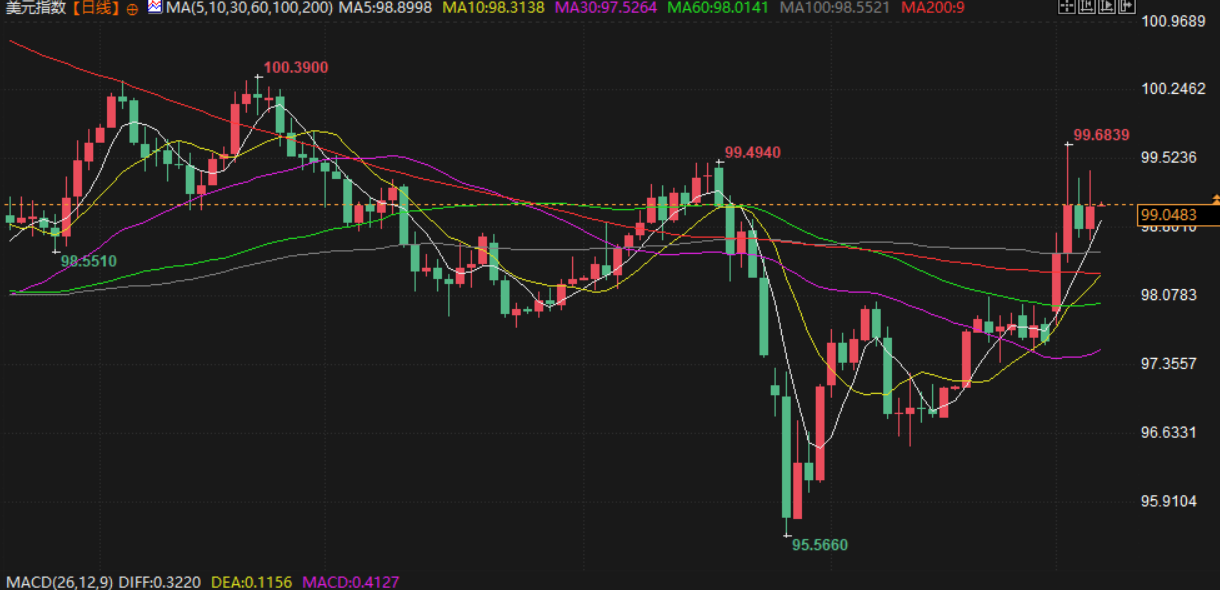
As the conflict entered its sixth day, Iran vowed retaliation for the US sinking of its warship, replacing previous expectations of de-escalation with a new wave of uncertainty. This led to a continued strengthening of the dollar, with the euro falling 0.4% to $1.1580 and the pound sterling falling 0.3% to $1.3326.
Elisabeth Colleran, co-head of the emerging markets debt team at Loomis Sayles, pointed out that although "de-dollarization" was a hot topic before, this week's market turmoil proves that the dollar inevitably strengthens when risks escalate. Driven by renewed risk aversion and inflation concerns, some traditional safe-haven assets behaved abnormally, with investors selling off German and US Treasuries, pushing their yields up to 2.829% and 4.138%, respectively.
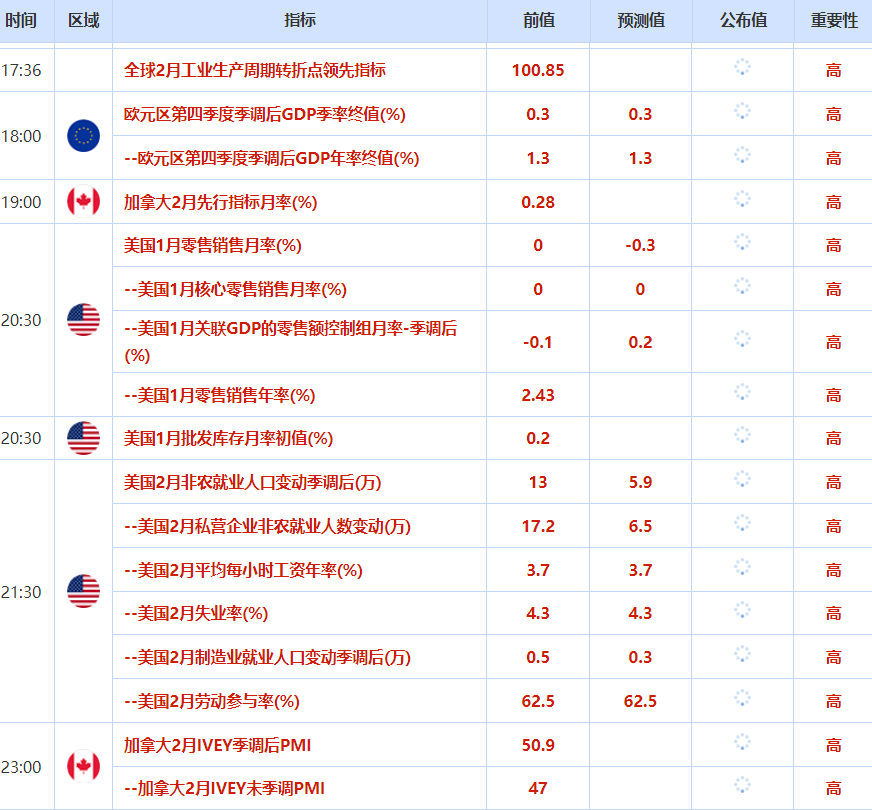
Currency market investors reacted mutedly to Thursday's U.S. initial jobless claims data, which remained unchanged at 213,000, as the market focuses on Friday's nonfarm payrolls report. Surveys predict 59,000 new jobs will be added in February, lower than the previous month's figure.
Jayati Bharadwaj, head of foreign exchange strategy at TD Securities, believes that although there is room for a short-term correction in the dollar bulls, the dollar's upward trend is likely to continue as long as the oil risk premium remains high, and its trajectory may be similar to that of June 2025. The dollar has risen nearly 1.5% so far this week and is on track for its best weekly gain since November 2024.
Soaring oil prices have exacerbated market concerns about a resurgence of inflation, potentially disrupting the interest rate outlook for major central banks. US interest rate futures now indicate that the magnitude of rate cuts this year has been lowered from 59 basis points before the conflict to just 40 basis points. Expectations for a Bank of England rate cut have also been lowered, while the money market is betting that the European Central Bank may raise rates as early as this year. The dollar rose 0.5% against the yen to 157.78 yen.
The United States and Mexico initiate joint review process of the USMCA agreement.
On March 5th local time, the United States and Mexico launched a joint review of the USMCA (United States-Mexico-Canada Agreement). The Office of the United States Trade Representative (USTR) stated that, as part of the joint review, US and Mexican negotiators will begin bilateral talks in the week of March 16th. According to a statement released by the USTR, US Trade Representative Jamison Greer and Mexican Economy Minister Marcelo Ebrard have instructed negotiators to begin preliminary discussions on measures needed to ensure the agreement benefits all parties. These measures include reducing reliance on imports from outside the region, strengthening rules of origin, and enhancing the security of North American supply chains. The statement also noted that, as part of the joint review, negotiators are expected to meet regularly. (CCTV News)
Iran's interim leadership council held its fourth meeting.
On March 5th local time, the fourth meeting of the Iranian Interim Leadership Council, chaired by Iranian President Peskhziyan, was held. Larijani, Secretary of Iran's Supreme National Security Council, reported on the latest developments in the war. While firmly supporting the armed forces' participation in the fighting, council members decided to strengthen the armed forces. Council members also responded to US President Trump's inappropriate remarks regarding the election of Iran's Supreme Leader, stating that Iran will force its enemies—the US and Israel—to submit through continued resistance. (CCTV International News)
Kuwait cuts refinery operating rates, Strait of Hormuz obstructs operations
Sources familiar with the matter said Kuwait has cut operating rates at three refineries, and the production cuts could be extended in the coming days if necessary. The sources indicated that the cuts are due to limited storage space. The war with Iran has thrown the Middle East oil industry into disarray, as the conflict has effectively closed the Strait of Hormuz. Storage facilities are rapidly filling up due to a shortage of tankers impacting exports. Furthermore, refineries in Saudi Arabia and Bahrain have been damaged and forced to reduce processing volumes. Kuwait, an OPEC member, has a combined processing capacity of approximately 1.4 million barrels per day at its Al-Zour, Mina Al-Ahmadi, and Mina Abdullah refineries. Al-Zour is one of the largest refining facilities in the Middle East.
The Israeli military says its strikes against Iran are entering the next phase.
On the evening of March 5 local time, Israel Defense Forces Chief of Staff Zamir stated at a press conference that after completing the surprise attack phase of the strike against Iran, achieving air superiority, and suppressing Iranian ballistic missile sites, the IDF is entering the next phase of the operation, intensifying its efforts to undermine the foundations of the Iranian regime and its military capabilities. (CCTV News)
More than 20 states across the United States have filed lawsuits against the U.S. government's new global tariff policy.
On February 5th local time, it was learned that more than 20 US states announced lawsuits to block the US government's latest global tariff policy. The Democratic state attorneys general who spearheaded the lawsuits argue that President Trump's plan to impose a 15% tariff on most parts of the world is an overreach of authority. On February 20th local time, the US Supreme Court ruled that the Trump administration's large-scale tariff measures under the International Emergency Economic Powers Act lacked clear legal authorization. Following the ruling, Trump announced a 10% global import tariff, effective for 150 days, under Section 122 of the Trade Act of 1974, to replace the tariffs deemed illegal by the Supreme Court. Then, on February 21st, Trump posted on his social media platform "Real Social" that he would raise the 10% import tariff on global goods to 15%. The lawsuit is reportedly led by the attorneys general of Oregon, Arizona, California, and New York. The states argue that Section 122 applies only to specific and limited circumstances and does not grant the president the power to impose general import tariffs; furthermore, these tariffs will increase costs for states, businesses, and consumers. (CCTV News)
Trump demands immediate pardon for Israeli prime minister
According to Axios, US President Donald Trump stated in a telephone interview on March 5th that Israeli President Herzog must pardon Israeli Prime Minister Benjamin Netanyahu "today." He called Herzog's failure to take action to pardon Netanyahu over the past year "a disgrace." Trump said, "I talk to Bibi (Netanyahu) about the war every day. I want him to focus on the war, not the court cases. I want the only pressure on Bibi (Netanyahu) to be the war against Iran." It is reported that Trump has suspended all diplomatic meetings with Herzog until Netanyahu is formally pardoned. (CCTV International News)
Trump asks Kurds to assist in US action against Iran
According to a report by The Washington Post on May 5th, US President Trump requested Kurdish assistance for US operations in Iran and stated that he would provide support, including air cover. The report, citing multiple sources, said that Trump, during calls with Kurdish leaders in Iran and Iraq this week, indicated he would provide "extensive US air cover" and other support to help "anti-government Iranian Kurds seize parts of western Iran." The report also stated that a senior official from the Patriotic Union of Iraqi Kurdistan said that Trump, during a call with the organization's leaders on May 1st, requested Iraqi Kurds to "open the way for Iranian Kurdish forces in Iraq." Furthermore, according to the US news website Axios, US and Israeli officials revealed that militants from several Kurdish armed factions in Iran are preparing for a possible ground offensive in northwestern Iran. These militants are supported by Israeli and US intelligence agencies. The report said that Trump spoke by phone on May 1st with Iraqi Kurdistan Regional Government leaders Barzani and Talabani to discuss the conflict and its future, but both Barzani and Talabani expressed reservations about participating in any ground operations against Iran. White House Press Secretary Janet Levitt confirmed on the 4th that Trump had spoken with Kurdish leaders, saying the discussions "related to our bases in northern Iraq," and denied claims that Trump had agreed to arm the Kurds for an attack on Iran. (Xinhua)
Report: The U.S. Department of Defense is seeking information on potential reserves of five key minerals.
The U.S. Department of Defense is seeking information on potential reserves of five critical minerals. The Defense Logistics Agency (DLA) posted a notice on its website Wednesday, requesting information on lithium, nickel, tin, chromium, and tellurium, including details on potential suppliers, product specifications, material sources, and market conditions. The DLA stated that the request is intended to prepare for potential procurement, involving 550 tons of lithium carbonate, 3,500 tons of nickel, 1,978 tons of London Metal Exchange (LME) grade tin, 37 tons of tellurium, and 4,500 short tons of chromium. In addition, the DLA is also seeking information on the reprocessing or remelting of 1,978 tons of tin ingots affected by the "tin epidemic."
The global market size for intelligent robot hardware will approach $30 billion in 2026.
According to IDC's latest forecast, the global smart robot hardware market will approach $30 billion in 2026, with China leading the growth of the global embodied smart robot market and becoming the core driving force for the market's accelerated expansion. At that time, the Chinese embodied smart robot market will exceed $11 billion.
Government Work Report: 2026 Economic Growth Target 4.5%-5%
The government work report states that the main expected development targets for 2026 are: economic growth of 4.5%-5%, with efforts to achieve even better results in practice; an urban surveyed unemployment rate of around 5.5%, with over 12 million new urban jobs created; a consumer price index increase of around 2%; income growth in line with economic growth; a basic balance of international payments; grain output of around 1.4 trillion jin (600 million tons); and a reduction of around 3.8% in carbon dioxide emissions per unit of GDP. (CCTV)
Key Focus Today
stock market
U.S. stocks closed lower on Thursday. The Dow Jones Industrial Average fell 1.61% to 47,954.74 points; the S&P 500 fell 0.56% to 6,830.71 points; and the Nasdaq Composite fell 0.26% to 22,748.99 points.
As the Middle East conflict entered its sixth day, oil prices continued to climb to multi-month highs, exacerbating market concerns about inflationary pressures and economic growth prospects, while expectations of a Federal Reserve interest rate cut also garnered significant attention. Michael Antonelli, market strategist at Baird Private Wealth Management, stated that oil price movements are key to understanding the stock market decline, as the market assesses the duration of the conflict and its potential economic impact, influenced by concerns that the conflict is spreading to more countries and disrupting oil supplies through the Strait of Hormuz.
In terms of sectors, the S&P 500's industrial, materials, and healthcare sectors all fell by more than 2%, while the passenger airline sector plummeted by 5.4%, with Southwest Airlines falling by 6.9%. However, energy stocks bucked the trend and strengthened due to expectations that rising oil prices would boost revenue, with the S&P energy sector rising by 0.6% and Chevron shares rising by 3.9%. Technology stocks also rose slightly by 0.4%, with Broadcom rising by 4.8% due to optimistic revenue forecasts for AI chips.
On the economic data front, initial jobless claims in the US remained unchanged last week. However, Steve Ricchiuto, chief economist at Mizuho Securities, pointed out that stronger-than-expected ISM manufacturing and services data boosted expectations for non-farm payrolls. These signs of economic improvement may reduce the likelihood of a Federal Reserve rate cut; the market currently expects a rate cut of about 40 basis points this year, lower than the 50 basis points expected before the conflict. Furthermore, declines in financial stocks such as JPMorgan Chase and Goldman Sachs dragged down the Dow Jones Industrial Average. Although Wall Street outperformed European and Asian markets this week due to a rebound in technology stocks, with the Nasdaq Composite Index rising 0.36% since the conflict began, investors are still closely watching any reports that the conflict is nearing its end, especially given the potential for wider concerns if oil prices reach $100 per barrel.
Gold Market
Gold prices reversed course on Thursday, giving back earlier gains, mainly due to pressure from rising U.S. Treasury yields and a stronger dollar, although safe-haven demand triggered by escalating conflict in the Middle East had initially provided support for gold prices.
The Middle East conflict entered its sixth day, with the US-Israeli coalition escalating its military action against Iran. Market concerns that the conflict could push up oil prices and inflation, thereby weakening expectations for a Federal Reserve interest rate cut. Bart Melek, global head of commodities strategy at TD Securities, said that the inflationary risks from rising oil prices and climbing US Treasury yields are generally unfavorable for gold.
Spot gold fell 1.2% to $5,076.59 an ounce, after hitting a high of $5,194.59 an ounce during the session; the dollar index rose 0.5%, making dollar-denominated gold more expensive for overseas buyers; the yield on the 10-year U.S. Treasury note climbed to a three-week high, also increasing the opportunity cost of holding gold.
However, Melek pointed out that signs of a sharp rise in the US fiscal deficit and macroeconomic uncertainty continue to support the fundamentals of gold.
On the economic data front, initial jobless claims in the US remained unchanged last week, while layoffs in February fell sharply. The latest report from the Federal Reserve showed a slight increase in recent economic activity, continued price increases, and stable employment levels. The market widely expects the Federal Reserve to keep interest rates unchanged at its policy meeting on March 18th, and investors are closely watching Friday's US February jobs report for further clues about the interest rate path.
In other precious metals, spot silver fell 1.8% to $81.91; platinum fell 1.1% to $2,125.10; and palladium fell 2.4% to $1,634.15.
oil market
Oil prices rose on Thursday, mainly due to the escalating conflict between the US, Israel, and Iran, which disrupted oil supplies and transportation in the Middle East, forcing some major oil-producing countries to cut production.
Brent crude futures rose about 5% on Thursday, marking their fifth consecutive day of gains, while U.S. crude rose nearly 4%, hitting a new high since July 2024 at $82.16 per barrel. John Kilduff, a partner at Again Capital, pointed out that tensions in the Strait of Hormuz and the long delays in resuming production after cuts in many countries are key factors driving the continued rise in oil prices.
Geopolitically, US President Trump expressed his desire to participate in deciding Iran's next leader, while the Israeli military warned residents to evacuate areas including Tehran. Iranian media reported explosions in multiple locations in the capital. Furthermore, attacks on oil tankers continue in the Gulf region; a Bahamian-flagged oil tanker was attacked near the Iraqi port of Zubel, sustaining damage.
Supply has been severely impacted. As OPEC's second-largest oil producer, Iraq has already reduced its production by nearly 1.5 million barrels per day due to a lack of storage space and export routes. JPMorgan analysts warn that if the Strait of Hormuz remains blocked, crude oil supplies from Iraq and Kuwait could be disrupted within days, with production potentially decreasing by 3.3 million barrels per day by the eighth day of the conflict.
UBS analyst Giovanni Staunovo said that the tanker attacks and China's measures to reduce refined oil exports have further pushed up prices, while reduced exports from the Middle East have also led to signs of tightness in the refined oil market.
Foreign exchange market
The dollar resumed its upward trend on Thursday, with the dollar index rising 0.5% to 99.26, rebounding after a brief pullback from a three-month high. This was mainly due to escalating tensions in the Middle East exacerbating market anxiety and driving safe-haven demand for the dollar.
As the conflict entered its sixth day, Iran vowed retaliation for the US sinking of its warship, replacing previous expectations of de-escalation with a new wave of uncertainty. This led to a continued strengthening of the dollar, with the euro falling 0.4% to $1.1580 and the pound sterling falling 0.3% to $1.3326.
Elisabeth Colleran, co-head of the emerging markets debt team at Loomis Sayles, pointed out that although "de-dollarization" was a hot topic before, this week's market turmoil proves that the dollar inevitably strengthens when risks escalate. Driven by renewed risk aversion and inflation concerns, some traditional safe-haven assets behaved abnormally, with investors selling off German and US Treasuries, pushing their yields up to 2.829% and 4.138%, respectively.
Currency market investors reacted mutedly to Thursday's U.S. initial jobless claims data, which remained unchanged at 213,000, as the market focuses on Friday's nonfarm payrolls report. Surveys predict 59,000 new jobs will be added in February, lower than the previous month's figure.
Jayati Bharadwaj, head of foreign exchange strategy at TD Securities, believes that although there is room for a short-term correction in the dollar bulls, the dollar's upward trend is likely to continue as long as the oil risk premium remains high, and its trajectory may be similar to that of June 2025. The dollar has risen nearly 1.5% so far this week and is on track for its best weekly gain since November 2024.
Soaring oil prices have exacerbated market concerns about a resurgence of inflation, potentially disrupting the interest rate outlook for major central banks. US interest rate futures now indicate that the magnitude of rate cuts this year has been lowered from 59 basis points before the conflict to just 40 basis points. Expectations for a Bank of England rate cut have also been lowered, while the money market is betting that the European Central Bank may raise rates as early as this year. The dollar rose 0.5% against the yen to 157.78 yen.
International News
The United States and Mexico initiate joint review process of the USMCA agreement.
On March 5th local time, the United States and Mexico launched a joint review of the USMCA (United States-Mexico-Canada Agreement). The Office of the United States Trade Representative (USTR) stated that, as part of the joint review, US and Mexican negotiators will begin bilateral talks in the week of March 16th. According to a statement released by the USTR, US Trade Representative Jamison Greer and Mexican Economy Minister Marcelo Ebrard have instructed negotiators to begin preliminary discussions on measures needed to ensure the agreement benefits all parties. These measures include reducing reliance on imports from outside the region, strengthening rules of origin, and enhancing the security of North American supply chains. The statement also noted that, as part of the joint review, negotiators are expected to meet regularly. (CCTV News)
Iran's interim leadership council held its fourth meeting.
On March 5th local time, the fourth meeting of the Iranian Interim Leadership Council, chaired by Iranian President Peskhziyan, was held. Larijani, Secretary of Iran's Supreme National Security Council, reported on the latest developments in the war. While firmly supporting the armed forces' participation in the fighting, council members decided to strengthen the armed forces. Council members also responded to US President Trump's inappropriate remarks regarding the election of Iran's Supreme Leader, stating that Iran will force its enemies—the US and Israel—to submit through continued resistance. (CCTV International News)
Kuwait cuts refinery operating rates, Strait of Hormuz obstructs operations
Sources familiar with the matter said Kuwait has cut operating rates at three refineries, and the production cuts could be extended in the coming days if necessary. The sources indicated that the cuts are due to limited storage space. The war with Iran has thrown the Middle East oil industry into disarray, as the conflict has effectively closed the Strait of Hormuz. Storage facilities are rapidly filling up due to a shortage of tankers impacting exports. Furthermore, refineries in Saudi Arabia and Bahrain have been damaged and forced to reduce processing volumes. Kuwait, an OPEC member, has a combined processing capacity of approximately 1.4 million barrels per day at its Al-Zour, Mina Al-Ahmadi, and Mina Abdullah refineries. Al-Zour is one of the largest refining facilities in the Middle East.
The Israeli military says its strikes against Iran are entering the next phase.
On the evening of March 5 local time, Israel Defense Forces Chief of Staff Zamir stated at a press conference that after completing the surprise attack phase of the strike against Iran, achieving air superiority, and suppressing Iranian ballistic missile sites, the IDF is entering the next phase of the operation, intensifying its efforts to undermine the foundations of the Iranian regime and its military capabilities. (CCTV News)
More than 20 states across the United States have filed lawsuits against the U.S. government's new global tariff policy.
On February 5th local time, it was learned that more than 20 US states announced lawsuits to block the US government's latest global tariff policy. The Democratic state attorneys general who spearheaded the lawsuits argue that President Trump's plan to impose a 15% tariff on most parts of the world is an overreach of authority. On February 20th local time, the US Supreme Court ruled that the Trump administration's large-scale tariff measures under the International Emergency Economic Powers Act lacked clear legal authorization. Following the ruling, Trump announced a 10% global import tariff, effective for 150 days, under Section 122 of the Trade Act of 1974, to replace the tariffs deemed illegal by the Supreme Court. Then, on February 21st, Trump posted on his social media platform "Real Social" that he would raise the 10% import tariff on global goods to 15%. The lawsuit is reportedly led by the attorneys general of Oregon, Arizona, California, and New York. The states argue that Section 122 applies only to specific and limited circumstances and does not grant the president the power to impose general import tariffs; furthermore, these tariffs will increase costs for states, businesses, and consumers. (CCTV News)
Trump demands immediate pardon for Israeli prime minister
According to Axios, US President Donald Trump stated in a telephone interview on March 5th that Israeli President Herzog must pardon Israeli Prime Minister Benjamin Netanyahu "today." He called Herzog's failure to take action to pardon Netanyahu over the past year "a disgrace." Trump said, "I talk to Bibi (Netanyahu) about the war every day. I want him to focus on the war, not the court cases. I want the only pressure on Bibi (Netanyahu) to be the war against Iran." It is reported that Trump has suspended all diplomatic meetings with Herzog until Netanyahu is formally pardoned. (CCTV International News)
Trump asks Kurds to assist in US action against Iran
According to a report by The Washington Post on May 5th, US President Trump requested Kurdish assistance for US operations in Iran and stated that he would provide support, including air cover. The report, citing multiple sources, said that Trump, during calls with Kurdish leaders in Iran and Iraq this week, indicated he would provide "extensive US air cover" and other support to help "anti-government Iranian Kurds seize parts of western Iran." The report also stated that a senior official from the Patriotic Union of Iraqi Kurdistan said that Trump, during a call with the organization's leaders on May 1st, requested Iraqi Kurds to "open the way for Iranian Kurdish forces in Iraq." Furthermore, according to the US news website Axios, US and Israeli officials revealed that militants from several Kurdish armed factions in Iran are preparing for a possible ground offensive in northwestern Iran. These militants are supported by Israeli and US intelligence agencies. The report said that Trump spoke by phone on May 1st with Iraqi Kurdistan Regional Government leaders Barzani and Talabani to discuss the conflict and its future, but both Barzani and Talabani expressed reservations about participating in any ground operations against Iran. White House Press Secretary Janet Levitt confirmed on the 4th that Trump had spoken with Kurdish leaders, saying the discussions "related to our bases in northern Iraq," and denied claims that Trump had agreed to arm the Kurds for an attack on Iran. (Xinhua)
Report: The U.S. Department of Defense is seeking information on potential reserves of five key minerals.
The U.S. Department of Defense is seeking information on potential reserves of five critical minerals. The Defense Logistics Agency (DLA) posted a notice on its website Wednesday, requesting information on lithium, nickel, tin, chromium, and tellurium, including details on potential suppliers, product specifications, material sources, and market conditions. The DLA stated that the request is intended to prepare for potential procurement, involving 550 tons of lithium carbonate, 3,500 tons of nickel, 1,978 tons of London Metal Exchange (LME) grade tin, 37 tons of tellurium, and 4,500 short tons of chromium. In addition, the DLA is also seeking information on the reprocessing or remelting of 1,978 tons of tin ingots affected by the "tin epidemic."
Domestic News
The global market size for intelligent robot hardware will approach $30 billion in 2026.
According to IDC's latest forecast, the global smart robot hardware market will approach $30 billion in 2026, with China leading the growth of the global embodied smart robot market and becoming the core driving force for the market's accelerated expansion. At that time, the Chinese embodied smart robot market will exceed $11 billion.
Government Work Report: 2026 Economic Growth Target 4.5%-5%
The government work report states that the main expected development targets for 2026 are: economic growth of 4.5%-5%, with efforts to achieve even better results in practice; an urban surveyed unemployment rate of around 5.5%, with over 12 million new urban jobs created; a consumer price index increase of around 2%; income growth in line with economic growth; a basic balance of international payments; grain output of around 1.4 trillion jin (600 million tons); and a reduction of around 3.8% in carbon dioxide emissions per unit of GDP. (CCTV)
- Risk Warning and Disclaimer
- The market involves risk, and trading may not be suitable for all investors. This article is for reference only and does not constitute personal investment advice, nor does it take into account certain users’ specific investment objectives, financial situation, or other needs. Any investment decisions made based on this information are at your own risk.