Falling oil prices catalyze a recovery in risk appetite, leading to a collective rebound in European stock index futures.
2026-03-10 15:47:12
According to APP reports, European stock futures rebounded across the board, with Euro Stoxx 50 futures rising 1.4% , German DAX futures rising 1.2% , and UK FTSE 100 futures rising 0.59% . This trend reflects a rapid recovery in market sentiment and a rebound in risk appetite, with growth and export-oriented sectors leading the gains.

The recent rebound in European stock index futures was primarily driven by a confluence of positive factors:
1. Marginal easing of geopolitical risks (most direct trigger)
Trump's recent statement that "the war with Iran will end soon" has eased market concerns about an escalation of the Middle East conflict. International oil prices (Brent crude) have fallen more than 10% from their highs (latest price around $91-94 per barrel ), and global risk aversion has cooled. The panic selling previously triggered by the surge in oil prices has turned into bargain hunting, and the high-beta market in Europe has become more volatile.
2. Easing energy cost pressures benefit export-oriented economies. Manufacturing powerhouses like Germany, heavily reliant on energy imports, see their production costs directly reduced by falling oil and natural gas prices, boosting profit expectations. Export-oriented companies in the automotive, chemical, and industrial equipment sectors within the DAX index are particularly benefiting, with futures prices showing the strongest rebound.
3. The FTSE 100's defensive characteristics are highlighted. The FTSE 100 constituents have a high weighting in energy, financials, and consumer staples. While the decline in oil prices is somewhat negative for energy stocks, it also eases inflationary pressures, which could help the Bank of England to ease monetary policy sooner, supporting the valuation recovery of bank and utility stocks. The relatively moderate gains reflect its defensive nature.
4. Technical Repair and Fund Replenishment: Previous geopolitical tensions led to an oversold European stock index, compressing valuations to low levels. A shift in risk appetite triggered short covering and bargain-hunting inflows. The Stoxx 50, representing pan-European growth stocks, showed the strongest resilience and led the gains.
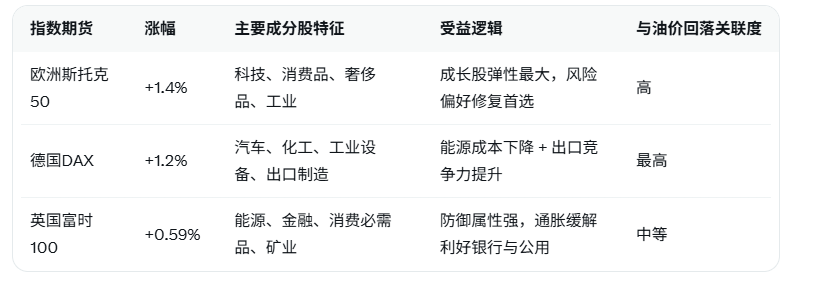
The following table compares the performance and key characteristics of three major index futures (based on the latest market data):
In the short term, the rebound may continue, but volatility remains high. While geopolitical tensions have improved marginally, uncertainty persists, and oil prices, inflation, and the path of global central banks may repeatedly cause disturbances. European stock markets are sensitive to external factors and are prone to impulsive rallies followed by consolidation. The logic of "buying back at low levels" supports the bottom, but profit-taking pressure should be watched closely.
The medium-term outlook is positive, with strong momentum for recovery in core European assets. A stabilization and rebound in the Eurozone manufacturing PMI, coupled with persistently low energy costs, will strengthen corporate profit expectations. The anticipated acceleration of the ECB's interest rate cut cycle will also support valuation recovery. Key areas to watch: ① Signals of oil price stabilization; ② Eurozone PMI and industrial production data; ③ Forward guidance from the ECB's March policy meeting.
Risk Warnings: 1. Unexpected escalation of geopolitical conflicts leading to a rebound in oil prices and tightening liquidity; 2. Weak global economic data, with both exports and consumption falling short of expectations; 3. Uncertainty surrounding the Federal Reserve's path causing a stronger dollar and a decline in risk appetite.
Editor's Summary : European stock index futures rebounded across the board, with the Stoxx 50 leading the gains at 1.4% , the DAX up 1.2% , and the FTSE 100 up 0.59% . The core drivers were easing geopolitical risks in the Middle East and a significant drop in oil prices. The previously oversold valuation advantage has been validated. In the medium to long term, declining energy costs and expectations of looser monetary policy will support the recovery, but external uncertainties still warrant attention and the possibility of periodic adjustments.
Frequently Asked Questions
1. Question: What is the main trigger for the recent rebound in European stock index futures?
A: The most direct trigger was the easing of geopolitical risks. Trump's statement that "the war with Iran will end soon" quickly alleviated market concerns about a prolonged conflict in the Middle East, causing international oil prices to fall by more than 10% from their highs, and global risk appetite to recover. The safe-haven selling previously triggered by soaring energy prices turned into buying on dips, with Europe, as a high-beta market, showing the greatest resilience, and the Stoxx 50 and DAX leading the gains.
2. Question: Why did the German DAX rebound significantly stronger than the FTSE 100?
A: The DAX constituents are mainly export-oriented manufacturing companies (such as automobiles, chemicals, and industrial equipment). The decline in oil and natural gas prices directly reduces production costs, improving profit expectations and export competitiveness. The FTSE 100, on the other hand, has a higher weighting in energy, financials, and consumer staples. The drop in oil prices is a negative factor for energy stocks, and their stronger defensive characteristics have resulted in a relatively moderate increase.
3. Question: Are current valuations of European stock indices attractive?
A: Valuations have been significantly compressed after the previous sharp decline, with the Stoxx 50 and DAX currently at relatively low historical P/E ratios. Given the large correction in the previous period, coupled with expectations of stable oil prices and the ECB's easing policy, there is substantial room for recovery, making them highly attractive options.
4. Question: What are the main risks of increased short-term volatility in the market?
A: Geopolitical uncertainties persist, potentially leading to fluctuating oil prices; foreign investors may face profit-taking pressure; a hawkish stance from the Federal Reserve would weaken the dollar and suppress risk assets. Volatility is increasing, but the logic of bottom-fishing provides support.
5. Question: How can investors seize the allocation opportunities presented by this rebound?
A: Short-term volatility is expected. Prioritize left-side positioning in growth and export-oriented core assets (such as technology, luxury goods, and industrial leaders in the Stoxx 50, or automotive and chemical stocks in the DAX). Risk can be diversified through relevant ETFs. Dynamically monitor oil price stabilization, Eurozone PMI, and ECB guidance as signals for adding to or reducing positions. Maintain overall position control and capture opportunities for medium-term valuation repair and earnings improvement.
The recent rebound in European stock index futures was primarily driven by a confluence of positive factors:
1. Marginal easing of geopolitical risks (most direct trigger)
Trump's recent statement that "the war with Iran will end soon" has eased market concerns about an escalation of the Middle East conflict. International oil prices (Brent crude) have fallen more than 10% from their highs (latest price around $91-94 per barrel ), and global risk aversion has cooled. The panic selling previously triggered by the surge in oil prices has turned into bargain hunting, and the high-beta market in Europe has become more volatile.
2. Easing energy cost pressures benefit export-oriented economies. Manufacturing powerhouses like Germany, heavily reliant on energy imports, see their production costs directly reduced by falling oil and natural gas prices, boosting profit expectations. Export-oriented companies in the automotive, chemical, and industrial equipment sectors within the DAX index are particularly benefiting, with futures prices showing the strongest rebound.
3. The FTSE 100's defensive characteristics are highlighted. The FTSE 100 constituents have a high weighting in energy, financials, and consumer staples. While the decline in oil prices is somewhat negative for energy stocks, it also eases inflationary pressures, which could help the Bank of England to ease monetary policy sooner, supporting the valuation recovery of bank and utility stocks. The relatively moderate gains reflect its defensive nature.
4. Technical Repair and Fund Replenishment: Previous geopolitical tensions led to an oversold European stock index, compressing valuations to low levels. A shift in risk appetite triggered short covering and bargain-hunting inflows. The Stoxx 50, representing pan-European growth stocks, showed the strongest resilience and led the gains.
The following table compares the performance and key characteristics of three major index futures (based on the latest market data):
In the short term, the rebound may continue, but volatility remains high. While geopolitical tensions have improved marginally, uncertainty persists, and oil prices, inflation, and the path of global central banks may repeatedly cause disturbances. European stock markets are sensitive to external factors and are prone to impulsive rallies followed by consolidation. The logic of "buying back at low levels" supports the bottom, but profit-taking pressure should be watched closely.
The medium-term outlook is positive, with strong momentum for recovery in core European assets. A stabilization and rebound in the Eurozone manufacturing PMI, coupled with persistently low energy costs, will strengthen corporate profit expectations. The anticipated acceleration of the ECB's interest rate cut cycle will also support valuation recovery. Key areas to watch: ① Signals of oil price stabilization; ② Eurozone PMI and industrial production data; ③ Forward guidance from the ECB's March policy meeting.
Risk Warnings: 1. Unexpected escalation of geopolitical conflicts leading to a rebound in oil prices and tightening liquidity; 2. Weak global economic data, with both exports and consumption falling short of expectations; 3. Uncertainty surrounding the Federal Reserve's path causing a stronger dollar and a decline in risk appetite.
Editor's Summary : European stock index futures rebounded across the board, with the Stoxx 50 leading the gains at 1.4% , the DAX up 1.2% , and the FTSE 100 up 0.59% . The core drivers were easing geopolitical risks in the Middle East and a significant drop in oil prices. The previously oversold valuation advantage has been validated. In the medium to long term, declining energy costs and expectations of looser monetary policy will support the recovery, but external uncertainties still warrant attention and the possibility of periodic adjustments.
Frequently Asked Questions
1. Question: What is the main trigger for the recent rebound in European stock index futures?
A: The most direct trigger was the easing of geopolitical risks. Trump's statement that "the war with Iran will end soon" quickly alleviated market concerns about a prolonged conflict in the Middle East, causing international oil prices to fall by more than 10% from their highs, and global risk appetite to recover. The safe-haven selling previously triggered by soaring energy prices turned into buying on dips, with Europe, as a high-beta market, showing the greatest resilience, and the Stoxx 50 and DAX leading the gains.
2. Question: Why did the German DAX rebound significantly stronger than the FTSE 100?
A: The DAX constituents are mainly export-oriented manufacturing companies (such as automobiles, chemicals, and industrial equipment). The decline in oil and natural gas prices directly reduces production costs, improving profit expectations and export competitiveness. The FTSE 100, on the other hand, has a higher weighting in energy, financials, and consumer staples. The drop in oil prices is a negative factor for energy stocks, and their stronger defensive characteristics have resulted in a relatively moderate increase.
3. Question: Are current valuations of European stock indices attractive?
A: Valuations have been significantly compressed after the previous sharp decline, with the Stoxx 50 and DAX currently at relatively low historical P/E ratios. Given the large correction in the previous period, coupled with expectations of stable oil prices and the ECB's easing policy, there is substantial room for recovery, making them highly attractive options.
4. Question: What are the main risks of increased short-term volatility in the market?
A: Geopolitical uncertainties persist, potentially leading to fluctuating oil prices; foreign investors may face profit-taking pressure; a hawkish stance from the Federal Reserve would weaken the dollar and suppress risk assets. Volatility is increasing, but the logic of bottom-fishing provides support.
5. Question: How can investors seize the allocation opportunities presented by this rebound?
A: Short-term volatility is expected. Prioritize left-side positioning in growth and export-oriented core assets (such as technology, luxury goods, and industrial leaders in the Stoxx 50, or automotive and chemical stocks in the DAX). Risk can be diversified through relevant ETFs. Dynamically monitor oil price stabilization, Eurozone PMI, and ECB guidance as signals for adding to or reducing positions. Maintain overall position control and capture opportunities for medium-term valuation repair and earnings improvement.
- Risk Warning and Disclaimer
- The market involves risk, and trading may not be suitable for all investors. This article is for reference only and does not constitute personal investment advice, nor does it take into account certain users’ specific investment objectives, financial situation, or other needs. Any investment decisions made based on this information are at your own risk.