Gold is experiencing a geopolitical bonanza, with the gold-oil seesaw pattern revealing significant investment opportunities.
2026-03-10 21:45:11
Gold prices held steady during the Asian and European sessions on Tuesday (March 10), currently up 1.65% at $5,221 per ounce. A weaker dollar and a lackluster rebound in US Treasury yields provided support for gold prices.
The easing of inflation concerns is mainly due to the decline in international crude oil prices. On Tuesday, US crude oil rebounded by more than 5% during the Asian and European sessions, but it is still more than 25% lower than Monday's high of 119.48. As a result, gold and crude oil are currently showing a seesaw trend with one rising and the other falling.
The inverse link between gold and crude oil lies in the fact that rising oil prices push up inflation expectations, high inflation expectations drive up global government bond yields, and high government bond yields increase the cost of holding gold.
On September 9, Trump publicly stated that the military operation would be "very soon" and announced the lifting of some oil-related sanctions. He emphasized that if Iran does anything to obstruct the flow of oil through the Strait of Hormuz, they will be attacked by the United States twenty times more severely than they are currently facing. He said that the U.S. will destroy those easily destroyed targets, making it virtually impossible for Iran to rebuild as a country.
Trump later stated that he did not rule out conditional negotiations with Iran, but his lack of confidence in Iran's new Supreme Leader meant that the outcome of the negotiations remained highly uncertain.
But U.S. Defense Secretary Hergsays said that actions are being taken according to our timetable and that the U.S. will not end the war against Iran unless the enemy is defeated. In the past 24 hours, the number of missiles launched by Iran has hit a record low. The U.S. military's goal is to destroy Iran's missile and defense industrial bases. Iranian proxies have been defeated and rendered useless. If Iran takes any action to block the flow of oil through the Strait of Hormuz, they will suffer a heavier blow than ever before.
From the night of September 9th to the early morning of September 10th local time, the Israeli military launched a series of airstrikes on Tehran, the capital of Iran, targeting underground facilities of the Iranian Islamic Revolutionary Guard Corps used for ballistic missile research and production. US Defense Secretary Hergsays issued a strong signal, stating that if Iran obstructs oil transport through the Strait of Hormuz, it will face unprecedented retaliation; the US is proceeding according to its own timetable and will not cease its actions against Iran until its adversary is defeated; and that Iran's missile launches in the past 24 hours reached a record low.
On the afternoon of October 10th local time, the Iranian Islamic Revolutionary Guard Corps issued a statement announcing the official commencement of the 34th round of Operation True Commitment 4. In this operation, Iran used precision-guided missiles carrying warheads exceeding one ton to strike US and Israeli military bases and related military support facilities.
While Trump has expressed a desire for de-escalation in the conflict, the reality is that Israeli, American, and Iranian forces are still conducting military operations. However, there are calls for a firm stance on allowing passage through the Strait of Hormuz, which has eased the crisis surrounding oil transportation.
Crude oil prices surged on Monday due to geopolitical conflicts in the Middle East. Tanker passage through the Strait of Hormuz was restricted, and major oil-producing countries such as Saudi Arabia, the UAE, Kuwait, and Iraq were forced to cut production due to rapidly saturated storage facilities, fueling expectations of a tightening global crude oil supply.
In addition, a drone attack on facilities in the UAE's Ruwais Industrial Zone caused a fire, affecting the country's largest refinery with a processing capacity of over 900,000 barrels per day;
Saudi Arabia had previously shut down its largest oil refinery, and Qatar's liquefied natural gas export facilities were also closed due to the attack, putting continued pressure on the Middle East's energy supply chain.
In addition to the shipping capacity issue in the Strait of Hormuz, crude oil production cuts seem unavoidable due to the backlog of crude oil inventories in Gulf countries and the bombing of oil fields. Crude oil is currently facing two major problems: shipping capacity and production volume.
However, since the easing of tensions in the Strait of Hormuz has a major impact on crude oil prices, the current situation, combined with the US's statements on the Strait of Hormuz and the crude oil production cuts by various countries, is generally putting downward pressure on oil prices.
Rising risks to crude oil supply could reignite inflation expectations, thereby affecting the pace of interest rate cuts by the Federal Reserve and directly influencing gold pricing. Meanwhile, ongoing geopolitical tensions in the Middle East will also boost safe-haven buying of gold.
Going forward, key factors to watch include the Strait of Hormuz's navigation situation, changes in oil production from oil-producing countries, and the Federal Reserve's policy statements. These three factors will determine the short-term trend and trading opportunities for gold and oil.
From a technical perspective, spot gold has broken upwards after holding the 5130 level for several consecutive days. As mentioned in previous articles, the ongoing war but the easing of the Strait of Hormuz issue will provide a unique sweet spot for gold prices. Gold will start to rise under these conditions of escalating geopolitics but limited gains in oil prices.
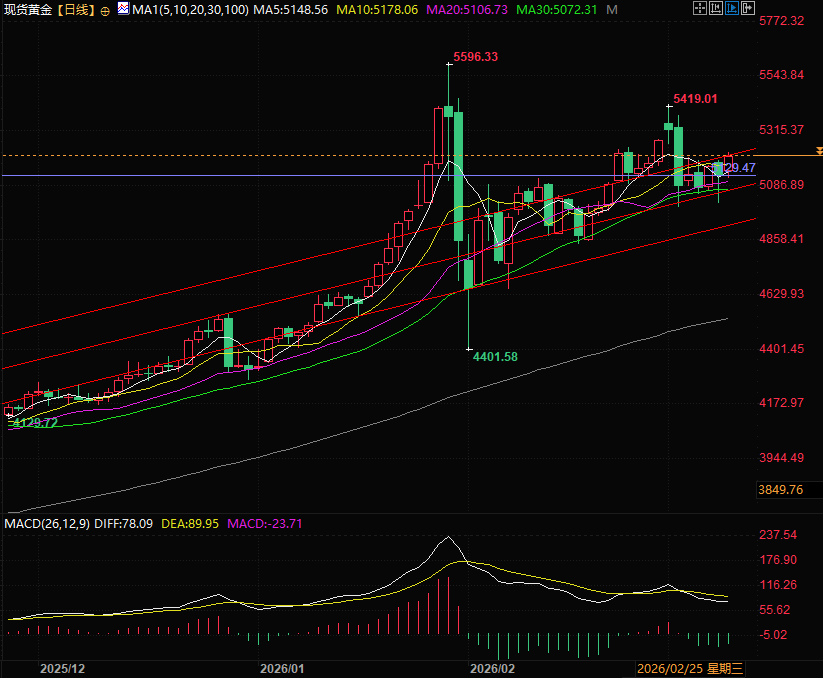
(Spot gold daily chart, source: FX678)
Crude oil remains bullish after retracing to the 5-day moving average, but the gains may be limited by the tough stance of the United States. Technically, after reaching the measured gains of the rising wedge pattern, crude oil has entered a consolidation phase, with support around 84.
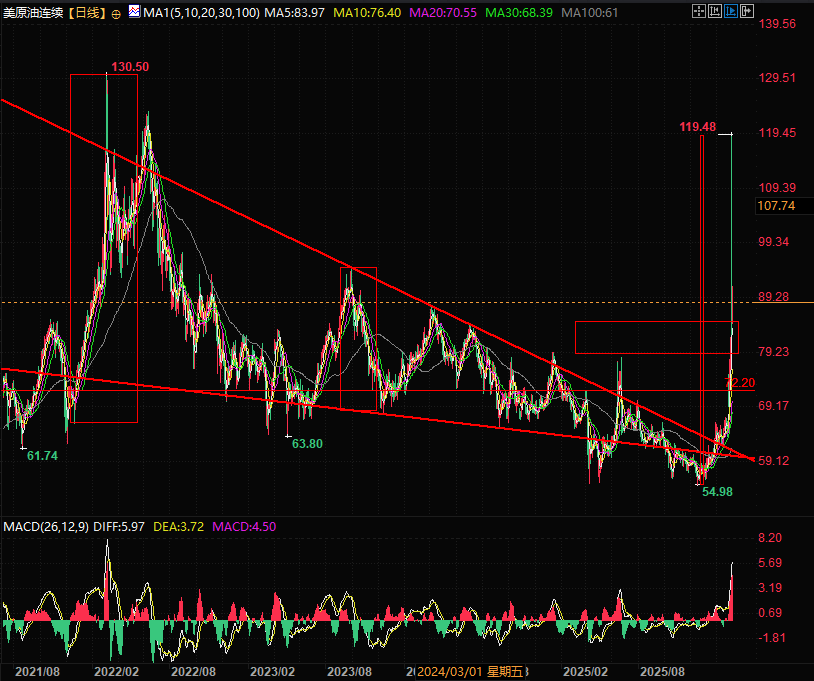
(US crude oil futures daily chart, source: FX678)
At 21:36 Beijing time, spot gold was trading at $5,211 per ounce, and US crude oil futures were trading at $88.42 per barrel.
The easing of inflation concerns is mainly due to the decline in international crude oil prices. On Tuesday, US crude oil rebounded by more than 5% during the Asian and European sessions, but it is still more than 25% lower than Monday's high of 119.48. As a result, gold and crude oil are currently showing a seesaw trend with one rising and the other falling.
The inverse link between gold and crude oil lies in the fact that rising oil prices push up inflation expectations, high inflation expectations drive up global government bond yields, and high government bond yields increase the cost of holding gold.
The war may continue, but the Strait of Hormuz is expected to be open to traffic.
On September 9, Trump publicly stated that the military operation would be "very soon" and announced the lifting of some oil-related sanctions. He emphasized that if Iran does anything to obstruct the flow of oil through the Strait of Hormuz, they will be attacked by the United States twenty times more severely than they are currently facing. He said that the U.S. will destroy those easily destroyed targets, making it virtually impossible for Iran to rebuild as a country.
Trump later stated that he did not rule out conditional negotiations with Iran, but his lack of confidence in Iran's new Supreme Leader meant that the outcome of the negotiations remained highly uncertain.
But U.S. Defense Secretary Hergsays said that actions are being taken according to our timetable and that the U.S. will not end the war against Iran unless the enemy is defeated. In the past 24 hours, the number of missiles launched by Iran has hit a record low. The U.S. military's goal is to destroy Iran's missile and defense industrial bases. Iranian proxies have been defeated and rendered useless. If Iran takes any action to block the flow of oil through the Strait of Hormuz, they will suffer a heavier blow than ever before.
From the night of September 9th to the early morning of September 10th local time, the Israeli military launched a series of airstrikes on Tehran, the capital of Iran, targeting underground facilities of the Iranian Islamic Revolutionary Guard Corps used for ballistic missile research and production. US Defense Secretary Hergsays issued a strong signal, stating that if Iran obstructs oil transport through the Strait of Hormuz, it will face unprecedented retaliation; the US is proceeding according to its own timetable and will not cease its actions against Iran until its adversary is defeated; and that Iran's missile launches in the past 24 hours reached a record low.
On the afternoon of October 10th local time, the Iranian Islamic Revolutionary Guard Corps issued a statement announcing the official commencement of the 34th round of Operation True Commitment 4. In this operation, Iran used precision-guided missiles carrying warheads exceeding one ton to strike US and Israeli military bases and related military support facilities.
While Trump has expressed a desire for de-escalation in the conflict, the reality is that Israeli, American, and Iranian forces are still conducting military operations. However, there are calls for a firm stance on allowing passage through the Strait of Hormuz, which has eased the crisis surrounding oil transportation.
Crude oil price surge hindered by Strait of Hormuz + attack on energy facilities
Crude oil prices surged on Monday due to geopolitical conflicts in the Middle East. Tanker passage through the Strait of Hormuz was restricted, and major oil-producing countries such as Saudi Arabia, the UAE, Kuwait, and Iraq were forced to cut production due to rapidly saturated storage facilities, fueling expectations of a tightening global crude oil supply.
In addition, a drone attack on facilities in the UAE's Ruwais Industrial Zone caused a fire, affecting the country's largest refinery with a processing capacity of over 900,000 barrels per day;
Saudi Arabia had previously shut down its largest oil refinery, and Qatar's liquefied natural gas export facilities were also closed due to the attack, putting continued pressure on the Middle East's energy supply chain.
In addition to the shipping capacity issue in the Strait of Hormuz, crude oil production cuts seem unavoidable due to the backlog of crude oil inventories in Gulf countries and the bombing of oil fields. Crude oil is currently facing two major problems: shipping capacity and production volume.
However, since the easing of tensions in the Strait of Hormuz has a major impact on crude oil prices, the current situation, combined with the US's statements on the Strait of Hormuz and the crude oil production cuts by various countries, is generally putting downward pressure on oil prices.
Summary and Technical Analysis:
Rising risks to crude oil supply could reignite inflation expectations, thereby affecting the pace of interest rate cuts by the Federal Reserve and directly influencing gold pricing. Meanwhile, ongoing geopolitical tensions in the Middle East will also boost safe-haven buying of gold.
Going forward, key factors to watch include the Strait of Hormuz's navigation situation, changes in oil production from oil-producing countries, and the Federal Reserve's policy statements. These three factors will determine the short-term trend and trading opportunities for gold and oil.
From a technical perspective, spot gold has broken upwards after holding the 5130 level for several consecutive days. As mentioned in previous articles, the ongoing war but the easing of the Strait of Hormuz issue will provide a unique sweet spot for gold prices. Gold will start to rise under these conditions of escalating geopolitics but limited gains in oil prices.
(Spot gold daily chart, source: FX678)
Crude oil remains bullish after retracing to the 5-day moving average, but the gains may be limited by the tough stance of the United States. Technically, after reaching the measured gains of the rising wedge pattern, crude oil has entered a consolidation phase, with support around 84.
(US crude oil futures daily chart, source: FX678)
At 21:36 Beijing time, spot gold was trading at $5,211 per ounce, and US crude oil futures were trading at $88.42 per barrel.
- Risk Warning and Disclaimer
- The market involves risk, and trading may not be suitable for all investors. This article is for reference only and does not constitute personal investment advice, nor does it take into account certain users’ specific investment objectives, financial situation, or other needs. Any investment decisions made based on this information are at your own risk.