BMI forecasts that the average silver price will surge to $93 per ounce in 2026, with strong investment demand offsetting weakness in solar-powered jewelry.
2026-03-12 13:29:11
According to APP, Fitch's research arm, BMI, predicts the average silver price in 2026 will be around $93 per ounce. This forecast is primarily attributed to strong investment demand effectively offsetting demand losses in the solar panel and jewelry sectors caused by high prices. Latest market data shows that the current spot silver price has stabilized around $88 per ounce, a significant increase from the 2025 average of approximately $40, highlighting the overall bullish sentiment in the precious metals sector. BMI's forecast is far higher than the market consensus of around $80 per ounce in 2026, reflecting institutional optimism based on both continued supply shortages and investor enthusiasm.
Further analysis reveals that the core reason for this upward revision of the forecast lies in the fact that the global silver market has faced a structural deficit for the sixth consecutive year. Futures market observations show that although the physical tightness has eased recently, investment funds continue to flow into ETFs and physical silver bars, driving price resilience. Solar panels, one of the largest industrial uses of silver, have seen some projects postpone procurement due to high prices; jewelry demand is also affected by the slowdown in high-end consumption. However, strong investment demand has compensated for these gaps. BMI explicitly states: "Although the physical tightness in the silver market has eased recently, we believe that even though the current Middle East conflict poses a downside risk to industrial demand for silver, the broader bull market in precious metals will still provide temporary support for silver prices." This statement echoes the recent escalation of the Middle East situation; the conflict may affect the supply chain, but it has not changed the overall bullish trend.
From a medium- to long-term perspective, the high price of silver will profoundly impact downstream industries. Rising costs in the solar energy and electronics industries may slow the pace of green transformation, while major Asian countries, as key consumer markets, may seek alternative materials in a high-price environment as their industrial recovery progresses. Historical data shows that during similar precious metal bull market cycles, silver often maintains high-level fluctuations driven by investment, even when industrial demand is under short-term pressure. While the current conflict in the Middle East poses a downside risk to industrial demand, global monetary easing and geopolitical uncertainty continue to support safe-haven buying. If the deficit continues to widen, prices could easily break through the $100 mark; conversely, if the conflict eases or the economic soft landing accelerates, the risk of a correction also exists. Market participants need to closely monitor inventory reports, changes in ETF holdings, and the Federal Reserve's policy dynamics, as these factors will directly determine the price path in 2026.
To clearly compare forecasts from different institutions, the following table presents key data:
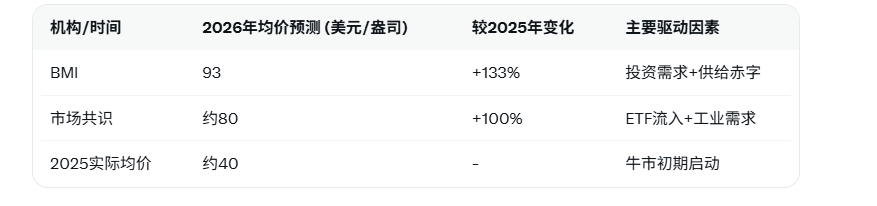
The above data highlights the divergence in silver price forecasts , with the BMI's optimistic stance leading the market, emphasizing the decisive role of investor sentiment in prices. In the short term, an escalation of conflict in the Middle East could put pressure on industrial demand, potentially limiting price increases; however, supported by the precious metals bull market, the $93 target remains achievable.
Overall, this BMI forecast reflects the dynamic balance in the silver market between tight supply and investment enthusiasm. Asian importers and investors need to plan ahead to cope with price fluctuations.
Editor's Summary : The structural deficit in the silver market and investment demand will dominate pricing in 2026. Although the high BMI forecast leads the consensus, Middle East risks and industrial weakness still pose uncertainties, requiring data-driven strategies to achieve a balance of risks.
Frequently Asked Questions
Question 1: Why did BMI raise its 2026 average silver price forecast to $93 per ounce?
Answer: BMI believes that strong investment demand will continue to offset the suppressive effect of high prices in the solar panel and jewelry sectors. The global silver market has been in deficit for six consecutive years, dominated by ETF inflows and safe-haven buying, preventing rapid supply expansion. Even if the Middle East conflict affects industrial purchasing, the precious metals bull market will still provide support, an optimistic assessment far exceeding previous low market expectations.
Question 2: Why is the market consensus only around $80/ounce, which differs from the BMI forecast?
Answer: The consensus is based on data from institutions such as JP Morgan, considering a double growth rate after a base of approximately $40 in 2025, but it does not fully account for persistent deficits and investment enthusiasm. The BMI emphasizes structural shortages and bull market resilience, leading to divergent forecasts. The current spot price is around $88, indicating that the market is gradually approaching higher levels.
Question 3: What are the specific downside risks to industrial demand for silver from the Middle East conflict?
Answer: The conflict may disrupt supply chains and affect silver procurement for industrial applications such as solar energy, leading to a short-term decline in demand. However, BMI indicates that this will not change the overall bullish support. Once physical supply shortages ease, investment funds will continue to dominate prices; the conflict is only a temporary variable rather than a trend reversal factor.
Question 4: What are the actual impacts of high silver prices on the solar panel and jewelry sectors?
Answer: High prices have driven up manufacturing costs, leading to delays in some solar energy projects or a shift towards alternative materials; jewelry consumption has shifted towards lower-priced options, resulting in weakened demand. However, strong investment demand has compensated for the shortfall, maintaining market balance. While industrial activity in major Asian countries is under cost pressure, it may accelerate technological innovation in the long term to reduce reliance on silver.
Question 5: How should investors deal with the uncertainty surrounding silver price forecasts for 2026?
Answer: It is recommended to develop a strategy based on ETF holdings and futures data. In the short term, pay attention to developments in the Middle East and Federal Reserve policies, while targeting a $93 target range in the medium term. High-level fluctuations are likely; if the deficit widens, consider buying on dips; conversely, if the economic soft landing accelerates, stop-loss orders should be placed. Overall, the precious metals bull market provides a buffer, but diversification is necessary to hedge against fluctuations in industrial demand.
Further analysis reveals that the core reason for this upward revision of the forecast lies in the fact that the global silver market has faced a structural deficit for the sixth consecutive year. Futures market observations show that although the physical tightness has eased recently, investment funds continue to flow into ETFs and physical silver bars, driving price resilience. Solar panels, one of the largest industrial uses of silver, have seen some projects postpone procurement due to high prices; jewelry demand is also affected by the slowdown in high-end consumption. However, strong investment demand has compensated for these gaps. BMI explicitly states: "Although the physical tightness in the silver market has eased recently, we believe that even though the current Middle East conflict poses a downside risk to industrial demand for silver, the broader bull market in precious metals will still provide temporary support for silver prices." This statement echoes the recent escalation of the Middle East situation; the conflict may affect the supply chain, but it has not changed the overall bullish trend.
From a medium- to long-term perspective, the high price of silver will profoundly impact downstream industries. Rising costs in the solar energy and electronics industries may slow the pace of green transformation, while major Asian countries, as key consumer markets, may seek alternative materials in a high-price environment as their industrial recovery progresses. Historical data shows that during similar precious metal bull market cycles, silver often maintains high-level fluctuations driven by investment, even when industrial demand is under short-term pressure. While the current conflict in the Middle East poses a downside risk to industrial demand, global monetary easing and geopolitical uncertainty continue to support safe-haven buying. If the deficit continues to widen, prices could easily break through the $100 mark; conversely, if the conflict eases or the economic soft landing accelerates, the risk of a correction also exists. Market participants need to closely monitor inventory reports, changes in ETF holdings, and the Federal Reserve's policy dynamics, as these factors will directly determine the price path in 2026.
To clearly compare forecasts from different institutions, the following table presents key data:
The above data highlights the divergence in silver price forecasts , with the BMI's optimistic stance leading the market, emphasizing the decisive role of investor sentiment in prices. In the short term, an escalation of conflict in the Middle East could put pressure on industrial demand, potentially limiting price increases; however, supported by the precious metals bull market, the $93 target remains achievable.
Overall, this BMI forecast reflects the dynamic balance in the silver market between tight supply and investment enthusiasm. Asian importers and investors need to plan ahead to cope with price fluctuations.
Editor's Summary : The structural deficit in the silver market and investment demand will dominate pricing in 2026. Although the high BMI forecast leads the consensus, Middle East risks and industrial weakness still pose uncertainties, requiring data-driven strategies to achieve a balance of risks.
Frequently Asked Questions
Question 1: Why did BMI raise its 2026 average silver price forecast to $93 per ounce?
Answer: BMI believes that strong investment demand will continue to offset the suppressive effect of high prices in the solar panel and jewelry sectors. The global silver market has been in deficit for six consecutive years, dominated by ETF inflows and safe-haven buying, preventing rapid supply expansion. Even if the Middle East conflict affects industrial purchasing, the precious metals bull market will still provide support, an optimistic assessment far exceeding previous low market expectations.
Question 2: Why is the market consensus only around $80/ounce, which differs from the BMI forecast?
Answer: The consensus is based on data from institutions such as JP Morgan, considering a double growth rate after a base of approximately $40 in 2025, but it does not fully account for persistent deficits and investment enthusiasm. The BMI emphasizes structural shortages and bull market resilience, leading to divergent forecasts. The current spot price is around $88, indicating that the market is gradually approaching higher levels.
Question 3: What are the specific downside risks to industrial demand for silver from the Middle East conflict?
Answer: The conflict may disrupt supply chains and affect silver procurement for industrial applications such as solar energy, leading to a short-term decline in demand. However, BMI indicates that this will not change the overall bullish support. Once physical supply shortages ease, investment funds will continue to dominate prices; the conflict is only a temporary variable rather than a trend reversal factor.
Question 4: What are the actual impacts of high silver prices on the solar panel and jewelry sectors?
Answer: High prices have driven up manufacturing costs, leading to delays in some solar energy projects or a shift towards alternative materials; jewelry consumption has shifted towards lower-priced options, resulting in weakened demand. However, strong investment demand has compensated for the shortfall, maintaining market balance. While industrial activity in major Asian countries is under cost pressure, it may accelerate technological innovation in the long term to reduce reliance on silver.
Question 5: How should investors deal with the uncertainty surrounding silver price forecasts for 2026?
Answer: It is recommended to develop a strategy based on ETF holdings and futures data. In the short term, pay attention to developments in the Middle East and Federal Reserve policies, while targeting a $93 target range in the medium term. High-level fluctuations are likely; if the deficit widens, consider buying on dips; conversely, if the economic soft landing accelerates, stop-loss orders should be placed. Overall, the precious metals bull market provides a buffer, but diversification is necessary to hedge against fluctuations in industrial demand.
- Risk Warning and Disclaimer
- The market involves risk, and trading may not be suitable for all investors. This article is for reference only and does not constitute personal investment advice, nor does it take into account certain users’ specific investment objectives, financial situation, or other needs. Any investment decisions made based on this information are at your own risk.