Crude oil trading alert:
2026-03-16 09:12:49
The escalation of tensions in the Middle East over the weekend has drawn significant attention from global energy markets. The US strikes on key Iranian oil export facilities rapidly increased the risk to crude oil supply, causing international oil prices to surge in early trading. WTI crude oil prices opened up about 3% before retreating, and are currently trading near $98 per barrel , once again approaching the psychologically important $100 mark .
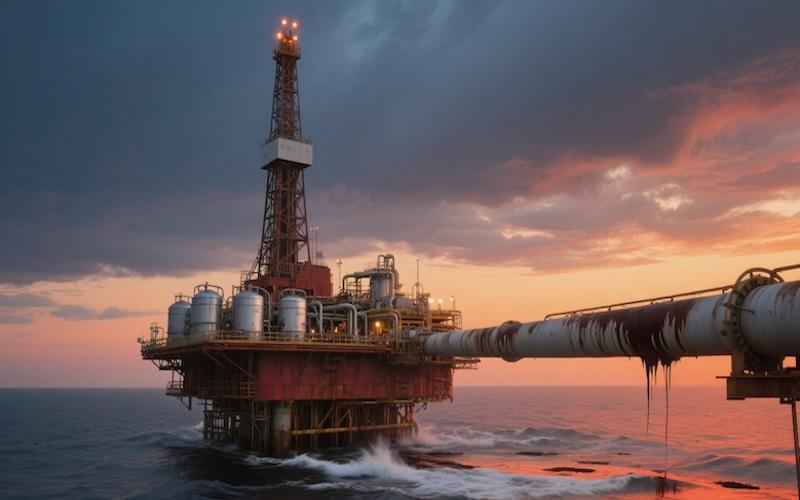
One of the core focal points of this conflict is Iran's oil export hub on Kharg Island. This region is one of Iran's most important energy export bases, with the market widely believing that approximately 90% of Iran's crude oil exports are transported through it . Following the attack on this facility, the market immediately began reassessing the risks to crude oil supplies in the Middle East.
In response, Iran launched retaliatory actions in the surrounding region, stating that these actions were aimed at the U.S. military presence in the area. This situation quickly escalated market uncertainty, causing investors to re-price geopolitical risk premiums.
Meanwhile, the most pressing issue for the energy market remains the Strait of Hormuz. This vital waterway connecting the Persian Gulf and the Gulf of Oman is one of the most critical routes for global energy transportation. Market estimates suggest that the Strait of Hormuz handles approximately 20% of global seaborne crude oil shipments , and any disruption to this route could significantly strain global energy supplies.
US President Donald Trump recently called on allies to help protect shipping safety in the Strait of Hormuz. Market sources indicate that the White House may release a related security plan in the coming days, further increasing investor concern about risks in energy transportation.
Despite heightened market anxieties, some energy officials remain relatively optimistic about the situation. Market surveys indicate that U.S. Energy Secretary Chris Wright stated he expects the conflict to gradually de-escalate "in the coming weeks." Once the situation calms, global energy supplies are expected to recover, and energy prices may gradually decline.
However, judging from the current market trading situation, investors are more concerned about short-term supply shocks. With the continued tension in the Middle East, the market generally believes that the risk of crude oil supply disruptions still exists, and oil prices may remain volatile at high levels in the short term.
From a technical perspective, WTI crude oil maintains a clear upward trend on the daily chart. After breaking through the key resistance level of $90, bullish momentum has continued to strengthen. Currently, the price is approaching the key psychological level of $100 , which is also a significant resistance area for the market. If the price can effectively break through and hold above $100, the market may see further gains towards the $110 to $120 range .
On the 4-hour chart, WTI crude oil is currently trading at approximately $98.89 , with the overall technical structure still biased towards a bullish trend. The price is currently clearly trading above the 20, 100, and 200-period simple moving averages, indicating that the short-term trend remains strong.
Specifically, the 20-period moving average is currently around $91.55 and has clearly crossed above the medium- and long-term moving averages, forming a bullish alignment. The 100-period moving average is around $77.45 , while the 200-period moving average is around $70.54 ; all three moving averages exhibit a typical bullish trend alignment.
In terms of momentum indicators, the Momentum indicator continues to operate above the midline and maintain an upward trend, indicating that the market's upward momentum is strengthening. Meanwhile, the RSI indicator is currently around 62 , still within a relatively healthy range, suggesting that buying power remains dominant and that oil prices still have room for further upward movement.
From a key support perspective, the first short-term support level is around $91.55 , which corresponds to the 20-period moving average and is also a significant support area for the current upward trend. If oil prices remain above this level, the bullish structure will remain stable. If a deeper pullback occurs, the next support areas may be around $77.45 and $70.54 .
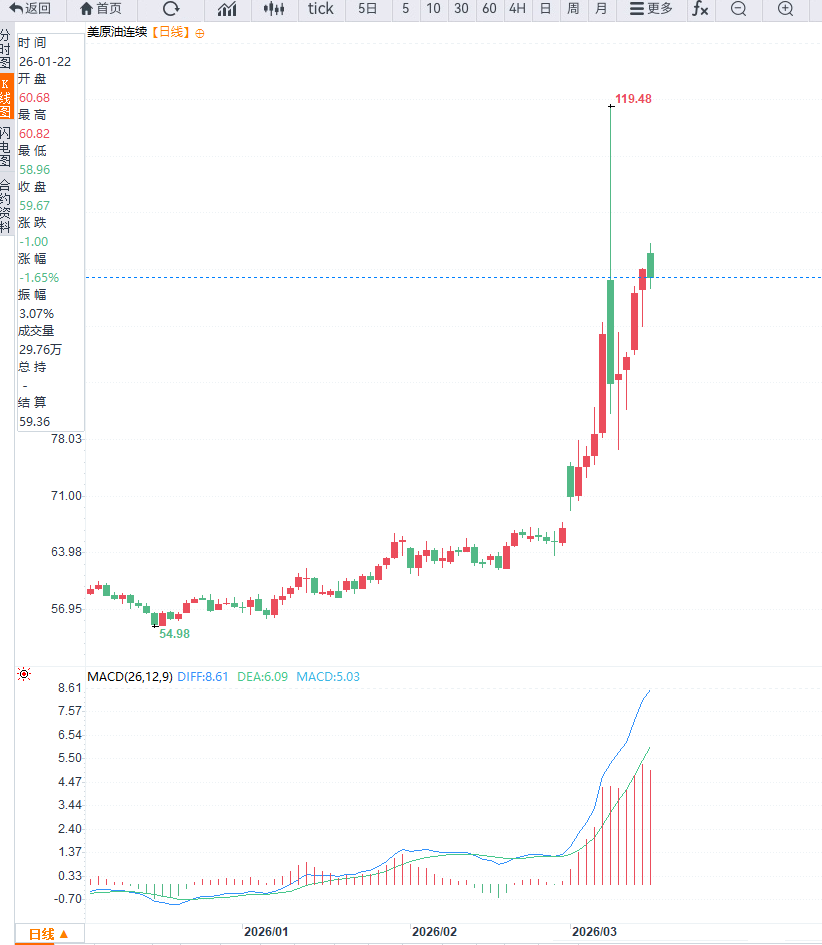
Overall, as long as oil prices remain above $91, the market could still challenge the $100 mark again. Once this key level is broken and held, oil prices could further test the historical high area near $120 .
Editor's Summary : The core driver of the current rise in international oil prices is not demand growth, but rather the return of geopolitical risk premiums to the market. Escalating tensions in the Middle East have significantly increased uncertainty in global energy supply, with the security of key shipping routes becoming a major market focus. In the short term, the $100 mark will be a crucial watershed for oil prices. If geopolitical risks persist, the probability of oil prices breaking through this level will increase significantly, potentially pushing prices further towards $110 or even $120. However, if the situation shows signs of easing, the market may experience a period of correction. Overall, the current crude oil market has entered a phase of high volatility, and investors need to simultaneously monitor changes in geopolitical risks, the global energy supply situation, and the impact of the macroeconomic environment on the demand side.
Frequently Asked Questions (FAQ)
1. Why is the Strait of Hormuz so important to global oil prices?
The Strait of Hormuz is one of the world's most important energy transport routes, connecting the Persian Gulf and the Gulf of Oman, and is a crucial waterway for Middle Eastern oil exports to the international market. Market statistics indicate that the strait handles approximately 20% of global seaborne crude oil transport and is also a vital route for liquefied natural gas (LNG) transport. Many major oil-producing countries, including Saudi Arabia, Iraq, the UAE, and Kuwait, rely on this passage to export energy to the global market. Due to the massive volume of transport, any disruption to shipping or security risks in the Strait of Hormuz can rapidly impact global energy supplies. The market typically prices oil prices in advance for such risks, creating a so-called "geopolitical risk premium." Historically, escalations of tensions in the Middle East have often been accompanied by significant increases in oil prices. Furthermore, the limited availability of alternative transport routes is another key reason for the strait's importance. While some countries possess land-based oil pipelines, their transport capacity is far from sufficient to completely replace the strait's transport. Therefore, any disruption to the strait often triggers rapid supply concerns in the global energy market, driving up oil prices.
2. How do Middle East conflicts typically affect international oil prices?
The Middle East is one of the world's most important energy-producing regions, with a large amount of global crude oil reserves concentrated there. Therefore, any conflict or escalation of tensions in the Middle East often leads to market concerns about disruptions to crude oil supply, driving up oil prices. This impact is primarily transmitted through two channels. First, there is the actual supply risk. If the conflict directly affects oil fields, refining facilities, or export ports, crude oil supply may decrease, directly pushing up prices. Second, there are changes in market expectations. Even if supply is not immediately affected, the market may pre-indulge in potential risks, creating a risk premium. Furthermore, financial market flows can exacerbate oil price volatility. When risk sentiment rises, investment funds often flow into commodity assets such as energy markets to hedge against inflation or geopolitical risks. This capital flow can also drive up oil prices. Therefore, during periods of tension in the Middle East, oil prices tend to be highly volatile, with the market not only focusing on actual supply conditions but also closely monitoring political and military developments.
3. What does it mean that WTI oil prices are close to $100?
WTI crude oil prices approaching $100 typically carry significant market implications. First, $100 is a key psychological level, considered a crucial technical and sentiment dividing line by many investors and trading institutions. Market sentiment often shifts noticeably when oil prices approach or break through this level. Second, oil prices above $100 generally indicate a tighter global energy market supply. In past market cycles, oil prices reaching this level have often been accompanied by geopolitical risks, supply disruptions, or strong demand. Furthermore, high oil prices can also impact the global economy. Rising energy prices can push up inflation, increasing energy costs for businesses and consumers, thus affecting economic growth expectations. Therefore, policymakers worldwide typically monitor oil price movements closely. For investors, oil prices approaching $100 suggest potentially increased market volatility and more trading opportunities. However, in a highly volatile environment, risk management remains paramount.
4. What factors might influence the short-term trend of the crude oil market?
Short-term crude oil market trends are typically influenced by a combination of factors. One of the most important is geopolitical risk. For example, escalating tensions in the Middle East, policy changes in major oil-producing countries, or security issues along key transportation routes can all directly impact oil prices. Secondly, global supply and demand are crucial. Strong global economic growth and increased energy demand often lead to higher oil prices; conversely, slowing economic growth and decreased energy demand can cause prices to fall. Inventory data is also a significant factor influencing short-term oil prices. For instance, changes in US crude oil inventories often affect market assessments of supply and demand balance. A sustained decline in inventories usually indicates strong market demand, thus supporting oil prices. Furthermore, financial market factors also influence oil price movements. For example, changes in the US dollar exchange rate, capital flows, and investor risk sentiment can all impact the energy market. Therefore, investors need to consider geopolitical factors, supply and demand dynamics, and the financial market environment simultaneously when analyzing the crude oil market.
5. Is it possible that oil prices will rise to $120 again in the future?
Whether oil prices can rise to $120 depends on several key factors. First, the development of geopolitical tensions. If the situation in the Middle East continues to escalate and has a substantial impact on crude oil supply or transportation, oil prices could rise significantly. Second, global supply and demand. If global energy demand continues to grow while supply growth is limited, the likelihood of rising oil prices will increase. This is especially true when global inventories are low, making the market more vulnerable to supply shocks. Additionally, investment flows will also affect oil prices. If investors continue to allocate funds to the commodities market, the upward momentum for oil prices could be further strengthened. However, it should be noted that high oil prices usually also incentivize more oil-producing countries to increase production, while potentially suppressing some energy demand. Therefore, oil prices often experience a period of adjustment after a significant rise. Overall, if geopolitical risks persist and supply growth remains limited, there is indeed a possibility that oil prices could approach or even break through $120 again in the future.
One of the core focal points of this conflict is Iran's oil export hub on Kharg Island. This region is one of Iran's most important energy export bases, with the market widely believing that approximately 90% of Iran's crude oil exports are transported through it . Following the attack on this facility, the market immediately began reassessing the risks to crude oil supplies in the Middle East.
In response, Iran launched retaliatory actions in the surrounding region, stating that these actions were aimed at the U.S. military presence in the area. This situation quickly escalated market uncertainty, causing investors to re-price geopolitical risk premiums.
Meanwhile, the most pressing issue for the energy market remains the Strait of Hormuz. This vital waterway connecting the Persian Gulf and the Gulf of Oman is one of the most critical routes for global energy transportation. Market estimates suggest that the Strait of Hormuz handles approximately 20% of global seaborne crude oil shipments , and any disruption to this route could significantly strain global energy supplies.
US President Donald Trump recently called on allies to help protect shipping safety in the Strait of Hormuz. Market sources indicate that the White House may release a related security plan in the coming days, further increasing investor concern about risks in energy transportation.
Despite heightened market anxieties, some energy officials remain relatively optimistic about the situation. Market surveys indicate that U.S. Energy Secretary Chris Wright stated he expects the conflict to gradually de-escalate "in the coming weeks." Once the situation calms, global energy supplies are expected to recover, and energy prices may gradually decline.
However, judging from the current market trading situation, investors are more concerned about short-term supply shocks. With the continued tension in the Middle East, the market generally believes that the risk of crude oil supply disruptions still exists, and oil prices may remain volatile at high levels in the short term.
From a technical perspective, WTI crude oil maintains a clear upward trend on the daily chart. After breaking through the key resistance level of $90, bullish momentum has continued to strengthen. Currently, the price is approaching the key psychological level of $100 , which is also a significant resistance area for the market. If the price can effectively break through and hold above $100, the market may see further gains towards the $110 to $120 range .
On the 4-hour chart, WTI crude oil is currently trading at approximately $98.89 , with the overall technical structure still biased towards a bullish trend. The price is currently clearly trading above the 20, 100, and 200-period simple moving averages, indicating that the short-term trend remains strong.
Specifically, the 20-period moving average is currently around $91.55 and has clearly crossed above the medium- and long-term moving averages, forming a bullish alignment. The 100-period moving average is around $77.45 , while the 200-period moving average is around $70.54 ; all three moving averages exhibit a typical bullish trend alignment.
In terms of momentum indicators, the Momentum indicator continues to operate above the midline and maintain an upward trend, indicating that the market's upward momentum is strengthening. Meanwhile, the RSI indicator is currently around 62 , still within a relatively healthy range, suggesting that buying power remains dominant and that oil prices still have room for further upward movement.
From a key support perspective, the first short-term support level is around $91.55 , which corresponds to the 20-period moving average and is also a significant support area for the current upward trend. If oil prices remain above this level, the bullish structure will remain stable. If a deeper pullback occurs, the next support areas may be around $77.45 and $70.54 .
Overall, as long as oil prices remain above $91, the market could still challenge the $100 mark again. Once this key level is broken and held, oil prices could further test the historical high area near $120 .
Editor's Summary : The core driver of the current rise in international oil prices is not demand growth, but rather the return of geopolitical risk premiums to the market. Escalating tensions in the Middle East have significantly increased uncertainty in global energy supply, with the security of key shipping routes becoming a major market focus. In the short term, the $100 mark will be a crucial watershed for oil prices. If geopolitical risks persist, the probability of oil prices breaking through this level will increase significantly, potentially pushing prices further towards $110 or even $120. However, if the situation shows signs of easing, the market may experience a period of correction. Overall, the current crude oil market has entered a phase of high volatility, and investors need to simultaneously monitor changes in geopolitical risks, the global energy supply situation, and the impact of the macroeconomic environment on the demand side.
Frequently Asked Questions (FAQ)
1. Why is the Strait of Hormuz so important to global oil prices?
The Strait of Hormuz is one of the world's most important energy transport routes, connecting the Persian Gulf and the Gulf of Oman, and is a crucial waterway for Middle Eastern oil exports to the international market. Market statistics indicate that the strait handles approximately 20% of global seaborne crude oil transport and is also a vital route for liquefied natural gas (LNG) transport. Many major oil-producing countries, including Saudi Arabia, Iraq, the UAE, and Kuwait, rely on this passage to export energy to the global market. Due to the massive volume of transport, any disruption to shipping or security risks in the Strait of Hormuz can rapidly impact global energy supplies. The market typically prices oil prices in advance for such risks, creating a so-called "geopolitical risk premium." Historically, escalations of tensions in the Middle East have often been accompanied by significant increases in oil prices. Furthermore, the limited availability of alternative transport routes is another key reason for the strait's importance. While some countries possess land-based oil pipelines, their transport capacity is far from sufficient to completely replace the strait's transport. Therefore, any disruption to the strait often triggers rapid supply concerns in the global energy market, driving up oil prices.
2. How do Middle East conflicts typically affect international oil prices?
The Middle East is one of the world's most important energy-producing regions, with a large amount of global crude oil reserves concentrated there. Therefore, any conflict or escalation of tensions in the Middle East often leads to market concerns about disruptions to crude oil supply, driving up oil prices. This impact is primarily transmitted through two channels. First, there is the actual supply risk. If the conflict directly affects oil fields, refining facilities, or export ports, crude oil supply may decrease, directly pushing up prices. Second, there are changes in market expectations. Even if supply is not immediately affected, the market may pre-indulge in potential risks, creating a risk premium. Furthermore, financial market flows can exacerbate oil price volatility. When risk sentiment rises, investment funds often flow into commodity assets such as energy markets to hedge against inflation or geopolitical risks. This capital flow can also drive up oil prices. Therefore, during periods of tension in the Middle East, oil prices tend to be highly volatile, with the market not only focusing on actual supply conditions but also closely monitoring political and military developments.
3. What does it mean that WTI oil prices are close to $100?
WTI crude oil prices approaching $100 typically carry significant market implications. First, $100 is a key psychological level, considered a crucial technical and sentiment dividing line by many investors and trading institutions. Market sentiment often shifts noticeably when oil prices approach or break through this level. Second, oil prices above $100 generally indicate a tighter global energy market supply. In past market cycles, oil prices reaching this level have often been accompanied by geopolitical risks, supply disruptions, or strong demand. Furthermore, high oil prices can also impact the global economy. Rising energy prices can push up inflation, increasing energy costs for businesses and consumers, thus affecting economic growth expectations. Therefore, policymakers worldwide typically monitor oil price movements closely. For investors, oil prices approaching $100 suggest potentially increased market volatility and more trading opportunities. However, in a highly volatile environment, risk management remains paramount.
4. What factors might influence the short-term trend of the crude oil market?
Short-term crude oil market trends are typically influenced by a combination of factors. One of the most important is geopolitical risk. For example, escalating tensions in the Middle East, policy changes in major oil-producing countries, or security issues along key transportation routes can all directly impact oil prices. Secondly, global supply and demand are crucial. Strong global economic growth and increased energy demand often lead to higher oil prices; conversely, slowing economic growth and decreased energy demand can cause prices to fall. Inventory data is also a significant factor influencing short-term oil prices. For instance, changes in US crude oil inventories often affect market assessments of supply and demand balance. A sustained decline in inventories usually indicates strong market demand, thus supporting oil prices. Furthermore, financial market factors also influence oil price movements. For example, changes in the US dollar exchange rate, capital flows, and investor risk sentiment can all impact the energy market. Therefore, investors need to consider geopolitical factors, supply and demand dynamics, and the financial market environment simultaneously when analyzing the crude oil market.
5. Is it possible that oil prices will rise to $120 again in the future?
Whether oil prices can rise to $120 depends on several key factors. First, the development of geopolitical tensions. If the situation in the Middle East continues to escalate and has a substantial impact on crude oil supply or transportation, oil prices could rise significantly. Second, global supply and demand. If global energy demand continues to grow while supply growth is limited, the likelihood of rising oil prices will increase. This is especially true when global inventories are low, making the market more vulnerable to supply shocks. Additionally, investment flows will also affect oil prices. If investors continue to allocate funds to the commodities market, the upward momentum for oil prices could be further strengthened. However, it should be noted that high oil prices usually also incentivize more oil-producing countries to increase production, while potentially suppressing some energy demand. Therefore, oil prices often experience a period of adjustment after a significant rise. Overall, if geopolitical risks persist and supply growth remains limited, there is indeed a possibility that oil prices could approach or even break through $120 again in the future.
- Risk Warning and Disclaimer
- The market involves risk, and trading may not be suitable for all investors. This article is for reference only and does not constitute personal investment advice, nor does it take into account certain users’ specific investment objectives, financial situation, or other needs. Any investment decisions made based on this information are at your own risk.