Iran's new leader's tough stance vs. the US Energy Secretary's optimistic prediction: the Straits blockade continues, and the end of the war remains uncertain.
2026-03-16 09:57:52
As the conflict between the US, Israel, and Iran in the Middle East enters its third week, stark contrasts emerge in the statements from top officials on both sides. US officials predicted on Sunday (March 15) that the war would end within weeks, followed by a decline in oil prices, while Iran's new Supreme Leader, Mojtaba Khamenei, vowed to continue the fight and use the closure of the Strait of Hormuz as a long-term means of exerting pressure.
Global oil supply is facing the largest disruption in history, with Brent crude prices hovering around $100 per barrel. The energy crisis poses a severe test to the world economy.
The Trump administration has called on allies to form a coalition to protect maritime rights, but has not yet received a substantial response, and the prospects for a diplomatic solution remain unclear.
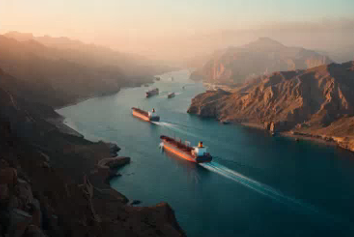
U.S. Energy Secretary Chris Wright stated, "This conflict will certainly end in the coming weeks, or even sooner... After that, we will see supplies return and oil prices fall back." He added that all indications suggest the war will end soon.
President Trump escalated his rhetoric multiple times over the weekend. On Saturday, he stated that the US military strikes had "completely destroyed" most of Khark Island, Iran's main oil export hub, and warned of further action. He said, "We might do it a few more times, just for fun."
On Saturday, Trump called on countries affected by the disruption in the Strait of Hormuz to take joint action to ensure the safety of the shipping lanes on social media. He wrote, "The world's nations that receive oil through the Strait of Hormuz must ensure the safety of this shipping lane, and we will provide substantial assistance!"
According to a report by The Wall Street Journal, citing anonymous U.S. officials, the Trump administration plans to announce as early as this week that several countries have agreed to form a coalition to escort ships in the Strait of Hormuz, but details are still under discussion, including whether the operation will begin before or after hostilities end. The White House has not yet responded to requests for comment.
Iranian Foreign Minister Abbas Araqchi explicitly refuted Trump's claims that Iran wanted negotiations. He stated, "We have never asked for a ceasefire, nor have we ever asked for negotiations. We are ready to defend ourselves at any time, no matter how long it takes." He added that the current situation cannot return to the state before the outbreak of war on February 28.
Iran's Islamic Revolutionary Guard Corps said on Sunday it had launched more missiles at targets inside Israel and three U.S. military bases in the region, calling it the first round of retaliation for the deaths of workers in Iranian industrial areas.
The Israeli military stated it was intercepting incoming missiles. The Saudi Ministry of Defense claimed to have intercepted and shot down 10 drones in Riyadh and eastern regions. The semi-official Fars News Agency reported that the Revolutionary Guard stated it was not involved in the attack.
The Strait of Hormuz (which carries about one-fifth of the world's oil shipments) is effectively closed to most shipping. Although the Iranian Foreign Ministry claims that some vessels may still be able to pass through if coordinated with the navy, international shipping companies are generally avoiding the risk.
The International Energy Agency (IEA) said on Sunday that its emergency oil reserves would soon be released into the market, with member countries pledging to provide 411.9 million barrels to mitigate the supply shock.
On Saturday, crude oil loading operations at a key global ship bunkering hub in the UAE were suspended due to a drone attack. Meanwhile, Iran's Revolutionary Guard continued its attacks, with more ships being attacked in the Gulf region on Sunday.
Trump urged relevant countries to send warships to the Strait of Hormuz on social media, but these countries have not yet responded immediately.
Takayuki Kobayashi, the policy chief of Japan's ruling party, stated that the possibility has not been ruled out, but "the legal threshold is very high." Japan's postwar pacifist constitution restricts overseas military operations unless the nation's survival is threatened; the government would need to invoke the 2015 Security Law, but this law has not yet been invoked.
France is seeking to form an alliance to ensure the security of the Straits once the security situation stabilizes; Britain is discussing various options with its allies.
Ukrainian President Volodymyr Zelenskyy stated that Russia is supplying Iran with Shahed drones to counter the US and Israel. These drones have previously been linked to several attacks in the region.
As the war enters its third week, missile and drone attacks continue, with no clear signs of an end.
Iran's ability to block the Strait of Hormuz has evolved into a decisive threat to the global economy. Global air transport has been severely disrupted, energy prices have soared, and economic uncertainty continues to rise.
While Trump threatened further strikes on Kharg Island, he also indicated that Iran seemed ready to reach an agreement, but "the conditions weren't good enough."
Iran's foreign minister emphasized that it would retaliate against any attacks targeting energy facilities. While US and Israeli officials claimed to have destroyed most of Iran's long-range weapons stockpile, drones continue to frequently fly into Kuwait, Iraq, the UAE, Bahrain, and Oman.
Overall , the optimistic predictions of U.S. officials that the war would "end within weeks" stand in stark contrast to Iran's tough stance of "preparing for protracted self-defense."
The closure of the Strait of Hormuz has caused the largest oil supply disruption in history. Although the International Energy Agency has initiated emergency reserve releases, it will be difficult to reverse the high oil price volatility in the short term.
Trump's call for allies to provide escort has yet to receive a substantial response, with countries such as Japan and France adopting a cautious stance, indicating that forming an international coalition still faces political and legal obstacles.
In the coming weeks, whether the conflict de-escalates, the speed at which cross-strait traffic resumes, and the extent of coordination among major powers will directly determine the trajectory of the global energy crisis and the prospects for economic recovery.
Investors and governments need to be highly vigilant about how the situation develops and prepare for prolonged high oil prices and inflationary pressures.
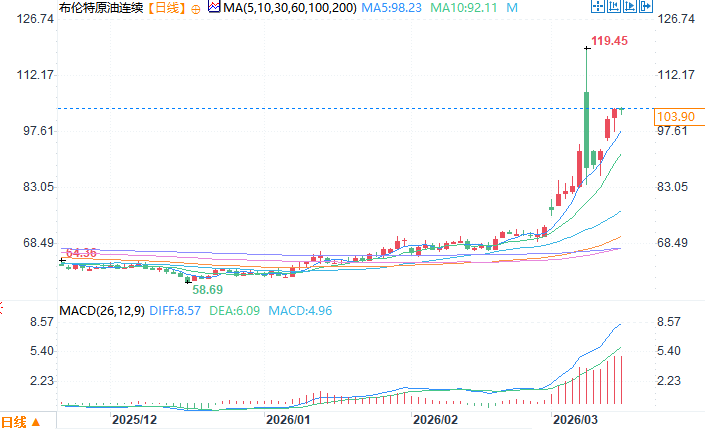
Brent crude oil daily chart source: EasyForex
At 9:57 AM Beijing time on March 16, Brent crude oil futures were trading at $104.11 per barrel.
Global oil supply is facing the largest disruption in history, with Brent crude prices hovering around $100 per barrel. The energy crisis poses a severe test to the world economy.
The Trump administration has called on allies to form a coalition to protect maritime rights, but has not yet received a substantial response, and the prospects for a diplomatic solution remain unclear.
US officials optimistically predict that the conflict will end within weeks and oil prices will fall.
U.S. Energy Secretary Chris Wright stated, "This conflict will certainly end in the coming weeks, or even sooner... After that, we will see supplies return and oil prices fall back." He added that all indications suggest the war will end soon.
President Trump escalated his rhetoric multiple times over the weekend. On Saturday, he stated that the US military strikes had "completely destroyed" most of Khark Island, Iran's main oil export hub, and warned of further action. He said, "We might do it a few more times, just for fun."
On Saturday, Trump called on countries affected by the disruption in the Strait of Hormuz to take joint action to ensure the safety of the shipping lanes on social media. He wrote, "The world's nations that receive oil through the Strait of Hormuz must ensure the safety of this shipping lane, and we will provide substantial assistance!"
According to a report by The Wall Street Journal, citing anonymous U.S. officials, the Trump administration plans to announce as early as this week that several countries have agreed to form a coalition to escort ships in the Strait of Hormuz, but details are still under discussion, including whether the operation will begin before or after hostilities end. The White House has not yet responded to requests for comment.
Iran remains firm: refusing to negotiate and vowing to maintain its self-defense.
Iranian Foreign Minister Abbas Araqchi explicitly refuted Trump's claims that Iran wanted negotiations. He stated, "We have never asked for a ceasefire, nor have we ever asked for negotiations. We are ready to defend ourselves at any time, no matter how long it takes." He added that the current situation cannot return to the state before the outbreak of war on February 28.
Iran's Islamic Revolutionary Guard Corps said on Sunday it had launched more missiles at targets inside Israel and three U.S. military bases in the region, calling it the first round of retaliation for the deaths of workers in Iranian industrial areas.
The Israeli military stated it was intercepting incoming missiles. The Saudi Ministry of Defense claimed to have intercepted and shot down 10 drones in Riyadh and eastern regions. The semi-official Fars News Agency reported that the Revolutionary Guard stated it was not involved in the attack.
The Strait of Hormuz remains closed, posing the greatest disruption to global energy supplies.
The Strait of Hormuz (which carries about one-fifth of the world's oil shipments) is effectively closed to most shipping. Although the Iranian Foreign Ministry claims that some vessels may still be able to pass through if coordinated with the navy, international shipping companies are generally avoiding the risk.
The International Energy Agency (IEA) said on Sunday that its emergency oil reserves would soon be released into the market, with member countries pledging to provide 411.9 million barrels to mitigate the supply shock.
On Saturday, crude oil loading operations at a key global ship bunkering hub in the UAE were suspended due to a drone attack. Meanwhile, Iran's Revolutionary Guard continued its attacks, with more ships being attacked in the Gulf region on Sunday.
Trump calls on allies to provide escort, international response cautious.
Trump urged relevant countries to send warships to the Strait of Hormuz on social media, but these countries have not yet responded immediately.
Takayuki Kobayashi, the policy chief of Japan's ruling party, stated that the possibility has not been ruled out, but "the legal threshold is very high." Japan's postwar pacifist constitution restricts overseas military operations unless the nation's survival is threatened; the government would need to invoke the 2015 Security Law, but this law has not yet been invoked.
France is seeking to form an alliance to ensure the security of the Straits once the security situation stabilizes; Britain is discussing various options with its allies.
Ukrainian President Volodymyr Zelenskyy stated that Russia is supplying Iran with Shahed drones to counter the US and Israel. These drones have previously been linked to several attacks in the region.
The war and energy crisis are unlikely to be resolved in the short term, and the high and volatile oil prices are exacerbating global pressures.
As the war enters its third week, missile and drone attacks continue, with no clear signs of an end.
Iran's ability to block the Strait of Hormuz has evolved into a decisive threat to the global economy. Global air transport has been severely disrupted, energy prices have soared, and economic uncertainty continues to rise.
While Trump threatened further strikes on Kharg Island, he also indicated that Iran seemed ready to reach an agreement, but "the conditions weren't good enough."
Iran's foreign minister emphasized that it would retaliate against any attacks targeting energy facilities. While US and Israeli officials claimed to have destroyed most of Iran's long-range weapons stockpile, drones continue to frequently fly into Kuwait, Iraq, the UAE, Bahrain, and Oman.
Overall , the optimistic predictions of U.S. officials that the war would "end within weeks" stand in stark contrast to Iran's tough stance of "preparing for protracted self-defense."
The closure of the Strait of Hormuz has caused the largest oil supply disruption in history. Although the International Energy Agency has initiated emergency reserve releases, it will be difficult to reverse the high oil price volatility in the short term.
Trump's call for allies to provide escort has yet to receive a substantial response, with countries such as Japan and France adopting a cautious stance, indicating that forming an international coalition still faces political and legal obstacles.
In the coming weeks, whether the conflict de-escalates, the speed at which cross-strait traffic resumes, and the extent of coordination among major powers will directly determine the trajectory of the global energy crisis and the prospects for economic recovery.
Investors and governments need to be highly vigilant about how the situation develops and prepare for prolonged high oil prices and inflationary pressures.
Brent crude oil daily chart source: EasyForex
At 9:57 AM Beijing time on March 16, Brent crude oil futures were trading at $104.11 per barrel.
- Risk Warning and Disclaimer
- The market involves risk, and trading may not be suitable for all investors. This article is for reference only and does not constitute personal investment advice, nor does it take into account certain users’ specific investment objectives, financial situation, or other needs. Any investment decisions made based on this information are at your own risk.