Global turmoil pushes up the Swiss franc; how long can the central bank maintain a 0% interest rate?
2026-03-16 17:57:14
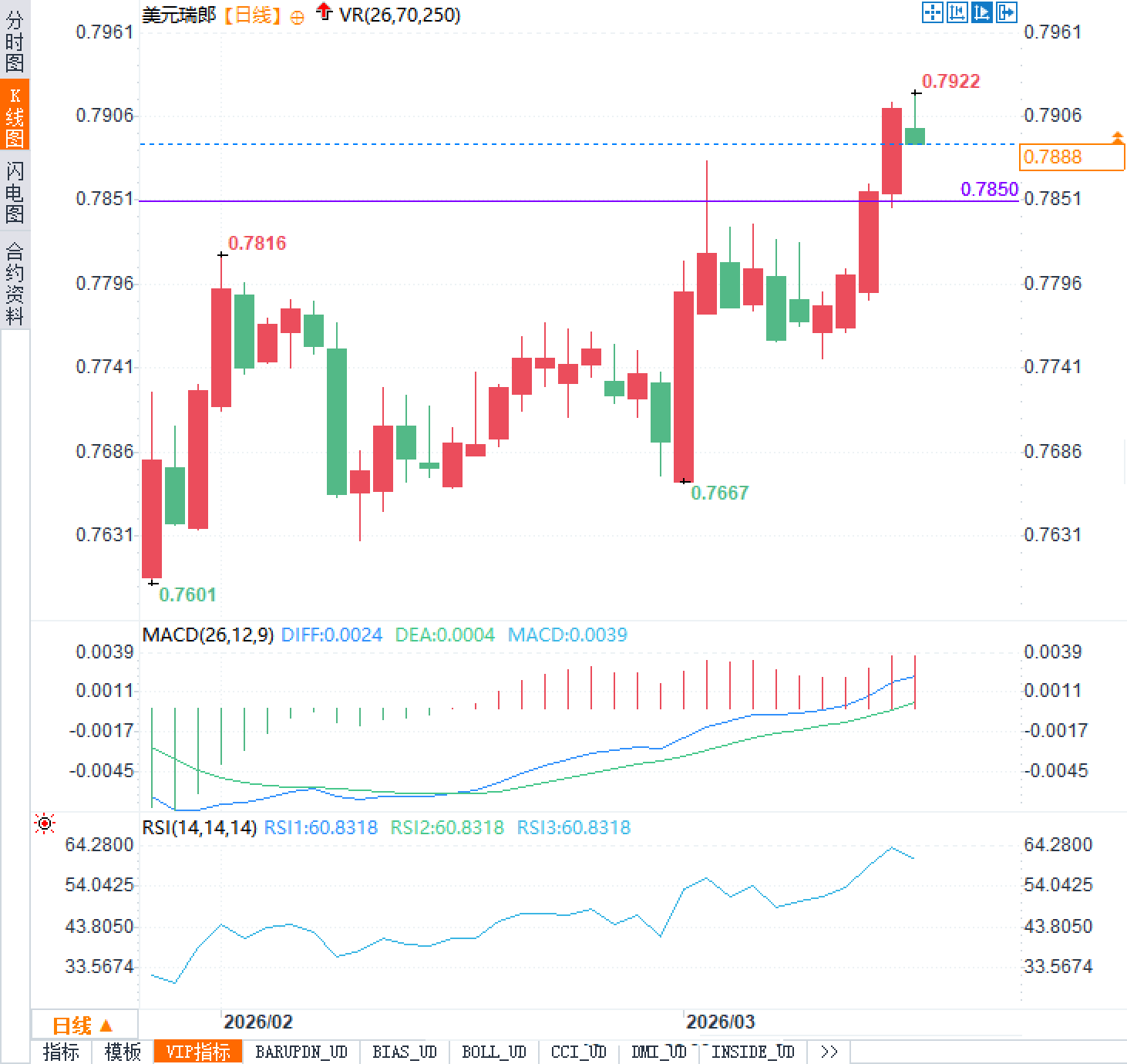
In the current market environment, the Swiss franc exhibits certain safe-haven characteristics. On Monday, March 16, the USD/CHF exchange rate traded around 0.7885, while the EUR/CHF rate was around 0.9030. The Swiss National Bank's policy rate has remained at 0.00% since June 2025; global uncertainties have driven capital inflows into the Swiss franc, increasing upward pressure on its value. While Switzerland's February CPI annual rate was only 0.1% and the monthly rate rose slightly to 0.6%, slightly exceeding expectations, overall inflation remained close to the lower limit of the target range. Swiss National Bank President Martin Schlegel has recently stated multiple times that the threshold for negative interest rates is high, and short-term negative inflation readings are not an immediate warning sign. The central bank prefers to address excessive Swiss franc appreciation through foreign exchange intervention rather than easily restarting negative interest rates.
Analysts believe the Swiss National Bank (SNB) is highly likely to maintain its policy rate at 0.00% at its March 19 meeting. This assessment is based on the continued low inflation environment, the resilience of GDP growth, and the potential upside risks from global energy price volatility. Inflation has hovered around 0.1% for several months, in line with the SNB's neutral expectations, but the appreciation of the Swiss franc poses the main downward pressure. In recent statements, Schlegel emphasized that the threshold for restarting negative interest rates is very high, and even a brief period of negative inflation readings would not trigger an immediate reaction. The central bank is more prepared to mitigate the suppressive effect of appreciation on prices through foreign exchange market operations. Compared to interest rate cuts, foreign exchange intervention is a more direct tool, especially against the backdrop of escalating international volatility.
The Swiss franc, as a traditional safe-haven currency, has become increasingly attractive amid frequent global risk events, leading to a sustained rise in its nominal effective exchange rate. This directly depresses import prices and amplifies the downside risk of inflation. The Swiss National Bank (SNB) has previously stated explicitly that it has been "increasingly prepared" to intervene in the foreign exchange market since the international situation became tense. Data shows that the USD/CHF exchange rate is at 0.7885, and the EUR/CHF exchange rate is at 0.9030, indicating that the appreciation trend has not shown a significant reversal. Regarding inflation, the CPI annual rate remained stable at 0.1% in February, with limited core pressure. The SNB predicts that if interest rates remain at 0.00%, inflation will average 0.3% in 2026 and 0.6% in 2027, suggesting a moderate recovery expectation in the medium term, but the Swiss franc factor remains the dominant variable in the short term.
The following is a comparison of key indicators:
Market logic indicates that the Swiss National Bank (SNB) is cautious about negative interest rates. Schlegel has repeatedly reiterated that the threshold for negative interest rates is far higher than conventional adjustments, and the central bank would rather tolerate mild deflation than easily shift into negative territory. Conversely, foreign exchange intervention has become the preferred response, especially when the appreciation of the Swiss franc directly threatens the inflation target. Recent statements from the vice president have reinforced this tendency; the willingness to intervene has clearly increased under the influence of geopolitical events. Historical experience shows that the SNB prefers direct market intervention rather than interest rate tools in similar environments to avoid excessive shocks to the banking system and depositors. The current 0.00% interest rate, plus a -0.25% fee on excess deposits, already constitutes a certain negative incentive, but has not yet triggered more aggressive measures.
Swiss National Bank March Meeting Expectations
Analysts believe the Swiss National Bank (SNB) is highly likely to maintain its policy rate at 0.00% at its March 19 meeting. This assessment is based on the continued low inflation environment, the resilience of GDP growth, and the potential upside risks from global energy price volatility. Inflation has hovered around 0.1% for several months, in line with the SNB's neutral expectations, but the appreciation of the Swiss franc poses the main downward pressure. In recent statements, Schlegel emphasized that the threshold for restarting negative interest rates is very high, and even a brief period of negative inflation readings would not trigger an immediate reaction. The central bank is more prepared to mitigate the suppressive effect of appreciation on prices through foreign exchange market operations. Compared to interest rate cuts, foreign exchange intervention is a more direct tool, especially against the backdrop of escalating international volatility.
Swiss Franc Appreciation and Inflation Dynamics
The Swiss franc, as a traditional safe-haven currency, has become increasingly attractive amid frequent global risk events, leading to a sustained rise in its nominal effective exchange rate. This directly depresses import prices and amplifies the downside risk of inflation. The Swiss National Bank (SNB) has previously stated explicitly that it has been "increasingly prepared" to intervene in the foreign exchange market since the international situation became tense. Data shows that the USD/CHF exchange rate is at 0.7885, and the EUR/CHF exchange rate is at 0.9030, indicating that the appreciation trend has not shown a significant reversal. Regarding inflation, the CPI annual rate remained stable at 0.1% in February, with limited core pressure. The SNB predicts that if interest rates remain at 0.00%, inflation will average 0.3% in 2026 and 0.6% in 2027, suggesting a moderate recovery expectation in the medium term, but the Swiss franc factor remains the dominant variable in the short term.
The following is a comparison of key indicators:
| index | Latest value | Previous value/Recent value | Swiss National Bank Target/Expectations |
|---|---|---|---|
| Swiss National Bank policy rate | 0.00% | 0.00% (from June 2025) | - |
| Swiss CPI annual rate (February) | 0.1% | 0.1% | 0-2% |
| Swiss CPI Monthly Rate (February) | 0.6% | -0.1% | - |
| US dollar against Swiss franc | Approximately 0.7885 | Recent fluctuation range: 0.78-0.80 | - |
| Euro to Swiss Franc | 0.9030 | near recent highs | - |
Foreign exchange intervention takes precedence over negative interest rates
Market logic indicates that the Swiss National Bank (SNB) is cautious about negative interest rates. Schlegel has repeatedly reiterated that the threshold for negative interest rates is far higher than conventional adjustments, and the central bank would rather tolerate mild deflation than easily shift into negative territory. Conversely, foreign exchange intervention has become the preferred response, especially when the appreciation of the Swiss franc directly threatens the inflation target. Recent statements from the vice president have reinforced this tendency; the willingness to intervene has clearly increased under the influence of geopolitical events. Historical experience shows that the SNB prefers direct market intervention rather than interest rate tools in similar environments to avoid excessive shocks to the banking system and depositors. The current 0.00% interest rate, plus a -0.25% fee on excess deposits, already constitutes a certain negative incentive, but has not yet triggered more aggressive measures.
Frequently Asked Questions
Question 1: Why does the Swiss National Bank currently prefer foreign exchange intervention rather than cutting interest rates into negative territory?
A: The appreciation of the Swiss franc directly suppresses import prices and overall inflation. Foreign exchange intervention can specifically mitigate this pressure, while negative interest rates have significant side effects on the real economy and the financial system. Schlegel clearly stated that the threshold for negative interest rates is high, and even if negative inflation occurs in the short term, it will not be triggered immediately. The central bank prioritizes monitoring the exchange rate and is prepared to intervene in the market to maintain the medium-term achievement of the price stability target of 0-2%.
Question 2: In the current environment of low inflation, what specific impact will the appreciation of the Swiss franc have on the Swiss economy?
A: Appreciation lowers import costs and helps control inflation, but it also weakens export competitiveness, particularly in pillar industries such as pharmaceuticals and precision manufacturing. While GDP growth is resilient, continued appreciation could amplify the impact of weak external demand. The Swiss National Bank intervenes to balance this contradiction, preventing the exchange rate from deviating excessively from fundamentals, while also monitoring whether global energy prices lead to a rebound in inflation.
Question 3: What will be the future path of inflation, and will it force the Swiss National Bank to adjust its policy?
A: The Swiss National Bank forecasts inflation of 0.3% in 2026 and 0.6% in 2027, assuming interest rates remain at 0.00%. Negative readings are possible in the short term, but a moderate rebound is more likely in the medium term. If upward pressure on the Swiss franc persists, intervention will remain the primary tool; if inflation unexpectedly accelerates, there is room for stabilization or fine-tuning, but a return to negative interest rates would require significantly worsening conditions, which is currently unlikely.
- Risk Warning and Disclaimer
- The market involves risk, and trading may not be suitable for all investors. This article is for reference only and does not constitute personal investment advice, nor does it take into account certain users’ specific investment objectives, financial situation, or other needs. Any investment decisions made based on this information are at your own risk.