Oil market in chaos: Attacks continue, Trump urgently calls in foreign warships for help.
2026-03-16 19:38:13
On Monday, March 16, the international crude oil market was in a state of high tension. Brent crude oil futures prices fluctuated between $102 and $106 per barrel, last trading at around $103 per barrel (a slight pullback during the day, but still above $100 per barrel), while WTI crude oil futures oscillated around $97 to $100 per barrel, last trading around $97 per barrel. This level is the highest since July 2022, mainly due to the escalation of geopolitical conflicts in the Middle East, particularly the military operations around the Strait of Hormuz, which led to a sharp decline in shipping traffic and the suspension of loading at some ports. The International Energy Agency (IEA) has coordinated member countries to release a record 400 million barrels of emergency reserves to alleviate supply pressure, but market concerns about actual supply losses still dominate sentiment. The United States has called on multiple countries to jointly maintain navigation in the Strait, and the degree of response from European allies is drawing attention.
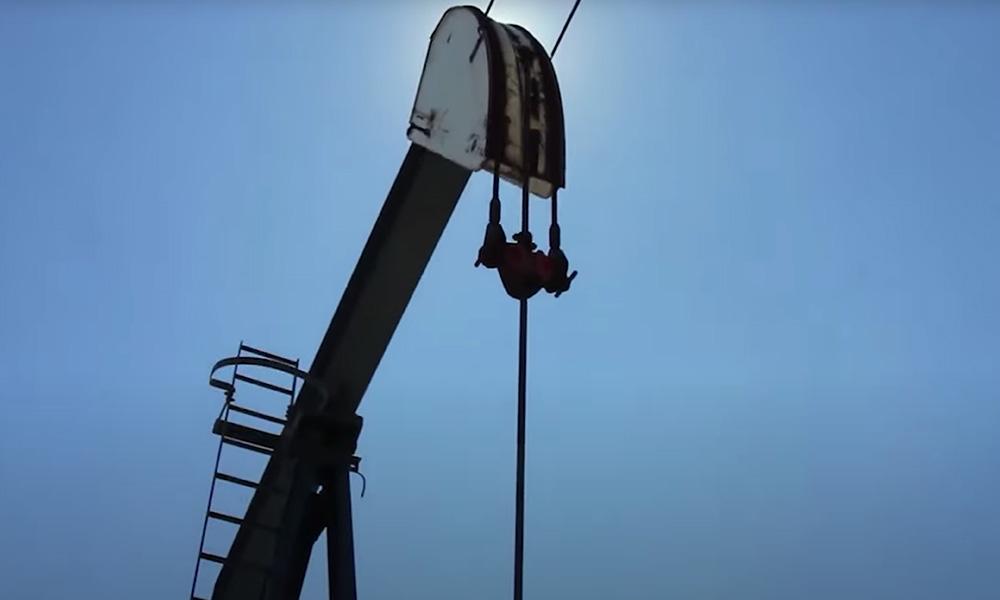
The recent sharp escalation of conflict in the Middle East, with the UAE's Fujairah port being attacked for three consecutive days, has led to a suspension of crude oil loading at the port (a key export node outside the Strait of Hormuz) to assess damage. Saturday's drone strikes already disrupted major UAE export routes, and the latest attacks further exacerbate supply chain uncertainty. The US strikes on military targets on Hag Island, Iran's main oil export hub, have been interpreted by Iranian media as a significant increase in the risk of supply disruptions, despite reports of continued loading. The Strait of Hormuz carries approximately 20% of global oil traffic daily, and recent ship traffic has slowed dramatically, even nearly halting, with some days recording only a single transit. Traders are closely monitoring the actual supply gap; if the strait is effectively blocked, millions of barrels of crude oil could be lost daily in the short term, far exceeding current inventory buffer capacity.
US President Trump publicly called on affected countries via social media to send warships to join the US in maintaining the openness and security of the Strait of Hormuz. He specifically named France, Japan, South Korea, and the UK, stating that these countries import large quantities of oil from the Gulf and should actively participate in the action. He also warned that if European countries refused to support it, NATO's future would be "very bad." This statement briefly boosted market expectations for multilateral intervention, partially alleviating concerns about extreme supply disruptions and pushing oil prices slightly lower from their intraday highs. However, the actual scale of the response remains unclear, and the cautious attitude of European countries towards military intervention may limit the size of joint action. Trump emphasized the need to remove the "artificial constraints" on the Strait, which the market interpreted as a signal of diplomatic pressure rather than an immediate military escalation.
In response to supply disruptions in the Middle East, IEA member countries unanimously agreed to release 400 million barrels of emergency reserves (approximately 72% crude oil, the remainder refined products), a record high. This action aims to rapidly inject liquidity into the market and buffer against potential physical shortages. Key data comparisons are as follows:
While reserve releases provide short-term support, continued conflict and accumulated production disruptions will test the rate of inventory depletion. Traders are focused on the pace of releases and logistical efficiency, and oil price volatility is expected to remain high in the short term.
After oil prices broke through $100/barrel, the WTI-Brent spread narrowed, reflecting increased correlation with global benchmarks. Geopolitical premiums are driving the market. On the fundamental front, non-OPEC+ producers have limited willingness to increase production, and while the number of US shale oil rigs has increased slightly recently, it will still take time for them to respond to high oil prices. Rising energy costs have already been transmitted to downstream sectors such as chemicals and transportation, and global inflation expectations are facing repricing. Traders need to be wary of intensified battles between bulls and bears; any signal of the resumption of navigation through the Taiwan Strait could trigger a rapid pullback, while further attacks could push prices to even higher levels. Overall, supply-side uncertainty far outweighs weak demand, and the tight supply situation is unlikely to change in the short term.
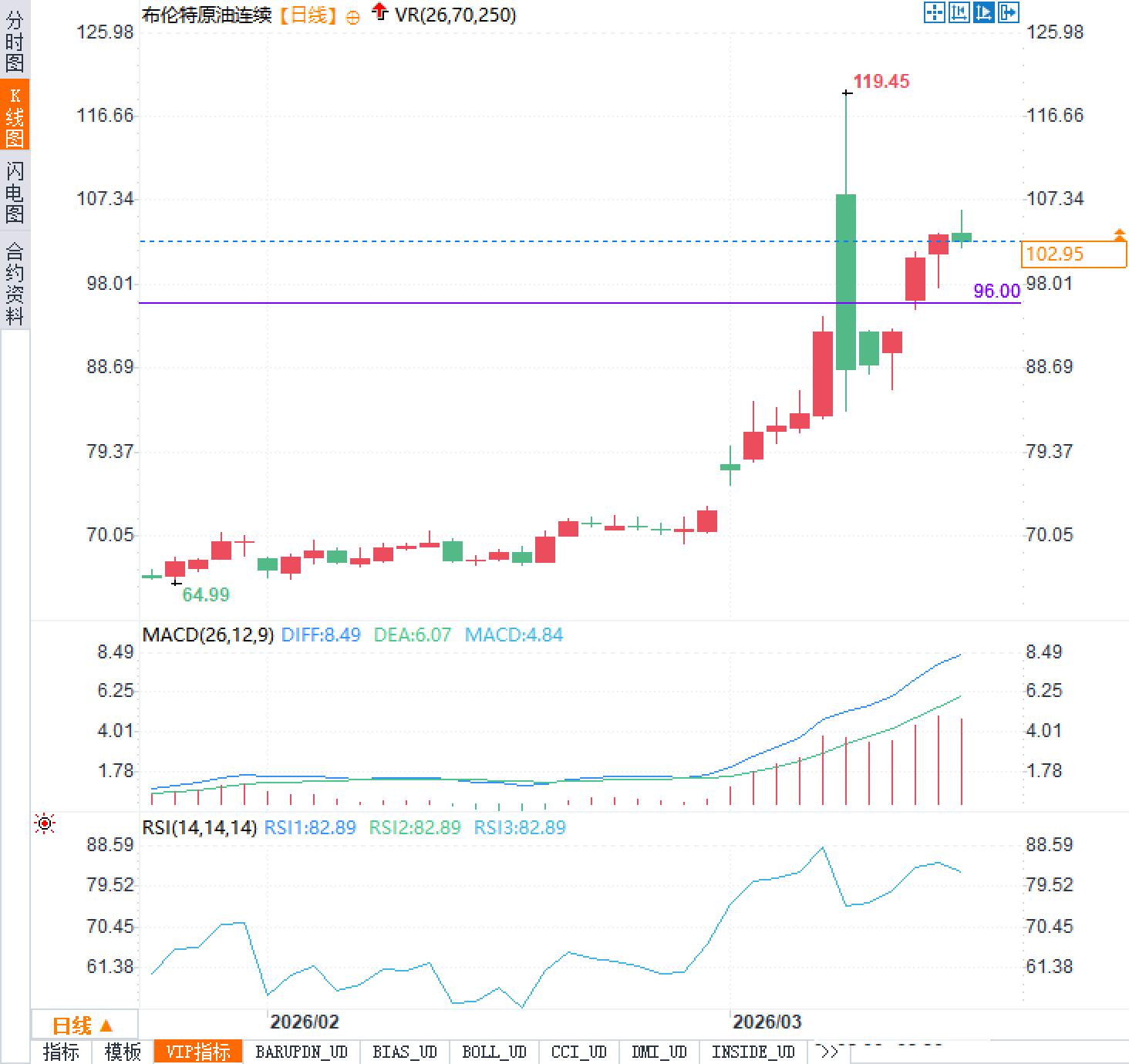
Escalating geopolitical risks push oil prices to near-recent highs.
The recent sharp escalation of conflict in the Middle East, with the UAE's Fujairah port being attacked for three consecutive days, has led to a suspension of crude oil loading at the port (a key export node outside the Strait of Hormuz) to assess damage. Saturday's drone strikes already disrupted major UAE export routes, and the latest attacks further exacerbate supply chain uncertainty. The US strikes on military targets on Hag Island, Iran's main oil export hub, have been interpreted by Iranian media as a significant increase in the risk of supply disruptions, despite reports of continued loading. The Strait of Hormuz carries approximately 20% of global oil traffic daily, and recent ship traffic has slowed dramatically, even nearly halting, with some days recording only a single transit. Traders are closely monitoring the actual supply gap; if the strait is effectively blocked, millions of barrels of crude oil could be lost daily in the short term, far exceeding current inventory buffer capacity.
Trump calls for international joint intervention to ensure the security of the Taiwan Strait.
US President Trump publicly called on affected countries via social media to send warships to join the US in maintaining the openness and security of the Strait of Hormuz. He specifically named France, Japan, South Korea, and the UK, stating that these countries import large quantities of oil from the Gulf and should actively participate in the action. He also warned that if European countries refused to support it, NATO's future would be "very bad." This statement briefly boosted market expectations for multilateral intervention, partially alleviating concerns about extreme supply disruptions and pushing oil prices slightly lower from their intraday highs. However, the actual scale of the response remains unclear, and the cautious attitude of European countries towards military intervention may limit the size of joint action. Trump emphasized the need to remove the "artificial constraints" on the Strait, which the market interpreted as a signal of diplomatic pressure rather than an immediate military escalation.
IEA's record reserve release and supply-side response
In response to supply disruptions in the Middle East, IEA member countries unanimously agreed to release 400 million barrels of emergency reserves (approximately 72% crude oil, the remainder refined products), a record high. This action aims to rapidly inject liquidity into the market and buffer against potential physical shortages. Key data comparisons are as follows:
| index | numerical values | illustrate |
|---|---|---|
| IEA release scale | Approximately 400 million barrels | Largest in history, far exceeding previous records |
| Of which crude oil accounted for | Approximately 72% | Directly targeting crude oil supply |
| Normal daily flow in the Strait of Hormuz | Global oil accounts for approximately 20% | This is equivalent to approximately 20 million barrels per day. |
| Recent traffic changes | Significant decline, with some days nearly stagnant. | Ship tracking data shows extremely low daily transit rates. |
Market Sentiment and Risk Transmission Observations
After oil prices broke through $100/barrel, the WTI-Brent spread narrowed, reflecting increased correlation with global benchmarks. Geopolitical premiums are driving the market. On the fundamental front, non-OPEC+ producers have limited willingness to increase production, and while the number of US shale oil rigs has increased slightly recently, it will still take time for them to respond to high oil prices. Rising energy costs have already been transmitted to downstream sectors such as chemicals and transportation, and global inflation expectations are facing repricing. Traders need to be wary of intensified battles between bulls and bears; any signal of the resumption of navigation through the Taiwan Strait could trigger a rapid pullback, while further attacks could push prices to even higher levels. Overall, supply-side uncertainty far outweighs weak demand, and the tight supply situation is unlikely to change in the short term.
Frequently Asked Questions
Question 1: Why are oil prices still above $100 per barrel despite the IEA releasing a huge amount of reserves?
A: While the IEA's release of 400 million barrels of reserves is unprecedented, it primarily targets potential supply disruptions rather than confirmed long-term gaps. The significant drop in traffic in the Strait of Hormuz has already created a logistical bottleneck, and the suspension of loading at the port of Fujairah and the attack on Hag Island have exacerbated uncertainty. Market pricing is highly forward-looking; traders are more focused on whether the conflict will escalate and result in a loss of millions of barrels of daily traffic than on short-term inventory replenishment. Therefore, even with the reserve injection, geopolitical premiums will continue to dominate, and oil prices are unlikely to quickly fall back to pre-conflict levels.
Question 2: What impact will Trump's call for multinational cooperation to safeguard the Straits have on oil prices?
A: Trump's public appeal and warning about NATO prospects improved market expectations for multilateral intervention in the short term, alleviating fears of extreme supply disruptions and causing oil prices to retreat slightly from their highs. However, the actual effect depends on the strength of the allies' response. Currently, European countries are cautious about direct military intervention, and Asian importers such as Japan and South Korea also need to weigh the risks. The statement is more of a diplomatic pressure tactic; without a substantial fleet deployment or escort operation, the recovery of market confidence will be limited, and oil prices will remain susceptible to fluctuations driven by news of sudden attacks.
Question 3: What will happen to the global oil market if the Strait of Hormuz remains blocked for an extended period?
A: The Strait of Hormuz carries approximately 20% of global oil traffic. If effectively blocked, the daily loss could reach millions of barrels in the short term, far exceeding the scale of a single IEA release. While Iranian exports will remain partially maintained, exports from neighboring Gulf countries will be severely impacted, accelerating global inventory depletion. Downstream refineries will face raw material shortages, pushing up crack spreads and causing refined product prices to rise more rapidly. In the long term, the delayed response to non-OPEC+ production increases and the potential for demand to weaken due to high prices, coupled with a rigid supply shortage, suggest that oil prices may test even higher levels until a diplomatic or military solution emerges.
- Risk Warning and Disclaimer
- The market involves risk, and trading may not be suitable for all investors. This article is for reference only and does not constitute personal investment advice, nor does it take into account certain users’ specific investment objectives, financial situation, or other needs. Any investment decisions made based on this information are at your own risk.