Ahead of the Fed's March Meeting: Choosing "Observation and Waiting" Amid Uncertainty
2026-03-16 19:37:38
With the March interest rate meeting approaching, the market widely expects the Federal Reserve to maintain the current interest rate level. Analysis from Danske Bank suggests this assessment is largely in line with market pricing and mainstream institutional consensus. Given the backdrop of significant energy market volatility triggered by the Iran war, the Fed is more likely to choose "observation and waiting" in the short term rather than rapidly adjusting policy.
Historically, the Federal Reserve has typically tended to observe the economic transmission effects of sudden geopolitical shocks. For example, during the 1973 oil crisis and the 1990 Gulf War, the Fed briefly maintained policy stability to assess the true impact of energy shocks on inflation and growth. The current policy stance is largely consistent with this traditional approach.
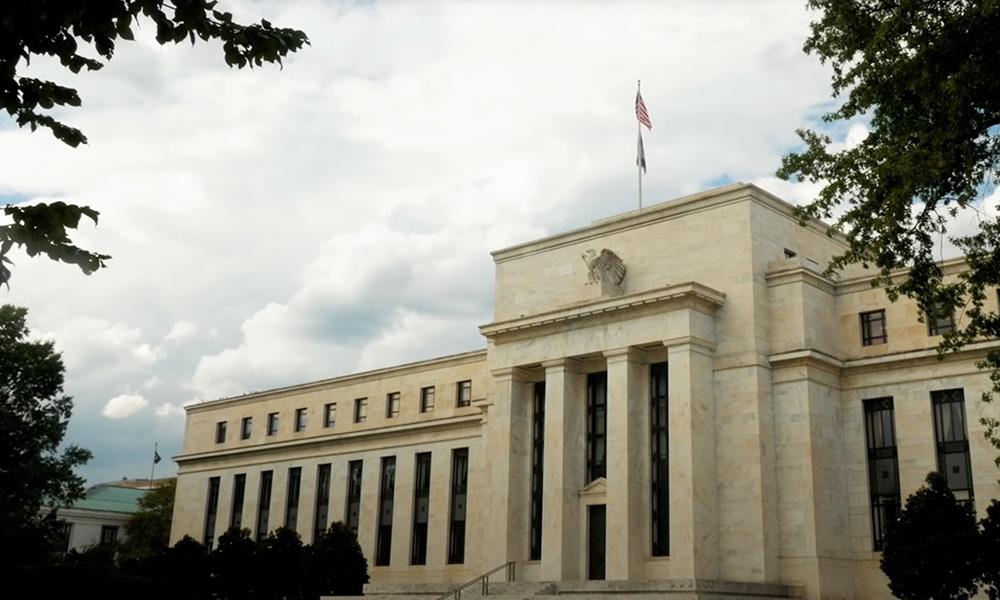
The impact of the war remains difficult to assess: The Federal Reserve maintains a rare consensus.
According to the Federal Reserve's policy practice, a "policy quiet period" is held about a week before each interest rate meeting. During this period, all Federal Reserve officials are prohibited from publicly discussing policy prospects, economic expectations, and related topics to avoid unnecessary market disruption. However, prior to the start of the quiet period for this March meeting, several key Federal Reserve officials had already made public statements regarding the economic impact of the war with Iran. Notably, regardless of whether they were hawkish officials favoring tightening policy or dovish officials advocating for easing, their statements showed a rare consistency: it is still too early to judge the actual impact of the war with Iran on the US economy, and further observation is needed.
Specifically, several key officials, including Minneapolis Federal Reserve Bank President Neel Kashkari, New York Federal Reserve Bank President John Williams, Federal Reserve Governor Christopher Waller, and San Francisco Federal Reserve Bank President Mary Daly, have all stated in various forums that the transmission of energy price volatility triggered by the Iran war to US inflation, economic growth, and the job market still requires time to observe, and that it is not advisable to make premature adjustments to policy direction. This cross-factional consensus also reflects a consensus within the Federal Reserve regarding the current economic environment—that geopolitical risks are too uncertain, and that hasty policy adjustments could be counterproductive.
This cautious approach also suggests that the March policy meeting is unlikely to release a clear signal of policy direction. Federal Reserve Chairman Jerome Powell is expected to deliberately avoid providing strong forward guidance at the press conference, instead emphasizing the "two-way risks" of the energy shock: it could push up inflation on the one hand, and suppress economic growth on the other.
Why has the United States been able to "withstand" the energy shock?
Compared to Europe, the United States has demonstrated a stronger ability to buffer against this round of energy shocks, which is also an important reason why the Federal Reserve is not in a hurry to adjust its policies.
First, U.S. natural gas prices have seen little significant increase. The benchmark U.S. natural gas price—Henry Hub Natural Gas—remained relatively unchanged after the outbreak of the conflict, while European natural gas and global liquefied natural gas (LNG) prices rose by nearly 50% in a month. This difference is primarily due to a more abundant domestic energy supply in the United States.
Secondly, the strengthening of the US dollar has, to some extent, offset the impact of rising oil prices on consumers. Since international crude oil is priced in US dollars, when the dollar appreciates, the actual increase in energy costs within the United States is often less than in other economies.
Furthermore, recent tightening of financial conditions is also suppressing demand. Simply put, higher borrowing costs and a more cautious financial environment will reduce consumption and investment, thereby counteracting inflationary pressures from rising energy prices.
The data shows that short-term inflation expectations in the United States have indeed risen and real interest rates have fallen, but the changes are significantly smaller than those in the Eurozone, which further illustrates that the US economy still has a certain degree of resilience in the face of energy shocks.
The market is more concerned about whether there will be another interest rate cut this year.
While short-term policies are likely to remain unchanged, the market is really focused on the interest rate path later this year.
Danske Bank expects the Federal Reserve to cut interest rates twice more this year, roughly in June and September. This assessment is based on a key premise: the current policy rate remains above the so-called "neutral rate" (i.e., the interest rate level that neither stimulates nor inhibits the economy).
If uncertainty in the energy market gradually eases, the Federal Reserve will have room to gradually ease policy. However, if the war lasts longer than expected, the timing of rate cuts may be delayed, but the possibility of completely cancelling rate cuts remains unlikely.
This expectation may also be reflected in the newly released "dot plot." The dot plot is an anonymous chart of Federal Reserve officials' projections of the future path of interest rates, which the market typically uses to judge policy inclinations.
Economic Outlook: Growth to slow slightly, inflation to be revised slightly upward.
The impact of rising energy prices on household spending power remains significant. Increased energy costs mean less disposable income for residents, while the US labor market is currently cooling down.
However, overall employment data remains relatively robust, which allows the Federal Reserve to remain patient for the time being.
Institutions predict that the 2026 US GDP growth forecast may be slightly lower than in December of last year (especially after weak data in the fourth quarter of last year), while the inflation forecast may be slightly higher. However, it should be noted that these forecasts are highly dependent on assumptions about the duration of the energy shock, and therefore have limited reference value.
Balance sheet policy: unlikely to change in the short term.
No new changes are expected at this meeting regarding balance sheet operations.
Currently, the Federal Reserve is still conducting reserve management purchases of short-term Treasury bills (T-bills), an operation expected to continue at least until the end of the US tax season in April.
Historically, the U.S. tax season has often temporarily drained market liquidity, so the Federal Reserve typically smooths out money market fluctuations by purchasing short-term Treasury bonds.
With tax revenues returning to the US after mid-April, coupled with the potential implementation of tariff rebates, dollar liquidity in the US financial system is expected to improve. At that time, the Federal Reserve may significantly reduce its purchases of short-term Treasury bonds.
Overall Conclusion
Overall, this week's Federal Reserve meeting was more like a "transition meeting".
Policy rates are likely to remain unchanged, and Chairman Powell will avoid sending overly explicit policy signals. Given the ongoing conflict with Iran, energy market volatility, and continued high uncertainty in the global financial environment, the Federal Reserve has chosen to continue monitoring economic data developments.
For the market, what really matters is not this week's decision, but whether the energy shock will ease in the coming months and whether the Federal Reserve still has room to begin a rate-cutting cycle in the second half of 2026.
Historically, the Federal Reserve has typically tended to observe the economic transmission effects of sudden geopolitical shocks. For example, during the 1973 oil crisis and the 1990 Gulf War, the Fed briefly maintained policy stability to assess the true impact of energy shocks on inflation and growth. The current policy stance is largely consistent with this traditional approach.
The impact of the war remains difficult to assess: The Federal Reserve maintains a rare consensus.
According to the Federal Reserve's policy practice, a "policy quiet period" is held about a week before each interest rate meeting. During this period, all Federal Reserve officials are prohibited from publicly discussing policy prospects, economic expectations, and related topics to avoid unnecessary market disruption. However, prior to the start of the quiet period for this March meeting, several key Federal Reserve officials had already made public statements regarding the economic impact of the war with Iran. Notably, regardless of whether they were hawkish officials favoring tightening policy or dovish officials advocating for easing, their statements showed a rare consistency: it is still too early to judge the actual impact of the war with Iran on the US economy, and further observation is needed.
Specifically, several key officials, including Minneapolis Federal Reserve Bank President Neel Kashkari, New York Federal Reserve Bank President John Williams, Federal Reserve Governor Christopher Waller, and San Francisco Federal Reserve Bank President Mary Daly, have all stated in various forums that the transmission of energy price volatility triggered by the Iran war to US inflation, economic growth, and the job market still requires time to observe, and that it is not advisable to make premature adjustments to policy direction. This cross-factional consensus also reflects a consensus within the Federal Reserve regarding the current economic environment—that geopolitical risks are too uncertain, and that hasty policy adjustments could be counterproductive.
This cautious approach also suggests that the March policy meeting is unlikely to release a clear signal of policy direction. Federal Reserve Chairman Jerome Powell is expected to deliberately avoid providing strong forward guidance at the press conference, instead emphasizing the "two-way risks" of the energy shock: it could push up inflation on the one hand, and suppress economic growth on the other.
Why has the United States been able to "withstand" the energy shock?
Compared to Europe, the United States has demonstrated a stronger ability to buffer against this round of energy shocks, which is also an important reason why the Federal Reserve is not in a hurry to adjust its policies.
First, U.S. natural gas prices have seen little significant increase. The benchmark U.S. natural gas price—Henry Hub Natural Gas—remained relatively unchanged after the outbreak of the conflict, while European natural gas and global liquefied natural gas (LNG) prices rose by nearly 50% in a month. This difference is primarily due to a more abundant domestic energy supply in the United States.
Secondly, the strengthening of the US dollar has, to some extent, offset the impact of rising oil prices on consumers. Since international crude oil is priced in US dollars, when the dollar appreciates, the actual increase in energy costs within the United States is often less than in other economies.
Furthermore, recent tightening of financial conditions is also suppressing demand. Simply put, higher borrowing costs and a more cautious financial environment will reduce consumption and investment, thereby counteracting inflationary pressures from rising energy prices.
The data shows that short-term inflation expectations in the United States have indeed risen and real interest rates have fallen, but the changes are significantly smaller than those in the Eurozone, which further illustrates that the US economy still has a certain degree of resilience in the face of energy shocks.
The market is more concerned about whether there will be another interest rate cut this year.
While short-term policies are likely to remain unchanged, the market is really focused on the interest rate path later this year.
Danske Bank expects the Federal Reserve to cut interest rates twice more this year, roughly in June and September. This assessment is based on a key premise: the current policy rate remains above the so-called "neutral rate" (i.e., the interest rate level that neither stimulates nor inhibits the economy).
If uncertainty in the energy market gradually eases, the Federal Reserve will have room to gradually ease policy. However, if the war lasts longer than expected, the timing of rate cuts may be delayed, but the possibility of completely cancelling rate cuts remains unlikely.
This expectation may also be reflected in the newly released "dot plot." The dot plot is an anonymous chart of Federal Reserve officials' projections of the future path of interest rates, which the market typically uses to judge policy inclinations.
Economic Outlook: Growth to slow slightly, inflation to be revised slightly upward.
The impact of rising energy prices on household spending power remains significant. Increased energy costs mean less disposable income for residents, while the US labor market is currently cooling down.
However, overall employment data remains relatively robust, which allows the Federal Reserve to remain patient for the time being.
Institutions predict that the 2026 US GDP growth forecast may be slightly lower than in December of last year (especially after weak data in the fourth quarter of last year), while the inflation forecast may be slightly higher. However, it should be noted that these forecasts are highly dependent on assumptions about the duration of the energy shock, and therefore have limited reference value.
Balance sheet policy: unlikely to change in the short term.
No new changes are expected at this meeting regarding balance sheet operations.
Currently, the Federal Reserve is still conducting reserve management purchases of short-term Treasury bills (T-bills), an operation expected to continue at least until the end of the US tax season in April.
Historically, the U.S. tax season has often temporarily drained market liquidity, so the Federal Reserve typically smooths out money market fluctuations by purchasing short-term Treasury bonds.
With tax revenues returning to the US after mid-April, coupled with the potential implementation of tariff rebates, dollar liquidity in the US financial system is expected to improve. At that time, the Federal Reserve may significantly reduce its purchases of short-term Treasury bonds.
Overall Conclusion
Overall, this week's Federal Reserve meeting was more like a "transition meeting".
Policy rates are likely to remain unchanged, and Chairman Powell will avoid sending overly explicit policy signals. Given the ongoing conflict with Iran, energy market volatility, and continued high uncertainty in the global financial environment, the Federal Reserve has chosen to continue monitoring economic data developments.
For the market, what really matters is not this week's decision, but whether the energy shock will ease in the coming months and whether the Federal Reserve still has room to begin a rate-cutting cycle in the second half of 2026.
- Risk Warning and Disclaimer
- The market involves risk, and trading may not be suitable for all investors. This article is for reference only and does not constitute personal investment advice, nor does it take into account certain users’ specific investment objectives, financial situation, or other needs. Any investment decisions made based on this information are at your own risk.