API inventories surge by 6.56 million barrels + Iraq resumes exports, are oil prices at their current high levels becoming increasingly precarious?
2026-03-18 13:16:05
On Wednesday (March 18) during Asian trading hours, US crude oil prices fluctuated and declined, currently trading around $92.60 per barrel, down about 3.1% on the day. Data released by the American Petroleum Institute (API) on Tuesday evening was a major bearish factor: US crude oil inventories unexpectedly surged by 6.56 million barrels in the week ending March 13, far exceeding market expectations of a 380,000-barrel increase. This larger-than-expected inventory increase significantly eased market concerns about tight supply, pushing oil prices back from recent highs.

API data showed that U.S. crude oil inventories increased significantly by 6.56 million barrels, far exceeding market expectations of a 380,000-barrel increase. This suggests that refinery utilization rates may have declined recently, or imports may have increased, alleviating short-term supply pressure to some extent.
The surge in inventories directly alleviated market panic regarding global supply shortages, becoming the main driver of the oil price decline. Investors will be focusing on whether the official EIA inventory data later on Wednesday confirms this trend.
Positive signs have emerged on the supply side: Iraq's oil minister stated that the Iraqi government and the Kurdistan Region have reached an agreement to resume oil exports via Turkey's Ceyhan port starting Wednesday. The resumption of exports, previously disrupted by a pipeline dispute, will inject additional supply into the global market.
Libya's National Oil Corporation also announced that oil supplies have been diverted following the fire at the Sharara oil field, and production continues. These developments have eased some market concerns about supply from non-OPEC+ oil-producing countries.
Geopolitical tensions remain high. Iran confirmed that Ali Larijani, secretary of its Supreme National Security Council, was killed in an Israeli attack, the highest-ranking official to be attacked since the start of the war.
The U.S. military struck missile sites off the Iranian coast near the Strait of Hormuz on Tuesday, citing threats to international shipping. Iran's new Supreme Leader has rejected proposals for de-escalation, and the Revolutionary Guard has vowed "blood feud." Despite the continued intensity of the conflict, some markets are beginning to bet that losses to top Iranian officials may accelerate negotiations or a compromise.
Analysts point out that news such as Larijani's death, the US military's strike on missile sites, and the resumption of Iraqi exports have increased expectations that the conflict may end sooner.
However, shipping through the Strait of Hormuz remains largely at a standstill, disrupting approximately 20% of global oil transport, and the supply gap has not yet been substantially alleviated. The decline in oil prices is largely driven by short-term inventory concerns and optimistic sentiment; the overall impact will depend on the strength of Iran's subsequent retaliation and the progress of restoring navigation through the Strait. Short-term volatility remains high, while the medium- to long-term outlook depends on the course of the conflict.
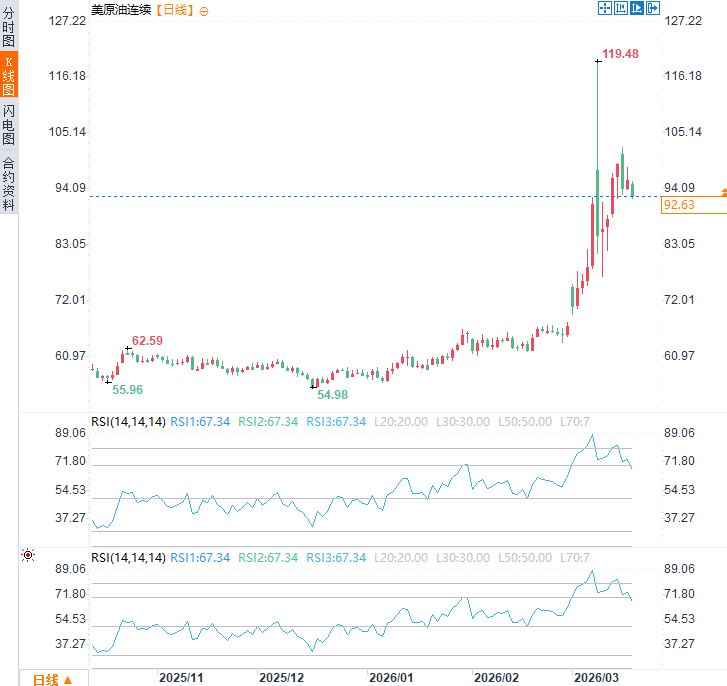
(US crude oil daily chart, source: FX678)
Oil prices retreated slightly in Asian trading on Wednesday, mainly due to an unexpected surge in API inventories of 6.56 million barrels (far exceeding the expected 380,000 barrels), easing supply concerns. Positive signals came from the resumption of exports from Iraq's Ceyhan port and the diversion of oil shipments from Libya's Sharara oil field.
Geopolitical tensions remain high: Larijani was killed in an attack, the US military struck missile sites along the Strait of Hormuz, and Iran refused to de-escalate the conflict and vowed revenge. Expectations for an end to the conflict have increased somewhat, but the Strait of Hormuz is essentially blocked, one-fifth of global oil transport is disrupted, and the supply gap has not been substantially alleviated.
The decline in oil prices is largely driven by short-term inventory pressures; the overall impact will depend on the strength of Iranian retaliation and the progress of resuming navigation in the Strait of Hormuz. Short-term volatility is high, and investors should be wary of unforeseen events triggering a reversal, paying close attention to EIA official inventory data and the latest developments in the Middle East.
At 13:15 Beijing time, US crude oil futures were trading at $92.47 per barrel.
U.S. crude oil inventories surged by 6.56 million barrels, far exceeding the expected 380,000 barrels.
API data showed that U.S. crude oil inventories increased significantly by 6.56 million barrels, far exceeding market expectations of a 380,000-barrel increase. This suggests that refinery utilization rates may have declined recently, or imports may have increased, alleviating short-term supply pressure to some extent.
The surge in inventories directly alleviated market panic regarding global supply shortages, becoming the main driver of the oil price decline. Investors will be focusing on whether the official EIA inventory data later on Wednesday confirms this trend.
Iraq resumes exports from Ceyhan port; Libya's Sharara oil field diverts shipments after fire.
Positive signs have emerged on the supply side: Iraq's oil minister stated that the Iraqi government and the Kurdistan Region have reached an agreement to resume oil exports via Turkey's Ceyhan port starting Wednesday. The resumption of exports, previously disrupted by a pipeline dispute, will inject additional supply into the global market.
Libya's National Oil Corporation also announced that oil supplies have been diverted following the fire at the Sharara oil field, and production continues. These developments have eased some market concerns about supply from non-OPEC+ oil-producing countries.
Larijani was killed in an attack; U.S. forces strike missile sites along the Hormuz coast.
Geopolitical tensions remain high. Iran confirmed that Ali Larijani, secretary of its Supreme National Security Council, was killed in an Israeli attack, the highest-ranking official to be attacked since the start of the war.
The U.S. military struck missile sites off the Iranian coast near the Strait of Hormuz on Tuesday, citing threats to international shipping. Iran's new Supreme Leader has rejected proposals for de-escalation, and the Revolutionary Guard has vowed "blood feud." Despite the continued intensity of the conflict, some markets are beginning to bet that losses to top Iranian officials may accelerate negotiations or a compromise.
Expectations of an end to the conflict are rising, but the overall impact on oil prices still needs to be observed.
Analysts point out that news such as Larijani's death, the US military's strike on missile sites, and the resumption of Iraqi exports have increased expectations that the conflict may end sooner.
However, shipping through the Strait of Hormuz remains largely at a standstill, disrupting approximately 20% of global oil transport, and the supply gap has not yet been substantially alleviated. The decline in oil prices is largely driven by short-term inventory concerns and optimistic sentiment; the overall impact will depend on the strength of Iran's subsequent retaliation and the progress of restoring navigation through the Strait. Short-term volatility remains high, while the medium- to long-term outlook depends on the course of the conflict.
(US crude oil daily chart, source: FX678)
Editor's Summary
Oil prices retreated slightly in Asian trading on Wednesday, mainly due to an unexpected surge in API inventories of 6.56 million barrels (far exceeding the expected 380,000 barrels), easing supply concerns. Positive signals came from the resumption of exports from Iraq's Ceyhan port and the diversion of oil shipments from Libya's Sharara oil field.
Geopolitical tensions remain high: Larijani was killed in an attack, the US military struck missile sites along the Strait of Hormuz, and Iran refused to de-escalate the conflict and vowed revenge. Expectations for an end to the conflict have increased somewhat, but the Strait of Hormuz is essentially blocked, one-fifth of global oil transport is disrupted, and the supply gap has not been substantially alleviated.
The decline in oil prices is largely driven by short-term inventory pressures; the overall impact will depend on the strength of Iranian retaliation and the progress of resuming navigation in the Strait of Hormuz. Short-term volatility is high, and investors should be wary of unforeseen events triggering a reversal, paying close attention to EIA official inventory data and the latest developments in the Middle East.
At 13:15 Beijing time, US crude oil futures were trading at $92.47 per barrel.
- Risk Warning and Disclaimer
- The market involves risk, and trading may not be suitable for all investors. This article is for reference only and does not constitute personal investment advice, nor does it take into account certain users’ specific investment objectives, financial situation, or other needs. Any investment decisions made based on this information are at your own risk.