Nationwide Crisis? Hormuz Blockade Triggers Oil Price Surge, Vance Urgently Calls for Meeting with Oil Giants
2026-03-19 09:20:58
U.S. Vice President Vance and Energy Secretary Wright will meet with the American Petroleum Institute (API) later Thursday (March 19) to discuss how to address rising oil prices. The API is the largest oil trading organization in the United States, and the meeting aims to "discuss energy market issues amid increased global market volatility."
Vance acknowledged that the oil price crisis is unlikely to be resolved in the short term due to the Strait of Hormuz blockade, emphasizing that the government will announce "several measures" in the next 24 to 48 hours in an attempt to stabilize market expectations and public sentiment. During Thursday's Asian trading session, US crude oil prices fluctuated upwards, currently trading around $98.15 per barrel, a daily increase of approximately 2.8%.
"We're going to have a tough time in the coming weeks, but it's only temporary," Vance said Wednesday in Michigan. He also promised that the government would announce "several measures" within 24 to 48 hours.
Speaking to the public at a manufacturing plant, Vance emphasized, "We know that oil prices have risen, and we know that people are suffering as a result. We are doing everything we can to ensure that oil prices remain low." This statement reflects the government's political anxiety under the pressure of high oil prices, especially with the midterm elections approaching.
According to data from the American Automobile Association (AAA), the average price of gasoline across the United States has risen by 92 cents since last month. The near-complete standstill of shipping in the Strait of Hormuz and the disruption of one-fifth of the world's oil supply are the main reasons for the price surge.
Vance acknowledged the significant cost of living pressures on the public but emphasized that this was "temporary," attempting to reassure voters. The persistently high gasoline prices have directly impacted transportation, logistics, and commodity prices, amplifying inflation concerns.
A spokesperson for the American Petroleum Institute stated that the industry is committed to “deeply analyzing market dynamics” and “strengthening U.S. energy leadership and resilience in the long term.”
The API, the largest oil trading organization in the United States, will discuss response strategies with the government at a meeting later Thursday. The oil industry's expressed cooperation is intended to demonstrate solidarity with the government, but the actual effect still depends on the situation in the Middle East and the speed of global supply recovery.
Thursday's meeting, attended by several members of Congress and governors, highlights that the oil price crisis has escalated into a national political issue. Manufacturing and agricultural powerhouses like Michigan have been hit hardest by high oil prices, putting local officials under immense pressure.
The meeting discussed not only short-term mitigation measures but also long-term energy security and supply chain resilience. The Trump administration attempted to demonstrate its resolve in responding to the crisis through bipartisan cooperation, but the support from allies has yet to yield substantial progress, making it difficult to address the fundamental problems in the short term.
Vance's promised "several measures" may include accelerating the implementation of IEA reserve releases, temporarily exempting some sanctions, or strengthening naval escorts, but these are unlikely to substantially alleviate the supply gap caused by the Hormuz disruption in the short term.
Oil price movements remain highly dependent on the trajectory of the Middle East conflict: if Iran continues its retaliation or its proxies escalate attacks, oil prices are likely to rebound; if navigation through the Straits of Hormuz resumes, prices may fall rapidly. With global inflation and economic slowdown risks continuing to mount, investors need to be wary of unforeseen events that could trigger a reversal, and pay close attention to the outcome of Thursday's meeting and Iran's response.
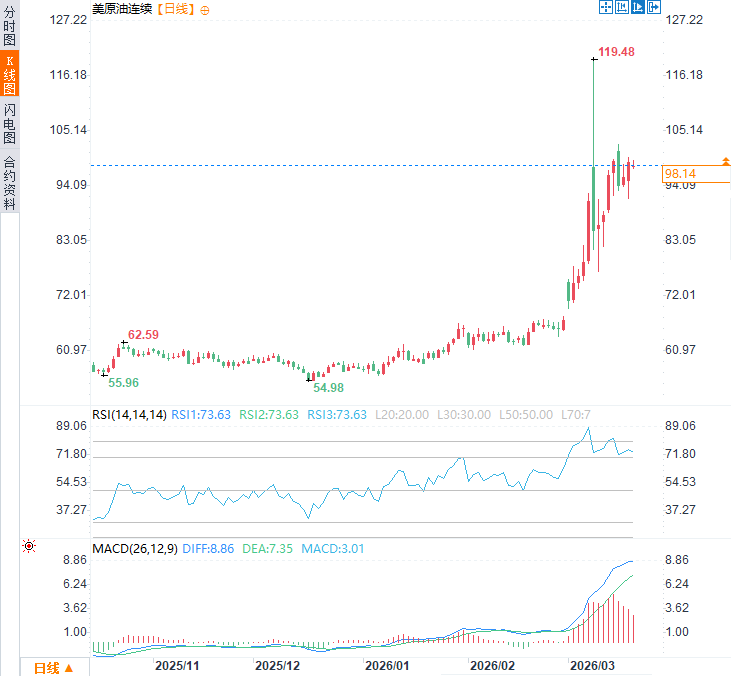
(US crude oil daily chart, source: FX678)
U.S. Vice President Vance and Energy Secretary Wright will hold an emergency meeting with the American Petroleum Institute on Thursday to discuss measures to address soaring oil prices. Vance admitted that "the next few weeks will be a difficult period," but promised to announce several measures within 24-48 hours. The average price of gasoline across the U.S. has risen by 92 cents since last month, causing significant hardship for the public.
The API pledged to conduct in-depth analysis of market dynamics and strengthen U.S. energy resilience. The attendance of several members of Congress and governors underscores the severity of the crisis. Short-term measures are unlikely to address the fundamental supply gap caused by the Hormuz disruption, and oil price movements will remain dependent on the situation in the Middle East.
Investors should be wary of a new wave of panic triggered by escalating Iranian retaliation, and pay close attention to the specific measures taken at Thursday's meeting and the progress of the resumption of navigation in the Taiwan Strait. The energy market is highly uncertain.
At 9:19 Beijing time, US crude oil futures were trading at $97.82 per barrel.
Vance acknowledged that the oil price crisis is unlikely to be resolved in the short term due to the Strait of Hormuz blockade, emphasizing that the government will announce "several measures" in the next 24 to 48 hours in an attempt to stabilize market expectations and public sentiment. During Thursday's Asian trading session, US crude oil prices fluctuated upwards, currently trading around $98.15 per barrel, a daily increase of approximately 2.8%.
Vanderbilt admitted the coming weeks would be difficult, but promised to announce several measures within 24-48 hours.
"We're going to have a tough time in the coming weeks, but it's only temporary," Vance said Wednesday in Michigan. He also promised that the government would announce "several measures" within 24 to 48 hours.
Speaking to the public at a manufacturing plant, Vance emphasized, "We know that oil prices have risen, and we know that people are suffering as a result. We are doing everything we can to ensure that oil prices remain low." This statement reflects the government's political anxiety under the pressure of high oil prices, especially with the midterm elections approaching.
The average price of gasoline across the United States rose by 92 cents compared to the previous month, causing great hardship for the public.
According to data from the American Automobile Association (AAA), the average price of gasoline across the United States has risen by 92 cents since last month. The near-complete standstill of shipping in the Strait of Hormuz and the disruption of one-fifth of the world's oil supply are the main reasons for the price surge.
Vance acknowledged the significant cost of living pressures on the public but emphasized that this was "temporary," attempting to reassure voters. The persistently high gasoline prices have directly impacted transportation, logistics, and commodity prices, amplifying inflation concerns.
API commits to in-depth analysis of market dynamics and strengthening U.S. energy resilience.
A spokesperson for the American Petroleum Institute stated that the industry is committed to “deeply analyzing market dynamics” and “strengthening U.S. energy leadership and resilience in the long term.”
The API, the largest oil trading organization in the United States, will discuss response strategies with the government at a meeting later Thursday. The oil industry's expressed cooperation is intended to demonstrate solidarity with the government, but the actual effect still depends on the situation in the Middle East and the speed of global supply recovery.
Several members of Congress and governors will attend, highlighting the severity of the crisis.
Thursday's meeting, attended by several members of Congress and governors, highlights that the oil price crisis has escalated into a national political issue. Manufacturing and agricultural powerhouses like Michigan have been hit hardest by high oil prices, putting local officials under immense pressure.
The meeting discussed not only short-term mitigation measures but also long-term energy security and supply chain resilience. The Trump administration attempted to demonstrate its resolve in responding to the crisis through bipartisan cooperation, but the support from allies has yet to yield substantial progress, making it difficult to address the fundamental problems in the short term.
Short-term measures are unlikely to solve the fundamental problem; oil price trends will still depend on the situation in the Middle East.
Vance's promised "several measures" may include accelerating the implementation of IEA reserve releases, temporarily exempting some sanctions, or strengthening naval escorts, but these are unlikely to substantially alleviate the supply gap caused by the Hormuz disruption in the short term.
Oil price movements remain highly dependent on the trajectory of the Middle East conflict: if Iran continues its retaliation or its proxies escalate attacks, oil prices are likely to rebound; if navigation through the Straits of Hormuz resumes, prices may fall rapidly. With global inflation and economic slowdown risks continuing to mount, investors need to be wary of unforeseen events that could trigger a reversal, and pay close attention to the outcome of Thursday's meeting and Iran's response.
(US crude oil daily chart, source: FX678)
Editor's Summary
U.S. Vice President Vance and Energy Secretary Wright will hold an emergency meeting with the American Petroleum Institute on Thursday to discuss measures to address soaring oil prices. Vance admitted that "the next few weeks will be a difficult period," but promised to announce several measures within 24-48 hours. The average price of gasoline across the U.S. has risen by 92 cents since last month, causing significant hardship for the public.
The API pledged to conduct in-depth analysis of market dynamics and strengthen U.S. energy resilience. The attendance of several members of Congress and governors underscores the severity of the crisis. Short-term measures are unlikely to address the fundamental supply gap caused by the Hormuz disruption, and oil price movements will remain dependent on the situation in the Middle East.
Investors should be wary of a new wave of panic triggered by escalating Iranian retaliation, and pay close attention to the specific measures taken at Thursday's meeting and the progress of the resumption of navigation in the Taiwan Strait. The energy market is highly uncertain.
At 9:19 Beijing time, US crude oil futures were trading at $97.82 per barrel.
- Risk Warning and Disclaimer
- The market involves risk, and trading may not be suitable for all investors. This article is for reference only and does not constitute personal investment advice, nor does it take into account certain users’ specific investment objectives, financial situation, or other needs. Any investment decisions made based on this information are at your own risk.