The euro rebounded instantly after the European Central Bank's announcement! With inflation forecasts unexpectedly revised upwards, what is the market truly afraid of?
2026-03-19 21:25:46
On Thursday (March 19), the European Central Bank (ECB) announced its latest monetary policy decision. Prior to this meeting, global financial markets were in a highly sensitive wait-and-see period. Influenced by geopolitical factors and energy price volatility, Eurozone inflation expectations have recently rebounded significantly, while economic growth momentum has shown some signs of weakness. Before the data release, the euro/dollar exchange rate (EUR/USD) remained range-bound around 1.1490, with market participants holding high expectations for whether the ECB would release a hawkish signal due to upside risks to inflation.

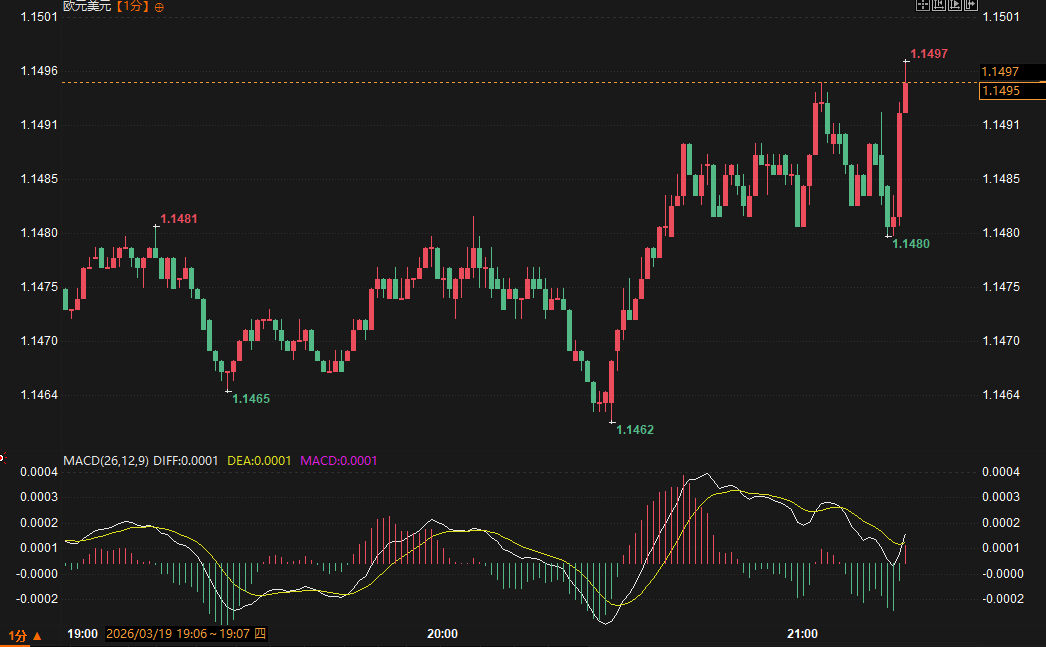
With the official implementation of the decision, the European Central Bank announced that it would maintain its three key interest rates unchanged: the deposit facility rate at 2.00%, the main refinancing rate at 2.15%, and the marginal lending rate at 2.40%. This decision was entirely in line with previous economist survey expectations. However, the market's immediate reaction still reflected significant volatility: within one minute of the announcement, the euro fell by about 10 points against the dollar, hitting a low of 1.1480, before quickly rebounding 15 points to return to the 1.1495 level. This "first down, then up" movement reflects that after digesting the established fact of unchanged interest rates, the market is rapidly shifting its focus to the deeper information in the policy statement regarding the upward revision of the inflation path.
The core conflict in this policy statement lies in the significant upward revision of inflation expectations and the downward revision of economic growth expectations. This is a typical macroeconomic predicament caused by a supply-side shock.
From a fundamental perspective, the European Central Bank (ECB) explicitly stated in its announcement that rising energy prices, influenced by the situation in the Middle East, have led to significant upside risks to the inflation outlook. Notably, ECB staff made an exception by extending the data cutoff date to March 11th to capture the latest geopolitical developments. The latest internal forecasts show that the average overall inflation rate for 2026 has been revised upward to 2.6% (from the previous forecast of 2.0%), and core inflation, excluding energy and food, has also been revised upward across the board. This means that although the benchmark interest rate remains unchanged, the path to returning inflation to the 2% target has become more difficult, directly leading to market confirmation of the logic that "high interest rates will be maintained for longer."
Eurozone interest rates are currently in the neutral range of the past two years, but the ECB's reaffirmation that it "does not pre-determine a path for interest rates" and its emphasis that decisions will depend on data have dispelled any illusions about a near-term rate cut. After confirming that the ECB has not turned dovish due to slowing growth, bullish forces began to cover their positions, supporting the exchange rate's recovery.
Institutional and retail investors held significantly opposing views. Institutions generally believed the ECB's statement demonstrated remarkable resilience, particularly its emphasis on "ensuring inflation targets are met even with slowing growth," which was seen as a "hawkish stance with room for maneuver." In contrast, prior to the decision, many retail investors tended to believe the ECB might signal a more tolerant stance on inflation due to concerns about a recession (with a 2026 growth forecast of only 0.9%). This correction in expectations was the primary reason for the euro's eventual strengthening after initial volatility.
Looking ahead, the European Central Bank's policy framework has entered a phase of "risk assessment first." Although the benchmark interest rate remains unchanged, the steady progress of balance sheet reduction (APP and PEPP) and the retention of the Transmission Protection Instrument (TPI) mean that the monetary environment in the Eurozone is actually still tightening.
For market trends, the evolution of the Middle East situation will be the deciding factor in the Eurozone's macroeconomic logic. If energy supply continues to be disrupted, causing inflation to deviate further from the 2.1% forecast in 2026, the ECB will be forced to maintain a tightening stance even in the face of economic downturn risks, which will provide a floor for the euro. Conversely, if economic resilience (such as low unemployment and defense spending) cannot offset the erosion of real income by inflation, the premium of Eurozone assets will be limited. In the short term, the euro is expected to seek a new equilibrium against the US dollar in the 1.1450 to 1.1600 range, and the market will await ECB President Lagarde's further clarification on the risks of a "second-round effect" at the press conference.
Q: Why did the European Central Bank raise its inflation forecast but choose to keep interest rates unchanged?
A: The ECB adopts a data-dependent strategy. Although forecasts have been revised upwards, the current interest rate range of 2.00%-2.40% remains at a level it believes will have a restraining effect. The central bank needs more time to observe whether energy price volatility will translate into widespread wage increases, the so-called "second-round effect," and therefore has chosen to remain on hold to preserve policy flexibility.
Q: How much influence has the situation in the Middle East had on the European Central Bank's decision-making?
A: The impact is significant. The statement repeatedly mentioned that the situation in the region has increased uncertainty about the outlook and directly led to higher energy price forecasts. This not only increased the upside risk of inflation but also became a major reason for the downward revision of economic growth expectations.
Q: What does the ECB's statement about "not pre-setting an interest rate path" mean for the market?
A: This means the market cannot deduce the future timetable for interest rate cuts or hikes from a single decision. Each round of decisions will be independent, and this uncertainty will exacerbate market volatility during data release periods, while also effectively dampening previously overly optimistic market expectations for rate cuts.
Q: What is the latest status of the Asset Purchase Programme (APP) and the Pandemic Emergency Purchase Programme (PEPP)?
A: The ECB has made it clear that the size of these two portfolios is declining at a "prudent and predictable" pace. Since the Eurosystem no longer reinvests the principal of maturing securities, this means liquidity is being passively withdrawn from the market, effectively acting as quantitative tightening.
Q: How should we interpret the "V-shaped" reversal of the euro after the decision?
A: The initial decline was due to some aggressive speculative positions betting on a rate hike being stopped out as interest rates remained unchanged; the subsequent rebound was due to the policy statement's hawkish tone on inflation risks. The market realized that the ECB had not wavered in its determination to combat inflation despite the slowdown in growth, and this hawkish stance ultimately supported the euro.
With the official implementation of the decision, the European Central Bank announced that it would maintain its three key interest rates unchanged: the deposit facility rate at 2.00%, the main refinancing rate at 2.15%, and the marginal lending rate at 2.40%. This decision was entirely in line with previous economist survey expectations. However, the market's immediate reaction still reflected significant volatility: within one minute of the announcement, the euro fell by about 10 points against the dollar, hitting a low of 1.1480, before quickly rebounding 15 points to return to the 1.1495 level. This "first down, then up" movement reflects that after digesting the established fact of unchanged interest rates, the market is rapidly shifting its focus to the deeper information in the policy statement regarding the upward revision of the inflation path.
Deep interconnect analysis
The core conflict in this policy statement lies in the significant upward revision of inflation expectations and the downward revision of economic growth expectations. This is a typical macroeconomic predicament caused by a supply-side shock.
From a fundamental perspective, the European Central Bank (ECB) explicitly stated in its announcement that rising energy prices, influenced by the situation in the Middle East, have led to significant upside risks to the inflation outlook. Notably, ECB staff made an exception by extending the data cutoff date to March 11th to capture the latest geopolitical developments. The latest internal forecasts show that the average overall inflation rate for 2026 has been revised upward to 2.6% (from the previous forecast of 2.0%), and core inflation, excluding energy and food, has also been revised upward across the board. This means that although the benchmark interest rate remains unchanged, the path to returning inflation to the 2% target has become more difficult, directly leading to market confirmation of the logic that "high interest rates will be maintained for longer."
Eurozone interest rates are currently in the neutral range of the past two years, but the ECB's reaffirmation that it "does not pre-determine a path for interest rates" and its emphasis that decisions will depend on data have dispelled any illusions about a near-term rate cut. After confirming that the ECB has not turned dovish due to slowing growth, bullish forces began to cover their positions, supporting the exchange rate's recovery.
Institutional and retail investors held significantly opposing views. Institutions generally believed the ECB's statement demonstrated remarkable resilience, particularly its emphasis on "ensuring inflation targets are met even with slowing growth," which was seen as a "hawkish stance with room for maneuver." In contrast, prior to the decision, many retail investors tended to believe the ECB might signal a more tolerant stance on inflation due to concerns about a recession (with a 2026 growth forecast of only 0.9%). This correction in expectations was the primary reason for the euro's eventual strengthening after initial volatility.
Trend Outlook
Looking ahead, the European Central Bank's policy framework has entered a phase of "risk assessment first." Although the benchmark interest rate remains unchanged, the steady progress of balance sheet reduction (APP and PEPP) and the retention of the Transmission Protection Instrument (TPI) mean that the monetary environment in the Eurozone is actually still tightening.
For market trends, the evolution of the Middle East situation will be the deciding factor in the Eurozone's macroeconomic logic. If energy supply continues to be disrupted, causing inflation to deviate further from the 2.1% forecast in 2026, the ECB will be forced to maintain a tightening stance even in the face of economic downturn risks, which will provide a floor for the euro. Conversely, if economic resilience (such as low unemployment and defense spending) cannot offset the erosion of real income by inflation, the premium of Eurozone assets will be limited. In the short term, the euro is expected to seek a new equilibrium against the US dollar in the 1.1450 to 1.1600 range, and the market will await ECB President Lagarde's further clarification on the risks of a "second-round effect" at the press conference.
Frequently Asked Questions
Q: Why did the European Central Bank raise its inflation forecast but choose to keep interest rates unchanged?
A: The ECB adopts a data-dependent strategy. Although forecasts have been revised upwards, the current interest rate range of 2.00%-2.40% remains at a level it believes will have a restraining effect. The central bank needs more time to observe whether energy price volatility will translate into widespread wage increases, the so-called "second-round effect," and therefore has chosen to remain on hold to preserve policy flexibility.
Q: How much influence has the situation in the Middle East had on the European Central Bank's decision-making?
A: The impact is significant. The statement repeatedly mentioned that the situation in the region has increased uncertainty about the outlook and directly led to higher energy price forecasts. This not only increased the upside risk of inflation but also became a major reason for the downward revision of economic growth expectations.
Q: What does the ECB's statement about "not pre-setting an interest rate path" mean for the market?
A: This means the market cannot deduce the future timetable for interest rate cuts or hikes from a single decision. Each round of decisions will be independent, and this uncertainty will exacerbate market volatility during data release periods, while also effectively dampening previously overly optimistic market expectations for rate cuts.
Q: What is the latest status of the Asset Purchase Programme (APP) and the Pandemic Emergency Purchase Programme (PEPP)?
A: The ECB has made it clear that the size of these two portfolios is declining at a "prudent and predictable" pace. Since the Eurosystem no longer reinvests the principal of maturing securities, this means liquidity is being passively withdrawn from the market, effectively acting as quantitative tightening.
Q: How should we interpret the "V-shaped" reversal of the euro after the decision?
A: The initial decline was due to some aggressive speculative positions betting on a rate hike being stopped out as interest rates remained unchanged; the subsequent rebound was due to the policy statement's hawkish tone on inflation risks. The market realized that the ECB had not wavered in its determination to combat inflation despite the slowdown in growth, and this hawkish stance ultimately supported the euro.
- Risk Warning and Disclaimer
- The market involves risk, and trading may not be suitable for all investors. This article is for reference only and does not constitute personal investment advice, nor does it take into account certain users’ specific investment objectives, financial situation, or other needs. Any investment decisions made based on this information are at your own risk.