March 20th Financial Breakfast: Hawkish interest rate expectations weigh on gold prices, causing a seven-day losing streak; oil prices weakened due to intervention measures.
2026-03-20 07:24:21
On Friday (March 20, Beijing time) in early Asian trading, spot gold was trading around $4,641 per ounce. Gold prices fell more than 3% on Thursday, briefly approaching the $4,500 per ounce mark, hitting their lowest level since early February, as markets anticipated that major central banks would maintain high interest rates, despite the Middle East conflict pushing up energy prices and triggering inflation concerns. US crude oil was trading around $93.83 per barrel. Oil prices fell more than 4% on Thursday as the US government took measures to try to curb rising oil prices, including considering lifting sanctions on some Iranian crude oil and possibly releasing strategic petroleum reserves again.

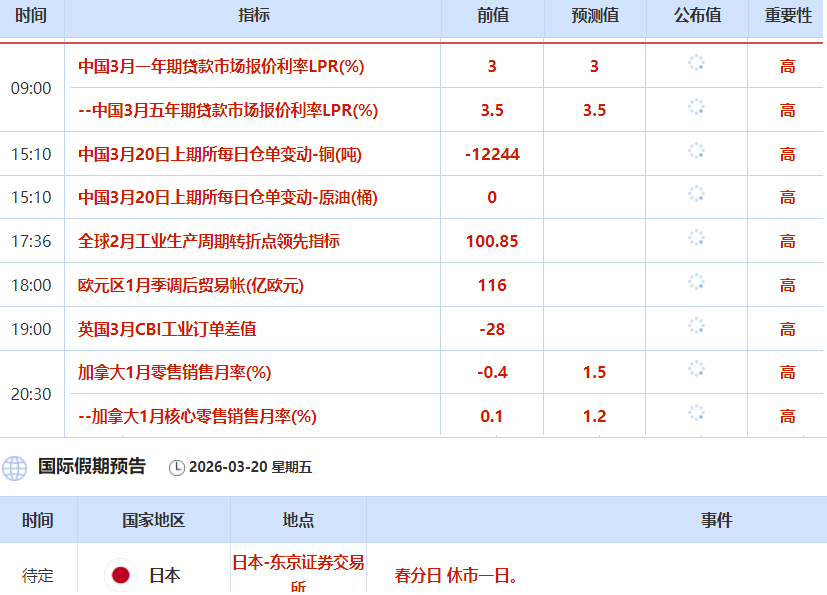
U.S. stocks closed lower on Thursday as heavyweights such as Micron and Tesla fell, coupled with pessimistic sentiment regarding the interest rate outlook. Traders expect the Federal Reserve to hold rates steady until mid-2027, while inflation concerns fueled by soaring oil prices further exacerbated investor anxieties.
The S&P 500 fell 0.27%, the Nasdaq fell 0.28%, and the Dow Jones Industrial Average fell 0.44%, with all three major indices falling below their 200-day moving averages, indicating weakening market momentum. In terms of individual stocks, Micron fell 3.8% due to lower-than-expected quarterly earnings, Tesla fell 3.2% due to escalating regulatory investigations, and Nvidia also fell 1%.
At the sector level, materials and consumer discretionary sectors led the decline. Although data showed the labor market remained robust, uncertainty stemming from the Middle East conflict and the central bank's continued hawkish stance weighed on the market, with trading volume at 20 billion shares, in line with recent averages.
Gold prices fell for the seventh straight session on Thursday, with spot gold dropping more than 3% and briefly approaching the $4,500 per ounce mark, its lowest level since early February, as markets anticipated that major central banks would keep interest rates high, despite the Middle East conflict pushing up energy prices and triggering inflation concerns.
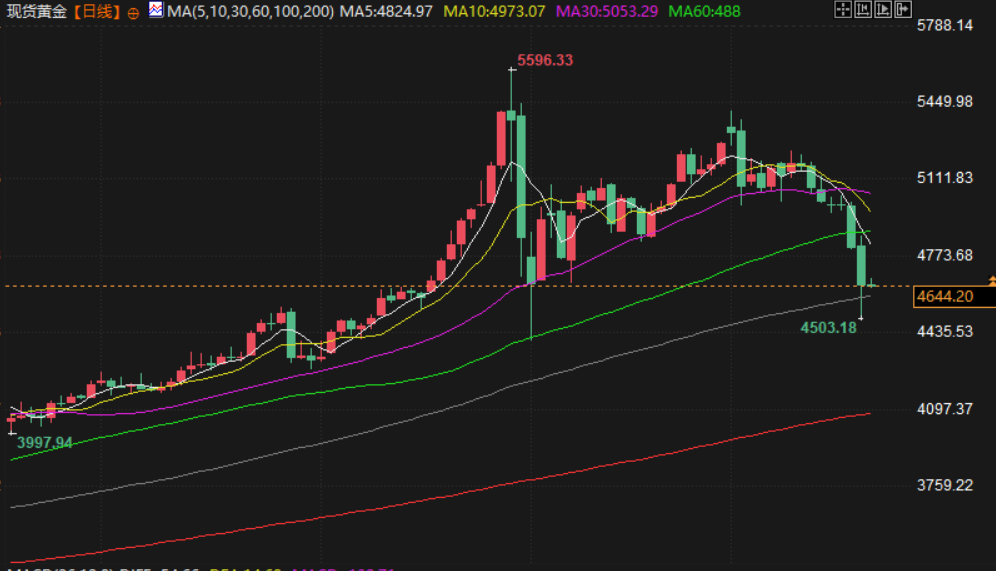
TD Securities commodity strategists pointed out that gold has been widely held by institutional investors over the past year as a tool to hedge against currency devaluation, but the logic supporting this trade is weakening and it still faces downside risks in the short term.
This week, central banks in almost all major developed economies kept interest rates unchanged and emphasized their readiness to curb persistent inflation that could be triggered by the Middle East conflict. Meanwhile, oil prices jumped to over $110 a barrel, and a stronger dollar exacerbated the selling pressure on gold. Analysts believe this is a result of traders locking in profits after gold's strong rally in 2025, meeting margin calls, and shifting to new trades such as hydrocarbons.
Spot silver, platinum, and palladium also fell by 5.3%, 3.7%, and 2.4% respectively on the same day.
Oil prices fell on Thursday, with US crude dropping more than 4% and Brent crude falling nearly 3%. Although Iran's overnight attack on Middle Eastern energy targets initially raised concerns about supply disruptions and pushed up prices, the US government quickly took measures to try to curb the rise, including considering lifting sanctions on some Iranian crude oil and potentially releasing strategic petroleum reserves again. Meanwhile, US President Trump is eager to curb fuel costs before the November midterm elections.
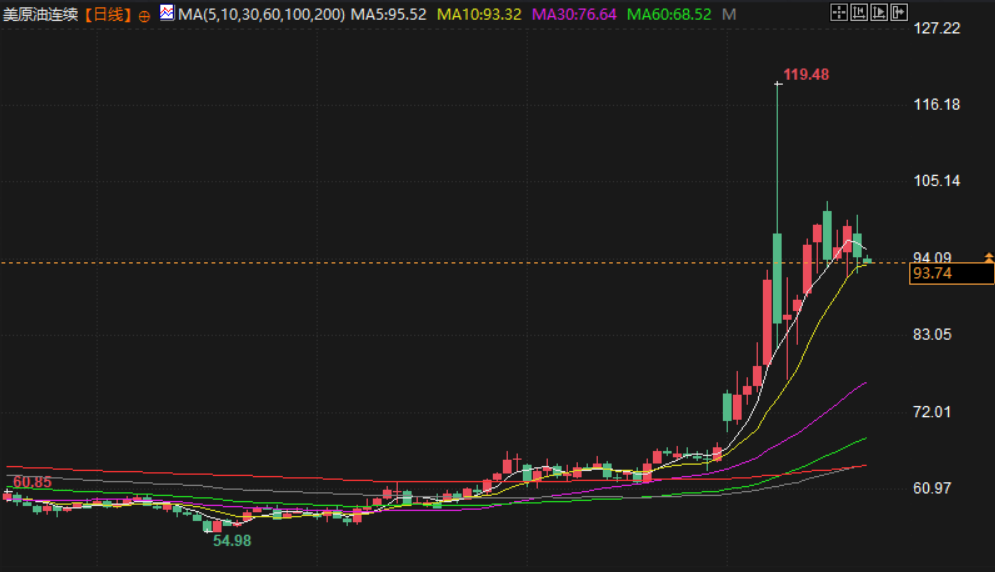
In addition, the Ras Lafan energy hub in Qatar was severely damaged in the attack, causing European natural gas prices to soar. However, the US stated that Israel would not strike Iranian facilities again unless Iran attacks Qatar, which alleviated the extreme panic in the market to some extent.
Following a week of simultaneous interest rate decisions from major central banks worldwide, which all remained unchanged, currency market movements on Thursday were primarily driven by differing policy stances among central banks and risk aversion stemming from the Middle East conflict. The euro and yen both strengthened against the dollar, with the euro rising 1.18% to $1.1585 and the yen gaining 1.4% to 157.61. The pound also rose 1.4% to $1.3436, dragging the dollar index down 1% to 99.20.
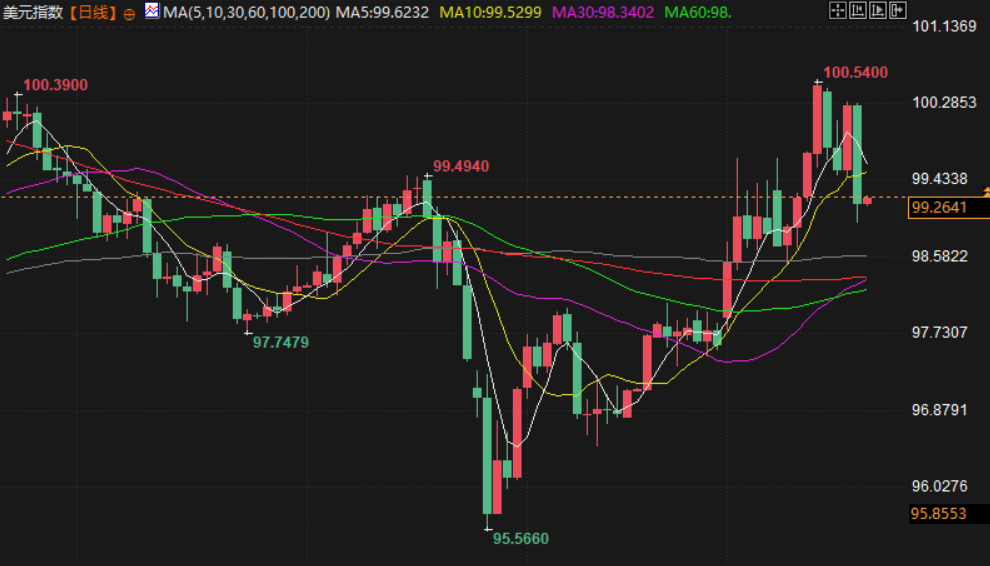
The European Central Bank, the Bank of Japan, the Bank of England, and the Federal Reserve all kept interest rates unchanged, but generally emphasized that they are closely monitoring the inflation risks posed by the Middle East conflict driving up oil prices. However, there are subtle differences among central banks in their weighing of inflation and economic growth risks; for example, the market believes that the UK faces a higher risk of inflation than the US. The Swiss franc weakened after the Swiss National Bank indicated it was prepared to intervene in the market to curb the currency's surge, with the euro rising nearly 0.50% against the Swiss franc. Among commodity currencies, the Canadian dollar was essentially unchanged, while the Australian dollar rose slightly by 0.83% due to a small increase in the unemployment rate.
The probability of the Federal Reserve keeping interest rates unchanged in April has fallen to 92.8%, a rare occurrence as the market has priced in a possible rate hike.
According to the latest data from CME's "FedWatch," the market expects a 92.8% probability that the Federal Reserve will keep interest rates unchanged at its April meeting, while the probability of a 25 basis point rate hike has unusually risen to 7.2%. This is the first time since the end of this rate hike cycle that the market has priced in a slight rate hike. For the June meeting, the probability of a cumulative 25 basis point rate hike is 9.2%, the probability of a cumulative 50 basis point rate hike is 0.2%, and the probability of keeping rates unchanged is 90.6%. This indicates that market expectations for a rate hike this year are quietly forming.
The United States approved a $16.5 billion arms sale to three Middle Eastern countries to replenish their losses.
The U.S. State Department announced on the 19th that it had approved a $16.5 billion arms sale to the United Arab Emirates, Kuwait, and Jordan, supplying these three Middle Eastern countries with military equipment including radar and anti-drone systems. In multiple statements, the State Department said the U.S. will sell the UAE 10 "Fixed-Position Low-Altitude, Slow-Speed, Small Unmanned Aerial Vehicle (UAV) Integrated Defense System" and related equipment, worth approximately $2.1 billion; a long-range identification radar and related equipment for the Terminal High Altitude Area Defense (THAAD) system, worth approximately $4.5 billion; 400 advanced medium-range air-to-air missiles and related equipment, worth $1.22 billion; and ammunition for F-16 fighter jets, worth $644 million. Simultaneously, the U.S. will sell Kuwait approximately $8 billion worth of low-altitude air defense and missile defense radar; and Jordan will receive approximately $70.5 million worth of arms sales, including aircraft maintenance and ammunition support.
Zelensky: Ukraine peace talks should resume; the initial talks between Ukraine and the US on the 21st should be held.
Ukrainian President Volodymyr Zelenskyy stated on the 19th that peace talks concerning Ukraine, which had been suspended due to the Middle East situation, should resume. Political members of the Ukrainian negotiating delegation have already departed and are expected to meet with US representatives in the United States on the 21st. This will be the first bilateral meeting between Ukraine and the US since the large-scale military action launched by the US and Israel against Iran on February 28th. According to Ukraine's Interfax news agency, Zelenskyy said in a video address that evening that the US had signaled to Ukraine that it was prepared to continue working "in the existing format of talks" in order to end the war. Ukraine is making every effort to make the negotiations truly meaningful. Zelenskyy said on the 14th that it was unclear when the trilateral talks between Ukraine, the US, and Russia, which had been postponed due to the Middle East situation, would resume.
IEA coordinated action released 426 million barrels of crude oil to stabilize oil prices during the Iraq War.
The International Energy Agency (IEA) announced that Japan, Canada, and South Korea will be the main contributors to the massive emergency oil reserve release in response to supply disruptions caused by the conflict with Iran. The IEA stated, "The emergency reserves released will primarily consist of crude oil, while in Europe, contributions will mainly be in the form of refined petroleum products. Additional production from countries in the Americas will also supplement this. Member countries have already contributed 426 million barrels of oil. As part of a previous agreement, a total of 426 million barrels of crude oil are being released into the market, of which 172 million barrels come from the United States."
Israeli Chief of Staff: Israel's military operation against Iran is "not even halfway done."
On the 19th local time, it was learned from Israeli sources that Israel Defense Forces Chief of Staff Zamir stated in an internal discussion that Israel's military operation against Iran "is not even halfway done." At the same time, senior Israeli military officials also hinted that there is currently no timetable for ending the operation. Reportedly, based on assessments presented in recent high-level consultations, the Israeli military leadership unanimously opposes halting operations at this stage. Israeli security officials fear that although recent strikes have significantly weakened Iran's ballistic missile launch capabilities, ending the military operation now could lead to renewed fighting within months. (CCTV News)
Six countries issued a joint statement: prepared to take measures to ensure the security of the Strait of Hormuz.
On March 19 local time, France, the United Kingdom, Germany, Italy, the Netherlands, and Japan announced in a joint statement their readiness to take appropriate measures to ensure navigational safety in the Strait of Hormuz. (CCTV News)
A senior US official acknowledged that the US and Israel have different war objectives.
This morning (March 19th), Eastern Time, U.S. Director of National Intelligence, Carolyn Gabbard, admitted during a hearing before the U.S. House Intelligence Committee that the goals of a U.S.-Israel war against Iran are not aligned. She pointed out that Israel's focus is on "weakening Iran's leadership," while President Trump's objectives are "focused on destroying Iran's ballistic missile program and naval power." Regarding the Israeli airstrikes on Iran's South Pars gas field and other energy infrastructure on March 18th, Trump posted on social media that he was "completely unaware" of them. During the hearing, when asked "why Israel chose to attack Iranian infrastructure despite Trump's calls against it," Gabbard stated that she "could not provide an answer." (CCTV International News)
Iranian Foreign Minister: Iran will no longer exercise restraint if its infrastructure is attacked again.
Iranian Foreign Minister Araqchi said on social media on the 19th that Iran would no longer exercise restraint if its infrastructure were attacked again. Araqchi stated that Iran had only used a small fraction of its forces in response to the Israeli attack on its infrastructure. The only reason Iran had exercised restraint was out of respect for the demands from all parties to de-escalate the situation. Any solution to this war must address the issue of the destruction of Iranian civilian infrastructure. (Xinhua)
The Spring Festival and Qingming Festival holidays have spurred a travel boom, with domestic flight bookings surging.
With many regions across China announcing their Spring Festival holiday dates, the spring tourism market has entered its peak booking period ahead of schedule this year. Travel platforms show an increase in both domestic flight searches and bookings. Data shows that as of now, domestic flight bookings for April 1st to 6th have exceeded 2.25 million, an increase of approximately 25% year-on-year. In the past week, related flight searches and bookings have more than doubled compared to the previous week. (CCTV News)
my country's liquefied natural gas (LNG) technology has achieved several breakthroughs, completing data testing in just 20 minutes.
The 6th China Liquefied Natural Gas Conference continued in Tianjin today (20th), showcasing a number of core technological achievements independently developed by my country. Among them was a domestically produced high-precision natural gas composition analyzer, equipped with independently developed software, capable of calculating and reporting calorific value data in real time, and able to complete high-precision testing of key quality indicators of natural gas in a single operation. In the field of key materials, my country has also overcome several technical challenges. Independently developed special low-temperature coatings and other core materials effectively solve key technical pain points in the storage and transportation of liquefied natural gas, such as low-temperature corrosion prevention and thermal insulation, achieving independent control over core materials. (Xinhua News Agency)
Key Focus Today
stock market
U.S. stocks closed lower on Thursday as heavyweights such as Micron and Tesla fell, coupled with pessimistic sentiment regarding the interest rate outlook. Traders expect the Federal Reserve to hold rates steady until mid-2027, while inflation concerns fueled by soaring oil prices further exacerbated investor anxieties.
The S&P 500 fell 0.27%, the Nasdaq fell 0.28%, and the Dow Jones Industrial Average fell 0.44%, with all three major indices falling below their 200-day moving averages, indicating weakening market momentum. In terms of individual stocks, Micron fell 3.8% due to lower-than-expected quarterly earnings, Tesla fell 3.2% due to escalating regulatory investigations, and Nvidia also fell 1%.
At the sector level, materials and consumer discretionary sectors led the decline. Although data showed the labor market remained robust, uncertainty stemming from the Middle East conflict and the central bank's continued hawkish stance weighed on the market, with trading volume at 20 billion shares, in line with recent averages.
Gold Market
Gold prices fell for the seventh straight session on Thursday, with spot gold dropping more than 3% and briefly approaching the $4,500 per ounce mark, its lowest level since early February, as markets anticipated that major central banks would keep interest rates high, despite the Middle East conflict pushing up energy prices and triggering inflation concerns.
TD Securities commodity strategists pointed out that gold has been widely held by institutional investors over the past year as a tool to hedge against currency devaluation, but the logic supporting this trade is weakening and it still faces downside risks in the short term.
This week, central banks in almost all major developed economies kept interest rates unchanged and emphasized their readiness to curb persistent inflation that could be triggered by the Middle East conflict. Meanwhile, oil prices jumped to over $110 a barrel, and a stronger dollar exacerbated the selling pressure on gold. Analysts believe this is a result of traders locking in profits after gold's strong rally in 2025, meeting margin calls, and shifting to new trades such as hydrocarbons.
Spot silver, platinum, and palladium also fell by 5.3%, 3.7%, and 2.4% respectively on the same day.
oil market
Oil prices fell on Thursday, with US crude dropping more than 4% and Brent crude falling nearly 3%. Although Iran's overnight attack on Middle Eastern energy targets initially raised concerns about supply disruptions and pushed up prices, the US government quickly took measures to try to curb the rise, including considering lifting sanctions on some Iranian crude oil and potentially releasing strategic petroleum reserves again. Meanwhile, US President Trump is eager to curb fuel costs before the November midterm elections.
In addition, the Ras Lafan energy hub in Qatar was severely damaged in the attack, causing European natural gas prices to soar. However, the US stated that Israel would not strike Iranian facilities again unless Iran attacks Qatar, which alleviated the extreme panic in the market to some extent.
Foreign exchange market
Following a week of simultaneous interest rate decisions from major central banks worldwide, which all remained unchanged, currency market movements on Thursday were primarily driven by differing policy stances among central banks and risk aversion stemming from the Middle East conflict. The euro and yen both strengthened against the dollar, with the euro rising 1.18% to $1.1585 and the yen gaining 1.4% to 157.61. The pound also rose 1.4% to $1.3436, dragging the dollar index down 1% to 99.20.
The European Central Bank, the Bank of Japan, the Bank of England, and the Federal Reserve all kept interest rates unchanged, but generally emphasized that they are closely monitoring the inflation risks posed by the Middle East conflict driving up oil prices. However, there are subtle differences among central banks in their weighing of inflation and economic growth risks; for example, the market believes that the UK faces a higher risk of inflation than the US. The Swiss franc weakened after the Swiss National Bank indicated it was prepared to intervene in the market to curb the currency's surge, with the euro rising nearly 0.50% against the Swiss franc. Among commodity currencies, the Canadian dollar was essentially unchanged, while the Australian dollar rose slightly by 0.83% due to a small increase in the unemployment rate.
International News
The probability of the Federal Reserve keeping interest rates unchanged in April has fallen to 92.8%, a rare occurrence as the market has priced in a possible rate hike.
According to the latest data from CME's "FedWatch," the market expects a 92.8% probability that the Federal Reserve will keep interest rates unchanged at its April meeting, while the probability of a 25 basis point rate hike has unusually risen to 7.2%. This is the first time since the end of this rate hike cycle that the market has priced in a slight rate hike. For the June meeting, the probability of a cumulative 25 basis point rate hike is 9.2%, the probability of a cumulative 50 basis point rate hike is 0.2%, and the probability of keeping rates unchanged is 90.6%. This indicates that market expectations for a rate hike this year are quietly forming.
The United States approved a $16.5 billion arms sale to three Middle Eastern countries to replenish their losses.
The U.S. State Department announced on the 19th that it had approved a $16.5 billion arms sale to the United Arab Emirates, Kuwait, and Jordan, supplying these three Middle Eastern countries with military equipment including radar and anti-drone systems. In multiple statements, the State Department said the U.S. will sell the UAE 10 "Fixed-Position Low-Altitude, Slow-Speed, Small Unmanned Aerial Vehicle (UAV) Integrated Defense System" and related equipment, worth approximately $2.1 billion; a long-range identification radar and related equipment for the Terminal High Altitude Area Defense (THAAD) system, worth approximately $4.5 billion; 400 advanced medium-range air-to-air missiles and related equipment, worth $1.22 billion; and ammunition for F-16 fighter jets, worth $644 million. Simultaneously, the U.S. will sell Kuwait approximately $8 billion worth of low-altitude air defense and missile defense radar; and Jordan will receive approximately $70.5 million worth of arms sales, including aircraft maintenance and ammunition support.
Zelensky: Ukraine peace talks should resume; the initial talks between Ukraine and the US on the 21st should be held.
Ukrainian President Volodymyr Zelenskyy stated on the 19th that peace talks concerning Ukraine, which had been suspended due to the Middle East situation, should resume. Political members of the Ukrainian negotiating delegation have already departed and are expected to meet with US representatives in the United States on the 21st. This will be the first bilateral meeting between Ukraine and the US since the large-scale military action launched by the US and Israel against Iran on February 28th. According to Ukraine's Interfax news agency, Zelenskyy said in a video address that evening that the US had signaled to Ukraine that it was prepared to continue working "in the existing format of talks" in order to end the war. Ukraine is making every effort to make the negotiations truly meaningful. Zelenskyy said on the 14th that it was unclear when the trilateral talks between Ukraine, the US, and Russia, which had been postponed due to the Middle East situation, would resume.
IEA coordinated action released 426 million barrels of crude oil to stabilize oil prices during the Iraq War.
The International Energy Agency (IEA) announced that Japan, Canada, and South Korea will be the main contributors to the massive emergency oil reserve release in response to supply disruptions caused by the conflict with Iran. The IEA stated, "The emergency reserves released will primarily consist of crude oil, while in Europe, contributions will mainly be in the form of refined petroleum products. Additional production from countries in the Americas will also supplement this. Member countries have already contributed 426 million barrels of oil. As part of a previous agreement, a total of 426 million barrels of crude oil are being released into the market, of which 172 million barrels come from the United States."
Israeli Chief of Staff: Israel's military operation against Iran is "not even halfway done."
On the 19th local time, it was learned from Israeli sources that Israel Defense Forces Chief of Staff Zamir stated in an internal discussion that Israel's military operation against Iran "is not even halfway done." At the same time, senior Israeli military officials also hinted that there is currently no timetable for ending the operation. Reportedly, based on assessments presented in recent high-level consultations, the Israeli military leadership unanimously opposes halting operations at this stage. Israeli security officials fear that although recent strikes have significantly weakened Iran's ballistic missile launch capabilities, ending the military operation now could lead to renewed fighting within months. (CCTV News)
Six countries issued a joint statement: prepared to take measures to ensure the security of the Strait of Hormuz.
On March 19 local time, France, the United Kingdom, Germany, Italy, the Netherlands, and Japan announced in a joint statement their readiness to take appropriate measures to ensure navigational safety in the Strait of Hormuz. (CCTV News)
A senior US official acknowledged that the US and Israel have different war objectives.
This morning (March 19th), Eastern Time, U.S. Director of National Intelligence, Carolyn Gabbard, admitted during a hearing before the U.S. House Intelligence Committee that the goals of a U.S.-Israel war against Iran are not aligned. She pointed out that Israel's focus is on "weakening Iran's leadership," while President Trump's objectives are "focused on destroying Iran's ballistic missile program and naval power." Regarding the Israeli airstrikes on Iran's South Pars gas field and other energy infrastructure on March 18th, Trump posted on social media that he was "completely unaware" of them. During the hearing, when asked "why Israel chose to attack Iranian infrastructure despite Trump's calls against it," Gabbard stated that she "could not provide an answer." (CCTV International News)
Iranian Foreign Minister: Iran will no longer exercise restraint if its infrastructure is attacked again.
Iranian Foreign Minister Araqchi said on social media on the 19th that Iran would no longer exercise restraint if its infrastructure were attacked again. Araqchi stated that Iran had only used a small fraction of its forces in response to the Israeli attack on its infrastructure. The only reason Iran had exercised restraint was out of respect for the demands from all parties to de-escalate the situation. Any solution to this war must address the issue of the destruction of Iranian civilian infrastructure. (Xinhua)
Domestic News
The Spring Festival and Qingming Festival holidays have spurred a travel boom, with domestic flight bookings surging.
With many regions across China announcing their Spring Festival holiday dates, the spring tourism market has entered its peak booking period ahead of schedule this year. Travel platforms show an increase in both domestic flight searches and bookings. Data shows that as of now, domestic flight bookings for April 1st to 6th have exceeded 2.25 million, an increase of approximately 25% year-on-year. In the past week, related flight searches and bookings have more than doubled compared to the previous week. (CCTV News)
my country's liquefied natural gas (LNG) technology has achieved several breakthroughs, completing data testing in just 20 minutes.
The 6th China Liquefied Natural Gas Conference continued in Tianjin today (20th), showcasing a number of core technological achievements independently developed by my country. Among them was a domestically produced high-precision natural gas composition analyzer, equipped with independently developed software, capable of calculating and reporting calorific value data in real time, and able to complete high-precision testing of key quality indicators of natural gas in a single operation. In the field of key materials, my country has also overcome several technical challenges. Independently developed special low-temperature coatings and other core materials effectively solve key technical pain points in the storage and transportation of liquefied natural gas, such as low-temperature corrosion prevention and thermal insulation, achieving independent control over core materials. (Xinhua News Agency)
- Risk Warning and Disclaimer
- The market involves risk, and trading may not be suitable for all investors. This article is for reference only and does not constitute personal investment advice, nor does it take into account certain users’ specific investment objectives, financial situation, or other needs. Any investment decisions made based on this information are at your own risk.