Aluminum prices are waiting for a signal: will geopolitical supply disruptions come first, or will a collapse in demand follow?
2026-03-20 18:59:04
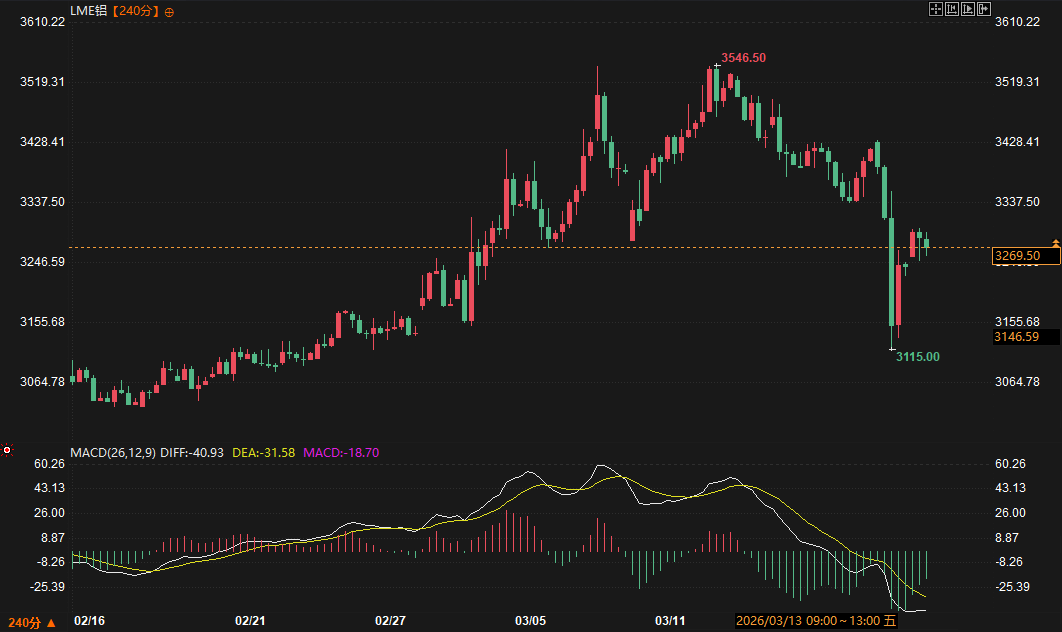
On Friday (March 20), the global commodities market showed signs of stabilizing after a period of volatility, with aluminum prices entering a stalemate between bulls and bears after experiencing sharp fluctuations. According to the latest market data, the three-month aluminum price on the London Metal Exchange (LME) was $3,269 per ton in the early morning session, a slight increase of 0.5% . Looking back at the previous trading day, aluminum prices plummeted by as much as 8.4% due to large-scale liquidation of speculative positions, ultimately closing down 4.4% . This deep "V-shaped" reversal expectation was not strongly corrected today, reflecting the market's cautious sentiment after extreme volatility. Currently, the aluminum market is at a crossroads where supply-side disturbances and demand-side contraction pressures are offsetting each other. Although volatility has converged, the overall tone remains cautious.
From a macro-narrative perspective, the current pricing power of aluminum is mainly concentrated in two dimensions: geopolitical situation and energy costs .
On the supply side, the dynamics of the situation in the Middle East directly threaten the security of approximately 8% of global production capacity. With the Strait of Hormuz effectively closed, logistical bottlenecks have become a real challenge. The prevailing market view points out that although some companies, such as Aluminium Bahrain, have begun to attempt transshipment exports via Saudi Arabia's Jeddah port, the limited capacity of this alternative route and the additional logistical costs still support the bottoming logic for aluminum prices.
However, the supply-side premium is being offset by expectations of a demand-side recession. High oil prices continue to trigger global inflation concerns and significantly weaken the expansion momentum of the manufacturing sector. The market observes that the sharp fluctuations in oil prices are eroding the demand buffer for metals. Once energy prices trigger a systemic slowdown in global economic growth, the growth rate of aluminum consumption as an industrial raw material will inevitably come under pressure. This interplay between "supply tightening" and "weak demand" has resulted in significant fluctuations around $3250 .
From a technical perspective, yesterday's sharp decline released the previously pent-up bullish sentiment. After the sell-off, the current stabilization is more of a technical correction.
Support and resistance range prediction:
Reference contract: LME 3-month aluminum (CMAL3)
Key resistance zone: $3350 - $3420 . If a breakout with significant volume fails to occur, the upside potential will be limited.
Key support zone: $3150 - $3200 . A break below this level could trigger a new round of technical stop-loss orders.
Key points to watch during trading: We need to pay close attention to whether the negative correlation between crude oil prices and metal price trends strengthens, as well as the progress made by Western countries in securing key shipping lanes, which directly determines the premium level in the aluminum market.
Looking ahead, the short-term trend of aluminum prices will largely depend on the speed of de-escalation of geopolitical tensions and the rebalancing of global energy costs. The spot premium in the aluminum market may persist until logistics routes fully return to normal, providing support for near-month contracts. However, the strength of the recovery in long-term demand remains uncertain due to weak global manufacturing Purchasing Managers' Index (PMI) data. Technically, the market needs a period of sideways consolidation to absorb the negative psychological impact of yesterday's sharp drop. Without further positive fundamental stimulus, aluminum prices are likely to remain within a highly volatile range. It is recommended to monitor inventory data changes to confirm the extent to which supply disruptions affect actual arrivals.
1. Why did aluminum prices experience an extreme drop of over 8% yesterday, but remain stable today?
Yesterday's sharp drop was mainly triggered by a stampede effect of speculative long positions being liquidated . After a rapid surge due to geopolitical premiums, market concerns about high oil prices dragging down the economy reached a critical point, leading to a concentrated exodus of funds. Today's stability is because, after the extreme volatility, both bulls and bears are awaiting clearer macroeconomic signals, and the market has entered a period of observation for the redistribution of resources.
2. What is the actual impact of the Middle East logistics disruptions on the global aluminum supply?
The region accounts for 8% of global aluminum production. The closure of the Strait of Hormuz means that this production is blocked from entering the international market. Although transshipment to Jeddah by land can alleviate some of the pressure, the longer logistics cycle and increased costs are inevitable, which will provide long-term support for prices.
3. How does the current aluminum price trend correlate with other base metals (such as copper and zinc)?
The metals market has been generally weak recently, with copper prices experiencing their biggest weekly drop since April 2025. Aluminum has been more "independent" and volatile in this round of price movements due to supply risks in specific regions. However, overall, all base metals have been suppressed by high energy consumption and the shadow of a slowing macroeconomy.
4. Why does the rise in oil prices have a two-way impact on aluminum prices?
This is a classic logical paradox. On the one hand, as an energy-intensive metal, rising oil prices drive up electricity costs, supporting aluminum prices from the production side. On the other hand, excessively high oil prices can trigger global inflation and suppress manufacturing investment, thus depressing aluminum prices from the demand side. The current market leans towards the latter, namely, concerns about stagnant growth due to high inflation .
5. What signals should investors pay attention to as evidence that aluminum prices are stabilizing?
First, we need to pay attention to the stability of crude oil prices . If oil prices continue to fall, it will alleviate market anxiety about inflation. Second, we need to observe the inventory changes on the LME and SHFE. If inventories continue to decline, it indicates that the impact of supply disruptions has become apparent. Finally, we need to see if the technical indicators can form a solid bottom pattern above $3,200 .
In-depth analysis of fundamentals and technical aspects
From a macro-narrative perspective, the current pricing power of aluminum is mainly concentrated in two dimensions: geopolitical situation and energy costs .
On the supply side, the dynamics of the situation in the Middle East directly threaten the security of approximately 8% of global production capacity. With the Strait of Hormuz effectively closed, logistical bottlenecks have become a real challenge. The prevailing market view points out that although some companies, such as Aluminium Bahrain, have begun to attempt transshipment exports via Saudi Arabia's Jeddah port, the limited capacity of this alternative route and the additional logistical costs still support the bottoming logic for aluminum prices.
However, the supply-side premium is being offset by expectations of a demand-side recession. High oil prices continue to trigger global inflation concerns and significantly weaken the expansion momentum of the manufacturing sector. The market observes that the sharp fluctuations in oil prices are eroding the demand buffer for metals. Once energy prices trigger a systemic slowdown in global economic growth, the growth rate of aluminum consumption as an industrial raw material will inevitably come under pressure. This interplay between "supply tightening" and "weak demand" has resulted in significant fluctuations around $3250 .
From a technical perspective, yesterday's sharp decline released the previously pent-up bullish sentiment. After the sell-off, the current stabilization is more of a technical correction.
Support and resistance range prediction:
Reference contract: LME 3-month aluminum (CMAL3)
Key resistance zone: $3350 - $3420 . If a breakout with significant volume fails to occur, the upside potential will be limited.
Key support zone: $3150 - $3200 . A break below this level could trigger a new round of technical stop-loss orders.
Key points to watch during trading: We need to pay close attention to whether the negative correlation between crude oil prices and metal price trends strengthens, as well as the progress made by Western countries in securing key shipping lanes, which directly determines the premium level in the aluminum market.
Future Trend Outlook
Looking ahead, the short-term trend of aluminum prices will largely depend on the speed of de-escalation of geopolitical tensions and the rebalancing of global energy costs. The spot premium in the aluminum market may persist until logistics routes fully return to normal, providing support for near-month contracts. However, the strength of the recovery in long-term demand remains uncertain due to weak global manufacturing Purchasing Managers' Index (PMI) data. Technically, the market needs a period of sideways consolidation to absorb the negative psychological impact of yesterday's sharp drop. Without further positive fundamental stimulus, aluminum prices are likely to remain within a highly volatile range. It is recommended to monitor inventory data changes to confirm the extent to which supply disruptions affect actual arrivals.
Frequently Asked Questions
1. Why did aluminum prices experience an extreme drop of over 8% yesterday, but remain stable today?
Yesterday's sharp drop was mainly triggered by a stampede effect of speculative long positions being liquidated . After a rapid surge due to geopolitical premiums, market concerns about high oil prices dragging down the economy reached a critical point, leading to a concentrated exodus of funds. Today's stability is because, after the extreme volatility, both bulls and bears are awaiting clearer macroeconomic signals, and the market has entered a period of observation for the redistribution of resources.
2. What is the actual impact of the Middle East logistics disruptions on the global aluminum supply?
The region accounts for 8% of global aluminum production. The closure of the Strait of Hormuz means that this production is blocked from entering the international market. Although transshipment to Jeddah by land can alleviate some of the pressure, the longer logistics cycle and increased costs are inevitable, which will provide long-term support for prices.
3. How does the current aluminum price trend correlate with other base metals (such as copper and zinc)?
The metals market has been generally weak recently, with copper prices experiencing their biggest weekly drop since April 2025. Aluminum has been more "independent" and volatile in this round of price movements due to supply risks in specific regions. However, overall, all base metals have been suppressed by high energy consumption and the shadow of a slowing macroeconomy.
4. Why does the rise in oil prices have a two-way impact on aluminum prices?
This is a classic logical paradox. On the one hand, as an energy-intensive metal, rising oil prices drive up electricity costs, supporting aluminum prices from the production side. On the other hand, excessively high oil prices can trigger global inflation and suppress manufacturing investment, thus depressing aluminum prices from the demand side. The current market leans towards the latter, namely, concerns about stagnant growth due to high inflation .
5. What signals should investors pay attention to as evidence that aluminum prices are stabilizing?
First, we need to pay attention to the stability of crude oil prices . If oil prices continue to fall, it will alleviate market anxiety about inflation. Second, we need to observe the inventory changes on the LME and SHFE. If inventories continue to decline, it indicates that the impact of supply disruptions has become apparent. Finally, we need to see if the technical indicators can form a solid bottom pattern above $3,200 .
- Risk Warning and Disclaimer
- The market involves risk, and trading may not be suitable for all investors. This article is for reference only and does not constitute personal investment advice, nor does it take into account certain users’ specific investment objectives, financial situation, or other needs. Any investment decisions made based on this information are at your own risk.