Iran has made it clear: the Strait of Hormuz is not closed, but "hostile ships" will be prosecuted; the Strait of Hormuz is changing!
2026-03-23 09:13:52
Iran's Foreign Ministry issued a formal statement last Sunday (March 22), making a clear statement on the issue of navigation safety in the Strait of Hormuz in the context of the current US-Israel war against Iran. The statement first clarified that the Strait of Hormuz has not been blocked, but emphasized that ships must comply with the "necessary measures" taken due to the war situation.
Iran also articulated its principled stance on shipping and navigation safety in the Straits, essentially drawing a clear red line: distinguishing between hostile and non-hostile vessels and linking the right of passage to Iran's legitimate interests. This statement is a formal policy signal from Iran to the international community amid ongoing conflict and heightened tensions in global energy markets.
The statement denied blocking the Strait of Hormuz to appease the market, but effectively tightened freedom of navigation by attaching military conditions and strengthening on-site control. On Monday (March 23) during Asian trading hours, US crude oil prices rose and then fell, currently trading around $98.25 per barrel. Earlier in the session, prices jumped 3% to $101.50 per barrel, a new high since March 9.
The statement indicated that the Strait of Hormuz is not currently blocked, and ships can continue to pass through. This statement aims to alleviate extreme market panic regarding a "complete blockade" and prevent oil prices from rising uncontrollably due to misjudgment.
However, the condition of "subject to compliance with necessary measures taken due to the war situation" means that Iran reserves the right to adjust the rules of passage at any time according to the battlefield situation. In practice, Iran has strengthened patrols and inspections of the Strait through its navy, coast guard, and revolutionary guard, and passing ships are subject to stricter screening and coordination, resulting in a significant decrease in freedom of navigation compared to before the war.
The strongest part of the statement is that it explicitly excludes vessels belonging to the United States, Israel, and other countries involved in the aggression from "normal and non-hostile passage conditions." Iran stated that it will "deal with them according to law," a statement that suggests possible interception, seizure, expulsion, or even more stringent measures.
This principle directly targets U.S. Navy ships, merchant ships of U.S. allies participating in escort missions, and any ships flying or associated with Israel. It essentially weaponizes the right of passage through the Straits, aiming to increase the military and economic costs for the U.S. and its allies.
For vessels from other countries or those with ties to Iran that are not hostile, Iran offers relatively lenient but conditional passage: three requirements must be met simultaneously.
1. Did not participate in or cooperate with acts of aggression against Iran;
2. Comply with the security regulations and measures published by Iran;
3. It can only be approved after coordination with the relevant Iranian authorities.
This mechanism means that ships from neutral or non-participating countries can theoretically still pass through, but they must declare in advance, undergo inspections, and comply with "safety regulations" unilaterally formulated by Iran, significantly reducing their autonomy in passage.
Iran's move maintains the "nominal openness" of the Straits as a global energy corridor while simultaneously achieving de facto control through a coordination mechanism.
The statement concluded by emphasizing that three political preconditions must be met to achieve "sustainable security and stability" in the Strait of Hormuz:
1. Military aggression and threats against Iran must cease;
2. The actions by the United States and Israel to destabilize Iran must cease;
3. Iran’s legitimate interests must be fully respected.
These three points constitute Iran's bottom-line demands, essentially linking freedom of navigation in the Strait with a comprehensive resolution of the conflict. This implies that unless the US and Israel cease military operations and make concessions in negotiations, the tension in the Strait will persist for a long time, and the global energy market will find it difficult to return to pre-war stability.
While acknowledging that the Strait of Hormuz is "not blocked," Iran's Foreign Ministry statement has essentially politicized and militarized its passage rules to a high degree: US and warring nations' vessels are explicitly excluded, non-hostile vessels must accept unilateral Iranian coordination and inspection, and the restoration of stability in the strait is directly tied to the cessation of US and Israeli military operations and respect for Iranian interests. This statement avoids a catastrophic global energy backlash caused by a complete blockade while maintaining strategic deterrence against the US and Israel through "conditional opening."
In the short term, navigation across the Taiwan Strait will remain highly controlled, and oil tanker shipping costs and insurance expenses will continue to be high. In the medium to long term, unless there is a major diplomatic breakthrough, Iran's "red line principle" will keep the global energy supply chain in a fragile and uncertain state for a long time, and the high-level fluctuation pattern of oil prices will be difficult to fundamentally change.
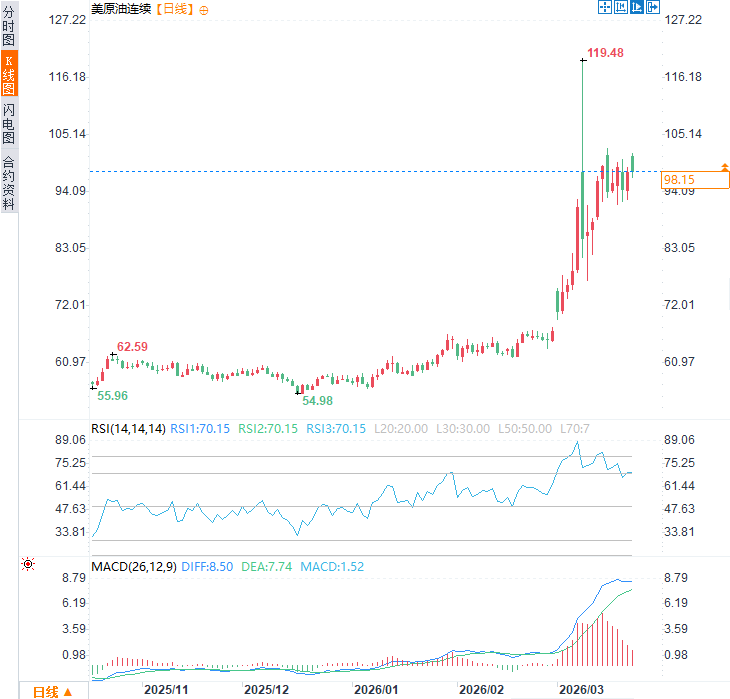
(US crude oil daily chart, source: FX678)
At 9:13 Beijing time, US crude oil futures were trading at $98.43 per barrel.
Iran also articulated its principled stance on shipping and navigation safety in the Straits, essentially drawing a clear red line: distinguishing between hostile and non-hostile vessels and linking the right of passage to Iran's legitimate interests. This statement is a formal policy signal from Iran to the international community amid ongoing conflict and heightened tensions in global energy markets.
The statement denied blocking the Strait of Hormuz to appease the market, but effectively tightened freedom of navigation by attaching military conditions and strengthening on-site control. On Monday (March 23) during Asian trading hours, US crude oil prices rose and then fell, currently trading around $98.25 per barrel. Earlier in the session, prices jumped 3% to $101.50 per barrel, a new high since March 9.
Current status of passage through the Strait of Hormuz
The statement indicated that the Strait of Hormuz is not currently blocked, and ships can continue to pass through. This statement aims to alleviate extreme market panic regarding a "complete blockade" and prevent oil prices from rising uncontrollably due to misjudgment.
However, the condition of "subject to compliance with necessary measures taken due to the war situation" means that Iran reserves the right to adjust the rules of passage at any time according to the battlefield situation. In practice, Iran has strengthened patrols and inspections of the Strait through its navy, coast guard, and revolutionary guard, and passing ships are subject to stricter screening and coordination, resulting in a significant decrease in freedom of navigation compared to before the war.
Principles for handling ships of the United States and countries that participated in aggression
The strongest part of the statement is that it explicitly excludes vessels belonging to the United States, Israel, and other countries involved in the aggression from "normal and non-hostile passage conditions." Iran stated that it will "deal with them according to law," a statement that suggests possible interception, seizure, expulsion, or even more stringent measures.
This principle directly targets U.S. Navy ships, merchant ships of U.S. allies participating in escort missions, and any ships flying or associated with Israel. It essentially weaponizes the right of passage through the Straits, aiming to increase the military and economic costs for the U.S. and its allies.
Other non-hostile vessel passage conditions and requirements
For vessels from other countries or those with ties to Iran that are not hostile, Iran offers relatively lenient but conditional passage: three requirements must be met simultaneously.
1. Did not participate in or cooperate with acts of aggression against Iran;
2. Comply with the security regulations and measures published by Iran;
3. It can only be approved after coordination with the relevant Iranian authorities.
This mechanism means that ships from neutral or non-participating countries can theoretically still pass through, but they must declare in advance, undergo inspections, and comply with "safety regulations" unilaterally formulated by Iran, significantly reducing their autonomy in passage.
Iran's move maintains the "nominal openness" of the Straits as a global energy corridor while simultaneously achieving de facto control through a coordination mechanism.
Prerequisites for the full restoration of stability across the Taiwan Strait
The statement concluded by emphasizing that three political preconditions must be met to achieve "sustainable security and stability" in the Strait of Hormuz:
1. Military aggression and threats against Iran must cease;
2. The actions by the United States and Israel to destabilize Iran must cease;
3. Iran’s legitimate interests must be fully respected.
These three points constitute Iran's bottom-line demands, essentially linking freedom of navigation in the Strait with a comprehensive resolution of the conflict. This implies that unless the US and Israel cease military operations and make concessions in negotiations, the tension in the Strait will persist for a long time, and the global energy market will find it difficult to return to pre-war stability.
Editor's Summary
While acknowledging that the Strait of Hormuz is "not blocked," Iran's Foreign Ministry statement has essentially politicized and militarized its passage rules to a high degree: US and warring nations' vessels are explicitly excluded, non-hostile vessels must accept unilateral Iranian coordination and inspection, and the restoration of stability in the strait is directly tied to the cessation of US and Israeli military operations and respect for Iranian interests. This statement avoids a catastrophic global energy backlash caused by a complete blockade while maintaining strategic deterrence against the US and Israel through "conditional opening."
In the short term, navigation across the Taiwan Strait will remain highly controlled, and oil tanker shipping costs and insurance expenses will continue to be high. In the medium to long term, unless there is a major diplomatic breakthrough, Iran's "red line principle" will keep the global energy supply chain in a fragile and uncertain state for a long time, and the high-level fluctuation pattern of oil prices will be difficult to fundamentally change.
(US crude oil daily chart, source: FX678)
At 9:13 Beijing time, US crude oil futures were trading at $98.43 per barrel.
- Risk Warning and Disclaimer
- The market involves risk, and trading may not be suitable for all investors. This article is for reference only and does not constitute personal investment advice, nor does it take into account certain users’ specific investment objectives, financial situation, or other needs. Any investment decisions made based on this information are at your own risk.