Eight years of wrangling, finally signed: the EU-Australia Free Trade Agreement was forced into existence.
2026-03-24 15:24:15
On March 24, 2026, European Commission President Ursula von der Leyen and Australian Prime Minister Anthony Albanese officially signed a free trade agreement (FTA), bringing an end to this "hard-to-crack" negotiation that lasted eight years and experienced multiple breakdowns and reversals.
This agreement, dubbed "HardYakka" by Australian media, not only ended the long-standing trade deadlock between the two sides, but also built a strategic partnership spanning the hemisphere against the backdrop of global geopolitical tensions and rising trade protectionism.
The energy crisis stemming from global geopolitical risks and the continued tariffs imposed by the United States are key drivers of this protracted trade agreement negotiation.
The delay in the agreement's implementation stems from deep-seated competition between the two sides in three major areas:
The battle over market access for agricultural products: As a major agricultural country, Australia has consistently demanded that the EU significantly increase its import quotas for beef, lamb, and sugar. However, farmers in EU member states such as France and Ireland strongly oppose this, fearing that cheap Australian agricultural products will flood their domestic markets.
The final compromise agreed that Australia's beef quota to the EU would increase more than tenfold within ten years, but this still did not fully meet the expectations of Australian farmers; at the same time, Australia would receive an initial quota of about 30,000 tons of red meat, opening up new channels for agricultural exports.
Geographical Indication Protection Battle: The European Union is extremely persistent in protecting geographical indications (GIs) such as "Prosecco," "Feta," and "Parmesan," insisting that Australian manufacturers stop using these names that have European regional characteristics, while Australian producers argue that these names have become common business terms.
The two parties ultimately agreed that Australian wine merchants could continue to use the name "Prosecco" domestically, but exported products would need to be renamed within ten years; for cheese names such as Feta and Gruyère, producers could continue to retain them if they had been using them for more than five years.
Disputes over drug prices and intellectual property rights: The EU had proposed extending the patent protection period for drugs, but this was rejected by Australia on the grounds that it would increase healthcare costs and harm the interests of its citizens. This dispute was only resolved through mutual concessions in the later stages of negotiations.
Profound changes in the global situation became a key catalyst for the signing of the agreement, with three core driving forces prompting both sides to set aside their differences and accelerate cooperation:
The direct catalyst for the shadow of US tariffs: In early 2026, the Trump administration restarted its global high tariff policy, imposing a 15% tariff on imported goods, breaking the tariff preferences brought about by the free trade agreement between Australia and the United States, and also putting the European Union under severe trade pressure.
As a crucial step in jointly addressing the impact of US trade, both sides recognized the urgent need to establish a stable and transparent trade alliance to mitigate the uncertainties in the global trade environment. Data shows that the EU is Australia's third-largest trading partner, accounting for 20% of its total exports, far exceeding the US's 5%. This foundation of cooperation makes "sticking together for mutual support" an inevitable choice.
Strategic complementary needs for key minerals: The EU is at a critical stage of its green energy transition and has an increasingly urgent need for key minerals such as lithium, cobalt, and tungsten, while Australia has world-class mineral reserves.
To reduce dependence on a single supplier, the EU made substantial concessions on agricultural access in exchange for priority supply guarantees of key minerals from Australia. The two sides had previously signed a memorandum of understanding on cooperation in key minerals, covering the entire value chain from exploration and mining to processing; the signing of the free trade agreement further solidified this strategic cooperation.
The shared need for trade diversification: For Australia, the trade dispute in 2020, which hampered agricultural exports for several years, coupled with changes in US tariff policy, prompted Canberra to accelerate the development of diversified markets.
The EU, on the other hand, faces US tariff barriers and urgently needs to expand its trading partners.
Through this agreement, Australian wines and seafood can enter the high-end market of 450 million consumers in the EU, while EU cars such as Mercedes-Benz and BMW, as well as luxury goods, will enjoy a 5% tariff reduction when entering Australia. Both sides have achieved the goal of "de-risking" their single trading partner.
According to EU forecasts, the agreement will boost EU exports to Australia by one-third over a decade.
By 2025, EU exports of goods to Australia will reach €37 billion (approximately US$42.9 billion), while service exports reached €31 billion in 2024. The implementation of the free trade agreement will further amplify this trade volume.
European automakers will directly benefit from Australia's policy of raising the tax threshold for luxury electric vehicles. In the future, three-quarters of EU electric vehicles will be exempt from taxes, significantly enhancing their market competitiveness.
It is worth noting that this signing is not limited to the trade field: the two sides also signed a defense cooperation agreement to strengthen cooperation in the fields of cybersecurity and maritime security. Ursula von der Leyen made it clear in the Australian Parliament that "our security is your security, and we will support each other through this new security and defense partnership."
This dual cooperation model of "trade + defense" highlights the deep bond between the two sides based on shared values.
The agreement was signed against the backdrop of what Ursula von der Leyen described as a “cruel, harsh and ruthless” world: the Middle East conflict has driven up international oil prices, and International Energy Agency Executive Director Fatih Birol has warned that the world may face an energy crisis unseen in decades.
As a country reliant on fuel imports, Australia, like the European Union, is under pressure from strained energy supply chains.
In this context, free trade agreements not only facilitate trade, but also encompass multiple strategic considerations such as supply chain diversification and energy security.
For Australia, China remains its largest export market and the United States its largest source of investment, but through cooperation with the European Union, its export market structure has been optimized.
The EU is using this agreement to further advance its trade diversification strategy and address trade challenges from both China and the US.
As Ursula von der Leyen stated, "We must not become overly reliant on any single supplier for critical raw materials, which is precisely why we need each other." This free trade agreement, which took eight years to develop, ultimately became a strategic choice for both sides to hedge risks and seek common development amidst global uncertainty.
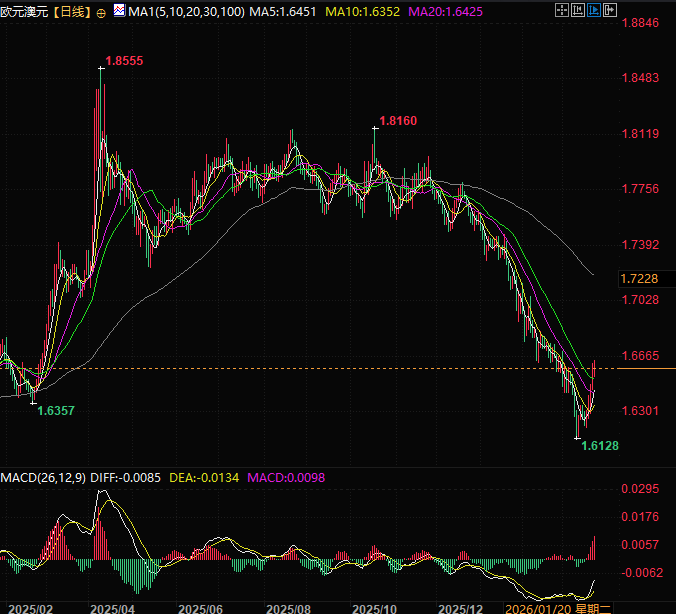
(Euro/Australian Dollar Daily Chart, Source: EasyForex)
At 15:21 Beijing time, the euro was trading at 1.6593/94 against the Australian dollar.
This agreement, dubbed "HardYakka" by Australian media, not only ended the long-standing trade deadlock between the two sides, but also built a strategic partnership spanning the hemisphere against the backdrop of global geopolitical tensions and rising trade protectionism.
The energy crisis stemming from global geopolitical risks and the continued tariffs imposed by the United States are key drivers of this protracted trade agreement negotiation.
Three core disagreements: the key issues hindering the signing
The delay in the agreement's implementation stems from deep-seated competition between the two sides in three major areas:
The battle over market access for agricultural products: As a major agricultural country, Australia has consistently demanded that the EU significantly increase its import quotas for beef, lamb, and sugar. However, farmers in EU member states such as France and Ireland strongly oppose this, fearing that cheap Australian agricultural products will flood their domestic markets.
The final compromise agreed that Australia's beef quota to the EU would increase more than tenfold within ten years, but this still did not fully meet the expectations of Australian farmers; at the same time, Australia would receive an initial quota of about 30,000 tons of red meat, opening up new channels for agricultural exports.
Geographical Indication Protection Battle: The European Union is extremely persistent in protecting geographical indications (GIs) such as "Prosecco," "Feta," and "Parmesan," insisting that Australian manufacturers stop using these names that have European regional characteristics, while Australian producers argue that these names have become common business terms.
The two parties ultimately agreed that Australian wine merchants could continue to use the name "Prosecco" domestically, but exported products would need to be renamed within ten years; for cheese names such as Feta and Gruyère, producers could continue to retain them if they had been using them for more than five years.
Disputes over drug prices and intellectual property rights: The EU had proposed extending the patent protection period for drugs, but this was rejected by Australia on the grounds that it would increase healthcare costs and harm the interests of its citizens. This dispute was only resolved through mutual concessions in the later stages of negotiations.
Three strategic driving forces: the historical context that led to the signing
Profound changes in the global situation became a key catalyst for the signing of the agreement, with three core driving forces prompting both sides to set aside their differences and accelerate cooperation:
The direct catalyst for the shadow of US tariffs: In early 2026, the Trump administration restarted its global high tariff policy, imposing a 15% tariff on imported goods, breaking the tariff preferences brought about by the free trade agreement between Australia and the United States, and also putting the European Union under severe trade pressure.
As a crucial step in jointly addressing the impact of US trade, both sides recognized the urgent need to establish a stable and transparent trade alliance to mitigate the uncertainties in the global trade environment. Data shows that the EU is Australia's third-largest trading partner, accounting for 20% of its total exports, far exceeding the US's 5%. This foundation of cooperation makes "sticking together for mutual support" an inevitable choice.
Strategic complementary needs for key minerals: The EU is at a critical stage of its green energy transition and has an increasingly urgent need for key minerals such as lithium, cobalt, and tungsten, while Australia has world-class mineral reserves.
To reduce dependence on a single supplier, the EU made substantial concessions on agricultural access in exchange for priority supply guarantees of key minerals from Australia. The two sides had previously signed a memorandum of understanding on cooperation in key minerals, covering the entire value chain from exploration and mining to processing; the signing of the free trade agreement further solidified this strategic cooperation.
The shared need for trade diversification: For Australia, the trade dispute in 2020, which hampered agricultural exports for several years, coupled with changes in US tariff policy, prompted Canberra to accelerate the development of diversified markets.
The EU, on the other hand, faces US tariff barriers and urgently needs to expand its trading partners.
Through this agreement, Australian wines and seafood can enter the high-end market of 450 million consumers in the EU, while EU cars such as Mercedes-Benz and BMW, as well as luxury goods, will enjoy a 5% tariff reduction when entering Australia. Both sides have achieved the goal of "de-risking" their single trading partner.
Agreement Implemented: Economic Benefits and Strategic Value Become More Prominent
According to EU forecasts, the agreement will boost EU exports to Australia by one-third over a decade.
By 2025, EU exports of goods to Australia will reach €37 billion (approximately US$42.9 billion), while service exports reached €31 billion in 2024. The implementation of the free trade agreement will further amplify this trade volume.
European automakers will directly benefit from Australia's policy of raising the tax threshold for luxury electric vehicles. In the future, three-quarters of EU electric vehicles will be exempt from taxes, significantly enhancing their market competitiveness.
It is worth noting that this signing is not limited to the trade field: the two sides also signed a defense cooperation agreement to strengthen cooperation in the fields of cybersecurity and maritime security. Ursula von der Leyen made it clear in the Australian Parliament that "our security is your security, and we will support each other through this new security and defense partnership."
This dual cooperation model of "trade + defense" highlights the deep bond between the two sides based on shared values.
Realistic considerations under global changes
The agreement was signed against the backdrop of what Ursula von der Leyen described as a “cruel, harsh and ruthless” world: the Middle East conflict has driven up international oil prices, and International Energy Agency Executive Director Fatih Birol has warned that the world may face an energy crisis unseen in decades.
As a country reliant on fuel imports, Australia, like the European Union, is under pressure from strained energy supply chains.
In this context, free trade agreements not only facilitate trade, but also encompass multiple strategic considerations such as supply chain diversification and energy security.
For Australia, China remains its largest export market and the United States its largest source of investment, but through cooperation with the European Union, its export market structure has been optimized.
The EU is using this agreement to further advance its trade diversification strategy and address trade challenges from both China and the US.
As Ursula von der Leyen stated, "We must not become overly reliant on any single supplier for critical raw materials, which is precisely why we need each other." This free trade agreement, which took eight years to develop, ultimately became a strategic choice for both sides to hedge risks and seek common development amidst global uncertainty.
(Euro/Australian Dollar Daily Chart, Source: EasyForex)
At 15:21 Beijing time, the euro was trading at 1.6593/94 against the Australian dollar.
- Risk Warning and Disclaimer
- The market involves risk, and trading may not be suitable for all investors. This article is for reference only and does not constitute personal investment advice, nor does it take into account certain users’ specific investment objectives, financial situation, or other needs. Any investment decisions made based on this information are at your own risk.