The pound was pressured against the dollar around 1.3420, compounded by a decline in UK services PMI expectations and escalating Middle East risks.
2026-03-24 16:03:05
Ahead of Tuesday's European session, the market is focused on the UK's upcoming preliminary March S&P Global Services Purchasing Managers' Index (PMI). The market widely expects the data to decline slightly from the previous reading of 53.9 to 53.0 , indicating a slight slowdown in the expansion momentum of the services sector. Although the overall figure remains above the 50-point threshold separating expansion from contraction, the marginal weakening of the data reflects some signs of cooling economic growth momentum.
In the current macroeconomic environment, the impact of PMI data is more about fine-tuning market expectations than about changing trends. If the data meets expectations, the market may maintain its assessment of "moderate growth" in the UK economy, but it is unlikely to provide significant support for the pound. Conversely, against the backdrop of global risk sentiment, the pound is more susceptible to external factors.
The ongoing tensions in the Middle East have become a key driver of the market. US President Donald Trump's statements about a possible agreement with Iran were quickly denied, and the risk of further escalation of the regional conflict remains. Market concerns about potential attacks on energy infrastructure could push up oil prices and exacerbate inflationary pressures. This uncertainty has prompted funds to flow into US dollar assets, strengthening their safe-haven appeal and putting pressure on the British pound.
From a monetary policy perspective, the Bank of England's decision to maintain its interest rate at 3.75% was in line with market expectations. With rising oil prices increasing inflation risks, the market is beginning to anticipate that the Bank of England may maintain a high-interest-rate environment for a longer period, and there is even a possibility of further rate hikes in 2026. This expectation will support the pound in the medium to long term, but it is unlikely to offset the impact of risk aversion in the short term.
Furthermore, market attention is gradually shifting to the upcoming UK CPI and retail sales data. These figures will provide more direct evidence for assessing the inflation path and consumption patterns, thus influencing market judgments on the Bank of England's policy. If inflation data continues to exceed expectations, it could strengthen tightening expectations, providing some support for the pound.
Meanwhile, support for the US dollar remains strong. As market expectations for a Federal Reserve rate cut cool, US Treasury yields remain high, enhancing the dollar's attractiveness. Driven by both geopolitical risks and interest rate expectations, the dollar has maintained its overall strength, putting pressure on the pound against the dollar.
From a technical perspective, the daily chart shows that the GBP/USD pair has entered a consolidation phase after its previous rise, with the price gradually falling back to near key moving averages. The current resistance level is around 1.3446 , corresponding to the 50-day exponential moving average, which also forms a confluence of resistance with the psychological level of 1.3450 . If the exchange rate fails to break through this area effectively, it will likely maintain a weak and volatile pattern in the short term.
On the 4-hour chart, the exchange rate is consolidating, with short-term moving averages gradually flattening, indicating a near balance between bullish and bearish forces. The current support level is at 1.3381 , corresponding to the 9-day moving average. A break below this level could trigger a further pullback, targeting the area around 1.3330. From a momentum perspective, the MACD is close to the zero line, suggesting that the short-term direction is unclear, but the overall trend is weak.
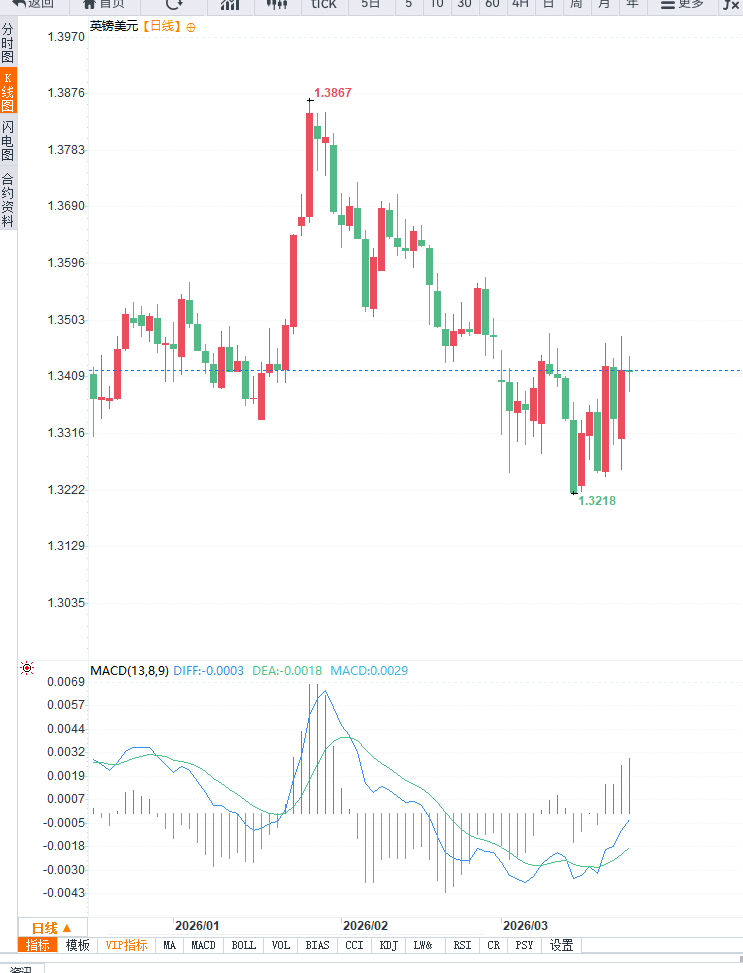
In summary, the GBP/USD pair is currently in a "correction phase after a mid-term rise." On the daily chart, the 1.3450 area forms key resistance; a break above this level is unlikely to restart the upward trend. The 4-hour chart shows a slightly bearish short-term bias, with the 1.3380 support level acting as a key level separating bullish and bearish sentiment. Overall, driven by risk sentiment, the exchange rate is expected to remain weak in the short term, and further guidance from PMI data and subsequent inflation figures is needed.
Editor's Summary : The current movement of the British pound is primarily influenced by both external risks and domestic economic data. The Middle East situation is driving safe-haven demand, keeping the US dollar strong, while marginal declines in UK economic data are limiting the pound's upside potential. Although inflation expectations support the Bank of England's hawkish stance, short-term market sentiment remains dominant. Future movements will depend on geopolitical developments and UK inflation data; investors should pay attention to breakouts at key technical levels and changes in the macroeconomic environment.
In the current macroeconomic environment, the impact of PMI data is more about fine-tuning market expectations than about changing trends. If the data meets expectations, the market may maintain its assessment of "moderate growth" in the UK economy, but it is unlikely to provide significant support for the pound. Conversely, against the backdrop of global risk sentiment, the pound is more susceptible to external factors.
The ongoing tensions in the Middle East have become a key driver of the market. US President Donald Trump's statements about a possible agreement with Iran were quickly denied, and the risk of further escalation of the regional conflict remains. Market concerns about potential attacks on energy infrastructure could push up oil prices and exacerbate inflationary pressures. This uncertainty has prompted funds to flow into US dollar assets, strengthening their safe-haven appeal and putting pressure on the British pound.
From a monetary policy perspective, the Bank of England's decision to maintain its interest rate at 3.75% was in line with market expectations. With rising oil prices increasing inflation risks, the market is beginning to anticipate that the Bank of England may maintain a high-interest-rate environment for a longer period, and there is even a possibility of further rate hikes in 2026. This expectation will support the pound in the medium to long term, but it is unlikely to offset the impact of risk aversion in the short term.
Furthermore, market attention is gradually shifting to the upcoming UK CPI and retail sales data. These figures will provide more direct evidence for assessing the inflation path and consumption patterns, thus influencing market judgments on the Bank of England's policy. If inflation data continues to exceed expectations, it could strengthen tightening expectations, providing some support for the pound.
Meanwhile, support for the US dollar remains strong. As market expectations for a Federal Reserve rate cut cool, US Treasury yields remain high, enhancing the dollar's attractiveness. Driven by both geopolitical risks and interest rate expectations, the dollar has maintained its overall strength, putting pressure on the pound against the dollar.
From a technical perspective, the daily chart shows that the GBP/USD pair has entered a consolidation phase after its previous rise, with the price gradually falling back to near key moving averages. The current resistance level is around 1.3446 , corresponding to the 50-day exponential moving average, which also forms a confluence of resistance with the psychological level of 1.3450 . If the exchange rate fails to break through this area effectively, it will likely maintain a weak and volatile pattern in the short term.
On the 4-hour chart, the exchange rate is consolidating, with short-term moving averages gradually flattening, indicating a near balance between bullish and bearish forces. The current support level is at 1.3381 , corresponding to the 9-day moving average. A break below this level could trigger a further pullback, targeting the area around 1.3330. From a momentum perspective, the MACD is close to the zero line, suggesting that the short-term direction is unclear, but the overall trend is weak.
In summary, the GBP/USD pair is currently in a "correction phase after a mid-term rise." On the daily chart, the 1.3450 area forms key resistance; a break above this level is unlikely to restart the upward trend. The 4-hour chart shows a slightly bearish short-term bias, with the 1.3380 support level acting as a key level separating bullish and bearish sentiment. Overall, driven by risk sentiment, the exchange rate is expected to remain weak in the short term, and further guidance from PMI data and subsequent inflation figures is needed.
Editor's Summary : The current movement of the British pound is primarily influenced by both external risks and domestic economic data. The Middle East situation is driving safe-haven demand, keeping the US dollar strong, while marginal declines in UK economic data are limiting the pound's upside potential. Although inflation expectations support the Bank of England's hawkish stance, short-term market sentiment remains dominant. Future movements will depend on geopolitical developments and UK inflation data; investors should pay attention to breakouts at key technical levels and changes in the macroeconomic environment.
- Risk Warning and Disclaimer
- The market involves risk, and trading may not be suitable for all investors. This article is for reference only and does not constitute personal investment advice, nor does it take into account certain users’ specific investment objectives, financial situation, or other needs. Any investment decisions made based on this information are at your own risk.