Gold Analysis: Negotiation uncertainties remain, market volatility: who will be the winner?
2026-03-24 17:54:48
On Tuesday, March 24, spot gold prices fluctuated narrowly around $4,400 per ounce. The latest developments in the Middle East were the core driver of the market. US President Trump publicly stated that he was working to reach an agreement with Iran to end regional hostilities and announced a five-day delay in strikes against Iranian energy infrastructure.
However, recent statements from senior Israeli officials suggest that despite Trump's determination to push for negotiations, Iran is unlikely to accept the core conditions demanded by the US, namely the complete cessation of its nuclear and ballistic missile programs. Iran, on the other hand, denies any substantive contact. This divergence in news has led to a slight increase in energy prices and rising global inflation expectations, directly suppressing non-yielding assets. Traders need to pay close attention to the interaction between the risk of energy supply chain disruptions and the path of monetary policy; the short-term safe-haven premium for spot gold has been partially offset by inflationary logic.

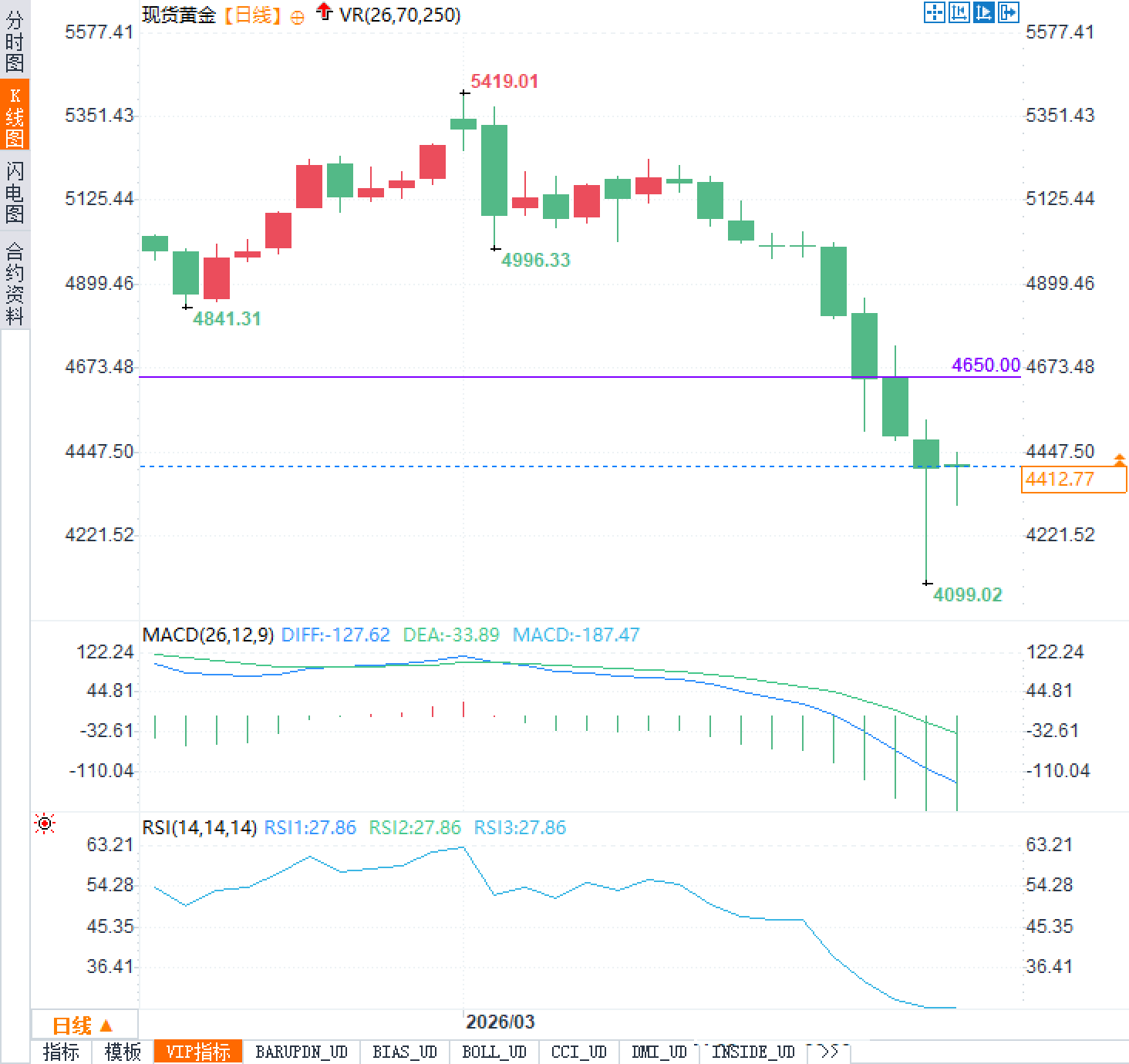
Trump's negotiating statements initially spurred a rebound in gold prices from their lows, but skepticism from Israeli officials quickly reversed market sentiment. They emphasized Iran's hardline stance, suggesting that any new round of talks would be unlikely to yield substantial results. Iran denied contact and accused related statements of market manipulation, while news of damage to energy assets expanded the spillover effects of the conflict. The risk of disruption to shipping through the Strait of Hormuz persists, directly pushing up global energy costs. Traders observed that this conflict differs from previous ones driven solely by safe-haven demand; gold prices have fallen more than 20% from their peak of $5,596 per ounce at the end of January, with a cumulative drop of over 15% since the conflict began. Latest market data shows that while gold prices have briefly rebounded, they remain under overall pressure, reflecting the market's cautious pricing in the prospects of an agreement. High energy prices are reshaping the valuation logic of risk assets, significantly increasing the holding cost of gold as a non-yielding asset.
The Middle East conflict has thrust the energy market into the spotlight, with soaring oil prices directly amplifying global inflationary pressures. Traders recognize that energy-driven cost-push inflation is prompting major central banks to reassess their monetary policy trajectories. While geopolitical risks typically benefit gold, the current energy price surge has fueled market expectations of persistently high interest rates, significantly diminishing the attractiveness of non-yielding assets. This logic aligns with financial market pricing mechanisms: rising commodity prices amplify inflation expectations through supply chain transmission, thereby compressing gold's relative valuation. Although Trump's five-day cooling-off period provided a window for negotiations, continued Israeli actions and Iranian attacks indicate that energy supply risks are unlikely to dissipate in the short term, and uncertainty surrounding the inflation path will be the dominant variable suppressing gold prices.
Trump's diplomatic strategy has shown a tendency to raise leverage before seeking dialogue, but recent comments from Israeli officials have clearly indicated a low probability of a successful agreement. Iran's denial of negotiations and maintenance of an aggressive posture have further exacerbated market concerns about a protracted conflict. Traders are deeply assessing multiple scenarios: if negotiations progress, energy prices may experience a temporary decline; if negotiations break down, the escalation of the conflict could indirectly affect gold pricing through a dual transmission of energy inflation, rather than providing pure safe-haven support. Current high volatility in gold prices reflects investors' balancing act between safe-haven demand and expectations of policy tightening. Overall, spot gold is undergoing a process of its safe-haven attributes being reshaped by macroeconomic factors.
However, recent statements from senior Israeli officials suggest that despite Trump's determination to push for negotiations, Iran is unlikely to accept the core conditions demanded by the US, namely the complete cessation of its nuclear and ballistic missile programs. Iran, on the other hand, denies any substantive contact. This divergence in news has led to a slight increase in energy prices and rising global inflation expectations, directly suppressing non-yielding assets. Traders need to pay close attention to the interaction between the risk of energy supply chain disruptions and the path of monetary policy; the short-term safe-haven premium for spot gold has been partially offset by inflationary logic.
Instantaneous reaction of spot gold to geopolitical signals
Trump's negotiating statements initially spurred a rebound in gold prices from their lows, but skepticism from Israeli officials quickly reversed market sentiment. They emphasized Iran's hardline stance, suggesting that any new round of talks would be unlikely to yield substantial results. Iran denied contact and accused related statements of market manipulation, while news of damage to energy assets expanded the spillover effects of the conflict. The risk of disruption to shipping through the Strait of Hormuz persists, directly pushing up global energy costs. Traders observed that this conflict differs from previous ones driven solely by safe-haven demand; gold prices have fallen more than 20% from their peak of $5,596 per ounce at the end of January, with a cumulative drop of over 15% since the conflict began. Latest market data shows that while gold prices have briefly rebounded, they remain under overall pressure, reflecting the market's cautious pricing in the prospects of an agreement. High energy prices are reshaping the valuation logic of risk assets, significantly increasing the holding cost of gold as a non-yielding asset.
Rising energy costs trigger inflation expectations and policy adjustments
The Middle East conflict has thrust the energy market into the spotlight, with soaring oil prices directly amplifying global inflationary pressures. Traders recognize that energy-driven cost-push inflation is prompting major central banks to reassess their monetary policy trajectories. While geopolitical risks typically benefit gold, the current energy price surge has fueled market expectations of persistently high interest rates, significantly diminishing the attractiveness of non-yielding assets. This logic aligns with financial market pricing mechanisms: rising commodity prices amplify inflation expectations through supply chain transmission, thereby compressing gold's relative valuation. Although Trump's five-day cooling-off period provided a window for negotiations, continued Israeli actions and Iranian attacks indicate that energy supply risks are unlikely to dissipate in the short term, and uncertainty surrounding the inflation path will be the dominant variable suppressing gold prices.
Negotiation uncertainty and the evolution of gold market sentiment
Trump's diplomatic strategy has shown a tendency to raise leverage before seeking dialogue, but recent comments from Israeli officials have clearly indicated a low probability of a successful agreement. Iran's denial of negotiations and maintenance of an aggressive posture have further exacerbated market concerns about a protracted conflict. Traders are deeply assessing multiple scenarios: if negotiations progress, energy prices may experience a temporary decline; if negotiations break down, the escalation of the conflict could indirectly affect gold pricing through a dual transmission of energy inflation, rather than providing pure safe-haven support. Current high volatility in gold prices reflects investors' balancing act between safe-haven demand and expectations of policy tightening. Overall, spot gold is undergoing a process of its safe-haven attributes being reshaped by macroeconomic factors.
Frequently Asked Questions
Question 1: Why did spot gold fail to continue rising after Trump announced negotiations?
A: Although the statement brought a short-term rebound, Israeli officials clearly questioned the prospects of the agreement, and Iran denied contact and maintained its attacks, causing energy prices to continue to rise and strengthening inflation expectations. The market repriced the tightening path of major central banks' policies, thus putting pressure on non-yielding gold.
Question 2: How will rising energy prices change gold's traditional safe-haven status?
A: This conflict has been accompanied by a sharp rise in energy costs, with inflation expectations dominating market pricing logic. Although gold has benefited from a risk premium in the short term, the rising cost of holding it in a high-interest-rate environment, coupled with the transmission effect of commodity prices, has caused gold prices to fall by more than 20% from their peak; cost-push inflation is weakening the attractiveness of non-yielding assets.
Question 3: How should traders view the core risks in the current gold price fluctuations?
A: The core issue lies in the combined effect of uncertainty surrounding negotiations and disruptions to the energy supply chain. In the short term, the risks associated with the Strait of Hormuz are unlikely to dissipate, and adjustments in the inflationary path will be the main factor suppressing gold prices.
- Risk Warning and Disclaimer
- The market involves risk, and trading may not be suitable for all investors. This article is for reference only and does not constitute personal investment advice, nor does it take into account certain users’ specific investment objectives, financial situation, or other needs. Any investment decisions made based on this information are at your own risk.