













The "false boom" in European manufacturing cannot mask the chill in the economy: PMI data shows a stark contrast between highs and lows.
2026-03-24 19:34:38
On Tuesday (March 24), during the Asian and European sessions, European countries released their manufacturing PMIs, which generally exceeded expectations. However, this did not provide support for exchange rates. The euro fell against the US dollar and traded around 1.1592. European stock markets also did not see a significant boost.
The preliminary March S&P Global HCOB PMI has been released, showing extreme structural divergence between the Eurozone and the UK economies: the manufacturing sector collectively performed significantly better than expected and continued to expand, while the service sector weakened across the board, dragging down the composite PMI.
The geopolitical conflict in the Middle East has boosted the manufacturing sector through defense orders and precautionary stockpiling, while simultaneously increasing business costs and suppressing end-user demand, further sounding the alarm about stagflation. The euro exchange rate is also facing a dual test from both data and the geopolitical situation.

Data shows that the Eurozone's preliminary composite PMI for March came in at 50.5, a significant drop from February's 51.9 and below market expectations of 51.1, indicating a substantial slowdown in overall private sector growth. The structural divergence was particularly pronounced: the services PMI plummeted to 50.1, below both the expected 51.0 and the previous reading of 51.9, becoming the core factor dragging down the economy; while the manufacturing PMI bucked the trend, rising to 51.4, far exceeding the expected 49.4 and significantly recovering from the previous reading of 50.8.
Manufacturing performance across the board exceeded expectations in core Eurozone countries: Germany's March manufacturing PMI surged to 51.7, significantly exceeding the expected 49.5 and further strengthening from the previous value of 50.9, continuing its expansionary trend; France's manufacturing PMI recorded 50.2, higher than the expected 49.5 and slightly higher than the previous value of 50.1, firmly above the expansion threshold.
The UK economy also exhibits a pattern of "strong manufacturing and weak services": the composite PMI fell to 51.0 in March, a significant drop from 53.7 in February; the services PMI dropped to 51.2, far below the previous value of 53.9; and the manufacturing PMI was 51.4, a slight decrease from the previous value of 51.7, but significantly better than the expected 50.1, still maintaining steady expansion.
The unexpected expansion of manufacturing in the Eurozone, as well as in the UK, Germany, and France, was not driven by a recovery in private consumption, but rather by the wartime mobilization effect under geopolitical conflicts.
The European manufacturing new orders index hit a near two-year high in March, driven primarily by the fact that following the escalation of the conflict in the Middle East, countries such as Germany, France, and Poland accelerated their military buildup efforts, with production lines for tank parts, drone components, and ammunition operating at full capacity, directly boosting manufacturing output and orders.
In contrast, the UK, relying on its key logistical role within NATO, saw a surge in orders for its aerospace and defense industries in March. This effectively offset the impact of high inflation on sectors such as retail, becoming a crucial support for preventing a significant decline in the manufacturing sector.
Meanwhile, preventative restocking and logistical delays artificially inflated the PMI reading. Concerns about a Suez Canal blockade and attacks on energy facilities led European companies to abandon just-in-time (JIT) practices and stockpile raw materials on a large scale. These purchases were directly reflected in the PMI inventory sub-index, making the data appear more volatile.
Supplier delivery time, as an inverse indicator of the PMI, is significantly extended due to logistical disruptions caused by geopolitical conflicts. This inversely pushes up the composite PMI in the weighted calculation. This is not a healthy supply shortage, but rather a data distortion caused by supply chain disruptions, which masks the true weakness of end-user demand.
The most alarming signal from the March PMI is the sharp rise in the input price index, indicating increasingly pronounced stagflation characteristics.
Affected by the uncertainty of the situation in the Middle East, energy prices are expected to spiral out of control. Companies rushed to place orders before raw material prices rose, creating a false impression of expansion through a "buying frenzy," but causing cost pressures to rise uncontrollably.
S&P Global Chief Business Economist Chris Williamson bluntly stated that the Middle East conflict is simultaneously pushing up prices and suppressing growth, and the Eurozone has already sounded the alarm for stagflation. The energy price surge and shipping disruptions triggered by the conflict have caused business cost increases to reach a more than three-year high, and supplier delivery delays have risen to their highest level since mid-2022.
British businesses are more directly attributing their business losses to geopolitical disturbances, with tightening customer risk appetite, high prices, high interest rates, and supply chain disruptions all contributing to suppressing economic activity.
The stronger-than-expected manufacturing PMIs in Germany, France, and the Eurozone will provide some support for the euro in the short term; however, the continued weakness in the service sector, the decline in the composite PMI, and the rising risk of stagflation will put downward pressure on the euro.
Compared to short-term PMI data fluctuations, the ongoing developments in the Middle East conflict remain the core factor driving the euro's exchange rate against the US dollar.
Geopolitical risks leading to energy price volatility and supply chain disruptions will continue to influence the prospects for European economic recovery and the ECB's policy expectations, thereby determining the medium-term trajectory of the euro.
Technically, the euro retreated against the dollar due to the previous triple top pattern, and then found strong support at 1.1500.
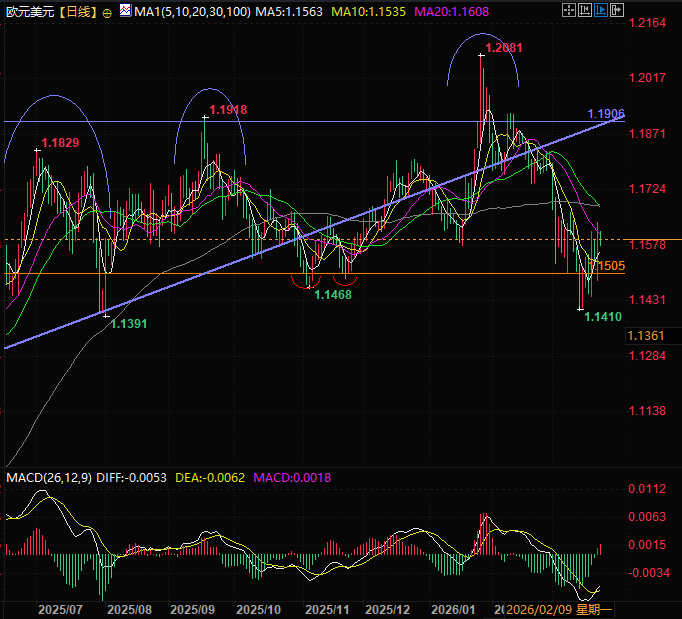
(Euro/USD daily chart, source: EasyForex)
At 19:33 Beijing time, the euro was trading at 1.1594/93 against the US dollar.
The preliminary March S&P Global HCOB PMI has been released, showing extreme structural divergence between the Eurozone and the UK economies: the manufacturing sector collectively performed significantly better than expected and continued to expand, while the service sector weakened across the board, dragging down the composite PMI.
The geopolitical conflict in the Middle East has boosted the manufacturing sector through defense orders and precautionary stockpiling, while simultaneously increasing business costs and suppressing end-user demand, further sounding the alarm about stagflation. The euro exchange rate is also facing a dual test from both data and the geopolitical situation.
Data shows that the Eurozone's preliminary composite PMI for March came in at 50.5, a significant drop from February's 51.9 and below market expectations of 51.1, indicating a substantial slowdown in overall private sector growth. The structural divergence was particularly pronounced: the services PMI plummeted to 50.1, below both the expected 51.0 and the previous reading of 51.9, becoming the core factor dragging down the economy; while the manufacturing PMI bucked the trend, rising to 51.4, far exceeding the expected 49.4 and significantly recovering from the previous reading of 50.8.
Manufacturing performance across the board exceeded expectations in core Eurozone countries: Germany's March manufacturing PMI surged to 51.7, significantly exceeding the expected 49.5 and further strengthening from the previous value of 50.9, continuing its expansionary trend; France's manufacturing PMI recorded 50.2, higher than the expected 49.5 and slightly higher than the previous value of 50.1, firmly above the expansion threshold.
The UK economy also exhibits a pattern of "strong manufacturing and weak services": the composite PMI fell to 51.0 in March, a significant drop from 53.7 in February; the services PMI dropped to 51.2, far below the previous value of 53.9; and the manufacturing PMI was 51.4, a slight decrease from the previous value of 51.7, but significantly better than the expected 50.1, still maintaining steady expansion.
Manufacturing sector bucks the trend and strengthens: Defense-driven "wartime mobilization" and speculative hoarding.
The unexpected expansion of manufacturing in the Eurozone, as well as in the UK, Germany, and France, was not driven by a recovery in private consumption, but rather by the wartime mobilization effect under geopolitical conflicts.
The European manufacturing new orders index hit a near two-year high in March, driven primarily by the fact that following the escalation of the conflict in the Middle East, countries such as Germany, France, and Poland accelerated their military buildup efforts, with production lines for tank parts, drone components, and ammunition operating at full capacity, directly boosting manufacturing output and orders.
In contrast, the UK, relying on its key logistical role within NATO, saw a surge in orders for its aerospace and defense industries in March. This effectively offset the impact of high inflation on sectors such as retail, becoming a crucial support for preventing a significant decline in the manufacturing sector.
Meanwhile, preventative restocking and logistical delays artificially inflated the PMI reading. Concerns about a Suez Canal blockade and attacks on energy facilities led European companies to abandon just-in-time (JIT) practices and stockpile raw materials on a large scale. These purchases were directly reflected in the PMI inventory sub-index, making the data appear more volatile.
Supplier delivery time, as an inverse indicator of the PMI, is significantly extended due to logistical disruptions caused by geopolitical conflicts. This inversely pushes up the composite PMI in the weighted calculation. This is not a healthy supply shortage, but rather a data distortion caused by supply chain disruptions, which masks the true weakness of end-user demand.
Soaring input prices: Stagflation risks fully revealed
The most alarming signal from the March PMI is the sharp rise in the input price index, indicating increasingly pronounced stagflation characteristics.
Affected by the uncertainty of the situation in the Middle East, energy prices are expected to spiral out of control. Companies rushed to place orders before raw material prices rose, creating a false impression of expansion through a "buying frenzy," but causing cost pressures to rise uncontrollably.
S&P Global Chief Business Economist Chris Williamson bluntly stated that the Middle East conflict is simultaneously pushing up prices and suppressing growth, and the Eurozone has already sounded the alarm for stagflation. The energy price surge and shipping disruptions triggered by the conflict have caused business cost increases to reach a more than three-year high, and supplier delivery delays have risen to their highest level since mid-2022.
British businesses are more directly attributing their business losses to geopolitical disturbances, with tightening customer risk appetite, high prices, high interest rates, and supply chain disruptions all contributing to suppressing economic activity.
Summary and Technical Analysis:
The stronger-than-expected manufacturing PMIs in Germany, France, and the Eurozone will provide some support for the euro in the short term; however, the continued weakness in the service sector, the decline in the composite PMI, and the rising risk of stagflation will put downward pressure on the euro.
Compared to short-term PMI data fluctuations, the ongoing developments in the Middle East conflict remain the core factor driving the euro's exchange rate against the US dollar.
Geopolitical risks leading to energy price volatility and supply chain disruptions will continue to influence the prospects for European economic recovery and the ECB's policy expectations, thereby determining the medium-term trajectory of the euro.
Technically, the euro retreated against the dollar due to the previous triple top pattern, and then found strong support at 1.1500.
(Euro/USD daily chart, source: EasyForex)
At 19:33 Beijing time, the euro was trading at 1.1594/93 against the US dollar.
- Risk Warning and Disclaimer
- The market involves risk, and trading may not be suitable for all investors. This article is for reference only and does not constitute personal investment advice, nor does it take into account certain users’ specific investment objectives, financial situation, or other needs. Any investment decisions made based on this information are at your own risk.

