Core CPI rebounds unexpectedly, escalating the GBP/USD game.
2026-03-25 15:50:39
On Wednesday, March 25th, the UK released its February Consumer Price Index (CPI) data, showing that the overall annual inflation rate remained stable at 3.0%, consistent with January's figure and in line with market expectations. Against this backdrop, the pound sterling traded in a narrow range against the dollar, currently hovering around 1.3380. Geopolitical factors are putting upward pressure on energy prices, prompting traders to reassess the UK's monetary policy tightening path. Although the data itself did not trigger a sharp one-sided market movement, the subtle changes in key indicators, coupled with future inflation risks, have injected new variables into the dynamics of the pound sterling/dollar interest rate differential.
This report shows that the Consumer Price Index (CPI) rose 0.4% month-on-month, rebounding from a 0.5% decline in January, in line with forecasts. Among the sub-indices, clothing and footwear prices rose 0.6% month-on-month, becoming the biggest driver of the increase. This was mainly due to the seasonal pattern of concentrated launches of new spring collections, and also the first positive month-on-month growth in four months. Housing and utilities prices accelerated year-on-year to 4.6%, a slight increase from 4.5% in the previous month, reflecting the continued transmission of related costs. Transportation prices slowed to 2.4% year-on-year, mainly due to a 1.6-pence month-on-month decrease in the average gasoline price, compared to a 2.0-pence increase in the same period last year. Food prices fell to 3.3% year-on-year, while entertainment and culture, and catering and hospitality also saw slight declines to 2.5% and 4.0% year-on-year, respectively. The service inflation rate slightly decreased from 4.4% to 4.3%, but remains in a relatively high range.
The unexpected rise in core inflation highlights the persistence of price pressures in non-energy and non-food sectors. In particular, while service inflation has slightly declined, it remains well above the overall level, indicating structural headwinds on the downward path of inflation. Traders should note that such stickiness could indirectly influence future policy decisions through the wage-price spiral. While seasonal factors such as clothing prices have a strong short-term contribution, the combined effect of accelerating housing costs still provides a supporting basis for overall prices.
Following the release of inflation data, the market has priced in nearly three 25-basis-point rate hikes by the Bank of England this year, with the probability of a rate hike at the April meeting remaining high. This shift in expectations is mainly due to the rebound in core indicators and sticky inflation in services, coupled with potential energy cost transmission caused by geopolitical factors. Traders have observed a more hawkish pricing at the front end of the yield curve, with forward rate contracts indicating a significantly increased probability of tightening this year. However, the actual decision will still depend on subsequent price data developments and labor market signals.
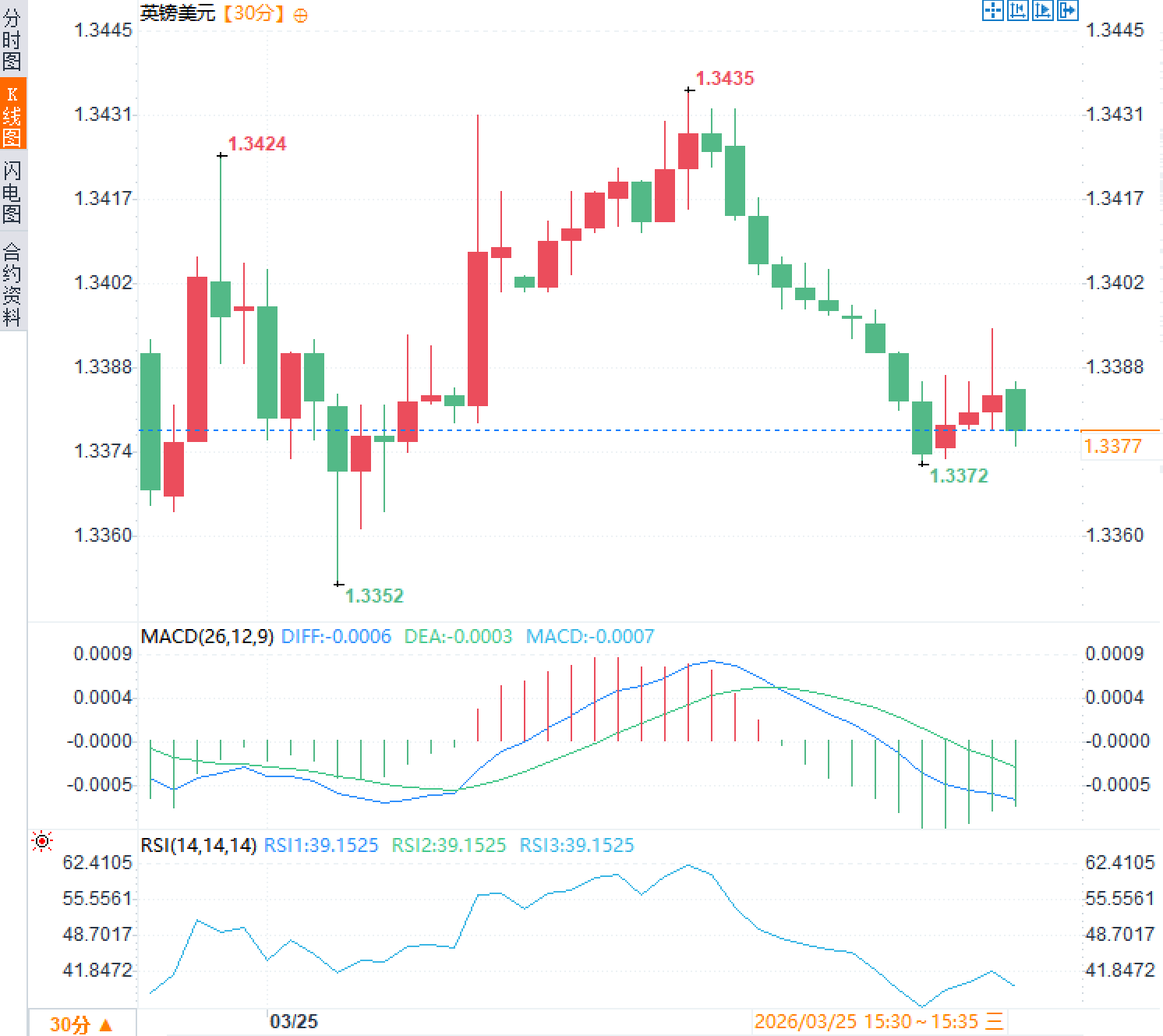
The pound is currently fluctuating around 1.3380 against the dollar. There has been no significant one-sided breakout after the data release, mainly because overall inflation is in line with expectations. However, core upward trends and the energy outlook have strengthened the pound's defensive characteristics. Adjustments in interest rate expectations have provided short-term support for the exchange rate. Traders note that while dollar-side variables remain relatively stable, the pricing of policy tightening in the pound has gradually narrowed the unfavorable interest rate differential. However, volatility in global risk sentiment could still amplify exchange rate sensitivity. Traders are wary of the amplifying effect of actual energy price transmission on future inflation trajectories, and will therefore dynamically adjust their assessments of exchange rate trends.
Geopolitical developments have pushed energy prices higher, posing a direct challenge to the UK's inflation outlook as a net energy importer. While the February data did not fully reflect this impact, the upside risks to prices are expected to become more pronounced in the coming months, leading traders to shift policy expectations from easing to cautious tightening. The pound has found some cushion against the dollar in this environment, but volatility is expected to increase periodically as energy costs are passed on. Traders are watching the actual contribution of the energy component in subsequent inflation reports, as well as the counter-effects of changes in global demand on price pressures.
Analysis of February Inflation Data
This report shows that the Consumer Price Index (CPI) rose 0.4% month-on-month, rebounding from a 0.5% decline in January, in line with forecasts. Among the sub-indices, clothing and footwear prices rose 0.6% month-on-month, becoming the biggest driver of the increase. This was mainly due to the seasonal pattern of concentrated launches of new spring collections, and also the first positive month-on-month growth in four months. Housing and utilities prices accelerated year-on-year to 4.6%, a slight increase from 4.5% in the previous month, reflecting the continued transmission of related costs. Transportation prices slowed to 2.4% year-on-year, mainly due to a 1.6-pence month-on-month decrease in the average gasoline price, compared to a 2.0-pence increase in the same period last year. Food prices fell to 3.3% year-on-year, while entertainment and culture, and catering and hospitality also saw slight declines to 2.5% and 4.0% year-on-year, respectively. The service inflation rate slightly decreased from 4.4% to 4.3%, but remains in a relatively high range.
| Subcategories | February year-on-year (%) | January year-on-year (%) | Month-on-month change |
|---|---|---|---|
| Overall CPI | 3.0 | 3.0 | +0.4 |
| Core CPI | 3.2 | 3.1 | — |
| Service inflation | 4.3 | 4.4 | — |
| transportation | 2.4 | 2.7 | Gasoline prices fell by 1.6 pence month-on-month. |
| food | 3.3 | 3.6 | — |
| Housing Utilities | 4.6 | 4.5 | — |
Bank of England Policy Path Forecast
Following the release of inflation data, the market has priced in nearly three 25-basis-point rate hikes by the Bank of England this year, with the probability of a rate hike at the April meeting remaining high. This shift in expectations is mainly due to the rebound in core indicators and sticky inflation in services, coupled with potential energy cost transmission caused by geopolitical factors. Traders have observed a more hawkish pricing at the front end of the yield curve, with forward rate contracts indicating a significantly increased probability of tightening this year. However, the actual decision will still depend on subsequent price data developments and labor market signals.
Analysis of GBP/USD exchange rate dynamics
The pound is currently fluctuating around 1.3380 against the dollar. There has been no significant one-sided breakout after the data release, mainly because overall inflation is in line with expectations. However, core upward trends and the energy outlook have strengthened the pound's defensive characteristics. Adjustments in interest rate expectations have provided short-term support for the exchange rate. Traders note that while dollar-side variables remain relatively stable, the pricing of policy tightening in the pound has gradually narrowed the unfavorable interest rate differential. However, volatility in global risk sentiment could still amplify exchange rate sensitivity. Traders are wary of the amplifying effect of actual energy price transmission on future inflation trajectories, and will therefore dynamically adjust their assessments of exchange rate trends.
Exchange Rate Risk Assessment under Geopolitical and Energy Shocks
Geopolitical developments have pushed energy prices higher, posing a direct challenge to the UK's inflation outlook as a net energy importer. While the February data did not fully reflect this impact, the upside risks to prices are expected to become more pronounced in the coming months, leading traders to shift policy expectations from easing to cautious tightening. The pound has found some cushion against the dollar in this environment, but volatility is expected to increase periodically as energy costs are passed on. Traders are watching the actual contribution of the energy component in subsequent inflation reports, as well as the counter-effects of changes in global demand on price pressures.
Frequently Asked Questions
Question 1: Did the UK's February inflation data exceed market expectations?
A: The overall inflation rate remaining stable at 3.0% was entirely in line with expectations, but the unexpected rise in core inflation to 3.2% indicates that price pressures are sticking beyond some forecasts. This reflects the continued structural headwinds in the non-energy and non-food sectors, especially in services inflation, which, although slightly down, remains high. Seasonal factors such as clothing prices further confirm the complexity of the downward path of inflation, providing traders with a key reference for assessing the probability of policy tightening.
Question 2: How will geopolitical conflicts alter the outlook for UK inflation and the pound against the dollar?
A: The conflict is pushing energy prices up, which will amplify inflationary pressures in the UK in the coming months, causing the market to shift from anticipating easing to pricing in multiple interest rate hikes. This shift provides short-term support for the pound against the dollar, but the long-term outlook still depends on the actual transmission effect of the energy shock and the evolution of global demand.
- Risk Warning and Disclaimer
- The market involves risk, and trading may not be suitable for all investors. This article is for reference only and does not constitute personal investment advice, nor does it take into account certain users’ specific investment objectives, financial situation, or other needs. Any investment decisions made based on this information are at your own risk.