Iranian Foreign Minister's remarks extinguished hopes for a ceasefire, and oil supply panic resurfaced!
2026-03-26 09:38:59
On Thursday (March 26) during Asian trading hours, US crude oil prices fluctuated higher, extending gains from the previous trading day, and are currently trading around $91.40 per barrel, up about 1.2% on the day. Investors' concerns about supply disruptions were reignited by Iran's refusal to negotiate directly with the United States. Iranian Foreign Minister Abbas Araqchi told state media on Wednesday that Iran has no intention of holding direct negotiations with the United States, although the Supreme Authority is reviewing the US-proposed plan to end the war. Continued disruptions to shipping in the Strait of Hormuz and expectations of tight global energy supplies have driven the oil price rebound.
Araghchi explicitly stated that the message conveyed through the mediators "does not mean negotiating with the United States." Iranian state media reported that Tehran will reject the US ceasefire proposal and has put forward its own list of conditions as preconditions for ending the conflict.
Iranian officials emphasized that Iran harbors a deep distrust of the United States, stemming from previous attacks during high-level diplomatic exchanges and further exacerbated by media leaks. Iran maintains that it will only consider ending the conflict after achieving its own strategic objectives.
Iran's refusal to engage in direct negotiations quickly dashed market optimism for a short-term ceasefire, refocusing attention on the supply risks posed by the continued blockade of the Strait of Hormuz. Current shipping volumes in the strait are far below normal levels, with approximately 20% of global oil transport routes disrupted, directly driving up energy prices.
Furthermore, the resilience exhibited by the Iranian regime and changes in its internal power structure have further increased the likelihood of a prolonged conflict, leading investors to price in the risk of supply disruptions.
The core of the US proposal is to demand that Iran significantly reduce its nuclear capabilities, limit its missile development, and cease supporting regional armed forces, while also opening the Strait of Hormuz. In exchange, the US is prepared to offer substantial concessions such as lifting sanctions.
Iran insists that all hostile actions must cease, compensation must be obtained, and sovereignty over the key straits must be maintained. Fundamental differences between the two sides on the nuclear issue, regional influence, and control of the straits make it difficult to break the current diplomatic deadlock quickly.
In the short term, oil prices will continue to be influenced by Iran's negotiating stance and the actual situation in the Strait of Hormuz. If Iran maintains its hardline conditions or the conflict escalates further, oil prices may test higher levels; conversely, if a compromise is reached through indirect channels, oil prices may see a correction.
In the medium to long term, the risk of a protracted conflict remains, and strained global energy supply chains and inflationary pressures will pose challenges to major economies. Investors need to closely monitor subsequent statements from Iranian officials, the actions of mediators, and the technical performance of oil prices; geopolitical uncertainty remains the dominant market factor.
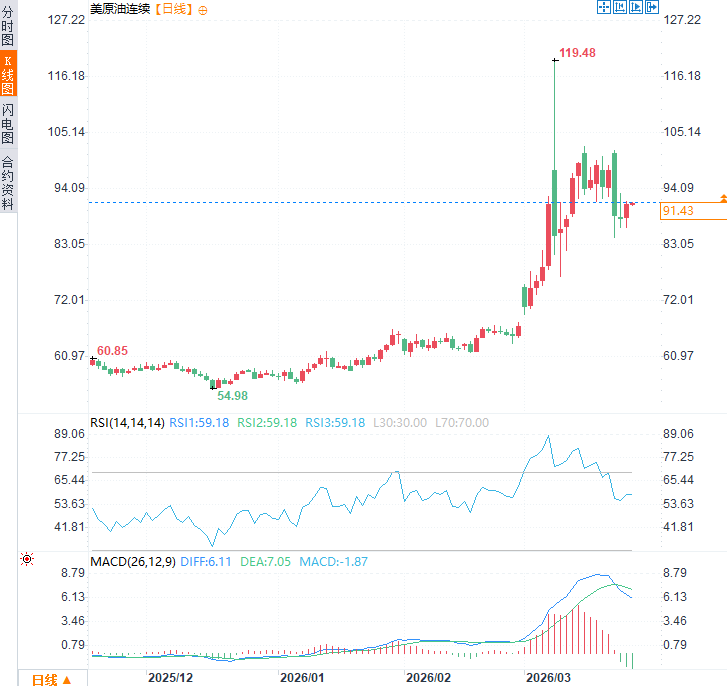
(US crude oil daily chart, source: FX678)
Iranian Foreign Minister Araqchi explicitly refused to negotiate directly with the United States, despite the Supreme Authority reviewing a proposed ceasefire, a hardline stance that led to a short-term rise in oil prices. Iran insists on an end to aggression, compensation, and maintaining sovereignty over the Strait of Hormuz, a position significantly diverging from that of the United States.
The current massive trust deficit between the US and Iran presents significant obstacles to reconciliation efforts, and the continued blockade of the Strait of Hormuz will drive up global energy costs. Overall, as the Iran conflict enters its fourth week, the diplomatic deadlock exacerbates the risk of supply disruptions, and short-term oil price volatility is expected to remain high, putting sustained pressure on the global economic and inflation outlook.
At 9:38 Beijing time, US crude oil futures were trading at $91.36 per barrel.
Iranian Foreign Minister Makes Strong Statement
Araghchi explicitly stated that the message conveyed through the mediators "does not mean negotiating with the United States." Iranian state media reported that Tehran will reject the US ceasefire proposal and has put forward its own list of conditions as preconditions for ending the conflict.
Iranian officials emphasized that Iran harbors a deep distrust of the United States, stemming from previous attacks during high-level diplomatic exchanges and further exacerbated by media leaks. Iran maintains that it will only consider ending the conflict after achieving its own strategic objectives.
Factors driving oil price increases
Iran's refusal to engage in direct negotiations quickly dashed market optimism for a short-term ceasefire, refocusing attention on the supply risks posed by the continued blockade of the Strait of Hormuz. Current shipping volumes in the strait are far below normal levels, with approximately 20% of global oil transport routes disrupted, directly driving up energy prices.
Furthermore, the resilience exhibited by the Iranian regime and changes in its internal power structure have further increased the likelihood of a prolonged conflict, leading investors to price in the risk of supply disruptions.
Comparison of US and Iran positions
The core of the US proposal is to demand that Iran significantly reduce its nuclear capabilities, limit its missile development, and cease supporting regional armed forces, while also opening the Strait of Hormuz. In exchange, the US is prepared to offer substantial concessions such as lifting sanctions.
Iran insists that all hostile actions must cease, compensation must be obtained, and sovereignty over the key straits must be maintained. Fundamental differences between the two sides on the nuclear issue, regional influence, and control of the straits make it difficult to break the current diplomatic deadlock quickly.
Market Outlook and Risks
In the short term, oil prices will continue to be influenced by Iran's negotiating stance and the actual situation in the Strait of Hormuz. If Iran maintains its hardline conditions or the conflict escalates further, oil prices may test higher levels; conversely, if a compromise is reached through indirect channels, oil prices may see a correction.
In the medium to long term, the risk of a protracted conflict remains, and strained global energy supply chains and inflationary pressures will pose challenges to major economies. Investors need to closely monitor subsequent statements from Iranian officials, the actions of mediators, and the technical performance of oil prices; geopolitical uncertainty remains the dominant market factor.
(US crude oil daily chart, source: FX678)
Editor's Summary
Iranian Foreign Minister Araqchi explicitly refused to negotiate directly with the United States, despite the Supreme Authority reviewing a proposed ceasefire, a hardline stance that led to a short-term rise in oil prices. Iran insists on an end to aggression, compensation, and maintaining sovereignty over the Strait of Hormuz, a position significantly diverging from that of the United States.
The current massive trust deficit between the US and Iran presents significant obstacles to reconciliation efforts, and the continued blockade of the Strait of Hormuz will drive up global energy costs. Overall, as the Iran conflict enters its fourth week, the diplomatic deadlock exacerbates the risk of supply disruptions, and short-term oil price volatility is expected to remain high, putting sustained pressure on the global economic and inflation outlook.
At 9:38 Beijing time, US crude oil futures were trading at $91.36 per barrel.
- Risk Warning and Disclaimer
- The market involves risk, and trading may not be suitable for all investors. This article is for reference only and does not constitute personal investment advice, nor does it take into account certain users’ specific investment objectives, financial situation, or other needs. Any investment decisions made based on this information are at your own risk.