Central banks are no longer effective? Japan plans to "fire" in the oil market; can intervention repel yen bears?
2026-03-26 14:28:13
In response to the persistent depreciation of the yen and inflationary pressures that traditional policy tools have struggled to contain, the Japanese government is considering a highly controversial and unconventional measure: directly intervening in the oil futures market using its foreign exchange reserves. This plan reflects growing concerns among policymakers that speculative rises in energy prices are driving the yen weaker.
Japan's foreign exchange reserves are approximately $1.4 trillion. If intervention is implemented, it will lower oil prices by establishing short positions in the oil futures market, indirectly reducing the demand for dollars needed to purchase oil and thus alleviating selling pressure on the yen. On Thursday (March 26), during the Asian and European sessions, the USD/JPY pair traded in a narrow range around 159.45, close to the one-and-a-half-year high of 159.89 reached earlier this month.
According to sources familiar with the matter, Japan's Ministry of Finance has consulted with market participants about a plan to establish short positions by selling oil futures contracts, with the aim of curbing rising crude oil prices. Japanese law allows the use of foreign exchange reserves to establish positions in the futures market, provided the action aims to stabilize the yen's exchange rate.
Finance Minister Satsuki Katayama stated that the government is prepared to "take all necessary measures in all areas and at all times," noting that speculative activities in the crude oil futures market are affecting the foreign exchange market. This statement was interpreted by the market as a sign that Japan may go beyond traditional foreign exchange intervention and adopt more creative approaches.
Policymakers believe that traditional monetary easing policies and verbal intervention are no longer effective in stabilizing the yen, while the speculative surge in energy prices triggered by the Middle East conflict has become the main external driver of the yen's depreciation. As an economy highly dependent on oil imports, Japan is not only experiencing increased domestic inflation due to rising oil prices, but also further exacerbating the pressure on the yen to sell by increasing demand for the US dollar.
The Ministry of Finance has contacted major banks in Tokyo with oil trading operations to understand the feasibility and potential impact of intervening in the crude oil futures market. This move is seen as an attempt to seek new tools in the context of a strong dollar.
Despite the plan attracting considerable attention, analysts and some government insiders remain cautious about its actual effectiveness. A foreign exchange strategist at Mitsubishi UFJ Morgan Stanley Securities pointed out that the yen's weakness stems primarily from a strong dollar, rather than pure energy speculation, and this move may mainly be intended to buy time while awaiting an improvement in the situation in the Middle East.
IG market analysts in Sydney believe that Japan would need to invest at least $10 billion to $20 billion for the market to feel a significant impact, and the final effect will highly depend on whether normal shipping can resume in the Strait of Hormuz. JPMorgan's chief foreign exchange strategist for Japan also believes that the likelihood of the Ministry of Finance actually intervening in the crude oil futures market is "extremely low."
Japan has not yet clearly chosen a specific international platform for intervention. Analysts point out that for intervention to be effective, it needs to be synchronized with the recovery of physical oil supplies and ideally supported by coordinated international action.
The United States is also considering potential actions related to the oil futures market, but has not yet made a final decision. Any unilateral intervention could face multiple challenges, including legal, technical, and market reactions.
In the short term, if Japan formally intervenes, the yen may receive some support, and oil price volatility may narrow. However, if the Middle East conflict continues or the Strait of Hormuz blockade is not lifted, the intervention effect will be greatly reduced, and the pressure on the yen to depreciate will be difficult to fundamentally alleviate.
In the medium to long term, this unconventional move may trigger discussions in international markets regarding Japan's policy independence and affect global commodity pricing mechanisms. Investors need to closely monitor subsequent statements from the Japanese Ministry of Finance, developments in the crude oil futures market, and the yen's exchange rate. Geopolitical risks remain the dominant uncertainty factor.
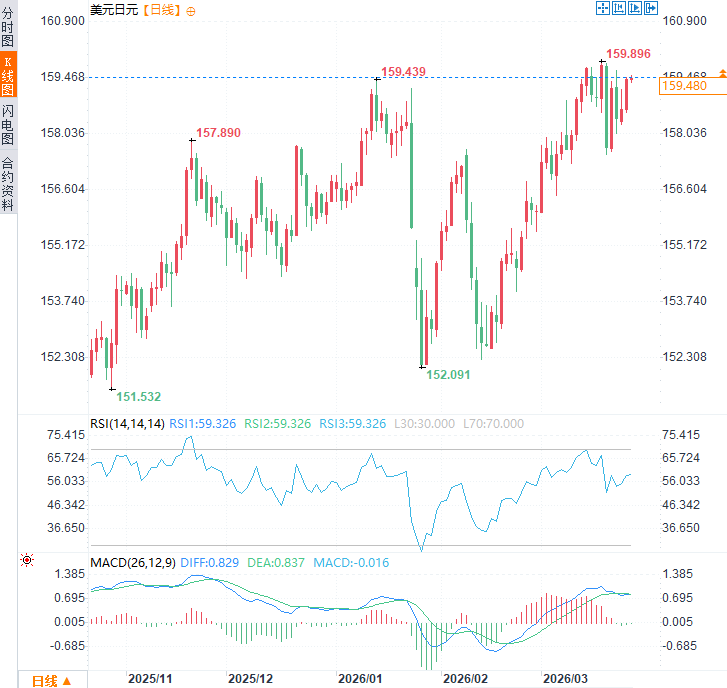
(USD/JPY daily chart, source: FX678)
At 14:27 Beijing time, the US dollar was trading at 159.47/48 against the Japanese yen.
Japan's foreign exchange reserves are approximately $1.4 trillion. If intervention is implemented, it will lower oil prices by establishing short positions in the oil futures market, indirectly reducing the demand for dollars needed to purchase oil and thus alleviating selling pressure on the yen. On Thursday (March 26), during the Asian and European sessions, the USD/JPY pair traded in a narrow range around 159.45, close to the one-and-a-half-year high of 159.89 reached earlier this month.
Core content of the intervention program
According to sources familiar with the matter, Japan's Ministry of Finance has consulted with market participants about a plan to establish short positions by selling oil futures contracts, with the aim of curbing rising crude oil prices. Japanese law allows the use of foreign exchange reserves to establish positions in the futures market, provided the action aims to stabilize the yen's exchange rate.
Finance Minister Satsuki Katayama stated that the government is prepared to "take all necessary measures in all areas and at all times," noting that speculative activities in the crude oil futures market are affecting the foreign exchange market. This statement was interpreted by the market as a sign that Japan may go beyond traditional foreign exchange intervention and adopt more creative approaches.
Background and motivations for the decision
Policymakers believe that traditional monetary easing policies and verbal intervention are no longer effective in stabilizing the yen, while the speculative surge in energy prices triggered by the Middle East conflict has become the main external driver of the yen's depreciation. As an economy highly dependent on oil imports, Japan is not only experiencing increased domestic inflation due to rising oil prices, but also further exacerbating the pressure on the yen to sell by increasing demand for the US dollar.
The Ministry of Finance has contacted major banks in Tokyo with oil trading operations to understand the feasibility and potential impact of intervening in the crude oil futures market. This move is seen as an attempt to seek new tools in the context of a strong dollar.
Market skepticism and effectiveness evaluation
Despite the plan attracting considerable attention, analysts and some government insiders remain cautious about its actual effectiveness. A foreign exchange strategist at Mitsubishi UFJ Morgan Stanley Securities pointed out that the yen's weakness stems primarily from a strong dollar, rather than pure energy speculation, and this move may mainly be intended to buy time while awaiting an improvement in the situation in the Middle East.
IG market analysts in Sydney believe that Japan would need to invest at least $10 billion to $20 billion for the market to feel a significant impact, and the final effect will highly depend on whether normal shipping can resume in the Strait of Hormuz. JPMorgan's chief foreign exchange strategist for Japan also believes that the likelihood of the Ministry of Finance actually intervening in the crude oil futures market is "extremely low."
Potential Implementation Platforms and International Factors
Japan has not yet clearly chosen a specific international platform for intervention. Analysts point out that for intervention to be effective, it needs to be synchronized with the recovery of physical oil supplies and ideally supported by coordinated international action.
The United States is also considering potential actions related to the oil futures market, but has not yet made a final decision. Any unilateral intervention could face multiple challenges, including legal, technical, and market reactions.
Market Outlook and Risks
In the short term, if Japan formally intervenes, the yen may receive some support, and oil price volatility may narrow. However, if the Middle East conflict continues or the Strait of Hormuz blockade is not lifted, the intervention effect will be greatly reduced, and the pressure on the yen to depreciate will be difficult to fundamentally alleviate.
In the medium to long term, this unconventional move may trigger discussions in international markets regarding Japan's policy independence and affect global commodity pricing mechanisms. Investors need to closely monitor subsequent statements from the Japanese Ministry of Finance, developments in the crude oil futures market, and the yen's exchange rate. Geopolitical risks remain the dominant uncertainty factor.
(USD/JPY daily chart, source: FX678)
At 14:27 Beijing time, the US dollar was trading at 159.47/48 against the Japanese yen.
- Risk Warning and Disclaimer
- The market involves risk, and trading may not be suitable for all investors. This article is for reference only and does not constitute personal investment advice, nor does it take into account certain users’ specific investment objectives, financial situation, or other needs. Any investment decisions made based on this information are at your own risk.