The euro has gone from a sharp drop to a bottoming-out phase, with two weeks of narrow-range fluctuations hinting at a potential turning point.
2026-03-27 09:52:17
After a sharp sell-off from above 1.2000 to below 1.1500, the euro has exhibited an almost bizarrely calm and volatile trading pattern against the US dollar over the past two weeks. Currently, the pair is showing a clear tug-of-war between bulls and bears, with the ongoing repercussions of the Middle East conflict remaining a significant external factor influencing the euro's trajectory. On Friday (March 27) during the Asian session, the euro traded in a narrow range around 1.1535 against the US dollar.
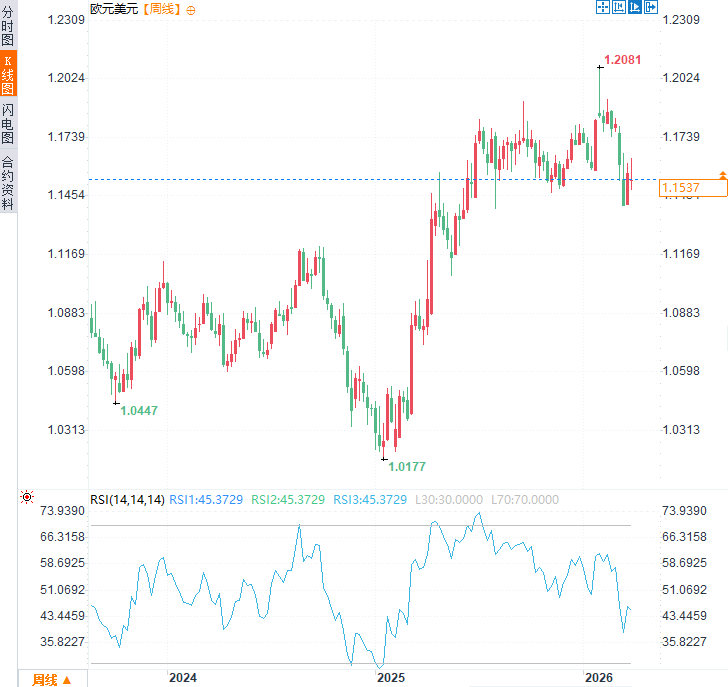
As tensions escalated in the Middle East, the US dollar quickly rebounded, pushing the euro/dollar exchange rate from overbought territory at the end of January to oversold territory in mid-March. Chasing extreme trends in the short term is difficult, and the market has now recovered somewhat from oversold territory, offering reasonable trading logic for both bulls and bears.

From a weekly chart perspective, the fluctuations of the past two weeks can be seen as a temporary pause in a broader downtrend. If one is bullish on a stronger dollar or a weaker euro, the weekly perspective remains the primary reference framework.
(Euro/USD weekly chart, source: FX678)
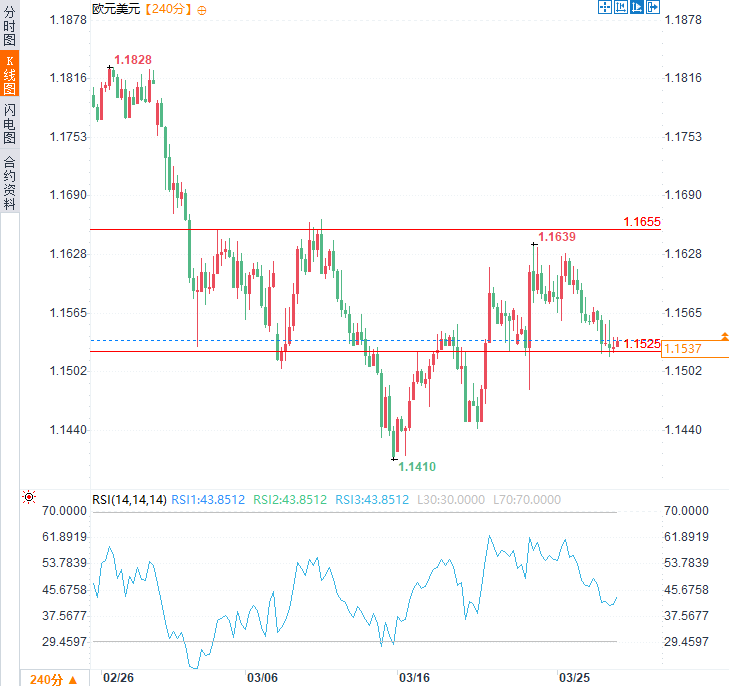
For euro bulls or dollar bears, short-term charts are more attractive. The 4-hour chart shows that the euro/dollar pair has formed higher lows and higher highs near its previous lows over the past two weeks, exhibiting a mild bottoming pattern. While this movement still appears weak on the long-term chart, most trend reversals tend to begin with similar slow bottoming, as seen in early February when the euro/dollar pair formed higher lows before being broken by bears.
On the upside, the current level of 1.1655 remains a crucial dividing line between the strength and weakness of bullish momentum. A successful breakout would open up space towards 1.1750 and 1.1766.
On the downside, the psychological level of 1.1500 was effectively defended this week, and the area around 1.1525 provides short-term support.
(EUR/USD 4-hour chart, source: FX678)
The ongoing uncertainty surrounding the Middle East conflict remains a significant external variable for the euro's trajectory. Escalating tensions often cause the US dollar to strengthen rapidly as a safe-haven currency, putting downward pressure on the euro; conversely, easing tensions or progress in diplomatic negotiations can alleviate the dollar's strength, providing the euro with room to rebound.
While market concerns persist about a prolonged conflict, the Trump administration's signals of negotiation offer the possibility of a short-term recovery in risk appetite. Traders need to adjust their positions flexibly in light of geopolitical developments.
In the short term, the euro/dollar exchange rate remains in a bottoming-out phase, with a clear divergence between bulls and bears. Euro bulls can watch for a breakout opportunity at 1.1655, while bears should be wary of the effectiveness of the 1.1500 support level. Any developments in the Middle East situation could quickly alter market risk appetite.
In the medium to long term, if the Middle East conflict sees a substantial easing or a breakthrough in diplomatic negotiations, the euro may experience a corrective rebound; conversely, if the conflict protracts or escalates, the strength of the US dollar will continue to suppress the euro. Traders should flexibly adjust their strategies based on timeframes, risk appetite, and geopolitical dynamics, and strictly control position risk.
At 9:50 AM Beijing time, the euro was trading at 1.1537/38 against the US dollar.
As tensions escalated in the Middle East, the US dollar quickly rebounded, pushing the euro/dollar exchange rate from overbought territory at the end of January to oversold territory in mid-March. Chasing extreme trends in the short term is difficult, and the market has now recovered somewhat from oversold territory, offering reasonable trading logic for both bulls and bears.
EUR/USD Technical Analysis
From a weekly chart perspective, the fluctuations of the past two weeks can be seen as a temporary pause in a broader downtrend. If one is bullish on a stronger dollar or a weaker euro, the weekly perspective remains the primary reference framework.
(Euro/USD weekly chart, source: FX678)
For euro bulls or dollar bears, short-term charts are more attractive. The 4-hour chart shows that the euro/dollar pair has formed higher lows and higher highs near its previous lows over the past two weeks, exhibiting a mild bottoming pattern. While this movement still appears weak on the long-term chart, most trend reversals tend to begin with similar slow bottoming, as seen in early February when the euro/dollar pair formed higher lows before being broken by bears.
On the upside, the current level of 1.1655 remains a crucial dividing line between the strength and weakness of bullish momentum. A successful breakout would open up space towards 1.1750 and 1.1766.
On the downside, the psychological level of 1.1500 was effectively defended this week, and the area around 1.1525 provides short-term support.
(EUR/USD 4-hour chart, source: FX678)
The impact of the Middle East conflict on the euro
The ongoing uncertainty surrounding the Middle East conflict remains a significant external variable for the euro's trajectory. Escalating tensions often cause the US dollar to strengthen rapidly as a safe-haven currency, putting downward pressure on the euro; conversely, easing tensions or progress in diplomatic negotiations can alleviate the dollar's strength, providing the euro with room to rebound.
While market concerns persist about a prolonged conflict, the Trump administration's signals of negotiation offer the possibility of a short-term recovery in risk appetite. Traders need to adjust their positions flexibly in light of geopolitical developments.
Market Outlook and Risks
In the short term, the euro/dollar exchange rate remains in a bottoming-out phase, with a clear divergence between bulls and bears. Euro bulls can watch for a breakout opportunity at 1.1655, while bears should be wary of the effectiveness of the 1.1500 support level. Any developments in the Middle East situation could quickly alter market risk appetite.
In the medium to long term, if the Middle East conflict sees a substantial easing or a breakthrough in diplomatic negotiations, the euro may experience a corrective rebound; conversely, if the conflict protracts or escalates, the strength of the US dollar will continue to suppress the euro. Traders should flexibly adjust their strategies based on timeframes, risk appetite, and geopolitical dynamics, and strictly control position risk.
At 9:50 AM Beijing time, the euro was trading at 1.1537/38 against the US dollar.
- Risk Warning and Disclaimer
- The market involves risk, and trading may not be suitable for all investors. This article is for reference only and does not constitute personal investment advice, nor does it take into account certain users’ specific investment objectives, financial situation, or other needs. Any investment decisions made based on this information are at your own risk.