Delay is not the solution! Trump's postponement of the strikes is unlikely to break the deadlock, and oil prices remain high.
2026-03-27 16:13:06
US President Donald Trump has again postponed a potential military strike on Iranian energy facilities until April 6, 2026. Trump had previously set an earlier deadline and briefly announced a five-day pause in the strike due to “productive dialogue” with Iran, but this latest decision further extends the grace period.
Trump stated that this move was to buy more time for negotiations and avoid immediate strikes against Iran's power and energy infrastructure. However, Iran denied engaging in substantive negotiations with the US, calling the claims untrue. This repeated delay has pushed the initial expectation of a "resolved issue within weeks" far beyond initial assessments, plunging the conflict into an uncertain and prolonged phase.
On Friday (March 27), during the European session, US crude oil prices fluctuated upwards and are currently trading around $95 per barrel, with a daily increase of about 0.55%. Although prices briefly fell back during the Asian session due to news of the postponement, long-term uncertainty continues to support oil prices at high levels.
Although tanker traffic through the Strait of Hormuz has recently seen a slight rebound, it remains negligible compared to the pre-conflict level of over 100 vessels per day. Currently, daily crude oil shipments through the strait have drastically decreased from approximately 20 million barrels before the conflict to around 1 million barrels, mostly carried by Iranian tankers or a limited number of vessels with special permits.
The strait is effectively closed, forcing some ships to pay hefty fees or take alternative routes, leading to a significant increase in global oil logistics costs. Analysts point out that as long as this vital waterway remains unobstructed, the oil market is unlikely to see substantial improvement.
As time has passed, the disruption of the Strait of Hormuz has resulted in the continued disruption of approximately one-fifth of the world's crude oil and liquefied natural gas supply. Although major oil-producing countries in the Gulf region have attempted to supplement their supplies through pipeline rerouting or idle capacity, overall supply capacity remains limited, and some countries have increasingly drawn on their strategic petroleum reserves to alleviate short-term pressure.
While Trump's repeated postponements of the "deadline" have temporarily averted a large-scale military escalation and potential casualties, they have also plunged the market into a prolonged stalemate. Investors face a dilemma: on the one hand, they worry that a strike could trigger a surge in oil prices and geopolitical risks; on the other hand, they lack confidence in the prospects for negotiations, leading to persistently low market sentiment.
From an economic perspective, maintaining the status quo is extremely detrimental. High energy costs are pushing up inflationary pressures, increasing production and transportation costs for businesses, and posing an additional drag on global economic growth. While countries may use their reserves for a short-term buffer, long-term reliance on this will weaken their energy security buffer.
Analyst Justin Low points out that Trump's repeated delays in the strike have stretched the timeline far beyond "just a few weeks." While traffic in the Strait of Hormuz has slightly improved, this is not positive for overall market sentiment. As time drags on, oil supplies will only become increasingly strained, and the risk of energy disruptions in the Gulf region will persist for a long time.
He emphasized that from an economic perspective, a prolonged stalemate is a terrible situation. As long as the situation in the Straits doesn't fundamentally change, the oil market will struggle to return to normal, and global reserves will be depleted more rapidly. While Trump's strategy avoided "bad news," it also prolonged the window of uncertainty in the market.
Trump's postponement of the strike on Iranian energy facilities to April 6 reflects a trade-off between negotiations and military options, but also exacerbates the lasting impact of supply disruptions in the Strait of Hormuz. The market currently faces the risk of a prolonged stalemate, with oil prices fluctuating at high levels and global energy security under pressure. Future trends depend on the actual progress of negotiations and the restoration of passage through the Strait; investors should be wary of the cumulative effects of supply shortages on the macroeconomy.
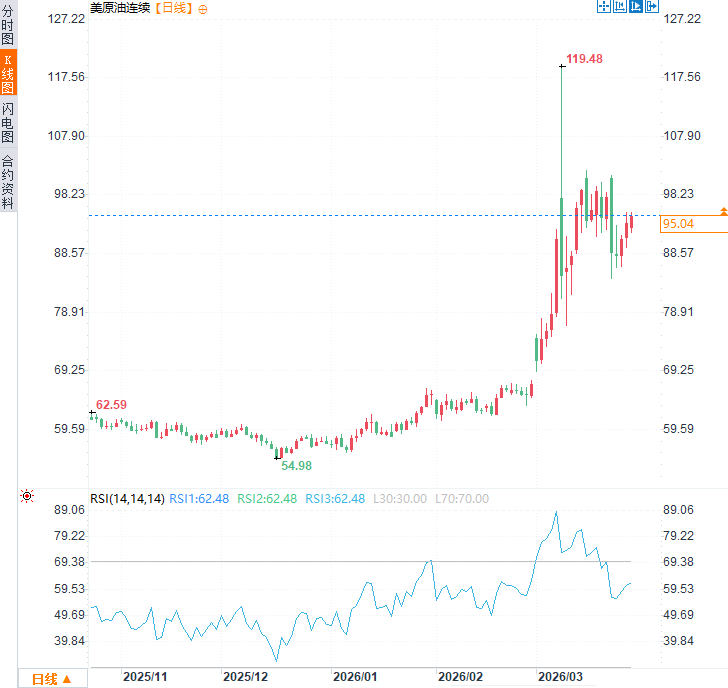
(US crude oil daily chart, source: FX678)
At 16:11 Beijing time, US crude oil futures were trading at $95.02 per barrel.
Trump stated that this move was to buy more time for negotiations and avoid immediate strikes against Iran's power and energy infrastructure. However, Iran denied engaging in substantive negotiations with the US, calling the claims untrue. This repeated delay has pushed the initial expectation of a "resolved issue within weeks" far beyond initial assessments, plunging the conflict into an uncertain and prolonged phase.
On Friday (March 27), during the European session, US crude oil prices fluctuated upwards and are currently trading around $95 per barrel, with a daily increase of about 0.55%. Although prices briefly fell back during the Asian session due to news of the postponement, long-term uncertainty continues to support oil prices at high levels.
Current traffic volume in the Strait of Hormuz
Although tanker traffic through the Strait of Hormuz has recently seen a slight rebound, it remains negligible compared to the pre-conflict level of over 100 vessels per day. Currently, daily crude oil shipments through the strait have drastically decreased from approximately 20 million barrels before the conflict to around 1 million barrels, mostly carried by Iranian tankers or a limited number of vessels with special permits.
The strait is effectively closed, forcing some ships to pay hefty fees or take alternative routes, leading to a significant increase in global oil logistics costs. Analysts point out that as long as this vital waterway remains unobstructed, the oil market is unlikely to see substantial improvement.
As time has passed, the disruption of the Strait of Hormuz has resulted in the continued disruption of approximately one-fifth of the world's crude oil and liquefied natural gas supply. Although major oil-producing countries in the Gulf region have attempted to supplement their supplies through pipeline rerouting or idle capacity, overall supply capacity remains limited, and some countries have increasingly drawn on their strategic petroleum reserves to alleviate short-term pressure.
The dual predicament of market sentiment and the economy
While Trump's repeated postponements of the "deadline" have temporarily averted a large-scale military escalation and potential casualties, they have also plunged the market into a prolonged stalemate. Investors face a dilemma: on the one hand, they worry that a strike could trigger a surge in oil prices and geopolitical risks; on the other hand, they lack confidence in the prospects for negotiations, leading to persistently low market sentiment.
From an economic perspective, maintaining the status quo is extremely detrimental. High energy costs are pushing up inflationary pressures, increasing production and transportation costs for businesses, and posing an additional drag on global economic growth. While countries may use their reserves for a short-term buffer, long-term reliance on this will weaken their energy security buffer.
Analyst Justin Low points out that Trump's repeated delays in the strike have stretched the timeline far beyond "just a few weeks." While traffic in the Strait of Hormuz has slightly improved, this is not positive for overall market sentiment. As time drags on, oil supplies will only become increasingly strained, and the risk of energy disruptions in the Gulf region will persist for a long time.
He emphasized that from an economic perspective, a prolonged stalemate is a terrible situation. As long as the situation in the Straits doesn't fundamentally change, the oil market will struggle to return to normal, and global reserves will be depleted more rapidly. While Trump's strategy avoided "bad news," it also prolonged the window of uncertainty in the market.
Editor's Summary
Trump's postponement of the strike on Iranian energy facilities to April 6 reflects a trade-off between negotiations and military options, but also exacerbates the lasting impact of supply disruptions in the Strait of Hormuz. The market currently faces the risk of a prolonged stalemate, with oil prices fluctuating at high levels and global energy security under pressure. Future trends depend on the actual progress of negotiations and the restoration of passage through the Strait; investors should be wary of the cumulative effects of supply shortages on the macroeconomy.
(US crude oil daily chart, source: FX678)
At 16:11 Beijing time, US crude oil futures were trading at $95.02 per barrel.
- Risk Warning and Disclaimer
- The market involves risk, and trading may not be suitable for all investors. This article is for reference only and does not constitute personal investment advice, nor does it take into account certain users’ specific investment objectives, financial situation, or other needs. Any investment decisions made based on this information are at your own risk.