From major buyer to major seller! Türkiye sells 60 tons of gold; will the central bank's gold-buying spree cool down?
2026-03-27 15:32:09
In the two weeks following the outbreak of the Iran-Iraq War, the Turkish central bank used approximately 60 tons of gold, worth over $8 billion, through sales and swap operations. This action put significant downward pressure on the global gold market. Gold prices had previously fallen for nine consecutive days, hitting a near four-month low of $4099.02 per ounce, and have remained relatively low overall this week. On Friday (March 27), spot gold fluctuated upwards during the European session, currently trading around $4450 per ounce, with a daily increase of approximately 1.65%.
Data from the Central Bank of Turkey shows that its gold reserves decreased by 6 tons in the week ending March 13, and further decreased significantly by 52.4 tons in the week ending March 20, totaling nearly 58.4 tons. Analysts estimate that more than half of this was completed through overseas gold-for-foreign exchange swap agreements.
As one of the world's most active gold buyers over the past decade, Turkey's move marks a significant shift in its central bank's gold reserve policy. Previously, Turkey's gold reserves totaled approximately $135 billion; this use is primarily intended to meet domestic liquidity needs and stabilize the lira's exchange rate.

Turkey has long been actively increasing its gold reserves in an effort to reduce its reliance on dollar-denominated assets. However, the outbreak of the war with Iran led to a surge in energy import costs and a sharp increase in dollar demand, forcing the central bank to adjust its strategy and turn to using its gold reserves to obtain foreign exchange or lira liquidity.
This shift comes at a time of pressure on Turkey's "de-inflation" strategy, which relies heavily on maintaining a stable or orderly depreciation of the lira, typically achieved through foreign exchange intervention by state-owned banks. The central bank's large-scale gold operation highlights its flexibility in responding to external shocks .
The war with Iran has directly impacted the Turkish economy. The country relies almost entirely on imports for oil and natural gas, and the conflict has led to increased energy costs and greater pressure on its balance of payments. Currently, Turkey's inflation rate in February reached 31.5%, which is among the highest in the world.
Since the outbreak of the war, Turkey has responded to the crisis by tightening liquidity, increasing the cost of lira financing, and having state-owned banks intervene in the foreign exchange market. A significant decline in foreign exchange reserves (excluding gold) has forced the central bank to consider using its approximately $30 billion in gold reserves held at the Bank of England for intervention.
The Turkish central bank's sale of gold exceeded the outflow of funds from gold ETFs during the same period (approximately 43 tons), directly exacerbating downward pressure on gold prices. Gold prices have fallen by about 15% this month, partly due to profit-taking after last year's sharp rise, and Turkey's actions further amplified the correction. Following the release of related reports, global spot gold prices initially reversed their upward trend and began to decline.
The Turkish central bank's operations included some direct sales of gold, and mostly obtaining foreign exchange or lira liquidity through swap agreements. This method of "selling spot and agreeing to repurchase in the future" essentially uses gold as collateral to obtain low-cost dollar financing, a common liquidity management tool used by central banks.
JPMorgan economist Fatih Akcelik points out that Türkiye's gold held at the Bank of England can be directly traded in the London market without logistical restrictions, facilitating rapid intervention in the foreign exchange market.
Daniel Ghali, a commodities strategist at TD Securities, said the economic shock from the war in Iran could weaken some central banks' demand for gold, while forcing other central banks to sell reserves to fulfill their dollar-denominated obligations. He believes the overall trend of global central banks increasing their gold holdings will slow significantly in the short term.
Financial blog Zerohedge commented that the market had been speculating about the sellers who drove gold prices from their January highs into a correction, and now at least the Turkish central bank has been confirmed as a major seller.
Iris Cibre emphasized that Turkish officials used approximately $135 billion in gold reserves to meet liquidity needs and stabilize their domestic markets.
The Turkish central bank's large-scale sale and swap operations of nearly 60 tons of gold during the Iran-Iraq War reflect its flexible policy adjustments in response to external geopolitical conflicts and domestic inflationary pressures. While this action temporarily alleviated pressure on the lira and foreign exchange reserves, it also had a downward impact on global gold prices.
If the war continues, Turkey's energy import costs and balance of payments challenges will continue to test its reserve management capabilities, while the global gold market trend will depend on changes in the net demand of major central banks and the evolution of geopolitical risks.
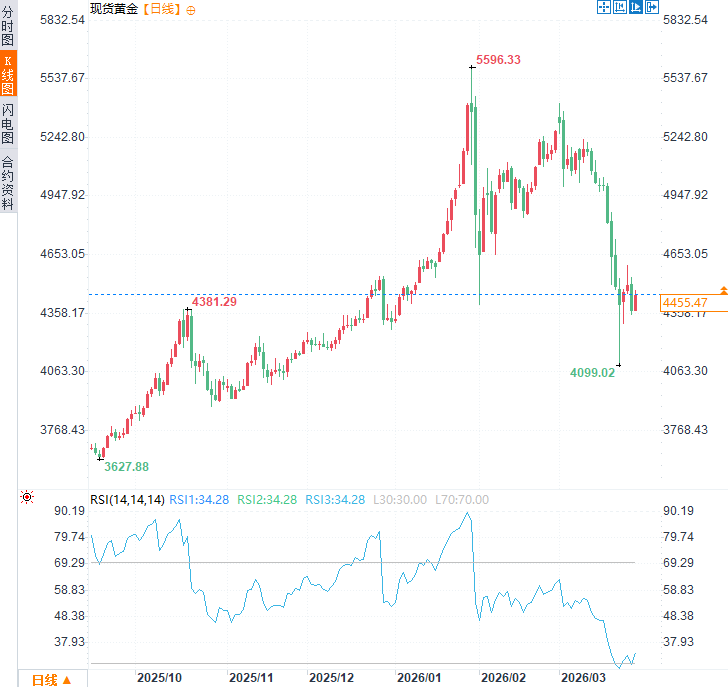
(Spot gold daily chart, source: FX678)
At 15:31 Beijing time, spot gold was trading at $4450.52 per ounce.
Data from the Central Bank of Turkey shows that its gold reserves decreased by 6 tons in the week ending March 13, and further decreased significantly by 52.4 tons in the week ending March 20, totaling nearly 58.4 tons. Analysts estimate that more than half of this was completed through overseas gold-for-foreign exchange swap agreements.
As one of the world's most active gold buyers over the past decade, Turkey's move marks a significant shift in its central bank's gold reserve policy. Previously, Turkey's gold reserves totaled approximately $135 billion; this use is primarily intended to meet domestic liquidity needs and stabilize the lira's exchange rate.
Türkiye's gold policy undergoes a major shift
Turkey has long been actively increasing its gold reserves in an effort to reduce its reliance on dollar-denominated assets. However, the outbreak of the war with Iran led to a surge in energy import costs and a sharp increase in dollar demand, forcing the central bank to adjust its strategy and turn to using its gold reserves to obtain foreign exchange or lira liquidity.
This shift comes at a time of pressure on Turkey's "de-inflation" strategy, which relies heavily on maintaining a stable or orderly depreciation of the lira, typically achieved through foreign exchange intervention by state-owned banks. The central bank's large-scale gold operation highlights its flexibility in responding to external shocks .
Economic pressures under the Iran war
The war with Iran has directly impacted the Turkish economy. The country relies almost entirely on imports for oil and natural gas, and the conflict has led to increased energy costs and greater pressure on its balance of payments. Currently, Turkey's inflation rate in February reached 31.5%, which is among the highest in the world.
Since the outbreak of the war, Turkey has responded to the crisis by tightening liquidity, increasing the cost of lira financing, and having state-owned banks intervene in the foreign exchange market. A significant decline in foreign exchange reserves (excluding gold) has forced the central bank to consider using its approximately $30 billion in gold reserves held at the Bank of England for intervention.
Impact on global gold prices
The Turkish central bank's sale of gold exceeded the outflow of funds from gold ETFs during the same period (approximately 43 tons), directly exacerbating downward pressure on gold prices. Gold prices have fallen by about 15% this month, partly due to profit-taking after last year's sharp rise, and Turkey's actions further amplified the correction. Following the release of related reports, global spot gold prices initially reversed their upward trend and began to decline.
Analysis of Selling and Swap Operations
The Turkish central bank's operations included some direct sales of gold, and mostly obtaining foreign exchange or lira liquidity through swap agreements. This method of "selling spot and agreeing to repurchase in the future" essentially uses gold as collateral to obtain low-cost dollar financing, a common liquidity management tool used by central banks.
JPMorgan economist Fatih Akcelik points out that Türkiye's gold held at the Bank of England can be directly traded in the London market without logistical restrictions, facilitating rapid intervention in the foreign exchange market.
Latest comments from institutions and analysts
Daniel Ghali, a commodities strategist at TD Securities, said the economic shock from the war in Iran could weaken some central banks' demand for gold, while forcing other central banks to sell reserves to fulfill their dollar-denominated obligations. He believes the overall trend of global central banks increasing their gold holdings will slow significantly in the short term.
Financial blog Zerohedge commented that the market had been speculating about the sellers who drove gold prices from their January highs into a correction, and now at least the Turkish central bank has been confirmed as a major seller.
Iris Cibre emphasized that Turkish officials used approximately $135 billion in gold reserves to meet liquidity needs and stabilize their domestic markets.
Editor's Summary
The Turkish central bank's large-scale sale and swap operations of nearly 60 tons of gold during the Iran-Iraq War reflect its flexible policy adjustments in response to external geopolitical conflicts and domestic inflationary pressures. While this action temporarily alleviated pressure on the lira and foreign exchange reserves, it also had a downward impact on global gold prices.
If the war continues, Turkey's energy import costs and balance of payments challenges will continue to test its reserve management capabilities, while the global gold market trend will depend on changes in the net demand of major central banks and the evolution of geopolitical risks.
(Spot gold daily chart, source: FX678)
At 15:31 Beijing time, spot gold was trading at $4450.52 per ounce.
- Risk Warning and Disclaimer
- The market involves risk, and trading may not be suitable for all investors. This article is for reference only and does not constitute personal investment advice, nor does it take into account certain users’ specific investment objectives, financial situation, or other needs. Any investment decisions made based on this information are at your own risk.