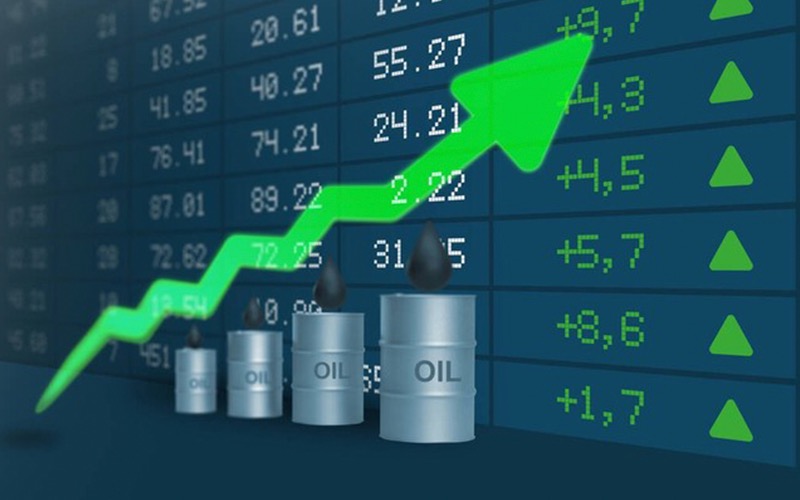
Will oil become the new safe-haven asset in 2026?
2026-03-28 02:03:01
In the past, oil has been regarded as a highly cyclical commodity, heavily influenced by geopolitical factors, and subject to huge price fluctuations. Its price movements are highly dependent on the global economic climate, often rising during economic booms and falling during recessions, and it lacks the core attributes of a safe-haven asset: preserving and increasing value, and hedging against risks. However, in 2026, this decades-old perception is being completely overturned by real-time changes in the global market, and oil is entering the field of safe-haven assets with a completely new image.
Global inflation is currently sticking much tighter than market expectations, economic growth in major economies is generally slowing, and geopolitical conflicts in the Middle East are escalating, plunging key global energy transport routes into a precarious situation. Under the interplay of these multiple factors, the price logic of crude oil has undergone a fundamental shift. It no longer simply follows economic fluctuations but is gradually breaking free from cyclical constraints, emerging as one of the core defensive assets in the global market and becoming a new choice for investors to hedge against stagflation risks and avoid market volatility.
The logic of safe-haven assets is being reshaped.
The current global economy is not facing ordinary inflationary panic, but rather a typical stagflation scenario: economic growth continues to slow, the job market is under pressure, while price levels remain high, and inflationary pressures are stubbornly persistent, creating a vicious cycle. This unique economic environment has forced global financial markets to repric a series of negative expectations—central banks have significantly reduced the number of interest rate cuts, with some even maintaining a stance of raising rates; government bond yields remain high; overall financial conditions continue to tighten; and liquidity pressures are constantly increasing.
Against this backdrop, funds are rapidly withdrawing from risky assets such as stocks and cryptocurrencies, seeking safer allocations. Global stock market volatility has surged, with overall downward pressure. In March alone, trillions of dollars in global stock market capitalization evaporated, resulting in a significant reduction in investor wealth. The Nasdaq 100 index has officially entered correction territory, falling more than 10% from its historical high in October 2025; the S&P 500 index has recorded its longest weekly losing streak since 2022, with market panic spreading. While risky assets are collectively weakening, tangible assets, with their scarcity and value-preserving properties, have regained control of market pricing, with oil being a prime example.
Lars Hansen, Head of Research at the Precious Metals Club, stated, “Currently, the vast majority of traders are still clinging to outdated trading logic and have failed to keep up with the structural changes in the market. The COVID-19 pandemic has completely reshaped the global market landscape from 2020 to 2025, and from 2026 onwards, energy will become the core variable dominating the direction of the global market for the remaining decade. Those investors who fail to recognize this structural shift and continue to adhere to the traditional logic of safe-haven asset allocation will ultimately miss market opportunities and find themselves in a passive position.”
Why has oil been transformed into a hedging tool?
The global market has changed not only the price trend of oil, but also the perception of its core value. In today's context where global energy security takes far greater priority than energy parity, carbon neutrality, and development goals, oil has been redefined as a core reserve asset that carries geostrategic value and safeguards national energy security; its strategic significance far exceeds its mere energy commodity attributes.
The current global energy supply chain is extremely fragile. Upstream oil and gas capacity has long suffered from insufficient investment, with many oil and gas companies preferring dividend payouts and share buybacks rather than expanding capacity, leading to a continuous decline in supply elasticity. Simultaneously, the energy transition is incomplete, and the stability and supply capacity of new energy sources still cannot meet global energy demand. Coupled with the supply and demand pressures brought about by the global economic recovery, the entire energy system is highly vulnerable to sudden shocks. This inherent vulnerability on the supply side precisely endows crude oil with new safe-haven attributes—the more volatile the market and the greater the risks, the more prominent the scarcity and strategic value of oil become, and the more resilient its price is to declines and the greater its upward momentum.
From a physical supply perspective, the current supply risks are unprecedentedly severe. The most concerning issue is the situation in the Strait of Hormuz. According to the latest market estimates, there is an 85% probability that the strait will remain closed until March 31st. The Iranian Islamic Revolutionary Guard Corps issued a statement on March 27th declaring the Strait of Hormuz closed and that any attempt to pass through it would be severely punished. It is important to understand that the Strait of Hormuz is the world's most important energy transport route. If the shipping route is disrupted for 31 days, the average daily outage of crude oil will reach 18.5 million barrels, with a cumulative supply disruption of 575 million barrels, approximately 1.4 times the total US strategic petroleum reserves. This would be a fatal blow to global crude oil supply.
More alarmingly, this crisis is not limited to the crude oil sector. The transportation lifelines of key commodities such as natural gas, fertilizers, and industrial metals also heavily rely on this crucial shipping route. A shock of this magnitude to the main energy logistics artery will inevitably trigger disorderly repricing across all asset classes, further fueling global inflationary pressures. As a core energy source, oil's value as a hedge against risk will become even more apparent.
Hansen further pointed out: "The market still seriously underestimates the potential destructive power of this crisis. Most institutions' forecasts are still focused on the short-term impact and have failed to fully consider the possibility of the situation continuing to escalate."
"Physical supply disruptions are merely the trigger; more crucially, the preventative stockpiling by governments and energy agencies will further amplify the price increase effect. Once major global economies and energy companies simultaneously scramble for energy reserves, creating an 'oil rush,' the price increase will far exceed the predictions of most institutions, and may even reach historical highs."
The energy supercycle is no longer just a theoretical concept.
Beneath the surface of rising oil prices, deep-seated structural contradictions in the global energy market have become apparent: the new clean energy system has not yet matured and can not achieve large-scale, stable supply, while the traditional fossil fuel system is accelerating its withdrawal in the wave of energy transition, with its production capacity continuing to shrink. This has led to a fatal gap between global energy supply and demand, a gap that is difficult to close in the short term. At the same time, the rapid development of the artificial intelligence industry has generated massive electricity demand, and rigid demands such as industrial capacity stabilization, defense and military consumption, and basic residential electricity consumption continue to exist. These multiple factors have jointly solidified the irreplaceable nature of fossil fuels in the coming years and laid the foundation for long-term oil price increases.
At the same time, the global asset allocation structure has undergone a fundamental change: the weighting of the energy sector in the S&P 500 has plummeted to only 3%, while the weighting of the technology sector has soared to 53%, creating a pattern of "technology dominance and energy marginalization." The previous portfolio logic where investors could rely on energy sector allocations to naturally hedge against stock market volatility and inflation risk has completely failed. This has led funds to seek new hedging tools, and oil happens to perfectly meet this demand.
Hansen's analysis states: "Currently, oil market allocations are generally low, and valuations are severely undervalued. Its strategic value and safe-haven attributes are largely ignored by the market. This 'severe divergence between value and price' is the core condition for creating a market with asymmetric returns. With the energy supercycle already underway, the rigid contraction on the supply side coupled with the lack of elasticity on the demand side determines that oil prices will not see a moderate rise, but will only experience a sharp price revaluation, with the upside potential far exceeding market expectations."
Unmissable trading opportunities
This is why anxiety about missing out on global market rallies is intensifying, with more and more smart money quietly positioning itself in oil-related assets. Historical experience shows that top safe-haven assets are often difficult for the general market to detect in the early stages of a market rally. Only after large-scale capital migration and the main upward trend has ended do ordinary investors realize the potential, and by then, entering the market often means paying higher costs or even becoming a follower left holding the bag.
In 2026, oil will no longer be just a short-term tactical asset for investors to hedge against inflation, but a core macroeconomic hedging tool throughout this decade-long cycle. Amidst a general weakening of risk assets, declining credibility of global monetary policy, and escalating geopolitical conflicts, crude oil, with its scarcity, strategic value, and resilience, is expected to continue to outperform, becoming a "new safe haven" for global funds.
"The market still views energy as a peripheral theme, but the truth is quite the opposite. Energy is the core narrative of the global market in 2026 and a key variable determining asset returns for the whole year. When the next global black swan crisis hits and the safe-haven effect of gold and government bonds weakens, oil may become the safest and most promising safe haven for funds," Hansen added.
This epic price revaluation is not a distant future expectation, but a reality unfolding in global markets—from the sustained rebound in Brent crude oil prices to the continued increase in funds' holdings of oil-related assets, all of which confirm this structural shift.
For all investors and traders, the answer is clear: if you wait for the entire market to reach a consensus before entering, you will pay a high price for the same investment logic and miss the best opportunity to position yourself. Currently, smart money has already quietly positioned itself, seizing market opportunities. The only choice is to recognize the structural changes in the market and get in early, or to stick to traditional thinking and become a latecomer who buys on dips.
Global inflation is currently sticking much tighter than market expectations, economic growth in major economies is generally slowing, and geopolitical conflicts in the Middle East are escalating, plunging key global energy transport routes into a precarious situation. Under the interplay of these multiple factors, the price logic of crude oil has undergone a fundamental shift. It no longer simply follows economic fluctuations but is gradually breaking free from cyclical constraints, emerging as one of the core defensive assets in the global market and becoming a new choice for investors to hedge against stagflation risks and avoid market volatility.
The logic of safe-haven assets is being reshaped.
The current global economy is not facing ordinary inflationary panic, but rather a typical stagflation scenario: economic growth continues to slow, the job market is under pressure, while price levels remain high, and inflationary pressures are stubbornly persistent, creating a vicious cycle. This unique economic environment has forced global financial markets to repric a series of negative expectations—central banks have significantly reduced the number of interest rate cuts, with some even maintaining a stance of raising rates; government bond yields remain high; overall financial conditions continue to tighten; and liquidity pressures are constantly increasing.
Against this backdrop, funds are rapidly withdrawing from risky assets such as stocks and cryptocurrencies, seeking safer allocations. Global stock market volatility has surged, with overall downward pressure. In March alone, trillions of dollars in global stock market capitalization evaporated, resulting in a significant reduction in investor wealth. The Nasdaq 100 index has officially entered correction territory, falling more than 10% from its historical high in October 2025; the S&P 500 index has recorded its longest weekly losing streak since 2022, with market panic spreading. While risky assets are collectively weakening, tangible assets, with their scarcity and value-preserving properties, have regained control of market pricing, with oil being a prime example.
Lars Hansen, Head of Research at the Precious Metals Club, stated, “Currently, the vast majority of traders are still clinging to outdated trading logic and have failed to keep up with the structural changes in the market. The COVID-19 pandemic has completely reshaped the global market landscape from 2020 to 2025, and from 2026 onwards, energy will become the core variable dominating the direction of the global market for the remaining decade. Those investors who fail to recognize this structural shift and continue to adhere to the traditional logic of safe-haven asset allocation will ultimately miss market opportunities and find themselves in a passive position.”
Why has oil been transformed into a hedging tool?
The global market has changed not only the price trend of oil, but also the perception of its core value. In today's context where global energy security takes far greater priority than energy parity, carbon neutrality, and development goals, oil has been redefined as a core reserve asset that carries geostrategic value and safeguards national energy security; its strategic significance far exceeds its mere energy commodity attributes.
The current global energy supply chain is extremely fragile. Upstream oil and gas capacity has long suffered from insufficient investment, with many oil and gas companies preferring dividend payouts and share buybacks rather than expanding capacity, leading to a continuous decline in supply elasticity. Simultaneously, the energy transition is incomplete, and the stability and supply capacity of new energy sources still cannot meet global energy demand. Coupled with the supply and demand pressures brought about by the global economic recovery, the entire energy system is highly vulnerable to sudden shocks. This inherent vulnerability on the supply side precisely endows crude oil with new safe-haven attributes—the more volatile the market and the greater the risks, the more prominent the scarcity and strategic value of oil become, and the more resilient its price is to declines and the greater its upward momentum.
From a physical supply perspective, the current supply risks are unprecedentedly severe. The most concerning issue is the situation in the Strait of Hormuz. According to the latest market estimates, there is an 85% probability that the strait will remain closed until March 31st. The Iranian Islamic Revolutionary Guard Corps issued a statement on March 27th declaring the Strait of Hormuz closed and that any attempt to pass through it would be severely punished. It is important to understand that the Strait of Hormuz is the world's most important energy transport route. If the shipping route is disrupted for 31 days, the average daily outage of crude oil will reach 18.5 million barrels, with a cumulative supply disruption of 575 million barrels, approximately 1.4 times the total US strategic petroleum reserves. This would be a fatal blow to global crude oil supply.
More alarmingly, this crisis is not limited to the crude oil sector. The transportation lifelines of key commodities such as natural gas, fertilizers, and industrial metals also heavily rely on this crucial shipping route. A shock of this magnitude to the main energy logistics artery will inevitably trigger disorderly repricing across all asset classes, further fueling global inflationary pressures. As a core energy source, oil's value as a hedge against risk will become even more apparent.
Hansen further pointed out: "The market still seriously underestimates the potential destructive power of this crisis. Most institutions' forecasts are still focused on the short-term impact and have failed to fully consider the possibility of the situation continuing to escalate."
"Physical supply disruptions are merely the trigger; more crucially, the preventative stockpiling by governments and energy agencies will further amplify the price increase effect. Once major global economies and energy companies simultaneously scramble for energy reserves, creating an 'oil rush,' the price increase will far exceed the predictions of most institutions, and may even reach historical highs."
The energy supercycle is no longer just a theoretical concept.
Beneath the surface of rising oil prices, deep-seated structural contradictions in the global energy market have become apparent: the new clean energy system has not yet matured and can not achieve large-scale, stable supply, while the traditional fossil fuel system is accelerating its withdrawal in the wave of energy transition, with its production capacity continuing to shrink. This has led to a fatal gap between global energy supply and demand, a gap that is difficult to close in the short term. At the same time, the rapid development of the artificial intelligence industry has generated massive electricity demand, and rigid demands such as industrial capacity stabilization, defense and military consumption, and basic residential electricity consumption continue to exist. These multiple factors have jointly solidified the irreplaceable nature of fossil fuels in the coming years and laid the foundation for long-term oil price increases.
At the same time, the global asset allocation structure has undergone a fundamental change: the weighting of the energy sector in the S&P 500 has plummeted to only 3%, while the weighting of the technology sector has soared to 53%, creating a pattern of "technology dominance and energy marginalization." The previous portfolio logic where investors could rely on energy sector allocations to naturally hedge against stock market volatility and inflation risk has completely failed. This has led funds to seek new hedging tools, and oil happens to perfectly meet this demand.
Hansen's analysis states: "Currently, oil market allocations are generally low, and valuations are severely undervalued. Its strategic value and safe-haven attributes are largely ignored by the market. This 'severe divergence between value and price' is the core condition for creating a market with asymmetric returns. With the energy supercycle already underway, the rigid contraction on the supply side coupled with the lack of elasticity on the demand side determines that oil prices will not see a moderate rise, but will only experience a sharp price revaluation, with the upside potential far exceeding market expectations."
Unmissable trading opportunities
This is why anxiety about missing out on global market rallies is intensifying, with more and more smart money quietly positioning itself in oil-related assets. Historical experience shows that top safe-haven assets are often difficult for the general market to detect in the early stages of a market rally. Only after large-scale capital migration and the main upward trend has ended do ordinary investors realize the potential, and by then, entering the market often means paying higher costs or even becoming a follower left holding the bag.
In 2026, oil will no longer be just a short-term tactical asset for investors to hedge against inflation, but a core macroeconomic hedging tool throughout this decade-long cycle. Amidst a general weakening of risk assets, declining credibility of global monetary policy, and escalating geopolitical conflicts, crude oil, with its scarcity, strategic value, and resilience, is expected to continue to outperform, becoming a "new safe haven" for global funds.
"The market still views energy as a peripheral theme, but the truth is quite the opposite. Energy is the core narrative of the global market in 2026 and a key variable determining asset returns for the whole year. When the next global black swan crisis hits and the safe-haven effect of gold and government bonds weakens, oil may become the safest and most promising safe haven for funds," Hansen added.
This epic price revaluation is not a distant future expectation, but a reality unfolding in global markets—from the sustained rebound in Brent crude oil prices to the continued increase in funds' holdings of oil-related assets, all of which confirm this structural shift.
For all investors and traders, the answer is clear: if you wait for the entire market to reach a consensus before entering, you will pay a high price for the same investment logic and miss the best opportunity to position yourself. Currently, smart money has already quietly positioned itself, seizing market opportunities. The only choice is to recognize the structural changes in the market and get in early, or to stick to traditional thinking and become a latecomer who buys on dips.
- Risk Warning and Disclaimer
- The market involves risk, and trading may not be suitable for all investors. This article is for reference only and does not constitute personal investment advice, nor does it take into account certain users’ specific investment objectives, financial situation, or other needs. Any investment decisions made based on this information are at your own risk.