USD/JPY breaks 160, Euro falls, Pound collapses: With the dollar soaring, who will be the next "trigger" for short sellers?
2026-03-28 12:52:55
This week, global foreign exchange market volatility intensified significantly, with the US dollar performing strongly amid a confluence of positive factors. Driven by safe-haven demand stemming from escalating tensions in the Middle East, coupled with a sharp shift in market expectations regarding the path of US interest rates, the dollar index recorded its largest monthly gain in nearly a year. Meanwhile, the yen fell below the 160 level, triggering strong market expectations of intervention by overseas authorities. Global investor sentiment oscillated wildly between faint hopes for diplomatic mediation and the real threat of escalating military action, putting pressure on risk assets across the board.

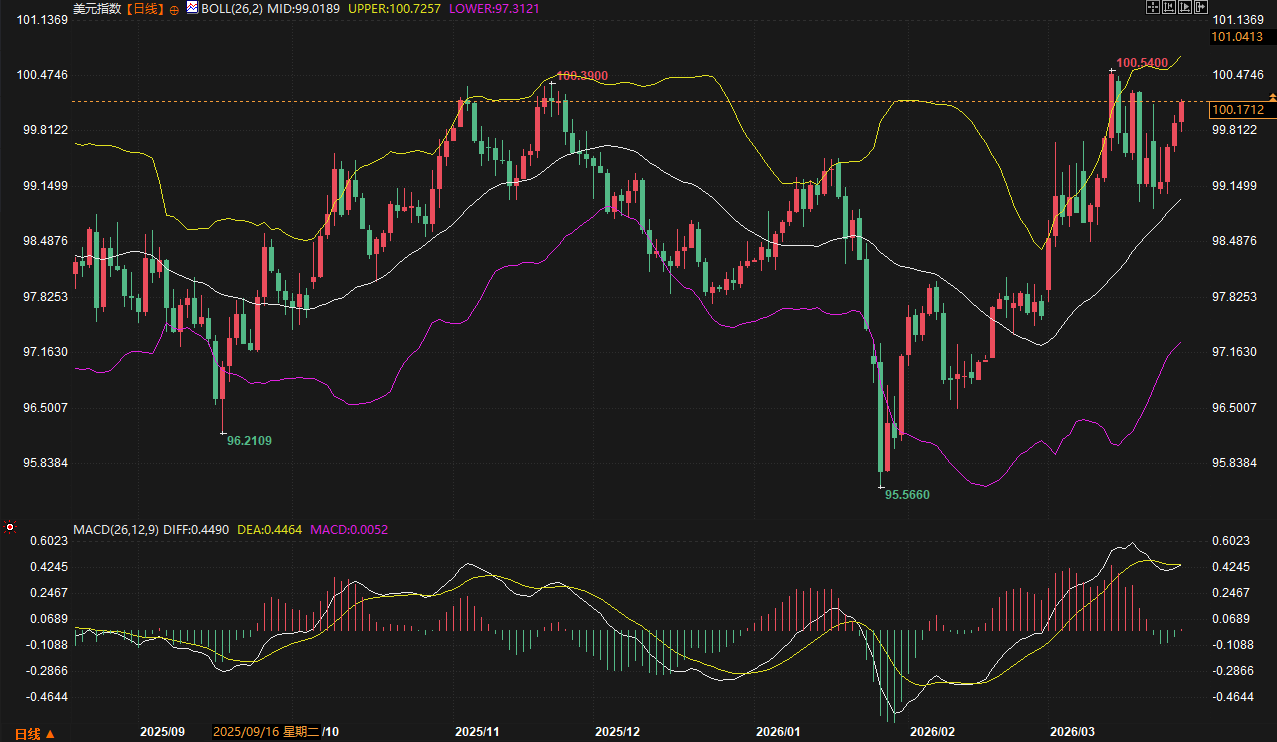
Weekly Market Review <br/>The US dollar index continued its strong rebound this week since hitting a low of 95.5660 in February, reaching a high of 100.5400, a new high in nearly six months. Although there was a slight pullback mid-week, it quickly recovered its losses in the latter half of the week due to safe-haven buying. While the MACD histogram narrowed technically, the price remained firmly above the Bollinger Band's middle line, demonstrating strong trend momentum.
Economic Data/Event Summary <br/>The US consumer confidence index fell to a three-month low in March, indicating that high inflation expectations and rising energy prices are eroding domestic demand. However, the weak macroeconomic data did not hinder the strengthening of the US dollar. The core driver was the escalating situation in the Middle East, with Iran's counter-proposal against the ceasefire proposal and the Revolutionary Guard's threat to allow navigation through the Strait of Hormuz, which greatly stimulated market demand for the safe-haven dollar. In addition, market expectations for a Fed rate cut this year have fundamentally reversed, and the possibility of a renewed rate hike has even begun to be discussed.
Summary of Analyst/Institutional Views <br/>Analysts from major overseas institutions believe that the correlation between the US dollar and risk has reached its peak in recent years. A well-known foreign media outlet, citing strategists, pointed out that weekend positioning reflects investors' fear of geopolitical risk fluctuations. Meanwhile, the shift in market pricing—from expectations of interest rate cuts to speculation about interest rate hikes—provides medium- to long-term interest rate support for the US dollar. This broad shift in interest rate expectations is reshaping the pricing logic of the bond and currency markets.
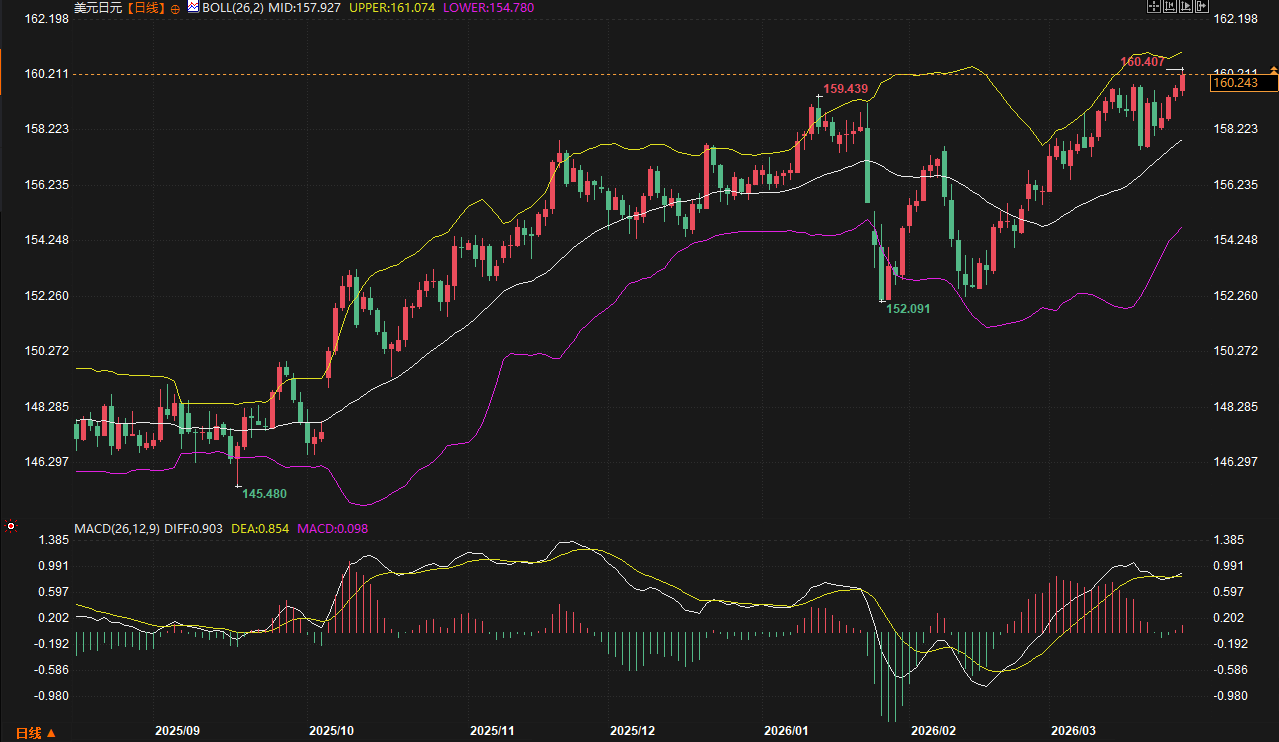
This Week's Market Review <br />The USD/JPY pair experienced a very passive performance this week. After breaking through the previous high of 159.439, the exchange rate accelerated its upward movement, reaching a high of 160.407, marking the first time it has broken through the 160 mark since July 2024. Although the MACD showed a slight bearish divergence, suggesting technical overbought conditions, the depreciation pressure on the yen failed to be substantially alleviated in the face of strong dollar buying.
Economic Data/Event Summary <br/>Japan's heavy reliance on imported energy puts it at a disadvantage in the current volatility of crude oil prices. Although the Bank of Japan announced a new neutral interest rate forecast, signaling its readiness to raise interest rates to offset inflation, the positive effect of the policy signal was completely offset by market risk aversion due to its interest rate differential disadvantage and external geopolitical pressures.
Summary of Analyst/Institutional Views : Major overseas institutions are generally paying close attention to the Japanese government's intervention. Analysts point out that the 160 level is not only a psychological barrier but also the starting point for last year's intervention. The current strength of the US dollar is likely to continue. If the situation in the Middle East does not substantially ease, even if intervention causes short-term fluctuations, it will be difficult to reverse the macroeconomic backdrop of the yen being sold off as a funding currency.
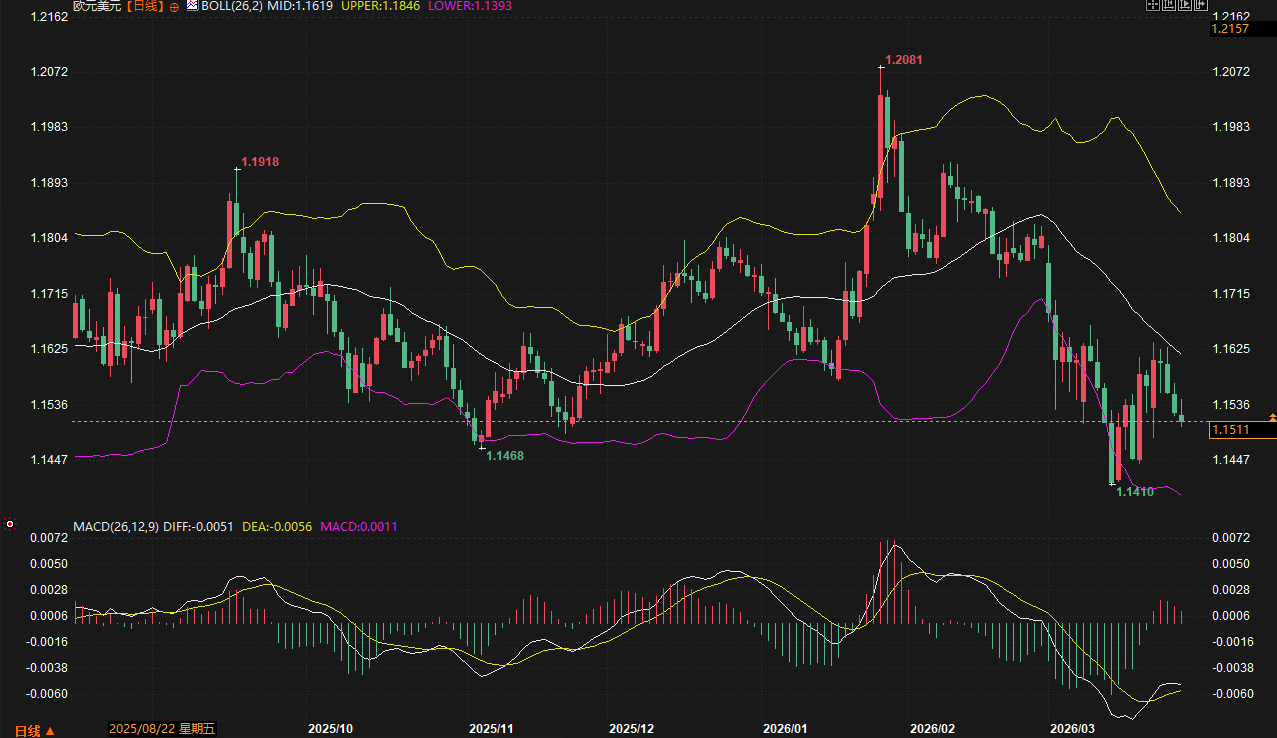
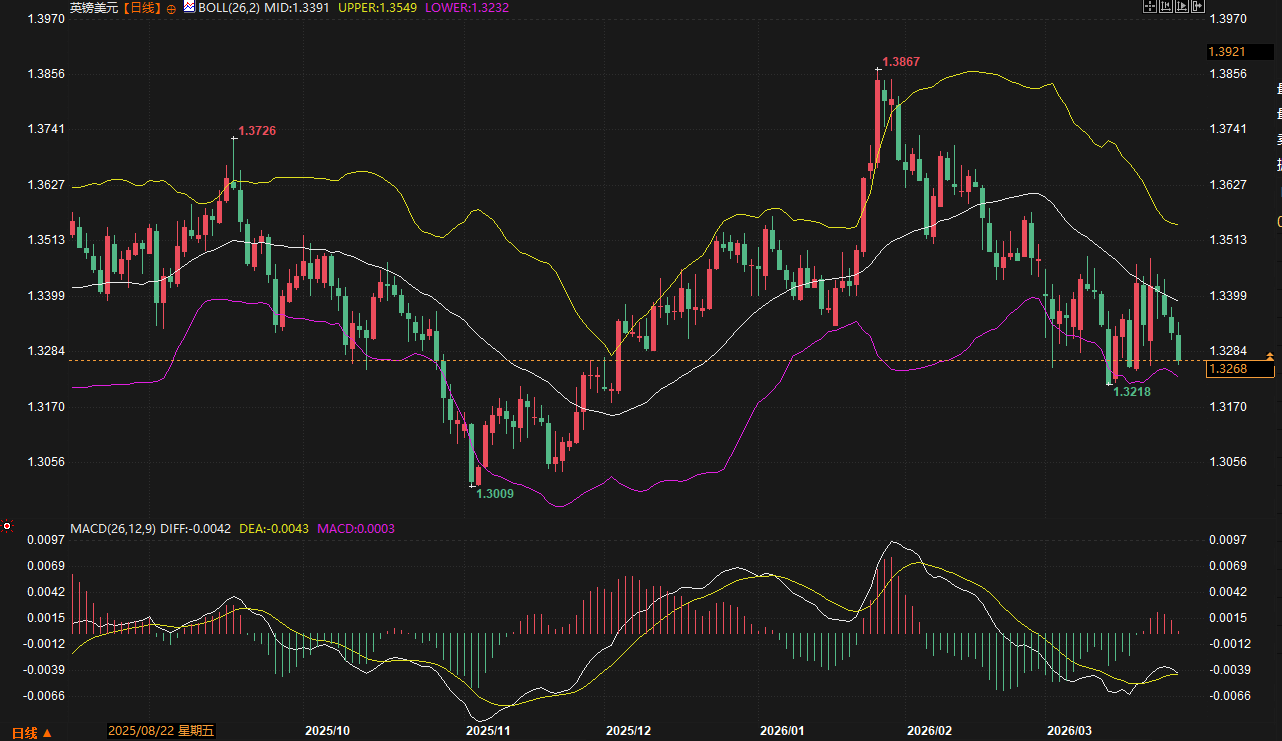
Weekly Market Review <br />The euro and pound sterling performed weakly this week. The euro fell below the Bollinger Band middle line at 1.1619 against the US dollar, confirming a medium-term downtrend; the pound sterling fell for four consecutive trading days, recording a weekly decline of 0.9%, becoming one of the worst-performing non-US dollar currencies. The MACD histogram continued to expand, indicating that bearish momentum is still being released.
Economic Data/Event Summary <br/> Due to the impact of geopolitical tensions on supply chains, concerns about a slowdown in European economic growth outweighed expectations of interest rate hikes. While the Bank of England and the European Central Bank may face further policy tightening to combat inflationary pressures, the market is more concerned that the combined effects of a high-interest-rate environment and the energy crisis could lead to an economic recession.
Summary of Analyst/Institutional Views <br/>Reputable overseas institutions believe that European currencies are currently under the shadow of "stagflation" expectations. Analysts noted that market speculative expectations have shifted across the board. Although the final interest rate may rise, the relative attractiveness of the euro and pound sterling against the dollar is weakening, and the logic of capital flowing back to North America remains unshaken.
This Week's Market Recap: The USD/CAD pair reached a high of 1.3894 this week, closing with a strong bullish candle. The AUD/USD pair, however, fell to a two-month low.
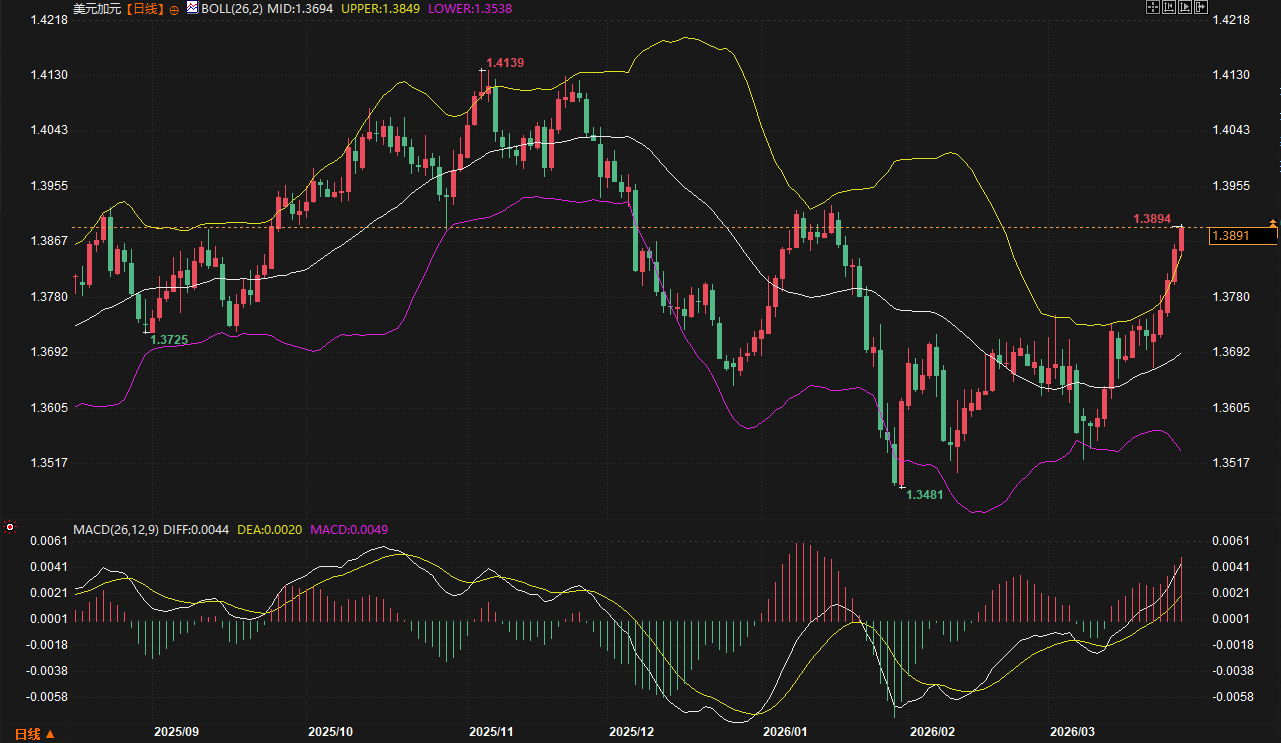
Economic Data/Event Summary <br/>Due to rising oil prices driven by the Middle East situation, the Canadian dollar, as an energy currency, showed some resilience, with relatively strong bullish momentum. In contrast, the Australian dollar, a typical risk currency, suffered indiscriminate selling as risk aversion intensified, depreciating by about 3% since the outbreak of the conflict.
Summary of Analyst/Institutional Views : Institutions generally believe that the divergence in commodity currencies reflects the differences between energy-exporting countries and risk-sensitive economies. As long as geopolitical premiums exist, the downside potential of the Canadian dollar will be limited, while the Australian dollar will need to wait for a recovery in global risk appetite.
In summary, the core driving force of the global foreign exchange market this week has shifted from purely economic data-driven to a dual driver of geopolitical and policy expectations. The US dollar, leveraging its safe-haven status and expectations of interest rate repricing, maintained its leading position among major currency pairs. Next week, key attention will be focused on Iran's substantive response and the US decision regarding the deployment of additional ground troops. Given the extremely high level of macroeconomic uncertainty, market sentiment will remain under pressure. Technically, the bullish trend in dollar-related assets shows no signs of reversal, while stress tests on European and safe-haven assets will continue.
1. Why has the Japanese yen, a traditional safe-haven asset, performed so weakly amid rising risk aversion?
The yen's weakness stems from a combination of pressures. First, the overwhelming impact of interest rate differentials: despite the Bank of Japan's inclination to raise interest rates, the interest rate differential remains significant compared to expectations of a potential resumption of rate hikes in the US, making it difficult for carry trades to be closed out to counter arbitrage buying. Second, the yen is heavily influenced by energy prices. Escalating tensions in the Middle East have driven up oil prices, directly worsening Japan's trade balance and transforming it from a "safe haven destination" into a "victim of energy costs."
2. Is the current strength of the US dollar index sustainable, and what are the core pillars supporting its long-term upward trend?
The core pillar lies in the "paradigm shift" in global interest rate expectations. Previously, the market widely believed the rate hike cycle had ended, but the energy inflation risks stemming from the current situation in the Middle East have led the market to reassess the Federal Reserve's actions. When speculative expectations shifted from "when to cut rates" to "whether to raise rates again," the dollar's bottom support was significantly strengthened. As long as the global inflation center remains constrained by energy prices and cannot decline, the dollar's relative strength is unlikely to be broken.
3. How likely is it that Japanese authorities will intervene in the foreign exchange market again at the 160 level, and what will be the effect of such intervention?
It is highly likely. 160 is considered a regulatory "red line," and breaching it would damage policy credibility. However, the effectiveness of intervention is questionable. Simply selling off dollars cannot bridge the fundamental gap between the US dollar and the Japanese yen. Historical experience shows that during a period of dollar strengthening, unilateral intervention usually only provides a temporary pullback opportunity. Without substantial monetary tightening, the yen's depreciation trend may only be delayed, not reversed.
4. Why did the British pound and the euro fall significantly more than other assets this week?
This reflects a deep distrust in the resilience of the European economy. Europe faces not only the direct threat of disrupted energy supply chains but also the indirect impact of US trade-related policy rhetoric. Under the dual pressures of potentially prolonged high interest rates and stagnant growth, the risk premium for European currencies is being repriced. Furthermore, compared to energy currencies like the Canadian dollar, European currencies lack the intrinsic incentive to hedge against high oil prices, making them particularly vulnerable to risk aversion.
5. What potential extreme risks in the foreign exchange market should investors be particularly wary of in the coming week?
The primary risk is a complete breakdown of diplomatic mediation in the Middle East, especially if a large-scale ground conflict occurs, which could lead to a liquidity crunch and a sell-off in the yen and euro. Secondly, public statements from Federal Reserve officials are crucial; if they officially confirm that interest rate hikes are back on the table, the dollar index will break through previous highs and begin a new one-sided upward trend. Finally, attention should be paid to extreme overheating in the market regarding specific assets, and the risk of a flash crash triggered by rapid profit-taking after excessive crowding of dollar bulls should be guarded against.
US Dollar Index: A Dual Resonance of Safe-Haven Assets and Interest Rate Carry Advantage
Weekly Market Review <br/>The US dollar index continued its strong rebound this week since hitting a low of 95.5660 in February, reaching a high of 100.5400, a new high in nearly six months. Although there was a slight pullback mid-week, it quickly recovered its losses in the latter half of the week due to safe-haven buying. While the MACD histogram narrowed technically, the price remained firmly above the Bollinger Band's middle line, demonstrating strong trend momentum.
Economic Data/Event Summary <br/>The US consumer confidence index fell to a three-month low in March, indicating that high inflation expectations and rising energy prices are eroding domestic demand. However, the weak macroeconomic data did not hinder the strengthening of the US dollar. The core driver was the escalating situation in the Middle East, with Iran's counter-proposal against the ceasefire proposal and the Revolutionary Guard's threat to allow navigation through the Strait of Hormuz, which greatly stimulated market demand for the safe-haven dollar. In addition, market expectations for a Fed rate cut this year have fundamentally reversed, and the possibility of a renewed rate hike has even begun to be discussed.
Summary of Analyst/Institutional Views <br/>Analysts from major overseas institutions believe that the correlation between the US dollar and risk has reached its peak in recent years. A well-known foreign media outlet, citing strategists, pointed out that weekend positioning reflects investors' fear of geopolitical risk fluctuations. Meanwhile, the shift in market pricing—from expectations of interest rate cuts to speculation about interest rate hikes—provides medium- to long-term interest rate support for the US dollar. This broad shift in interest rate expectations is reshaping the pricing logic of the bond and currency markets.
Japanese Yen: Falls below intervention threshold, energy cost pressures increase sharply.
This Week's Market Review <br />The USD/JPY pair experienced a very passive performance this week. After breaking through the previous high of 159.439, the exchange rate accelerated its upward movement, reaching a high of 160.407, marking the first time it has broken through the 160 mark since July 2024. Although the MACD showed a slight bearish divergence, suggesting technical overbought conditions, the depreciation pressure on the yen failed to be substantially alleviated in the face of strong dollar buying.
Economic Data/Event Summary <br/>Japan's heavy reliance on imported energy puts it at a disadvantage in the current volatility of crude oil prices. Although the Bank of Japan announced a new neutral interest rate forecast, signaling its readiness to raise interest rates to offset inflation, the positive effect of the policy signal was completely offset by market risk aversion due to its interest rate differential disadvantage and external geopolitical pressures.
Summary of Analyst/Institutional Views : Major overseas institutions are generally paying close attention to the Japanese government's intervention. Analysts point out that the 160 level is not only a psychological barrier but also the starting point for last year's intervention. The current strength of the US dollar is likely to continue. If the situation in the Middle East does not substantially ease, even if intervention causes short-term fluctuations, it will be difficult to reverse the macroeconomic backdrop of the yen being sold off as a funding currency.
European currencies: Squeezed by both economic outlook and tightening policies
Weekly Market Review <br />The euro and pound sterling performed weakly this week. The euro fell below the Bollinger Band middle line at 1.1619 against the US dollar, confirming a medium-term downtrend; the pound sterling fell for four consecutive trading days, recording a weekly decline of 0.9%, becoming one of the worst-performing non-US dollar currencies. The MACD histogram continued to expand, indicating that bearish momentum is still being released.
Economic Data/Event Summary <br/> Due to the impact of geopolitical tensions on supply chains, concerns about a slowdown in European economic growth outweighed expectations of interest rate hikes. While the Bank of England and the European Central Bank may face further policy tightening to combat inflationary pressures, the market is more concerned that the combined effects of a high-interest-rate environment and the energy crisis could lead to an economic recession.
Summary of Analyst/Institutional Views <br/>Reputable overseas institutions believe that European currencies are currently under the shadow of "stagflation" expectations. Analysts noted that market speculative expectations have shifted across the board. Although the final interest rate may rise, the relative attractiveness of the euro and pound sterling against the dollar is weakening, and the logic of capital flowing back to North America remains unshaken.
Commodity Currencies: Canadian Dollar's Relative Resilience vs. Australian Dollar's Risk Sensitivity
This Week's Market Recap: The USD/CAD pair reached a high of 1.3894 this week, closing with a strong bullish candle. The AUD/USD pair, however, fell to a two-month low.
Economic Data/Event Summary <br/>Due to rising oil prices driven by the Middle East situation, the Canadian dollar, as an energy currency, showed some resilience, with relatively strong bullish momentum. In contrast, the Australian dollar, a typical risk currency, suffered indiscriminate selling as risk aversion intensified, depreciating by about 3% since the outbreak of the conflict.
Summary of Analyst/Institutional Views : Institutions generally believe that the divergence in commodity currencies reflects the differences between energy-exporting countries and risk-sensitive economies. As long as geopolitical premiums exist, the downside potential of the Canadian dollar will be limited, while the Australian dollar will need to wait for a recovery in global risk appetite.
In summary, the core driving force of the global foreign exchange market this week has shifted from purely economic data-driven to a dual driver of geopolitical and policy expectations. The US dollar, leveraging its safe-haven status and expectations of interest rate repricing, maintained its leading position among major currency pairs. Next week, key attention will be focused on Iran's substantive response and the US decision regarding the deployment of additional ground troops. Given the extremely high level of macroeconomic uncertainty, market sentiment will remain under pressure. Technically, the bullish trend in dollar-related assets shows no signs of reversal, while stress tests on European and safe-haven assets will continue.
QA module
1. Why has the Japanese yen, a traditional safe-haven asset, performed so weakly amid rising risk aversion?
The yen's weakness stems from a combination of pressures. First, the overwhelming impact of interest rate differentials: despite the Bank of Japan's inclination to raise interest rates, the interest rate differential remains significant compared to expectations of a potential resumption of rate hikes in the US, making it difficult for carry trades to be closed out to counter arbitrage buying. Second, the yen is heavily influenced by energy prices. Escalating tensions in the Middle East have driven up oil prices, directly worsening Japan's trade balance and transforming it from a "safe haven destination" into a "victim of energy costs."
2. Is the current strength of the US dollar index sustainable, and what are the core pillars supporting its long-term upward trend?
The core pillar lies in the "paradigm shift" in global interest rate expectations. Previously, the market widely believed the rate hike cycle had ended, but the energy inflation risks stemming from the current situation in the Middle East have led the market to reassess the Federal Reserve's actions. When speculative expectations shifted from "when to cut rates" to "whether to raise rates again," the dollar's bottom support was significantly strengthened. As long as the global inflation center remains constrained by energy prices and cannot decline, the dollar's relative strength is unlikely to be broken.
3. How likely is it that Japanese authorities will intervene in the foreign exchange market again at the 160 level, and what will be the effect of such intervention?
It is highly likely. 160 is considered a regulatory "red line," and breaching it would damage policy credibility. However, the effectiveness of intervention is questionable. Simply selling off dollars cannot bridge the fundamental gap between the US dollar and the Japanese yen. Historical experience shows that during a period of dollar strengthening, unilateral intervention usually only provides a temporary pullback opportunity. Without substantial monetary tightening, the yen's depreciation trend may only be delayed, not reversed.
4. Why did the British pound and the euro fall significantly more than other assets this week?
This reflects a deep distrust in the resilience of the European economy. Europe faces not only the direct threat of disrupted energy supply chains but also the indirect impact of US trade-related policy rhetoric. Under the dual pressures of potentially prolonged high interest rates and stagnant growth, the risk premium for European currencies is being repriced. Furthermore, compared to energy currencies like the Canadian dollar, European currencies lack the intrinsic incentive to hedge against high oil prices, making them particularly vulnerable to risk aversion.
5. What potential extreme risks in the foreign exchange market should investors be particularly wary of in the coming week?
The primary risk is a complete breakdown of diplomatic mediation in the Middle East, especially if a large-scale ground conflict occurs, which could lead to a liquidity crunch and a sell-off in the yen and euro. Secondly, public statements from Federal Reserve officials are crucial; if they officially confirm that interest rate hikes are back on the table, the dollar index will break through previous highs and begin a new one-sided upward trend. Finally, attention should be paid to extreme overheating in the market regarding specific assets, and the risk of a flash crash triggered by rapid profit-taking after excessive crowding of dollar bulls should be guarded against.
- Risk Warning and Disclaimer
- The market involves risk, and trading may not be suitable for all investors. This article is for reference only and does not constitute personal investment advice, nor does it take into account certain users’ specific investment objectives, financial situation, or other needs. Any investment decisions made based on this information are at your own risk.