Houthi rebels launched a surprise attack on Israel, and thousands of US troops were deployed to reinforce the Middle East, leaving the Strait of Hormuz seemingly "suffocated."
2026-03-30 09:37:18
The Houthi rebels in Yemen launched their first missile attack on Israel since the start of the war with Iran on Saturday (March 28). Houthi spokesman Yahya Saree subsequently stated that a second strike had been launched against Israel and vowed to take further action. The Houthis have made it clear that their operations will continue until their "aggression" against all "resistance fronts" ceases.
Israel claims it has successfully intercepted a missile originating in Yemen. The Houthi intervention marks a further escalation of the conflict, potentially prolonging the war and opening new fronts. The group previously demonstrated its ability to strike targets outside Yemen and disrupt shipping lanes in the Arabian Peninsula and around the Red Sea during the Gaza conflict.
On Monday (March 30) during the Asian session, US crude oil prices fluctuated upwards and are currently trading around $102.58 per barrel, up about 3% from the previous trading day's settlement price.
Washington has deployed two contingents of several thousand Marines to the Middle East, with the first batch arriving last Friday aboard an amphibious assault ship. The Pentagon expects to also deploy several thousand more soldiers from the U.S. Army's 82nd Airborne Division, raising concerns that the war could escalate into a protracted ground conflict.
While US President Trump claimed that his objectives could be achieved without ground troops, he acknowledged that some ground forces were being deployed to provide the president with maximum options and flexibility in responding to various contingencies. Trump also emphasized that he was seeking to end the war through "productive" diplomatic negotiations.
According to the Washington Post, U.S. officials revealed that the Pentagon is preparing for a multi-week ground operation in Iran. These plans may include raids by special operations forces and conventional infantry, but it remains uncertain whether Trump will approve any such deployments.
As the war with Iran enters its fifth week, U.S. Secretary of State Marco Rubio stated that Washington is "on track, even ahead of schedule," and expects the military operation to conclude within weeks rather than months. He also called on European and Asian countries that benefit from trade in the Strait of Hormuz to contribute to ensuring the passage of the waterway.
The Houthi attacks demonstrate that global shipping may face new and serious threats. The Strait of Hormuz is currently effectively blocked, and it previously carried approximately one-fifth of the world's oil and liquefied natural gas supplies. If the Houthis open a new front, one target could be the Bab el-Mandeb Strait off the Yemeni coast—a vital maritime chokepoint leading to the Suez Canal.
The Houthi rebels have demonstrated their ability to strike long-range targets and disrupt shipping lanes around the Red Sea. Their participation in this conflict could further exacerbate the risk of energy supply disruptions, leading to increased global shipping costs and strained supply chains.
Pakistan, a potential mediator between Washington and Tehran, held two days of talks with the foreign ministers of Saudi Arabia, Turkey, and Egypt starting Sunday to seek ways to ease regional tensions.
Despite the efforts of Pakistan, Egypt, and Turkey to relay messages between the warring parties, Iran has repeatedly denied engaging in substantive consultations with the United States. Two individuals familiar with the behind-the-scenes mediation expressed skepticism about direct talks taking place in the near future.
The war with Iran has entered its fifth week and has now spread throughout the Middle East, causing thousands of deaths and resulting in the worst energy supply disruption in history, impacting the global economy and exacerbating inflation fears. An Iranian attack on a Saudi airbase injured 12 U.S. military personnel, two of whom are seriously wounded.
The UAE and Bahrain reported missile attacks, and explosions were heard over Damascus triggered by interceptions of Iranian missiles. US-Israeli coalition attacks on the Zanjan residential area in northwestern Iran and Tehran's Technological University caused casualties.
Iranian Foreign Minister Abbas Araqchi stated that Israel, in coordination with the United States, also attacked two steel mills and a power plant, adding that Iran would make Israel pay a heavy price for its crimes.
Trump stated that the lack of support from allies has impacted NATO and questioned whether it will continue to fulfill its obligations.
The Houthi missile strikes against Israel for the first time and the large-scale US troop buildup in the Middle East have significantly increased the risk of an escalation of the war with Iran. The combined effects of the Strait of Hormuz blockade and the potential threat from the Bab el-Mandeb Strait are placing greater pressure on global energy supplies and shipping security.
Although the United States seeks to end the conflict as soon as possible through diplomatic negotiations, ground operations and the involvement of multiple parties in the region indicate that the situation remains highly uncertain. The future course of the conflict will directly affect global oil prices, inflation levels, and supply chain stability.
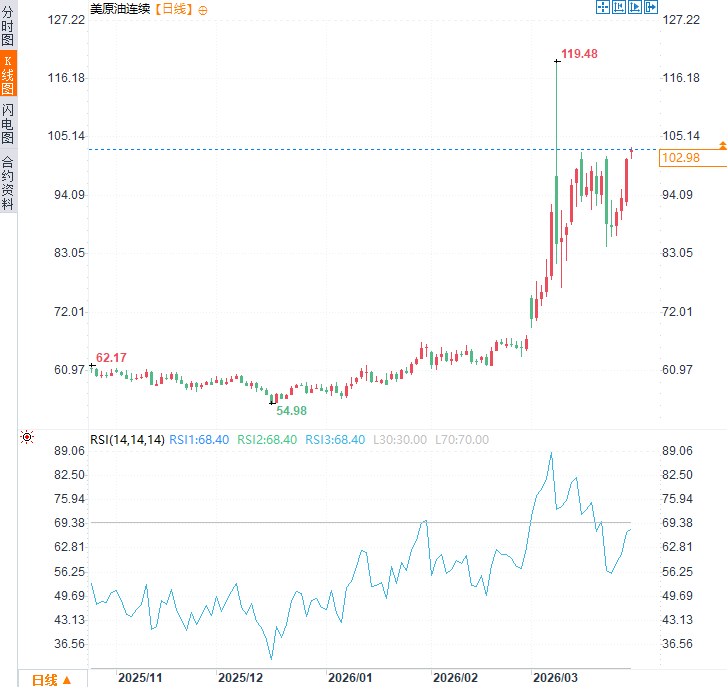
(US crude oil daily chart, source: FX678)
At 9:36 AM Beijing time, US crude oil futures were trading at $102.58 per barrel.
Israel claims it has successfully intercepted a missile originating in Yemen. The Houthi intervention marks a further escalation of the conflict, potentially prolonging the war and opening new fronts. The group previously demonstrated its ability to strike targets outside Yemen and disrupt shipping lanes in the Arabian Peninsula and around the Red Sea during the Gaza conflict.
On Monday (March 30) during the Asian session, US crude oil prices fluctuated upwards and are currently trading around $102.58 per barrel, up about 3% from the previous trading day's settlement price.
The United States is massively increasing its troop presence in the Middle East.
Washington has deployed two contingents of several thousand Marines to the Middle East, with the first batch arriving last Friday aboard an amphibious assault ship. The Pentagon expects to also deploy several thousand more soldiers from the U.S. Army's 82nd Airborne Division, raising concerns that the war could escalate into a protracted ground conflict.
While US President Trump claimed that his objectives could be achieved without ground troops, he acknowledged that some ground forces were being deployed to provide the president with maximum options and flexibility in responding to various contingencies. Trump also emphasized that he was seeking to end the war through "productive" diplomatic negotiations.
Pentagon prepares ground operation plan for Iran
According to the Washington Post, U.S. officials revealed that the Pentagon is preparing for a multi-week ground operation in Iran. These plans may include raids by special operations forces and conventional infantry, but it remains uncertain whether Trump will approve any such deployments.
As the war with Iran enters its fifth week, U.S. Secretary of State Marco Rubio stated that Washington is "on track, even ahead of schedule," and expects the military operation to conclude within weeks rather than months. He also called on European and Asian countries that benefit from trade in the Strait of Hormuz to contribute to ensuring the passage of the waterway.
Global shipping faces new threats
The Houthi attacks demonstrate that global shipping may face new and serious threats. The Strait of Hormuz is currently effectively blocked, and it previously carried approximately one-fifth of the world's oil and liquefied natural gas supplies. If the Houthis open a new front, one target could be the Bab el-Mandeb Strait off the Yemeni coast—a vital maritime chokepoint leading to the Suez Canal.
The Houthi rebels have demonstrated their ability to strike long-range targets and disrupt shipping lanes around the Red Sea. Their participation in this conflict could further exacerbate the risk of energy supply disruptions, leading to increased global shipping costs and strained supply chains.
Mediation efforts by Pakistan and other countries
Pakistan, a potential mediator between Washington and Tehran, held two days of talks with the foreign ministers of Saudi Arabia, Turkey, and Egypt starting Sunday to seek ways to ease regional tensions.
Despite the efforts of Pakistan, Egypt, and Turkey to relay messages between the warring parties, Iran has repeatedly denied engaging in substantive consultations with the United States. Two individuals familiar with the behind-the-scenes mediation expressed skepticism about direct talks taking place in the near future.
Regional situation and economic impact in the fifth week of the war
The war with Iran has entered its fifth week and has now spread throughout the Middle East, causing thousands of deaths and resulting in the worst energy supply disruption in history, impacting the global economy and exacerbating inflation fears. An Iranian attack on a Saudi airbase injured 12 U.S. military personnel, two of whom are seriously wounded.
The UAE and Bahrain reported missile attacks, and explosions were heard over Damascus triggered by interceptions of Iranian missiles. US-Israeli coalition attacks on the Zanjan residential area in northwestern Iran and Tehran's Technological University caused casualties.
Iranian Foreign Minister Abbas Araqchi stated that Israel, in coordination with the United States, also attacked two steel mills and a power plant, adding that Iran would make Israel pay a heavy price for its crimes.
Trump stated that the lack of support from allies has impacted NATO and questioned whether it will continue to fulfill its obligations.
Editor's Summary
The Houthi missile strikes against Israel for the first time and the large-scale US troop buildup in the Middle East have significantly increased the risk of an escalation of the war with Iran. The combined effects of the Strait of Hormuz blockade and the potential threat from the Bab el-Mandeb Strait are placing greater pressure on global energy supplies and shipping security.
Although the United States seeks to end the conflict as soon as possible through diplomatic negotiations, ground operations and the involvement of multiple parties in the region indicate that the situation remains highly uncertain. The future course of the conflict will directly affect global oil prices, inflation levels, and supply chain stability.
(US crude oil daily chart, source: FX678)
At 9:36 AM Beijing time, US crude oil futures were trading at $102.58 per barrel.
- Risk Warning and Disclaimer
- The market involves risk, and trading may not be suitable for all investors. This article is for reference only and does not constitute personal investment advice, nor does it take into account certain users’ specific investment objectives, financial situation, or other needs. Any investment decisions made based on this information are at your own risk.