Russia has chosen to support Iran in its current predicament in order to maintain its global influence.
2026-03-30 11:40:38
As the conflict with Iran continues, US military action against Iran has not only destabilized the Middle East but has also made Russia one of the short-term beneficiaries. High oil prices have injected vitality into the Russian economy, while the Trump administration has temporarily eased restrictions on Russian oil. However, in the long run, this conflict may weaken Russia's global influence.
Russia has recently increased its support for Iran, providing satellite imagery and drone technology to assist Iran in striking U.S. military targets in the region. This move reflects Moscow's strategic considerations in maintaining its network of partnerships.
High Brent crude oil prices provided a significant boost to Russia's sluggish economy. The conflict disrupted shipping in the Strait of Hormuz, tightening global oil supplies and causing oil prices to surge. Simultaneously, the Trump administration eased export restrictions on Russian oil, resulting in a significant increase in Russian oil revenues. This made Russia one of the few beneficiaries in the early stages of the conflict.
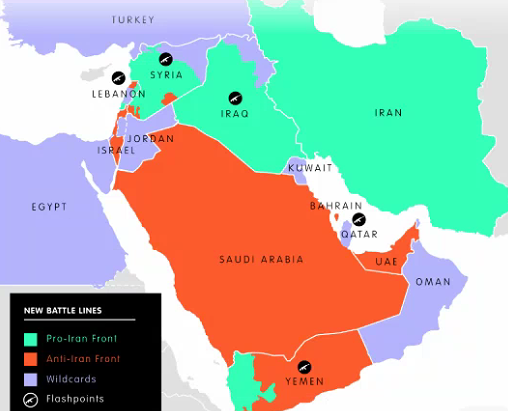
Image: Green represents Russia's geopolitical influence in the Middle East.
However, analysts point out that this benefit may only be temporary, and in the long run, the conflict poses a greater challenge to Russia's global strategy.
In recent weeks, Russia has significantly increased its support for Iran, including providing satellite imagery and drone-related technology to help Iran launch strikes against U.S. forces in the region.
Moscow’s move is partly aimed at salvaging its shrinking network of partnerships that helped Russia become the world’s second-largest arms exporter after the United States, supported multiple regimes from the Middle East to Latin America, and provided crucial support for President Vladimir Putin’s assertion that Russia is a world power.
Hanna Notte, director of the Eurasia Program at the James Martin Center for Nonproliferation Studies, said that Russia is gradually realizing what it would mean if the United States acted completely unrestrained.
In January of this year, the U.S. military raided Venezuela and arrested President Nicolas Maduro, establishing U.S. dominance over the country. Venezuela had been a reliable buyer of Russian weapons, with Russia investing hundreds of millions of dollars in its oil sector.
US President Trump has hinted that the next target could include overthrowing the Cuban regime, one of Russia’s closest partners in the Western Hemisphere.
The attack on Iran also threatens a long-standing Russian strategy to maintain a system of partnerships with friendly nations and paramilitary groups along its southern border. Russia's former partner in Syria, former President Bashar al-Assad, is currently in Moscow after leaving the country, and Russia is negotiating with the new Syrian government over the future of its military bases.
The Iranian regime is a key link in a network of militia groups, including Hezbollah in Lebanon, which have long challenged the dominance of the United States and Israel in the region. These militias have also provided the Russian military with arms and technology trafficking routes. However, since the events of October 7, 2023, the conflict has weakened these groups.
Despite weeks of attacks from the US and Israel, Iran has so far demonstrated considerable resilience. The country has effectively blocked the Strait of Hormuz (through which one-fifth of the world's oil is transported) and continues to launch daily missile and drone strikes against the US and its allies.
According to reports, Russia has provided advice to Iran based on its experience in the Russia-Ukraine conflict, including tactical guidance on how many drones should be used in the attack and from what altitude.
It is widely believed that Russian advice and target information helped Iran successfully strike U.S. radar systems in the region.
The potential continued existence of the Iranian regime would provide Russia with an opportunity to maintain a foothold in the Middle East, especially as it sees its influence waning in other regions. It would also give Moscow an opportunity to demonstrate its ability to help its partners counter U.S. military power.
Furthermore, Russia is attempting to use its support for Iran as leverage in negotiations with Washington. The Kremlin's special envoy in charge of negotiations on Ukraine told US envoys Steve Witkoff and Jared Kushner that if the US stops providing targeting information to Ukraine, Russia will also stop providing such information to Iran.
In the early stages of Trump's second term, Russia seemed reluctant to confront the United States directly, attempting to keep the Trump administration largely on the sidelines in the Russia-Ukraine conflict. However, as its own interests were increasingly affected by Trump's foreign policy, Moscow's expressions of disappointment grew.
The U.S. military has boarded and seized several oil tankers with ties to Russia, one of which, according to U.S. officials, was originally scheduled to be escorted by a Russian submarine and other naval assets. This tanker was painted with the Russian flag on one side when it was being pursued. Despite warnings from the Russian Foreign Ministry, the tanker was seized.
At the end of last year, Russia's state-owned oil company received a 15-year extension for its production license in Venezuela. However, last month, Russian Foreign Minister Sergei Lavrov stated that, at the behest of the United States, Russian companies are being slowly squeezed out of Venezuela. In an interview with Russian state television, Lavrov said that the US is openly attempting to expel Russia and its companies from Venezuela.
Following the U.S. tightening of its embargo on Cuba, Kremlin spokesman Dmitry Peskov stated that Russia is prepared to provide financial and humanitarian aid to alleviate the crisis. A Russian-flagged state-owned oil tanker, the Anatoly Kolodkin, sailed towards Cuba, sparking speculation about whether it was attempting to circumvent the embargo.
In sub-Saharan Africa, military regimes in countries like Mali, Burkina Faso, and Niger have received Russian mercenaries and military aid, but this aid has failed to effectively stop jihadist groups. Russia has largely remained neutral, while the rulers of these countries have begun to quietly re-establish ties with the Trump administration.
Trump has even ventured into regions historically within Russia's sphere of influence. He invited Armenian President Nikol Pashinyan and Azerbaijani President Ilham Aliyev to the White House in an attempt to resolve tensions between the two countries. Samuel Charap, a senior political scientist at the RAND Corporation, a defense think tank, said that on the South Caucasus issue, Trump appears to be deliberately provoking the Russians.
The escalating clash between Trump's expansionist foreign policy and the Kremlin's global foothold has sparked calls within Russia for a tougher approach to dealing with the United States. Russian nationalist Alexander Dugin, who advocates a hardline stance against the West and has received Putin's endorsement, says the situation will become even more unpredictable if Russia does not undertake genuine patriotic reforms now. Dugin adds, "Our partners will fall one by one."
Overall, by increasing its support for Iran, Russia hopes to both maintain its strategic foothold in the Middle East and gain leverage in its power struggle with the United States. The economic benefits brought by high oil prices have given Moscow some breathing room in the short term, but US actions in Latin America, Africa, and the Caucasus are gradually shrinking Russia's global influence. How Russia balances short-term interests with its long-term strategy will directly impact its international standing and the future of its relationship with the United States.
Russia has recently increased its support for Iran, providing satellite imagery and drone technology to assist Iran in striking U.S. military targets in the region. This move reflects Moscow's strategic considerations in maintaining its network of partnerships.
Soaring oil prices bring short-term benefits to the Russian economy.
High Brent crude oil prices provided a significant boost to Russia's sluggish economy. The conflict disrupted shipping in the Strait of Hormuz, tightening global oil supplies and causing oil prices to surge. Simultaneously, the Trump administration eased export restrictions on Russian oil, resulting in a significant increase in Russian oil revenues. This made Russia one of the few beneficiaries in the early stages of the conflict.
Image: Green represents Russia's geopolitical influence in the Middle East.
However, analysts point out that this benefit may only be temporary, and in the long run, the conflict poses a greater challenge to Russia's global strategy.
Russia increases support for Iran
In recent weeks, Russia has significantly increased its support for Iran, including providing satellite imagery and drone-related technology to help Iran launch strikes against U.S. forces in the region.
Moscow’s move is partly aimed at salvaging its shrinking network of partnerships that helped Russia become the world’s second-largest arms exporter after the United States, supported multiple regimes from the Middle East to Latin America, and provided crucial support for President Vladimir Putin’s assertion that Russia is a world power.
Hanna Notte, director of the Eurasia Program at the James Martin Center for Nonproliferation Studies, said that Russia is gradually realizing what it would mean if the United States acted completely unrestrained.
US actions threaten Russia’s traditional influence in Latin America and the Middle East.
In January of this year, the U.S. military raided Venezuela and arrested President Nicolas Maduro, establishing U.S. dominance over the country. Venezuela had been a reliable buyer of Russian weapons, with Russia investing hundreds of millions of dollars in its oil sector.
US President Trump has hinted that the next target could include overthrowing the Cuban regime, one of Russia’s closest partners in the Western Hemisphere.
The attack on Iran also threatens a long-standing Russian strategy to maintain a system of partnerships with friendly nations and paramilitary groups along its southern border. Russia's former partner in Syria, former President Bashar al-Assad, is currently in Moscow after leaving the country, and Russia is negotiating with the new Syrian government over the future of its military bases.
The Iranian regime is a key link in a network of militia groups, including Hezbollah in Lebanon, which have long challenged the dominance of the United States and Israel in the region. These militias have also provided the Russian military with arms and technology trafficking routes. However, since the events of October 7, 2023, the conflict has weakened these groups.
Iran demonstrates resilience; Russia provides tactical guidance.
Despite weeks of attacks from the US and Israel, Iran has so far demonstrated considerable resilience. The country has effectively blocked the Strait of Hormuz (through which one-fifth of the world's oil is transported) and continues to launch daily missile and drone strikes against the US and its allies.
According to reports, Russia has provided advice to Iran based on its experience in the Russia-Ukraine conflict, including tactical guidance on how many drones should be used in the attack and from what altitude.
It is widely believed that Russian advice and target information helped Iran successfully strike U.S. radar systems in the region.
Supporting Iran helps Russia maintain its foothold in the Middle East and serves as a bargaining chip.
The potential continued existence of the Iranian regime would provide Russia with an opportunity to maintain a foothold in the Middle East, especially as it sees its influence waning in other regions. It would also give Moscow an opportunity to demonstrate its ability to help its partners counter U.S. military power.
Furthermore, Russia is attempting to use its support for Iran as leverage in negotiations with Washington. The Kremlin's special envoy in charge of negotiations on Ukraine told US envoys Steve Witkoff and Jared Kushner that if the US stops providing targeting information to Ukraine, Russia will also stop providing such information to Iran.
In the early stages of Trump's second term, Russia seemed reluctant to confront the United States directly, attempting to keep the Trump administration largely on the sidelines in the Russia-Ukraine conflict. However, as its own interests were increasingly affected by Trump's foreign policy, Moscow's expressions of disappointment grew.
Russia's partnerships in many parts of the world are under pressure.
The U.S. military has boarded and seized several oil tankers with ties to Russia, one of which, according to U.S. officials, was originally scheduled to be escorted by a Russian submarine and other naval assets. This tanker was painted with the Russian flag on one side when it was being pursued. Despite warnings from the Russian Foreign Ministry, the tanker was seized.
At the end of last year, Russia's state-owned oil company received a 15-year extension for its production license in Venezuela. However, last month, Russian Foreign Minister Sergei Lavrov stated that, at the behest of the United States, Russian companies are being slowly squeezed out of Venezuela. In an interview with Russian state television, Lavrov said that the US is openly attempting to expel Russia and its companies from Venezuela.
Following the U.S. tightening of its embargo on Cuba, Kremlin spokesman Dmitry Peskov stated that Russia is prepared to provide financial and humanitarian aid to alleviate the crisis. A Russian-flagged state-owned oil tanker, the Anatoly Kolodkin, sailed towards Cuba, sparking speculation about whether it was attempting to circumvent the embargo.
In sub-Saharan Africa, military regimes in countries like Mali, Burkina Faso, and Niger have received Russian mercenaries and military aid, but this aid has failed to effectively stop jihadist groups. Russia has largely remained neutral, while the rulers of these countries have begun to quietly re-establish ties with the Trump administration.
Trump has even ventured into regions historically within Russia's sphere of influence. He invited Armenian President Nikol Pashinyan and Azerbaijani President Ilham Aliyev to the White House in an attempt to resolve tensions between the two countries. Samuel Charap, a senior political scientist at the RAND Corporation, a defense think tank, said that on the South Caucasus issue, Trump appears to be deliberately provoking the Russians.
Rising hardline voices within Russia
The escalating clash between Trump's expansionist foreign policy and the Kremlin's global foothold has sparked calls within Russia for a tougher approach to dealing with the United States. Russian nationalist Alexander Dugin, who advocates a hardline stance against the West and has received Putin's endorsement, says the situation will become even more unpredictable if Russia does not undertake genuine patriotic reforms now. Dugin adds, "Our partners will fall one by one."
Summary: Short-term profits and long-term risks coexist.
Overall, by increasing its support for Iran, Russia hopes to both maintain its strategic foothold in the Middle East and gain leverage in its power struggle with the United States. The economic benefits brought by high oil prices have given Moscow some breathing room in the short term, but US actions in Latin America, Africa, and the Caucasus are gradually shrinking Russia's global influence. How Russia balances short-term interests with its long-term strategy will directly impact its international standing and the future of its relationship with the United States.
- Risk Warning and Disclaimer
- The market involves risk, and trading may not be suitable for all investors. This article is for reference only and does not constitute personal investment advice, nor does it take into account certain users’ specific investment objectives, financial situation, or other needs. Any investment decisions made based on this information are at your own risk.