The war in Iran has led to a disruption in the supply of petrochemical raw materials, and everyday consumer goods are about to see a collective price increase.
2026-03-30 13:10:42
The tensions in the Strait of Hormuz caused by the conflict with Iran have not only driven up oil prices, but will also be transmitted to millions of everyday consumer goods through the petrochemical industry chain.
In the short term, consumers may face reduced packaging but no price reduction, while in the long term, they may face more significant price increases, especially low-income groups will feel greater pressure.
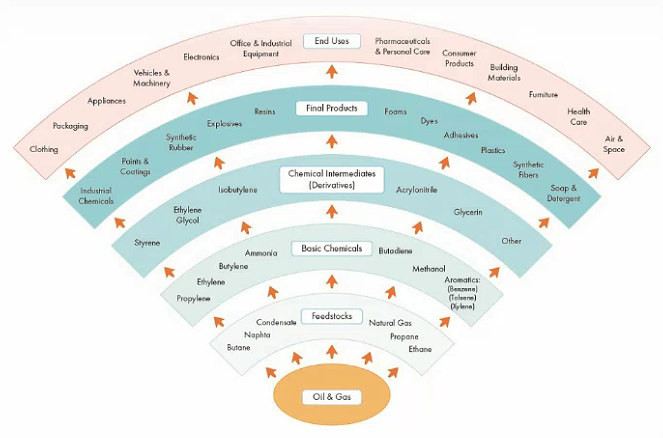
The raw materials for almost all the plastic products we use every day come from petroleum, such as naphtha, propylene, methanol, ammonia, and styrene. Although some byproducts can be obtained from other places, Middle Eastern oil fields are the world's primary source of naphtha, and currently nothing can replace it.
Krimmel, founder of energy consultancy Krimmel Strategy Group, said: "Naphtha is very important. It is a more abundant and easier-to-process liquid feedstock that can produce a lot of products that will affect the whole economy in a chain."
He stated that even if a ceasefire were to be implemented immediately, it would take considerable time for the supply chain to recover. The longer the fighting continues, the more problems will accumulate. Therefore, no consumer can breathe a sigh of relief at this moment.
Moody's Chief Credit Officer, Atsi Sheth, pointed out that this is the latest blow to the petrochemical industry in recent years. It has already experienced the COVID-19 pandemic, the Russia-Ukraine conflict, the Red Sea crisis, and now the Strait of Hormuz issue.
However, she believes the biggest impact actually comes from the significant increase in petrochemical production by major Asian countries, coupled with global oil companies seeing opportunities for vertical integration and expanding their production.
"Moody's has been reminding everyone that we are currently experiencing a supply glut, with too much product and insufficient demand," said Shess.
Because of oversupply, profits have been severely squeezed and companies' ability to repay debts has been declining, so Moody's has downgraded the ratings of many producers.
However, she said that once the current inventory runs out, the situation will quickly reverse, and inflation is expected to intensify significantly in the second half of this year.
"We believe this will ultimately impact people's daily expenses," said Xie Si. "Prices of food, clothing, and other daily necessities will affect lower-income groups the most. "
Peter Swartz, chief scientific officer and co-founder of supply chain analytics firm Altana, said the market is now pricing in uncertainty, and prices will rise in the long run no matter what happens on the battlefield.
He said, "The long-term effects are already emerging. Every company is preparing for a more uncertain future and investing in diversification, which in itself increases costs."
Once the petrochemical market is impacted, it will trigger a chain reaction, because petrochemical products will enter into various commodities worth trillions of dollars, and these commodities will enter into even more commodities, with all links relying on the same set of petrochemical raw materials.
He stated, "There are no simple, quick alternatives to these products."
Altana data shows that petrochemical feedstocks, intermediates, and finished products flowing through the Gulf region are worth a total of $733 billion, accounting for 22% of global supply. The downstream products affected by these feedstocks are worth a total of $3.8 trillion, ranging from toothpaste to towels.
Krykun, head of a plastic packaging company, is closely monitoring the dramatic fluctuations in orders. He says that consumers will at least notice less packaging, but prices won't go down.
He said, "We are seeing many brands making real adjustments." For example, skincare brands may change their complicated packaging boxes to simpler structures, and mobile phone accessory brands may reduce the number of packaging components inside, or redesign to save materials.
He said, "Even with boxed chocolates, brands are simplifying the internal layout or overall packaging to control costs."
But time isn't on the manufacturers' side. "Simplifying packaging or redesigning the structure isn't something that can be done immediately," says Kriquin. "It usually requires development, testing, and approval, and the whole process can take weeks or even months." In many cases, brands don't have enough time to completely redesign the packaging before the next production run. Therefore, they often have to place larger orders at higher prices while simultaneously trying to find more cost-effective packaging solutions.
In the short term, consumers may face reduced packaging but no price reduction, while in the long term, they may face more significant price increases, especially low-income groups will feel greater pressure.
Plastic raw materials rely entirely on petroleum, with Middle Eastern naphtha being particularly crucial.
The raw materials for almost all the plastic products we use every day come from petroleum, such as naphtha, propylene, methanol, ammonia, and styrene. Although some byproducts can be obtained from other places, Middle Eastern oil fields are the world's primary source of naphtha, and currently nothing can replace it.
Krimmel, founder of energy consultancy Krimmel Strategy Group, said: "Naphtha is very important. It is a more abundant and easier-to-process liquid feedstock that can produce a lot of products that will affect the whole economy in a chain."
He stated that even if a ceasefire were to be implemented immediately, it would take considerable time for the supply chain to recover. The longer the fighting continues, the more problems will accumulate. Therefore, no consumer can breathe a sigh of relief at this moment.
Inflationary pressures will increase, and low-income groups will be the most affected.
Moody's Chief Credit Officer, Atsi Sheth, pointed out that this is the latest blow to the petrochemical industry in recent years. It has already experienced the COVID-19 pandemic, the Russia-Ukraine conflict, the Red Sea crisis, and now the Strait of Hormuz issue.
However, she believes the biggest impact actually comes from the significant increase in petrochemical production by major Asian countries, coupled with global oil companies seeing opportunities for vertical integration and expanding their production.
"Moody's has been reminding everyone that we are currently experiencing a supply glut, with too much product and insufficient demand," said Shess.
Because of oversupply, profits have been severely squeezed and companies' ability to repay debts has been declining, so Moody's has downgraded the ratings of many producers.
However, she said that once the current inventory runs out, the situation will quickly reverse, and inflation is expected to intensify significantly in the second half of this year.
"We believe this will ultimately impact people's daily expenses," said Xie Si. "Prices of food, clothing, and other daily necessities will affect lower-income groups the most. "
Uncertainty has become the norm, and business costs will only continue to rise.
Peter Swartz, chief scientific officer and co-founder of supply chain analytics firm Altana, said the market is now pricing in uncertainty, and prices will rise in the long run no matter what happens on the battlefield.
He said, "The long-term effects are already emerging. Every company is preparing for a more uncertain future and investing in diversification, which in itself increases costs."
Once the petrochemical market is impacted, it will trigger a chain reaction, because petrochemical products will enter into various commodities worth trillions of dollars, and these commodities will enter into even more commodities, with all links relying on the same set of petrochemical raw materials.
He stated, "There are no simple, quick alternatives to these products."
Altana data shows that petrochemical feedstocks, intermediates, and finished products flowing through the Gulf region are worth a total of $733 billion, accounting for 22% of global supply. The downstream products affected by these feedstocks are worth a total of $3.8 trillion, ranging from toothpaste to towels.
Rising packaging costs may lead consumers to buy products with "less packaging but higher prices."
Krykun, head of a plastic packaging company, is closely monitoring the dramatic fluctuations in orders. He says that consumers will at least notice less packaging, but prices won't go down.
He said, "We are seeing many brands making real adjustments." For example, skincare brands may change their complicated packaging boxes to simpler structures, and mobile phone accessory brands may reduce the number of packaging components inside, or redesign to save materials.
He said, "Even with boxed chocolates, brands are simplifying the internal layout or overall packaging to control costs."
But time isn't on the manufacturers' side. "Simplifying packaging or redesigning the structure isn't something that can be done immediately," says Kriquin. "It usually requires development, testing, and approval, and the whole process can take weeks or even months." In many cases, brands don't have enough time to completely redesign the packaging before the next production run. Therefore, they often have to place larger orders at higher prices while simultaneously trying to find more cost-effective packaging solutions.
- Risk Warning and Disclaimer
- The market involves risk, and trading may not be suitable for all investors. This article is for reference only and does not constitute personal investment advice, nor does it take into account certain users’ specific investment objectives, financial situation, or other needs. Any investment decisions made based on this information are at your own risk.