Iran rejects "excessive" US proposal, further intensifying oil risk premiums.
2026-03-30 19:32:56
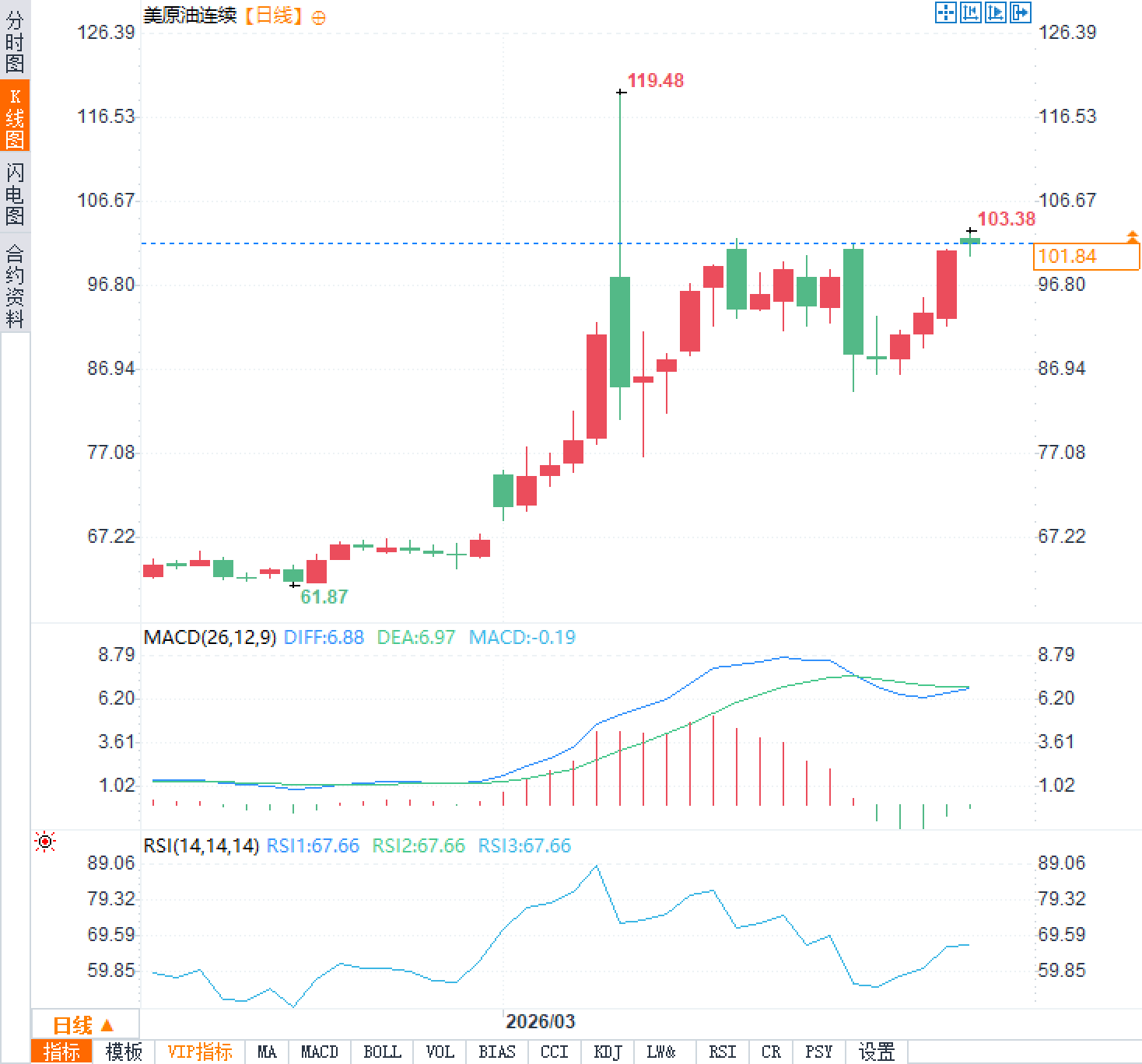
On Monday, March 30, WTI crude oil prices rose to $101.80 per barrel, a 2% increase for the day, while Brent crude oil prices reached $108 per barrel, a 1.2% increase. This market movement is directly related to geopolitical developments in the Middle East, particularly the recent statement by Iranian Foreign Ministry spokesman Esmail Bagheei, who explicitly stated that most of the US proposals conveyed through intermediaries were "unrealistic, unreasonable, and excessive," and that there were no direct negotiations between the two sides, only exchanges of information. This stance further intensified market concerns about supply stability, driving up the risk premium for crude oil futures.
Iranian Foreign Ministry spokesman Bagai emphasized that recent exchanges relied entirely on third-party intermediaries and were not conducted within a formal dialogue framework, a statement that reflects Iran's long-standing bottom line in negotiations. This has led Iran to view current proposals as a "deceptive tactic," serving more as a means of exerting pressure than a substantive compromise. Iran's core conditions include a complete cessation of aggression, provision of war reparations, and formal recognition of its sovereign rights—demands directly addressing considerations of regional balance. In the current environment, any breakthrough requires a consensus among all parties on regional stability; otherwise, it will be difficult to alleviate market pricing in persistent uncertainty in the short term.
The recent rapid rise in crude oil prices reflects a risk reassessment driven by geopolitical factors. Over the past month, WTI crude oil has risen by 42.56%, and Brent crude oil by 48.11%, representing year-on-year increases of 42.07% and 53.88%, respectively. This trend closely aligns with concerns about potential supply disruptions, particularly the uncertainty surrounding key Straits shipping lanes. The following is a comparison of recent price data:
The data above indicates that the market has already incorporated long-term supply risks into its pricing system. As a major oil producer, Iran's stance directly impacts the global energy flow balance. Even if actual disruptions are limited in the short term, the risk premium will continue to support an upward shift in the price range.
The potential impact of the US-Iran diplomatic stalemate on the global energy supply and demand landscape warrants close attention. Iran's oil export capacity occupies a crucial position in the regional supply chain; any additional pressure on transportation routes will test the buffer capacity of global crude oil inventories. In the current environment, coordinated production increases by major OPEC countries may alleviate some of the shortfall, but structural risks remain. Simultaneously, the transmission of energy prices to downstream industries may indirectly affect the global inflation path and constrain the policies of major central banks. The European Central Bank, the Bank of England, and other institutions have recently emphasized the need to closely monitor the impact of geopolitical variables on growth expectations. Overall, this diplomatic development has amplified the energy market's sensitivity to long-term equilibrium, prompting traders to reassess their risk exposure across asset allocations.
Geopolitical Signals from Iran's Diplomatic Stance
Iranian Foreign Ministry spokesman Bagai emphasized that recent exchanges relied entirely on third-party intermediaries and were not conducted within a formal dialogue framework, a statement that reflects Iran's long-standing bottom line in negotiations. This has led Iran to view current proposals as a "deceptive tactic," serving more as a means of exerting pressure than a substantive compromise. Iran's core conditions include a complete cessation of aggression, provision of war reparations, and formal recognition of its sovereign rights—demands directly addressing considerations of regional balance. In the current environment, any breakthrough requires a consensus among all parties on regional stability; otherwise, it will be difficult to alleviate market pricing in persistent uncertainty in the short term.
Crude oil price volatility and supply risk pricing
The recent rapid rise in crude oil prices reflects a risk reassessment driven by geopolitical factors. Over the past month, WTI crude oil has risen by 42.56%, and Brent crude oil by 48.11%, representing year-on-year increases of 42.07% and 53.88%, respectively. This trend closely aligns with concerns about potential supply disruptions, particularly the uncertainty surrounding key Straits shipping lanes. The following is a comparison of recent price data:
| variety | Current price (USD/barrel) | Monthly increase (%) | Annual growth rate (%) |
|---|---|---|---|
| WTI crude oil | 101.80 | 42.56 | 42.07 |
| Brent crude oil | 108 | 48.11 | 53.88 |
Uncertainty Transmission in the Global Energy Landscape
The potential impact of the US-Iran diplomatic stalemate on the global energy supply and demand landscape warrants close attention. Iran's oil export capacity occupies a crucial position in the regional supply chain; any additional pressure on transportation routes will test the buffer capacity of global crude oil inventories. In the current environment, coordinated production increases by major OPEC countries may alleviate some of the shortfall, but structural risks remain. Simultaneously, the transmission of energy prices to downstream industries may indirectly affect the global inflation path and constrain the policies of major central banks. The European Central Bank, the Bank of England, and other institutions have recently emphasized the need to closely monitor the impact of geopolitical variables on growth expectations. Overall, this diplomatic development has amplified the energy market's sensitivity to long-term equilibrium, prompting traders to reassess their risk exposure across asset allocations.
Frequently Asked Questions
Question 1: What does Iran's tough stance mean for the crude oil market?
A: This stance directly reinforces pricing of supply uncertainty, leading to a rise in risk premiums for crude oil futures. Currently, WTI crude oil has seen a cumulative monthly increase of over 42%, and Brent crude oil even more than 48%, with the market incorporating potential transportation route risks into prices. Prices are supported in the short term, but if actual disruptions do not occur, downward pressure may emerge later. Overall, this dynamic highlights the dominant role of geopolitical factors in energy pricing, and volatility in the trading environment is expected to remain high.
Question 2: How will the conditions proposed by Iran affect future market expectations?
A: Iran's demands, including a halt to aggression, compensation for damages, and recognition of sovereignty, point to the establishment of a long-term stable framework. If the parties struggle to bridge their differences quickly, the market will continue to pay a premium for persistent uncertainty. Conversely, if intermediaries make progress, perceptions of supply risks may ease, driving price range adjustments. Traders will focus on subsequent actions by intermediary countries to determine the direction of the diplomatic path, a process that will directly shape the medium-term performance of energy assets.
- Risk Warning and Disclaimer
- The market involves risk, and trading may not be suitable for all investors. This article is for reference only and does not constitute personal investment advice, nor does it take into account certain users’ specific investment objectives, financial situation, or other needs. Any investment decisions made based on this information are at your own risk.