March 31st Financial Breakfast: Safe-haven demand drives gold prices above $4500; heightened concerns over Red Sea shipping push oil prices up nearly 4%.
2026-03-31 07:25:25
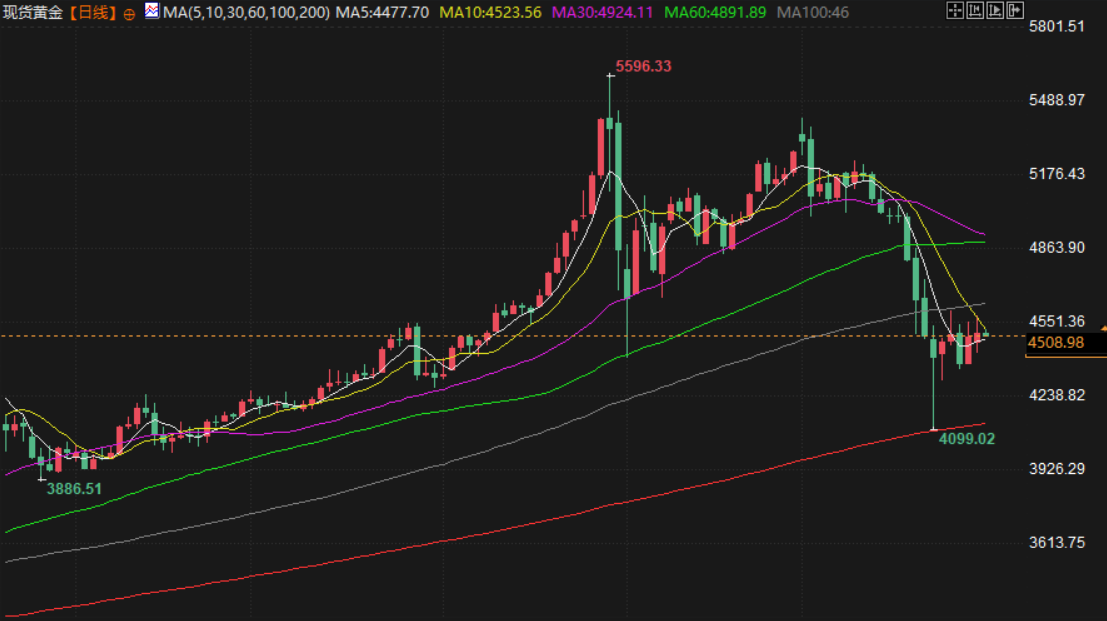
On Tuesday (March 31, Beijing time) in early Asian trading, spot gold was trading around $4,502 per ounce. Gold prices rose for the second consecutive trading day on Monday, mainly driven by safe-haven demand stemming from the ongoing conflict in the Middle East, despite the market no longer expecting the Federal Reserve to cut interest rates this year. US crude oil was trading around $106.08 per barrel. Oil prices rose nearly 4% on Monday after the Houthi rebels in Yemen launched their first attack on Israel, further escalating the conflict with Iran and exacerbating market concerns about Red Sea shipping and oil transport routes around the Arabian Peninsula.

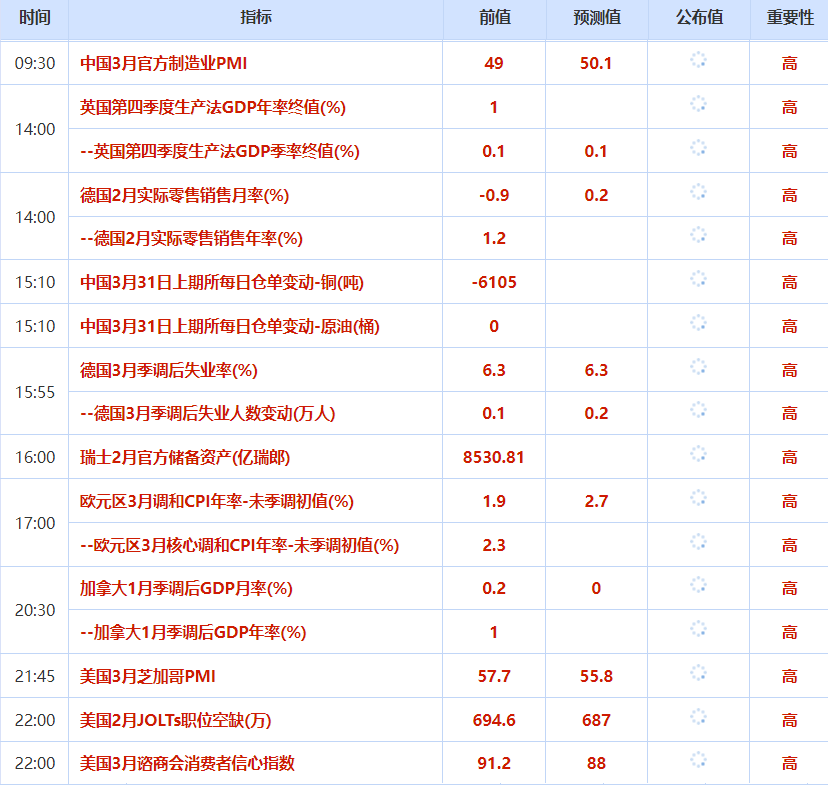
Most major U.S. stock indexes closed lower on Monday. The Dow Jones Industrial Average rose slightly by 0.11% to close at 45,216.14 points, the S&P 500 fell 0.39% to 6,343.72 points, and the Nasdaq Composite fell 0.73% to 20,794.64 points.
Investors are weighing US President Trump’s comments on Iran and the conflicting signals they send: on the one hand, Trump says he will engage in serious negotiations with a “more rational regime” to end the war, while on the other hand, he warns that the US will attack Iran’s oil wells and power plants if Iran does not open the Strait of Hormuz. Coupled with the intervention of the Iranian-backed Houthi rebels in Yemen over the weekend, the Middle East conflict continues to escalate, causing oil prices to soar and exacerbating inflation concerns, making the market uneasy.
Despite weak performance from technology stocks and the semiconductor index, which also led to a decline in the energy index, the financial index rose 1.1% as the U.S. Department of Labor issued guidance to include alternative assets in 401(k) plans.
Federal Reserve Chairman Jerome Powell stated that long-term inflation expectations are stabilizing and the Fed does not need to take action at this time, providing some support for the stock market. However, money market participants no longer expect the Fed to cut interest rates this year.
Gold prices rose for the second straight session on Monday, with spot gold closing up 0.6% at $4,518.57 an ounce and U.S. gold futures rising 0.7% to $4,557.50, mainly driven by safe-haven demand fueled by ongoing conflicts in the Middle East.
US President Trump issued a new warning to Iran, saying he would destroy its oil wells and power plants unless Iran opens the Strait of Hormuz, while Iran called the US peace proposal unrealistic and launched missiles at Israel, exacerbating market concerns about inflation and rising global interest rates.
Despite the recent rebound, gold prices have fallen more than 14% so far in March, on track for their worst monthly performance since 2008, as soaring energy prices have prompted the market to reassess interest rate expectations.
Federal Reserve Chairman Jerome Powell stated that policy is in a good position and that the Fed will closely monitor the impact of the war on the economy. This week, the market will focus on US economic data including job openings, retail sales, ADP employment, and non-farm payrolls.
In other precious metals, spot silver rose 1% to $70.27, platinum rose 1.6% to $1891.71, and palladium rose 2.9% to $1416.47.
Oil prices closed higher on Monday, with U.S. crude futures settling above $100 a barrel for the first time since 2022, while Brent crude futures were on track for a record monthly gain. This was mainly due to the Houthi rebels in Yemen launching their first attack on Israel, further escalating the conflict with Iran and exacerbating market concerns about Red Sea shipping and oil transport routes around the Arabian Peninsula.
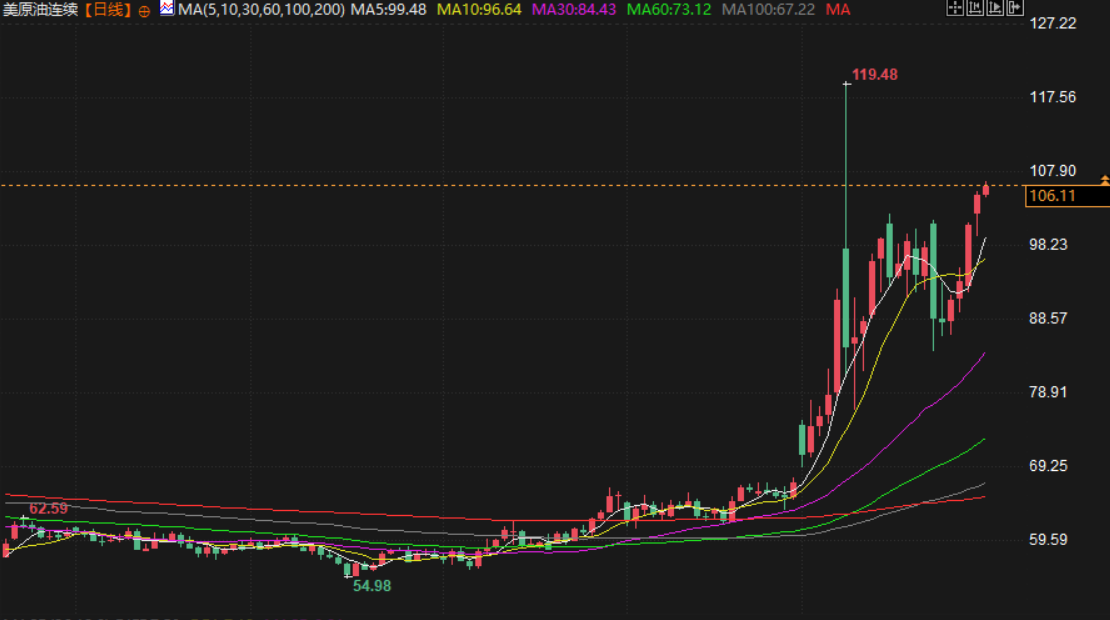
U.S. crude oil futures rose 3.3% to $102.88 a barrel, the highest level since July 2022; Brent crude oil futures rose 0.2% to $112.78, having touched $116.89 during the session. So far this month, influenced by Iran's de facto closure of the Strait of Hormuz, Brent crude has risen approximately 57%, marking its largest monthly gain since records began in 1988, while U.S. crude has risen 53%, its largest monthly gain since May 2020.
U.S. Treasury Secretary Bessant stated that the global oil market has ample supply, and G7 finance ministers also indicated they are prepared to take all necessary measures to maintain energy market stability. Meanwhile, Federal Reserve Chairman Powell stated that he will wait and observe the impact of the war on the economy and inflation, and will not consider raising interest rates for the time being.
The dollar index rose 0.22% on Monday, hitting its highest level since May 19, while the euro fell 0.44% against the dollar to $1.1457, weighed down by concerns that the ongoing war between the US and Israel and Iran could drag down economic growth.
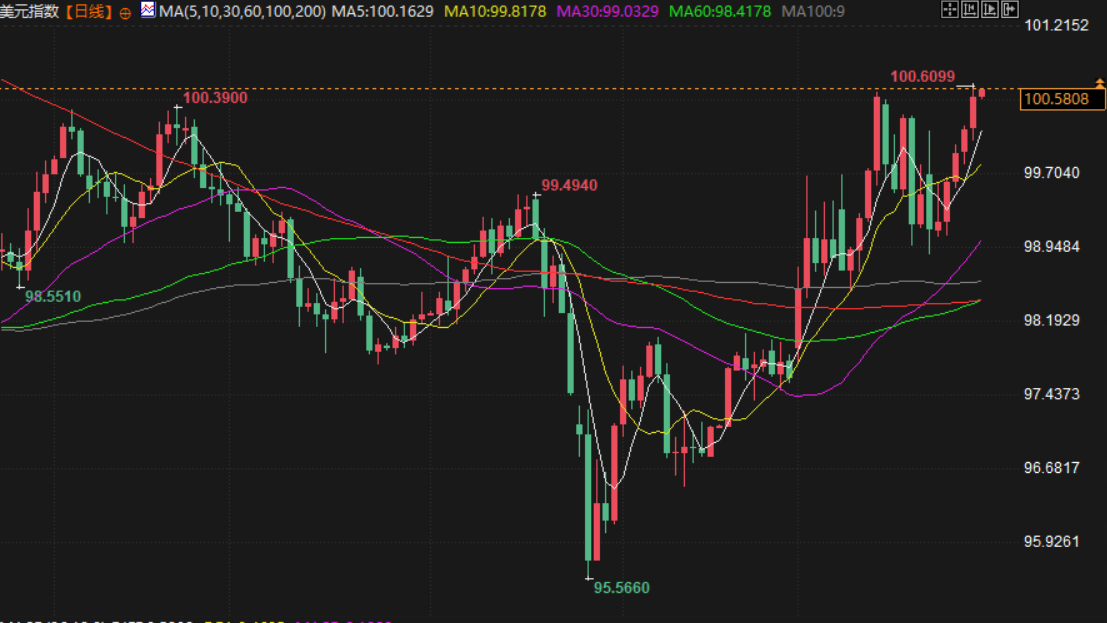
US President Trump threatened to destroy Iran's energy facilities if it did not open the Strait of Hormuz, and rising oil prices exacerbated inflation concerns while also raising worries about energy costs harming consumers and economic growth. State Street Global Strategists said investors are beginning to focus on growth, particularly concerned about the prospects of more vulnerable economies such as the UK and the EU.
The dollar benefited from both safe-haven buying and the relative advantage of the United States as a net energy exporter. Federal Reserve Chairman Powell said he would wait and see the impact of the war on the economy and inflation, while federal funds rate futures traders have withdrawn their expectations for a rate cut this year.
The yen rose 0.42% to 159.63 against the dollar, after briefly breaking the 160 mark, following the strongest intervention warning yet issued by a Japanese finance ministry official and a statement from the Bank of Japan governor that inflationary pressures from a weak yen could justify future interest rate hikes. The pound fell 0.57% to $1.3181, while the Australian and New Zealand dollars hit two-month and four-month lows, respectively.
The probability of the Federal Reserve keeping interest rates unchanged in April is 97.4%, while the probability of a rate hike in December has dropped to 4%.
According to CME's "FedWatch": The probability of the Fed raising interest rates by 25 basis points in April is 2.6%, while the probability of keeping rates unchanged is 97.4%. The probability of the Fed cutting rates by a cumulative 25 basis points by June is 5%, the probability of keeping rates unchanged is 92.5%, and the probability of a cumulative 25 basis point rate hike is 2.5%. The probability of the Fed cutting rates by a cumulative 25 basis points by December is 14.1% (from 1.3% the previous day), the probability of keeping rates unchanged is 82% (from 74% the previous day), and the probability of a cumulative 25 basis point rate hike has decreased to 4% (from 24.6% the previous day, and as high as 40% last week).
Iran's First Vice President warned the United States: Sending troops to Kharg Island would be a one-way trip.
On March 30 local time, Iranian First Vice President Aleif warned US President Trump against sending troops to attack Kharg Island. Aleif stated that Trump could decide whether to send troops to Kharg Island, but whether or not troops could be withdrawn from there would be beyond the US's control, because "no one comes back alive from hell." Kharg Island is located in the northwestern Persian Gulf, about 25 kilometers from the Iranian coast. It is approximately 6 kilometers long and 3 kilometers wide and is Iran's largest crude oil export base, with 90% of Iran's crude oil exported from there. (CCTV News)
European officials: Iran is pressuring the Houthis to take action against shipping in the Red Sea.
According to informed European officials, Iran is pressuring the Houthi rebels to resume strikes against shipping in the Red Sea, with the decision to proceed depending on whether the US-Iran war escalates further. The sources indicated that the Houthi leadership, which is backed by Iran and operates in Yemen, is discussing options for more aggressive action after launching ballistic missiles at Israel. The sources stated that internal disagreements within the Houthi leadership regarding the appropriate level of aggression are partly responsible for the group's delayed intervention, a month after the start of the conflict. The Houthis issued a statement on Saturday declaring they would continue military operations until the US and Israel cease their attacks on Iran and its proxies, including Hezbollah in Lebanon. The statement did not explicitly mention attacks on oil tankers and other vessels transiting the Red Sea. The sources also stated that US and Saudi officials have informed their European allies that they believe the Houthis currently wish to avoid further escalation and will refrain from attacking US and Saudi targets.
The Iranian parliament approved the imposition of tolls on passage through the Straits of Hormuz, which must be paid in Iranian currency.
On Monday, local time, the Iranian parliament passed a bill to impose passage fees on ships transiting the Strait of Hormuz. The fee for a single oil tanker could be as high as $2 million. According to Iranian media citing officials from the Iranian parliament's National Security and Foreign Policy Committee, the new navigation control plan also includes prohibiting ships associated with the United States, Israel, or countries that have previously imposed unilateral sanctions on Iran from passing through the strait, and the passage fees must be paid in Iranian rials. Iran will cooperate with Oman to develop the relevant legal framework. Shortly before the bill was approved, the White House stated that the United States does not support Iran imposing passage fees.
Federal Reserve Chairman Jerome Powell: The balance sheet is an effective tool
Federal Reserve Chairman Jerome Powell defended the Fed's asset purchase program on Monday, while acknowledging uncertainty about its potential impact on the economy. Speaking at Harvard University, Powell stated that the Fed's asset purchases during a period of severe stress "have not yet shown downside risks." He added, "Buying long-term assets does lower interest rates and does provide some support for economic activity."
Iran accuses Ukraine of involvement in military operations against Iran.
On March 30 local time, Iran's Permanent Representative to the United Nations, Illavani, sent a letter to the UN Secretary-General and the Security Council, accusing Ukraine of participating in military operations against Iran by sending personnel to the region. In the letter, Illavani stated that Ukraine admitted to sending "hundreds of experts" to the relevant areas, a move Iran views as "support" for the US-Israel military action against Iran and a direct participation in a country's illegal use of force. (CCTV News)
White House: US-Iran dialogue is ongoing and progressing well.
White House Press Secretary Janet Levitt stated that dialogue between the US and Iran is ongoing and progressing smoothly. Levitt said that Iran has agreed to some of the key points raised by the US in closed-door talks. Regarding specific details, given that negotiations are still ongoing, they will not be made public. On March 30th local time, Iranian Foreign Ministry spokesman Bagaei stated that Iran has not yet held any negotiations with the United States.
The sharp drop in memory module prices is suspected to be due to suppressed purchasing demand from individual consumers.
With the explosive growth in demand for AI computing power, global memory production capacity has fallen short of demand, driving up prices and significantly impacting the consumer electronics industry. However, since last week, memory market prices have seen a marked decline. Merchants in Shenzhen's Huaqiang Electronics World reported that many memory products saw price reductions starting last Wednesday. Currently, 16GB memory has dropped from around 900 yuan last week to around 700 yuan, and 32GB memory has also decreased by about 300 yuan, with some brands even seeing price drops of up to 30%. While upstream distributors are increasingly willing to ship, the market has not warmed up despite the price reductions. Since the memory price surge began in the fourth quarter of last year, many individual consumers have suppressed their purchasing demand, opting for lower-capacity memory or turning to the secondhand market, which has to some extent suppressed memory product shipments. Many Huaqiangbei merchants stated that last year's price surge significantly impacted their business, with a general decline in sales volume, which is the main reason for the recent drop in memory prices. (CCTV Finance)
Key Focus Today
stock market
Most major U.S. stock indexes closed lower on Monday. The Dow Jones Industrial Average rose slightly by 0.11% to close at 45,216.14 points, the S&P 500 fell 0.39% to 6,343.72 points, and the Nasdaq Composite fell 0.73% to 20,794.64 points.
Investors are weighing US President Trump’s comments on Iran and the conflicting signals they send: on the one hand, Trump says he will engage in serious negotiations with a “more rational regime” to end the war, while on the other hand, he warns that the US will attack Iran’s oil wells and power plants if Iran does not open the Strait of Hormuz. Coupled with the intervention of the Iranian-backed Houthi rebels in Yemen over the weekend, the Middle East conflict continues to escalate, causing oil prices to soar and exacerbating inflation concerns, making the market uneasy.
Despite weak performance from technology stocks and the semiconductor index, which also led to a decline in the energy index, the financial index rose 1.1% as the U.S. Department of Labor issued guidance to include alternative assets in 401(k) plans.
Federal Reserve Chairman Jerome Powell stated that long-term inflation expectations are stabilizing and the Fed does not need to take action at this time, providing some support for the stock market. However, money market participants no longer expect the Fed to cut interest rates this year.
Gold Market
Gold prices rose for the second straight session on Monday, with spot gold closing up 0.6% at $4,518.57 an ounce and U.S. gold futures rising 0.7% to $4,557.50, mainly driven by safe-haven demand fueled by ongoing conflicts in the Middle East.
US President Trump issued a new warning to Iran, saying he would destroy its oil wells and power plants unless Iran opens the Strait of Hormuz, while Iran called the US peace proposal unrealistic and launched missiles at Israel, exacerbating market concerns about inflation and rising global interest rates.
Despite the recent rebound, gold prices have fallen more than 14% so far in March, on track for their worst monthly performance since 2008, as soaring energy prices have prompted the market to reassess interest rate expectations.
Federal Reserve Chairman Jerome Powell stated that policy is in a good position and that the Fed will closely monitor the impact of the war on the economy. This week, the market will focus on US economic data including job openings, retail sales, ADP employment, and non-farm payrolls.
In other precious metals, spot silver rose 1% to $70.27, platinum rose 1.6% to $1891.71, and palladium rose 2.9% to $1416.47.
oil market
Oil prices closed higher on Monday, with U.S. crude futures settling above $100 a barrel for the first time since 2022, while Brent crude futures were on track for a record monthly gain. This was mainly due to the Houthi rebels in Yemen launching their first attack on Israel, further escalating the conflict with Iran and exacerbating market concerns about Red Sea shipping and oil transport routes around the Arabian Peninsula.
U.S. crude oil futures rose 3.3% to $102.88 a barrel, the highest level since July 2022; Brent crude oil futures rose 0.2% to $112.78, having touched $116.89 during the session. So far this month, influenced by Iran's de facto closure of the Strait of Hormuz, Brent crude has risen approximately 57%, marking its largest monthly gain since records began in 1988, while U.S. crude has risen 53%, its largest monthly gain since May 2020.
U.S. Treasury Secretary Bessant stated that the global oil market has ample supply, and G7 finance ministers also indicated they are prepared to take all necessary measures to maintain energy market stability. Meanwhile, Federal Reserve Chairman Powell stated that he will wait and observe the impact of the war on the economy and inflation, and will not consider raising interest rates for the time being.
Foreign exchange market
The dollar index rose 0.22% on Monday, hitting its highest level since May 19, while the euro fell 0.44% against the dollar to $1.1457, weighed down by concerns that the ongoing war between the US and Israel and Iran could drag down economic growth.
US President Trump threatened to destroy Iran's energy facilities if it did not open the Strait of Hormuz, and rising oil prices exacerbated inflation concerns while also raising worries about energy costs harming consumers and economic growth. State Street Global Strategists said investors are beginning to focus on growth, particularly concerned about the prospects of more vulnerable economies such as the UK and the EU.
The dollar benefited from both safe-haven buying and the relative advantage of the United States as a net energy exporter. Federal Reserve Chairman Powell said he would wait and see the impact of the war on the economy and inflation, while federal funds rate futures traders have withdrawn their expectations for a rate cut this year.
The yen rose 0.42% to 159.63 against the dollar, after briefly breaking the 160 mark, following the strongest intervention warning yet issued by a Japanese finance ministry official and a statement from the Bank of Japan governor that inflationary pressures from a weak yen could justify future interest rate hikes. The pound fell 0.57% to $1.3181, while the Australian and New Zealand dollars hit two-month and four-month lows, respectively.
International News
The probability of the Federal Reserve keeping interest rates unchanged in April is 97.4%, while the probability of a rate hike in December has dropped to 4%.
According to CME's "FedWatch": The probability of the Fed raising interest rates by 25 basis points in April is 2.6%, while the probability of keeping rates unchanged is 97.4%. The probability of the Fed cutting rates by a cumulative 25 basis points by June is 5%, the probability of keeping rates unchanged is 92.5%, and the probability of a cumulative 25 basis point rate hike is 2.5%. The probability of the Fed cutting rates by a cumulative 25 basis points by December is 14.1% (from 1.3% the previous day), the probability of keeping rates unchanged is 82% (from 74% the previous day), and the probability of a cumulative 25 basis point rate hike has decreased to 4% (from 24.6% the previous day, and as high as 40% last week).
Iran's First Vice President warned the United States: Sending troops to Kharg Island would be a one-way trip.
On March 30 local time, Iranian First Vice President Aleif warned US President Trump against sending troops to attack Kharg Island. Aleif stated that Trump could decide whether to send troops to Kharg Island, but whether or not troops could be withdrawn from there would be beyond the US's control, because "no one comes back alive from hell." Kharg Island is located in the northwestern Persian Gulf, about 25 kilometers from the Iranian coast. It is approximately 6 kilometers long and 3 kilometers wide and is Iran's largest crude oil export base, with 90% of Iran's crude oil exported from there. (CCTV News)
European officials: Iran is pressuring the Houthis to take action against shipping in the Red Sea.
According to informed European officials, Iran is pressuring the Houthi rebels to resume strikes against shipping in the Red Sea, with the decision to proceed depending on whether the US-Iran war escalates further. The sources indicated that the Houthi leadership, which is backed by Iran and operates in Yemen, is discussing options for more aggressive action after launching ballistic missiles at Israel. The sources stated that internal disagreements within the Houthi leadership regarding the appropriate level of aggression are partly responsible for the group's delayed intervention, a month after the start of the conflict. The Houthis issued a statement on Saturday declaring they would continue military operations until the US and Israel cease their attacks on Iran and its proxies, including Hezbollah in Lebanon. The statement did not explicitly mention attacks on oil tankers and other vessels transiting the Red Sea. The sources also stated that US and Saudi officials have informed their European allies that they believe the Houthis currently wish to avoid further escalation and will refrain from attacking US and Saudi targets.
The Iranian parliament approved the imposition of tolls on passage through the Straits of Hormuz, which must be paid in Iranian currency.
On Monday, local time, the Iranian parliament passed a bill to impose passage fees on ships transiting the Strait of Hormuz. The fee for a single oil tanker could be as high as $2 million. According to Iranian media citing officials from the Iranian parliament's National Security and Foreign Policy Committee, the new navigation control plan also includes prohibiting ships associated with the United States, Israel, or countries that have previously imposed unilateral sanctions on Iran from passing through the strait, and the passage fees must be paid in Iranian rials. Iran will cooperate with Oman to develop the relevant legal framework. Shortly before the bill was approved, the White House stated that the United States does not support Iran imposing passage fees.
Federal Reserve Chairman Jerome Powell: The balance sheet is an effective tool
Federal Reserve Chairman Jerome Powell defended the Fed's asset purchase program on Monday, while acknowledging uncertainty about its potential impact on the economy. Speaking at Harvard University, Powell stated that the Fed's asset purchases during a period of severe stress "have not yet shown downside risks." He added, "Buying long-term assets does lower interest rates and does provide some support for economic activity."
Iran accuses Ukraine of involvement in military operations against Iran.
On March 30 local time, Iran's Permanent Representative to the United Nations, Illavani, sent a letter to the UN Secretary-General and the Security Council, accusing Ukraine of participating in military operations against Iran by sending personnel to the region. In the letter, Illavani stated that Ukraine admitted to sending "hundreds of experts" to the relevant areas, a move Iran views as "support" for the US-Israel military action against Iran and a direct participation in a country's illegal use of force. (CCTV News)
White House: US-Iran dialogue is ongoing and progressing well.
White House Press Secretary Janet Levitt stated that dialogue between the US and Iran is ongoing and progressing smoothly. Levitt said that Iran has agreed to some of the key points raised by the US in closed-door talks. Regarding specific details, given that negotiations are still ongoing, they will not be made public. On March 30th local time, Iranian Foreign Ministry spokesman Bagaei stated that Iran has not yet held any negotiations with the United States.
Domestic News
The sharp drop in memory module prices is suspected to be due to suppressed purchasing demand from individual consumers.
With the explosive growth in demand for AI computing power, global memory production capacity has fallen short of demand, driving up prices and significantly impacting the consumer electronics industry. However, since last week, memory market prices have seen a marked decline. Merchants in Shenzhen's Huaqiang Electronics World reported that many memory products saw price reductions starting last Wednesday. Currently, 16GB memory has dropped from around 900 yuan last week to around 700 yuan, and 32GB memory has also decreased by about 300 yuan, with some brands even seeing price drops of up to 30%. While upstream distributors are increasingly willing to ship, the market has not warmed up despite the price reductions. Since the memory price surge began in the fourth quarter of last year, many individual consumers have suppressed their purchasing demand, opting for lower-capacity memory or turning to the secondhand market, which has to some extent suppressed memory product shipments. Many Huaqiangbei merchants stated that last year's price surge significantly impacted their business, with a general decline in sales volume, which is the main reason for the recent drop in memory prices. (CCTV Finance)
- Risk Warning and Disclaimer
- The market involves risk, and trading may not be suitable for all investors. This article is for reference only and does not constitute personal investment advice, nor does it take into account certain users’ specific investment objectives, financial situation, or other needs. Any investment decisions made based on this information are at your own risk.