The Middle East conflict is fueling energy inflation expectations, and coupled with a wait-and-see approach to policy, the European Central Bank may remain on hold for an extended period.
2026-03-31 16:25:43
The Eurozone's inflation outlook and monetary policy path have once again become the focus of market attention. Nomura Securities analysts believe that although March inflation data is expected to rise significantly, this change will have limited impact on the European Central Bank's short-term policy decisions. The current market consensus is that rising inflation is mainly driven by rising energy prices, particularly the direct impact of the continued rise in Brent crude oil prices against the backdrop of the Middle East conflict.

From the perspective of inflation structure, this round of price increases has a clear imported characteristic. Rising energy costs will push up the overall consumer price index, but this shock is more of a temporary factor than a driver of endogenous demand. Therefore, when assessing the policy path, the European Central Bank prefers to observe medium- to long-term inflation trends rather than relying on single-month data.
Nomura Securities analysts pointed out: "The key to the ECB's policy path lies not in monthly inflation data, but in the persistence of the energy shock and its medium-term impact on the economy."
In its baseline scenario, the institution expects the European Central Bank to maintain stable interest rates until the fourth quarter of 2027. This assessment is based on the assumption that the situation in the Middle East will not lead to serious long-term disruptions to energy supplies, and that the impact of energy price shocks on the economy will gradually diminish. Under this framework, the central bank will not need to further tighten policy.
However, risk scenarios should not be ignored. If Brent crude oil prices remain above $95 per barrel ahead of the ECB's June meeting, it could trigger a policy shift. The institution predicts that in this scenario, the ECB may raise interest rates by 25 basis points in June and September respectively to address inflationary pressures.
Current comments from European Central Bank officials remain generally hawkish, indicating that policymakers want to maintain flexibility. Some officials have hinted at the possibility of an interest rate hike at the April meeting, but the market generally believes that whether this risk materializes depends on whether geopolitical tensions escalate further and whether energy prices continue to rise.
One market analyst said, "The European Central Bank is deliberately maintaining policy uncertainty to avoid locking in the path too early, thus preserving room to deal with different scenarios."
Market reactions indicate a divergence in interest rate expectations. On one hand, some investors are betting that rising inflation will drive interest rate hikes; on the other hand, some believe that the energy shock will drag down economic growth, thus limiting the scope for policy tightening. This divergence has led to increased volatility in the euro and bond markets.
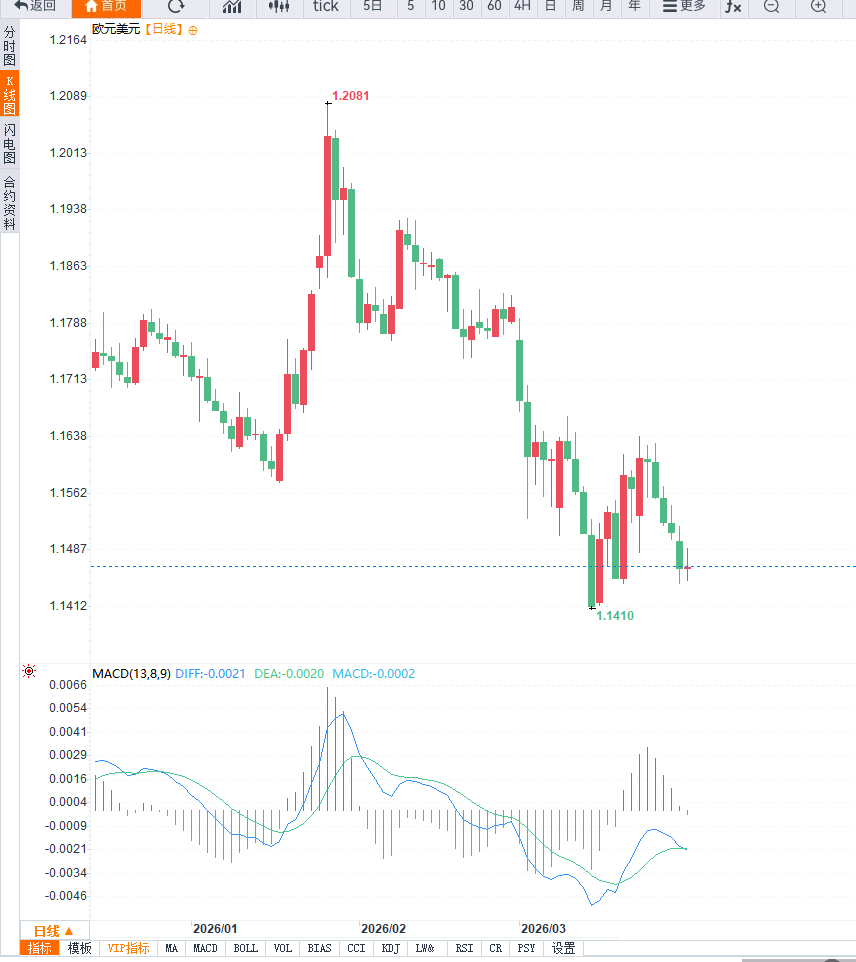
From a technical perspective, Eurozone bond yields have generally remained high and volatile. On the daily chart, yields have entered a consolidation phase after their previous rise, with weakening momentum indicating that the market is becoming more cautious about betting on further rate hikes. On the 4-hour chart, yields are fluctuating frequently and lack a clear direction, reflecting a wait-and-see attitude in the market.
Editor's Summary <br/>Overall, the European Central Bank (ECB) currently faces a typical "external shock-driven" policy environment. Energy prices have become a core variable influencing inflation and policy path, and the uncertainty surrounding the Middle East situation further amplifies this impact. In the baseline scenario, the ECB may maintain stable interest rates, but if oil prices remain high, the risk of interest rate hikes will increase significantly. Overall, the policy outlook remains highly dependent on geopolitical developments, and the market needs to closely monitor changes in energy prices and the ECB's statements.
From the perspective of inflation structure, this round of price increases has a clear imported characteristic. Rising energy costs will push up the overall consumer price index, but this shock is more of a temporary factor than a driver of endogenous demand. Therefore, when assessing the policy path, the European Central Bank prefers to observe medium- to long-term inflation trends rather than relying on single-month data.
Nomura Securities analysts pointed out: "The key to the ECB's policy path lies not in monthly inflation data, but in the persistence of the energy shock and its medium-term impact on the economy."
In its baseline scenario, the institution expects the European Central Bank to maintain stable interest rates until the fourth quarter of 2027. This assessment is based on the assumption that the situation in the Middle East will not lead to serious long-term disruptions to energy supplies, and that the impact of energy price shocks on the economy will gradually diminish. Under this framework, the central bank will not need to further tighten policy.
However, risk scenarios should not be ignored. If Brent crude oil prices remain above $95 per barrel ahead of the ECB's June meeting, it could trigger a policy shift. The institution predicts that in this scenario, the ECB may raise interest rates by 25 basis points in June and September respectively to address inflationary pressures.
Current comments from European Central Bank officials remain generally hawkish, indicating that policymakers want to maintain flexibility. Some officials have hinted at the possibility of an interest rate hike at the April meeting, but the market generally believes that whether this risk materializes depends on whether geopolitical tensions escalate further and whether energy prices continue to rise.
One market analyst said, "The European Central Bank is deliberately maintaining policy uncertainty to avoid locking in the path too early, thus preserving room to deal with different scenarios."
Market reactions indicate a divergence in interest rate expectations. On one hand, some investors are betting that rising inflation will drive interest rate hikes; on the other hand, some believe that the energy shock will drag down economic growth, thus limiting the scope for policy tightening. This divergence has led to increased volatility in the euro and bond markets.
From a technical perspective, Eurozone bond yields have generally remained high and volatile. On the daily chart, yields have entered a consolidation phase after their previous rise, with weakening momentum indicating that the market is becoming more cautious about betting on further rate hikes. On the 4-hour chart, yields are fluctuating frequently and lack a clear direction, reflecting a wait-and-see attitude in the market.
Editor's Summary <br/>Overall, the European Central Bank (ECB) currently faces a typical "external shock-driven" policy environment. Energy prices have become a core variable influencing inflation and policy path, and the uncertainty surrounding the Middle East situation further amplifies this impact. In the baseline scenario, the ECB may maintain stable interest rates, but if oil prices remain high, the risk of interest rate hikes will increase significantly. Overall, the policy outlook remains highly dependent on geopolitical developments, and the market needs to closely monitor changes in energy prices and the ECB's statements.
- Risk Warning and Disclaimer
- The market involves risk, and trading may not be suitable for all investors. This article is for reference only and does not constitute personal investment advice, nor does it take into account certain users’ specific investment objectives, financial situation, or other needs. Any investment decisions made based on this information are at your own risk.