April 1st Financial Breakfast: Iran threatens US and Israeli tech companies; US Defense Secretary warns of a "decisive moment"; gold prices surge back above $4650; oil prices rise nearly 52% in a single month.
2026-04-01 06:33:35
On Wednesday (April 1, Beijing time) in early Asian trading, spot gold was trading around $4,674 per ounce. Gold prices rose 3.5% on Tuesday, returning above $4,650 per ounce. The US Secretary of Defense stated that the next few days would be a decisive moment in the war with Iran, while Iran announced it would use drones to strike technology companies in Israel. US crude oil was trading around $102.51 per barrel. Oil prices rose and then fell on Tuesday. Trump said the war with Iran would end soon, and the Iranian president also said he was ready to end the war, but needed to obtain relevant guarantees.

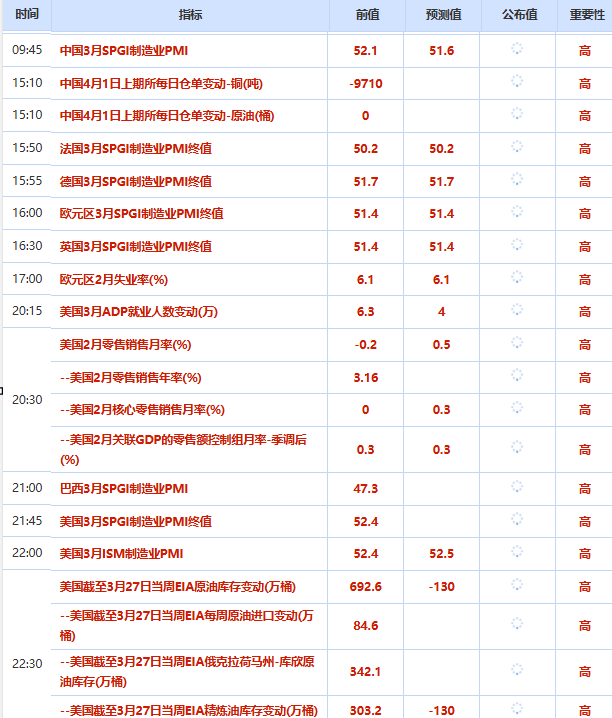
U.S. stocks closed sharply higher on Tuesday, with the S&P 500 surging 2.91%, its biggest one-day gain since May 2025, driven primarily by expectations of a possible easing of tensions in the Middle East—after reports that U.S. President Trump was willing to end military action against Iran, even though the Strait of Hormuz remains largely blocked.
Meanwhile, the decline in U.S. job openings in February exceeded expectations, with hiring falling to its lowest level in nearly six years, further boosting market sentiment.
All three major stock indexes recorded their biggest one-day gains since May 2025. The S&P 500 closed at 6,528.52 points, the Nasdaq surged 3.83% to 21,590.63 points, and the Dow Jones Industrial Average rose 2.49% to 46,341.51 points. The communication services and information technology sectors led the gains, while the energy sector, although down 1.2% on the day, still rose 10% cumulatively in March.
In terms of individual stocks, tech giants such as Nvidia, Alphabet, and Meta generally rose, the Philadelphia Semiconductor Index surged 6.24%, Marvell Technology jumped 12% after Nvidia invested $2 billion, and CoreWeave also surged 12% after receiving an $8.5 billion loan.
Gold prices surged 3.46% on Tuesday, but still recorded their worst monthly performance since October 2008, as persistent inflation concerns and expectations of interest rate hikes triggered by the war in Iran put pressure on non-yielding precious metals.
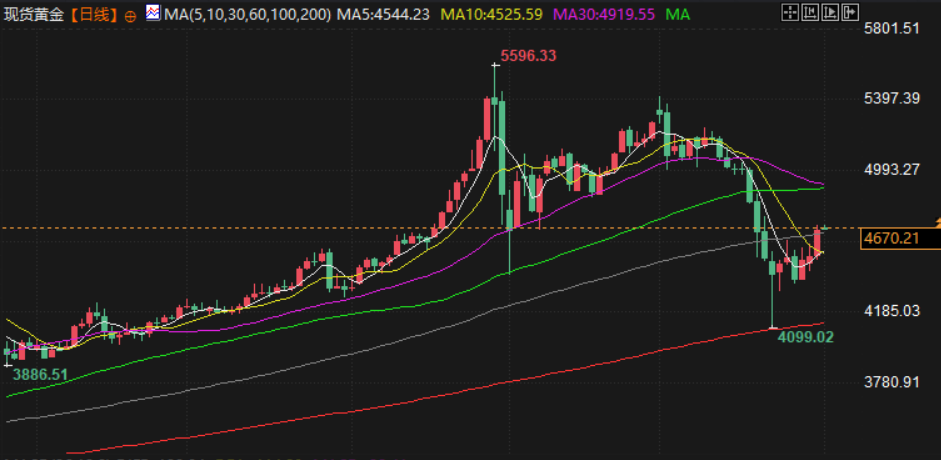
Spot gold rose 3.46% to $4,687.06 an ounce, a new high since March 20. While the dollar weakened, its monthly gain made gold more expensive for investors holding other currencies. The vice president of Zaner Metals stated that the current gold price rally stems from increased market optimism regarding easing tensions in the Middle East, but a stronger upward move is needed to sustain the rally. In the long term, fundamental support such as de-dollarization and central bank buying remains.
According to The Wall Street Journal, even though the Strait of Hormuz remains largely blocked, President Trump is willing to end military action against Iran, and US Defense Secretary Hergsays said the next few days will be a decisive moment in the war against Iran.
Soaring energy prices have exacerbated inflation concerns and prompted markets to reassess interest rate expectations, with higher rates increasing the opportunity cost of holding gold. BMI maintains its 2026 average annual gold price forecast of $4,600, while Goldman Sachs still expects gold prices to rise to $5,400 by the end of 2026.
Spot silver surged 6.7% to $74.64, after falling 20.4% in March. BNP Paribas predicts that silver prices will fluctuate between $65 and $75 in 2026, and the physical market will turn to oversupply in 2027. Platinum rose 3.1% to $1,958.05, and palladium jumped 5.2% to $1,479.25, both poised to record monthly declines.
Oil prices rallied and then retreated on Tuesday. US crude oil briefly touched a new high since March 9th at $106.86 per barrel, while Brent crude futures for June delivery settled down more than $3, as unconfirmed media reports claimed that the Iranian president stated he was ready to end the war, but required guarantees. June Brent crude futures closed down $3.42 at $103.97 per barrel. However, the May Brent contract rose 4.94% to $118.35 on its expiry date. This contract recorded a record monthly gain of 64% in March, while US crude oil's March gain of approximately 52% was the largest since May 2020.
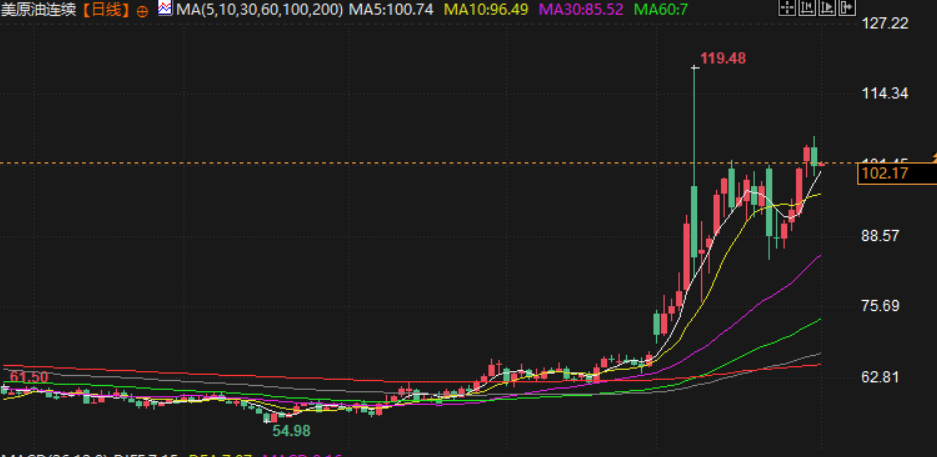
A partner at Again Capital stated that if hostilities cease and the Strait of Hormuz reopens, the return of supply to the market will eliminate most of the risk premium accumulated in prices. International oil prices have steadily climbed over the past four weeks due to severe supply disruptions caused by attacks on Persian Gulf energy infrastructure. Meanwhile, surveys show that OPEC crude oil production plummeted by 7.3 million barrels per day in March, the lowest level since June 2020, due to mandatory production cuts.
U.S. Defense Secretary Hergsays warned that the conflict would continue to escalate if no agreement was reached with Iran, while the Iranian Islamic Revolutionary Guard Corps threatened to retaliate against U.S. companies and listed 18 companies. The White House stated that the U.S. military was prepared to thwart the attack.
Trump urged countries that did not assist the U.S. in its joint strike against Iran to go to the Strait of Hormuz and “take it straight” for oil, after The Wall Street Journal reported that Trump was willing to end military action against Iran even if the strait remained largely blocked.
The dollar index fell 0.59% to 99.96 on Tuesday as markets hoped the war between the US-Israeli coalition and Iran might not be as protracted as expected, after reports that US President Trump said he was willing to end military action against Iran even if the Strait of Hormuz remained largely closed.
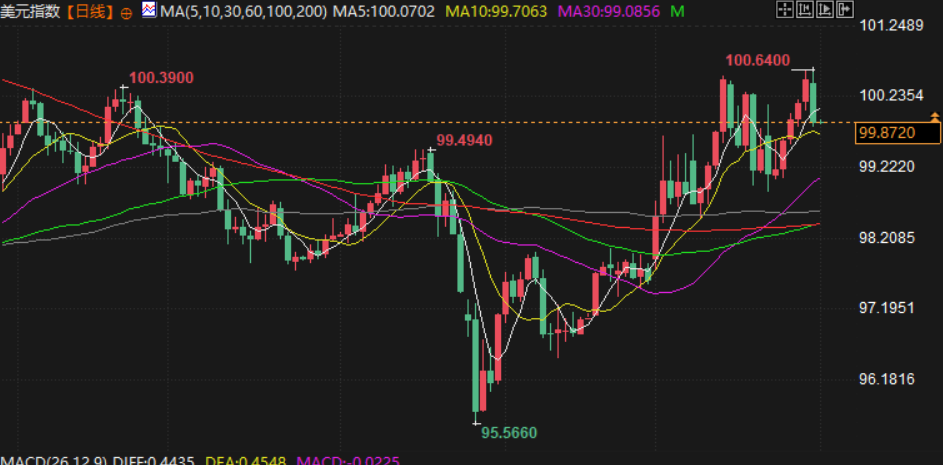
However, supported by safe-haven demand stemming from conflict uncertainty, the dollar still posted its best quarterly performance since the third quarter of 2024, rising 2.35% in March, its largest monthly gain since July. Scotiabank strategists noted that although the dollar is currently overvalued, it will continue to be supported as long as war concerns dampen risk appetite and stock market volatility remains high.
The Iranian Revolutionary Guard subsequently threatened retaliation against American companies. Markets are also focused on Friday's March jobs report; a sharp deterioration in the labor market could reignite expectations of a Federal Reserve rate cut.
The euro rose 0.68% to $1.1543, the pound rose 0.33% to $1.3228, and the yen rose 0.55% to 158.84 yen, boosted by the threat of intervention from the Japanese finance minister. Finance Minister Satsuki Katayama attributed the recent depreciation of the yen to speculative activities for the first time and reiterated that Japan is prepared to take "comprehensive" countermeasures.
The probability of a Federal Reserve rate hike in December has risen to 12.5%, while the probability of a rate cut has risen to 39.5%.
According to CME's "FedWatch": The probability of the Fed raising interest rates by 25 basis points in April is 1.6%, and the probability of keeping rates unchanged is 98.4%. The probability of the Fed cutting rates by a cumulative 25 basis points by June is 3.9%, the probability of keeping rates unchanged is 94.6%, and the probability of raising rates by a cumulative 25 basis points is 1.5%. The probability of the Fed cutting rates by a cumulative 25 basis points by June is 39.5% (14.1% the previous day), the probability of keeping rates unchanged is 48% (82% the previous day), and the probability of raising rates by a cumulative 25 basis points has risen to 12.5% (4% the previous day).
Trump claims the war with Iran will end soon and the Strait of Hormuz will "open automatically".
According to the New York Post, Trump said in an interview on Tuesday that he believes the war with Iran could end soon and other countries can reopen the Strait of Hormuz on their own. “We’re not going to be there for long. We’re completely destroying them right now,” Trump said in a phone interview. Trump claimed that the Strait of Hormuz, closed by Iran for 31 days, has caused global energy prices to soar, and that other countries can resolve the issue themselves. “I think it will automatically reopen, but my attitude is, I’ve destroyed this country, let the countries that use the strait open it themselves…because I think the people who control the oil would be very happy to reopen the strait.” When pressed about a Wall Street Journal report that he was willing to end the war without reopening the strait, Trump said, “Honestly, I don’t think about that. My only job is to make sure they don’t have nuclear weapons. They don’t have nuclear weapons. When we leave, the strait will automatically open.”
Iran claims to have used drones to strike Israeli technology companies.
On March 31 local time, the Iranian military issued a statement saying that in response to attacks on Iranian infrastructure by Israel and the United States, Iran launched attack drone strikes early that morning, targeting Siemens and AT&T communications, telecommunications, and industrial centers located at Ben Gurion International Airport and in the Haifa region of Israel. The statement indicated that the Siemens Industrial Software Center, located in central Israel (around Ben Gurion Airport), provides the Israeli military with cutting-edge technologies such as artificial intelligence and industrial automation to optimize weapons production lines and military design systems. The AT&T telecommunications center in Haifa is a US research and development center providing advanced network technology, cloud computing, and artificial intelligence services to the Israeli military. (CCTV News)
Iranian Foreign Minister: No negotiations with the US, but information exchanged.
On March 31 local time, Iranian Foreign Minister Araqchi stated that the current situation is "not about negotiations," but rather an exchange of information through direct channels or with "regional friends." Iran continues to receive messages from US representative Witkov, but this does not mean negotiations have begun; the exchanges are primarily "warnings or exchanges of views." He pointed out that Iran is not currently negotiating with any specific party, and the information exchange is being conducted by the Ministry of Foreign Affairs under the coordination of security agencies and strictly within the official framework under the supervision of the government and the Supreme National Security Council. Araqchi emphasized that Iran has not responded to any of the 15 proposals put forward by the United States, nor has it made any proposals or conditions. Iran has not yet made a final decision on the principles of negotiations, but the conditions for ending the war are "very clear": Iran "will not agree to a ceasefire," but demands a "complete end to the war in the entire region." Regarding the regional situation, Araqchi stated that "the Iranian people will not be threatened," and the US president must respect the Iranian people. The Strait of Hormuz is "completely open," closed only to parties involved in the war against Iran. Iran has taken all necessary measures to ensure the safe passage of friendly vessels through the strait. He pointed out that the Strait of Hormuz could become a "peaceful passage," and its ultimate course depends on the decisions of the littoral states. Araghchi concluded by emphasizing that Iran is "prepared for any ground conflict" and warned its adversaries not to make strategic mistakes. (CCTV News)
USS George H.W. Bush aircraft carrier departs for the Middle East
On the morning of March 31 local time, the USS George H.W. Bush aircraft carrier departed Norfolk, and is expected to rendezvous with other ships in its strike group before heading to the Middle East or nearby areas. Depending on its speed and weather conditions, the journey is estimated to take two to three weeks. Currently, the US has two carrier strike groups, the USS Abraham Lincoln and the USS Ford, deployed for military operations against Iran. However, the USS Ford is currently undergoing repairs in Croatia, and it is unclear whether it will continue to participate in military operations against Iran after completing its repairs. (CCTV International News)
Britain announces increased air defense capabilities in the Gulf region.
The British government issued a statement on March 31, saying that as tensions continue in the Middle East, the UK will increase its air defense capabilities in the Gulf region, including extending the deployment of Typhoon fighter jets in Qatar and deploying the SkySword air defense system to Saudi Arabia. According to the statement, British Defence Secretary John Healy recently visited Saudi Arabia, Qatar, and Bahrain, holding talks with leaders and defense officials of the three countries on the Middle East conflict, the situation in the Strait of Hormuz, and UK security cooperation with Gulf states. The UK will deploy the SkySword air defense system to Saudi Arabia, with related equipment and personnel arriving this week, including radar, control nodes, and missile launchers. The UK also announced that a lightweight multi-purpose launch system has arrived in Bahrain; the land-based air defense missile system Rapid Sentinel has arrived in Kuwait; and the Royal Air Force's drone early warning and detection system is now operational in Kuwait. (Xinhua)
Iranian President: Iran is willing to end the war if its demands are met.
On March 31 local time, Iranian President Peskhziyan stated that Iran is willing to end the war, but only if its demands are met, especially a guarantee that it will no longer be subjected to aggression. (CCTV News)
Ten countries issued a joint statement calling on Lebanon and Israel to engage in direct political negotiations.
On March 31 local time, Belgium, Croatia, Cyprus, France, Greece, Italy, Malta, the Netherlands, Portugal, the United Kingdom, and the European Union issued a joint statement calling on Lebanon and Israel to engage in direct political negotiations to end the current conflict. The statement said that direct political negotiations would help bring the conflict to a close and create conditions for lasting peace and coexistence in the region. The statement also called on all parties to avoid further escalation and to restore the ceasefire agreement and UN Security Council Resolution 1701. The statement further called on Israel to avoid expanding the conflict, including refraining from launching ground operations on Lebanese territory. (CCTV News)
Data shows that approximately 70% of office space in US government agencies is vacant.
A new accounting report released Tuesday, authorized by Congress, reveals that the U.S. government is using less than a third of its office space, potentially costing the federal government billions of dollars annually in real estate-related expenses. This unprecedented report paves the way for the Trump administration's large-scale sale of federal buildings and cancellation of office space leases—efficiency measures sought by Elon Musk's Government Efficiency Agency (DOGE) initiative launched last year. Of the 22 agencies covered in the report, none achieved 60% or higher office space utilization by 2025, meaning none met the target set by a new law. The General Services Administration (GSA), as the "landlord" of federal agencies, can propose relocations or reductions in office space based on a "use or give up" policy. GSA Administrator Edward Foster stated, "The data released today reveals the state of federal building utilization and provides a clear direction for the GSA to optimize space allocation. Addressing underutilized, costly, and long-term vacant buildings is a top priority."
An unexpected rise in U.S. consumer confidence improved views on the labor market.
U.S. consumer confidence unexpectedly rebounded in March, with a slight improvement in views on the business environment and labor market conditions. Data released Tuesday showed that the Conference Board's consumer confidence index rose to 91.8, up from a revised 91 in February. The median forecast from a Bloomberg survey of economists was 87.9. The expectation index for the next six months fell to 70.9 in March, while the current situation index rose. Despite the improvement in March, consumer confidence remains subdued compared to recent years, as consumers remain cautious about the employment outlook and inflation. War-related gasoline price increases could exacerbate concerns about rising inflationary pressures in the coming months. "Consumer confidence rose slightly again in March as a modest improvement in consumers' view of the current situation offset the slight decline in expectations," said Dana Peterson, chief economist at Conference Board, in a statement.
National Data Administration: We must strengthen the construction of the low-altitude data resource system and expand the supply of public data resources.
The Data Resources Department of the National Data Administration held a meeting in Suzhou, Jiangsu Province on the 27th to thoroughly study and implement the spirit of the National People's Congress and the Chinese People's Political Consultative Conference (NPC & CPPCC) and the relevant deployment requirements of the 15th Five-Year Plan. The meeting focused on empowering the high-quality development of the low-altitude economy with data elements, exchanging practices and experiences, analyzing problems and challenges, and deploying key tasks for the next stage. The meeting required strengthening the construction of the low-altitude data supply and utilization system, improving management systems, and perfecting low-altitude data standards and specifications. It also required strengthening the construction of the low-altitude data resource system, expanding the supply of public data resources, accelerating the construction of a systematic data resource system, strengthening the interconnection between low-altitude data and urban data infrastructure, and exploring the development of data market transactions in the low-altitude economy. Furthermore, it emphasized strengthening low-altitude data infrastructure support, improving the low-altitude computing power supply system, building digital low-altitude infrastructure, and strengthening algorithm research and development in the low-altitude field. Finally, it stressed deepening the construction of low-altitude data resource application scenarios and encouraging all parties to utilize low-altitude data to develop more products and provide better services. (Xinhua News Agency)
Key Focus Today
stock market
U.S. stocks closed sharply higher on Tuesday, with the S&P 500 surging 2.91%, its biggest one-day gain since May 2025, driven primarily by expectations of a possible easing of tensions in the Middle East—after reports that U.S. President Trump was willing to end military action against Iran, even though the Strait of Hormuz remains largely blocked.
Meanwhile, the decline in U.S. job openings in February exceeded expectations, with hiring falling to its lowest level in nearly six years, further boosting market sentiment.
All three major stock indexes recorded their biggest one-day gains since May 2025. The S&P 500 closed at 6,528.52 points, the Nasdaq surged 3.83% to 21,590.63 points, and the Dow Jones Industrial Average rose 2.49% to 46,341.51 points. The communication services and information technology sectors led the gains, while the energy sector, although down 1.2% on the day, still rose 10% cumulatively in March.
In terms of individual stocks, tech giants such as Nvidia, Alphabet, and Meta generally rose, the Philadelphia Semiconductor Index surged 6.24%, Marvell Technology jumped 12% after Nvidia invested $2 billion, and CoreWeave also surged 12% after receiving an $8.5 billion loan.
Gold Market
Gold prices surged 3.46% on Tuesday, but still recorded their worst monthly performance since October 2008, as persistent inflation concerns and expectations of interest rate hikes triggered by the war in Iran put pressure on non-yielding precious metals.
Spot gold rose 3.46% to $4,687.06 an ounce, a new high since March 20. While the dollar weakened, its monthly gain made gold more expensive for investors holding other currencies. The vice president of Zaner Metals stated that the current gold price rally stems from increased market optimism regarding easing tensions in the Middle East, but a stronger upward move is needed to sustain the rally. In the long term, fundamental support such as de-dollarization and central bank buying remains.
According to The Wall Street Journal, even though the Strait of Hormuz remains largely blocked, President Trump is willing to end military action against Iran, and US Defense Secretary Hergsays said the next few days will be a decisive moment in the war against Iran.
Soaring energy prices have exacerbated inflation concerns and prompted markets to reassess interest rate expectations, with higher rates increasing the opportunity cost of holding gold. BMI maintains its 2026 average annual gold price forecast of $4,600, while Goldman Sachs still expects gold prices to rise to $5,400 by the end of 2026.
Spot silver surged 6.7% to $74.64, after falling 20.4% in March. BNP Paribas predicts that silver prices will fluctuate between $65 and $75 in 2026, and the physical market will turn to oversupply in 2027. Platinum rose 3.1% to $1,958.05, and palladium jumped 5.2% to $1,479.25, both poised to record monthly declines.
oil market
Oil prices rallied and then retreated on Tuesday. US crude oil briefly touched a new high since March 9th at $106.86 per barrel, while Brent crude futures for June delivery settled down more than $3, as unconfirmed media reports claimed that the Iranian president stated he was ready to end the war, but required guarantees. June Brent crude futures closed down $3.42 at $103.97 per barrel. However, the May Brent contract rose 4.94% to $118.35 on its expiry date. This contract recorded a record monthly gain of 64% in March, while US crude oil's March gain of approximately 52% was the largest since May 2020.
A partner at Again Capital stated that if hostilities cease and the Strait of Hormuz reopens, the return of supply to the market will eliminate most of the risk premium accumulated in prices. International oil prices have steadily climbed over the past four weeks due to severe supply disruptions caused by attacks on Persian Gulf energy infrastructure. Meanwhile, surveys show that OPEC crude oil production plummeted by 7.3 million barrels per day in March, the lowest level since June 2020, due to mandatory production cuts.
U.S. Defense Secretary Hergsays warned that the conflict would continue to escalate if no agreement was reached with Iran, while the Iranian Islamic Revolutionary Guard Corps threatened to retaliate against U.S. companies and listed 18 companies. The White House stated that the U.S. military was prepared to thwart the attack.
Trump urged countries that did not assist the U.S. in its joint strike against Iran to go to the Strait of Hormuz and “take it straight” for oil, after The Wall Street Journal reported that Trump was willing to end military action against Iran even if the strait remained largely blocked.
Foreign exchange market
The dollar index fell 0.59% to 99.96 on Tuesday as markets hoped the war between the US-Israeli coalition and Iran might not be as protracted as expected, after reports that US President Trump said he was willing to end military action against Iran even if the Strait of Hormuz remained largely closed.
However, supported by safe-haven demand stemming from conflict uncertainty, the dollar still posted its best quarterly performance since the third quarter of 2024, rising 2.35% in March, its largest monthly gain since July. Scotiabank strategists noted that although the dollar is currently overvalued, it will continue to be supported as long as war concerns dampen risk appetite and stock market volatility remains high.
The Iranian Revolutionary Guard subsequently threatened retaliation against American companies. Markets are also focused on Friday's March jobs report; a sharp deterioration in the labor market could reignite expectations of a Federal Reserve rate cut.
The euro rose 0.68% to $1.1543, the pound rose 0.33% to $1.3228, and the yen rose 0.55% to 158.84 yen, boosted by the threat of intervention from the Japanese finance minister. Finance Minister Satsuki Katayama attributed the recent depreciation of the yen to speculative activities for the first time and reiterated that Japan is prepared to take "comprehensive" countermeasures.
International News
The probability of a Federal Reserve rate hike in December has risen to 12.5%, while the probability of a rate cut has risen to 39.5%.
According to CME's "FedWatch": The probability of the Fed raising interest rates by 25 basis points in April is 1.6%, and the probability of keeping rates unchanged is 98.4%. The probability of the Fed cutting rates by a cumulative 25 basis points by June is 3.9%, the probability of keeping rates unchanged is 94.6%, and the probability of raising rates by a cumulative 25 basis points is 1.5%. The probability of the Fed cutting rates by a cumulative 25 basis points by June is 39.5% (14.1% the previous day), the probability of keeping rates unchanged is 48% (82% the previous day), and the probability of raising rates by a cumulative 25 basis points has risen to 12.5% (4% the previous day).
Trump claims the war with Iran will end soon and the Strait of Hormuz will "open automatically".
According to the New York Post, Trump said in an interview on Tuesday that he believes the war with Iran could end soon and other countries can reopen the Strait of Hormuz on their own. “We’re not going to be there for long. We’re completely destroying them right now,” Trump said in a phone interview. Trump claimed that the Strait of Hormuz, closed by Iran for 31 days, has caused global energy prices to soar, and that other countries can resolve the issue themselves. “I think it will automatically reopen, but my attitude is, I’ve destroyed this country, let the countries that use the strait open it themselves…because I think the people who control the oil would be very happy to reopen the strait.” When pressed about a Wall Street Journal report that he was willing to end the war without reopening the strait, Trump said, “Honestly, I don’t think about that. My only job is to make sure they don’t have nuclear weapons. They don’t have nuclear weapons. When we leave, the strait will automatically open.”
Iran claims to have used drones to strike Israeli technology companies.
On March 31 local time, the Iranian military issued a statement saying that in response to attacks on Iranian infrastructure by Israel and the United States, Iran launched attack drone strikes early that morning, targeting Siemens and AT&T communications, telecommunications, and industrial centers located at Ben Gurion International Airport and in the Haifa region of Israel. The statement indicated that the Siemens Industrial Software Center, located in central Israel (around Ben Gurion Airport), provides the Israeli military with cutting-edge technologies such as artificial intelligence and industrial automation to optimize weapons production lines and military design systems. The AT&T telecommunications center in Haifa is a US research and development center providing advanced network technology, cloud computing, and artificial intelligence services to the Israeli military. (CCTV News)
Iranian Foreign Minister: No negotiations with the US, but information exchanged.
On March 31 local time, Iranian Foreign Minister Araqchi stated that the current situation is "not about negotiations," but rather an exchange of information through direct channels or with "regional friends." Iran continues to receive messages from US representative Witkov, but this does not mean negotiations have begun; the exchanges are primarily "warnings or exchanges of views." He pointed out that Iran is not currently negotiating with any specific party, and the information exchange is being conducted by the Ministry of Foreign Affairs under the coordination of security agencies and strictly within the official framework under the supervision of the government and the Supreme National Security Council. Araqchi emphasized that Iran has not responded to any of the 15 proposals put forward by the United States, nor has it made any proposals or conditions. Iran has not yet made a final decision on the principles of negotiations, but the conditions for ending the war are "very clear": Iran "will not agree to a ceasefire," but demands a "complete end to the war in the entire region." Regarding the regional situation, Araqchi stated that "the Iranian people will not be threatened," and the US president must respect the Iranian people. The Strait of Hormuz is "completely open," closed only to parties involved in the war against Iran. Iran has taken all necessary measures to ensure the safe passage of friendly vessels through the strait. He pointed out that the Strait of Hormuz could become a "peaceful passage," and its ultimate course depends on the decisions of the littoral states. Araghchi concluded by emphasizing that Iran is "prepared for any ground conflict" and warned its adversaries not to make strategic mistakes. (CCTV News)
USS George H.W. Bush aircraft carrier departs for the Middle East
On the morning of March 31 local time, the USS George H.W. Bush aircraft carrier departed Norfolk, and is expected to rendezvous with other ships in its strike group before heading to the Middle East or nearby areas. Depending on its speed and weather conditions, the journey is estimated to take two to three weeks. Currently, the US has two carrier strike groups, the USS Abraham Lincoln and the USS Ford, deployed for military operations against Iran. However, the USS Ford is currently undergoing repairs in Croatia, and it is unclear whether it will continue to participate in military operations against Iran after completing its repairs. (CCTV International News)
Britain announces increased air defense capabilities in the Gulf region.
The British government issued a statement on March 31, saying that as tensions continue in the Middle East, the UK will increase its air defense capabilities in the Gulf region, including extending the deployment of Typhoon fighter jets in Qatar and deploying the SkySword air defense system to Saudi Arabia. According to the statement, British Defence Secretary John Healy recently visited Saudi Arabia, Qatar, and Bahrain, holding talks with leaders and defense officials of the three countries on the Middle East conflict, the situation in the Strait of Hormuz, and UK security cooperation with Gulf states. The UK will deploy the SkySword air defense system to Saudi Arabia, with related equipment and personnel arriving this week, including radar, control nodes, and missile launchers. The UK also announced that a lightweight multi-purpose launch system has arrived in Bahrain; the land-based air defense missile system Rapid Sentinel has arrived in Kuwait; and the Royal Air Force's drone early warning and detection system is now operational in Kuwait. (Xinhua)
Iranian President: Iran is willing to end the war if its demands are met.
On March 31 local time, Iranian President Peskhziyan stated that Iran is willing to end the war, but only if its demands are met, especially a guarantee that it will no longer be subjected to aggression. (CCTV News)
Ten countries issued a joint statement calling on Lebanon and Israel to engage in direct political negotiations.
On March 31 local time, Belgium, Croatia, Cyprus, France, Greece, Italy, Malta, the Netherlands, Portugal, the United Kingdom, and the European Union issued a joint statement calling on Lebanon and Israel to engage in direct political negotiations to end the current conflict. The statement said that direct political negotiations would help bring the conflict to a close and create conditions for lasting peace and coexistence in the region. The statement also called on all parties to avoid further escalation and to restore the ceasefire agreement and UN Security Council Resolution 1701. The statement further called on Israel to avoid expanding the conflict, including refraining from launching ground operations on Lebanese territory. (CCTV News)
Data shows that approximately 70% of office space in US government agencies is vacant.
A new accounting report released Tuesday, authorized by Congress, reveals that the U.S. government is using less than a third of its office space, potentially costing the federal government billions of dollars annually in real estate-related expenses. This unprecedented report paves the way for the Trump administration's large-scale sale of federal buildings and cancellation of office space leases—efficiency measures sought by Elon Musk's Government Efficiency Agency (DOGE) initiative launched last year. Of the 22 agencies covered in the report, none achieved 60% or higher office space utilization by 2025, meaning none met the target set by a new law. The General Services Administration (GSA), as the "landlord" of federal agencies, can propose relocations or reductions in office space based on a "use or give up" policy. GSA Administrator Edward Foster stated, "The data released today reveals the state of federal building utilization and provides a clear direction for the GSA to optimize space allocation. Addressing underutilized, costly, and long-term vacant buildings is a top priority."
An unexpected rise in U.S. consumer confidence improved views on the labor market.
U.S. consumer confidence unexpectedly rebounded in March, with a slight improvement in views on the business environment and labor market conditions. Data released Tuesday showed that the Conference Board's consumer confidence index rose to 91.8, up from a revised 91 in February. The median forecast from a Bloomberg survey of economists was 87.9. The expectation index for the next six months fell to 70.9 in March, while the current situation index rose. Despite the improvement in March, consumer confidence remains subdued compared to recent years, as consumers remain cautious about the employment outlook and inflation. War-related gasoline price increases could exacerbate concerns about rising inflationary pressures in the coming months. "Consumer confidence rose slightly again in March as a modest improvement in consumers' view of the current situation offset the slight decline in expectations," said Dana Peterson, chief economist at Conference Board, in a statement.
Domestic News
National Data Administration: We must strengthen the construction of the low-altitude data resource system and expand the supply of public data resources.
The Data Resources Department of the National Data Administration held a meeting in Suzhou, Jiangsu Province on the 27th to thoroughly study and implement the spirit of the National People's Congress and the Chinese People's Political Consultative Conference (NPC & CPPCC) and the relevant deployment requirements of the 15th Five-Year Plan. The meeting focused on empowering the high-quality development of the low-altitude economy with data elements, exchanging practices and experiences, analyzing problems and challenges, and deploying key tasks for the next stage. The meeting required strengthening the construction of the low-altitude data supply and utilization system, improving management systems, and perfecting low-altitude data standards and specifications. It also required strengthening the construction of the low-altitude data resource system, expanding the supply of public data resources, accelerating the construction of a systematic data resource system, strengthening the interconnection between low-altitude data and urban data infrastructure, and exploring the development of data market transactions in the low-altitude economy. Furthermore, it emphasized strengthening low-altitude data infrastructure support, improving the low-altitude computing power supply system, building digital low-altitude infrastructure, and strengthening algorithm research and development in the low-altitude field. Finally, it stressed deepening the construction of low-altitude data resource application scenarios and encouraging all parties to utilize low-altitude data to develop more products and provide better services. (Xinhua News Agency)
- Risk Warning and Disclaimer
- The market involves risk, and trading may not be suitable for all investors. This article is for reference only and does not constitute personal investment advice, nor does it take into account certain users’ specific investment objectives, financial situation, or other needs. Any investment decisions made based on this information are at your own risk.