With the easing of tensions, the Federal Reserve has returned to the forefront, and the narrative surrounding gold has been restarted.
2026-04-01 15:40:06
With the prospect of easing geopolitical conflicts in the Middle East, the AI investment boom intertwined with economic uncertainty, the Federal Reserve's policy moves have once again become a key anchor for global investors.
Its interest rate decision-making logic, its indirect impact on the AI industry, and the resulting asset allocation strategies together constitute the core trading framework of the current market.
Faced with the surge in energy prices triggered by the situation in the Strait of Hormuz (Brent crude oil has risen by 55% since March, approaching $113 per barrel), the Federal Reserve has clearly conveyed a policy signal of "wait and see, and postpone interest rate cuts".
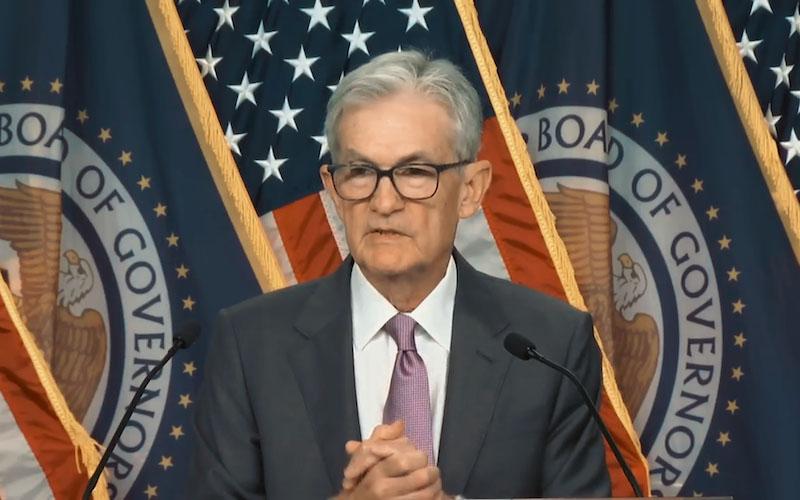
Federal Reserve Chairman Jerome Powell emphasized on Monday that current policy is "in an appropriate position" and inflation expectations "remain well anchored." Central banks typically downplay supply-side shocks such as soaring oil prices—after all, there is a time lag in the transmission of monetary policy, and by the time the effects of tightening become apparent, the energy shock has often subsided, which may instead cause unnecessary suppression of the economy.
John Williams, president of the Federal Reserve Bank of New York, added that the policy is "fully prepared" to address short-term inflationary pressures and the risk of economic repression from rising energy prices.
This stance implies that the Fed's accommodative bias has not reversed, but has only been postponed due to geopolitical risks. Market expectations have shifted from a previous likelihood of a December rate hike to pricing in a rate cut of approximately 3 basis points at the final meeting in 2026.
Although the timing of the interest rate cut has been significantly delayed, there is still room for a 50 basis point rate cut by the end of the year.
The core reason is that the current macroeconomic environment is significantly different from that of 2022: economic growth is slowing, the labor market is weakening, policy interest rates are close to the neutral level, and high inflation is more due to supply shocks than overheated demand. Simply rising energy prices may actually suppress consumption, ultimately prompting the Federal Reserve to continue to launch easing measures.
However, it is worth noting that the Federal Reserve's interest rate adjustments are facing the challenge of traditional signals becoming ineffective. Former Federal Reserve official Peter R. Fischer pointed out that the effectiveness of the Phillips curve has declined significantly, the unemployment rate is no longer as valuable as it used to be, and income and wealth inequality has greatly reduced the effectiveness of interest rate tools in controlling inflation—60% of consumption is concentrated in the top 20% of high-income groups who are not constrained by credit costs, meaning that interest rate hikes have a very limited effect on suppressing overall demand and a very limited effect on controlling inflation.
Furthermore, the market signaling function of long-term interest rates has been distorted by quantitative easing (the Fed's previous expansion of its balance sheet and bond purchases led to long-term Treasury yields being lower than the actual situation). In the future, the Fed will need to gradually withdraw its intervention in long-term interest rates without causing market turmoil, which further limits the flexibility of its policy adjustments (i.e., the Fed will not dare to shrink its balance sheet too quickly, for fear that the reduction in the number of bond buyers will push up long-term interest rates and cause a collapse in the equity market).
The Federal Reserve has not introduced specific policies for the AI industry, but judging from its monetary policy logic and market observations, AI is not currently a core consideration in interest rate decisions, and the industry's own imbalance risks have come into the view of regulators and policymakers.
A Bank of America report clearly states that the impact of AI on the macroeconomy is gradual. While it may contribute about 0.4 percentage points to US GDP growth in the short term, its impact on monetary policy remains relatively limited compared to factors such as the labor market, fiscal policy, and energy prices.
The inflationary effect of AI is currently relatively weak, mainly reflected in the increased energy demand brought about by the construction of data centers and the wealth effect generated by the rise in the stock market. However, these pressures have not yet reached the point where they would force the Federal Reserve to adjust its policy stance.
However, Federal Reserve officials and market experts have warned of the imbalance in investment in the AI industry.
Former SEC Chairman Gary Gensler emphasized that AI infrastructure capital expenditures reached $400 billion in 2025 and are expected to climb to $500 billion to $600 billion in 2026, while the direct revenue from generative AI during the same period was only about $50 billion. This supply-demand imbalance of "heavy investment, light returns" will inevitably be corrected through market mechanisms, and the downside risks are significantly higher than the upside potential. Historical experience shows that after the hype dies down, industry consolidation and valuation restructuring often follow.
Fisher added that large-scale fixed cost expansion by AI companies can easily lead to supply chain disruptions and quality control issues, and investors need to carefully assess the capital recovery cycle.
More concerning is that policy uncertainty has led to an over-concentration of capital in government-supported sectors such as AI and domestic manufacturing, which may constrain overall productivity growth over the next 3 to 5 years. This structural imbalance will also indirectly affect the economic growth and inflation fundamentals upon which the Federal Reserve's policies depend.
The pricing logic for gold has shifted from being driven by short-term safe-haven demand to a game of speculation regarding the Federal Reserve's medium- to long-term interest rate cut expectations.
As signs of easing geopolitical tensions emerge, falling oil prices are expected to alleviate inflationary pressures and create room for the Federal Reserve to cut interest rates. Gold is highly sensitive to real interest rates, and declining interest rate expectations will significantly ease its valuation pressures.
Furthermore, the medium- to long-term weakening trend of the US dollar and the process of de-dollarization further provide underlying support for gold.
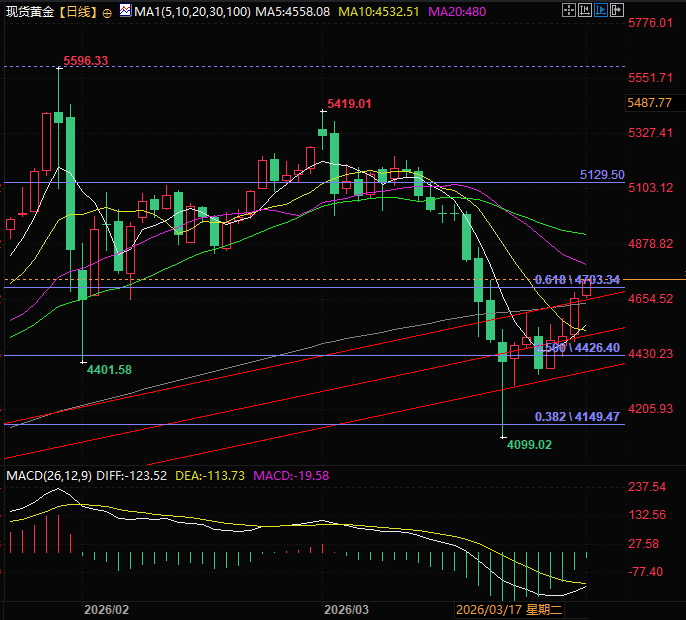
(Spot gold daily chart, source: EasyForex subsidiary)
At 15:37 Beijing time, spot gold was trading at $4,744 per ounce.
Its interest rate decision-making logic, its indirect impact on the AI industry, and the resulting asset allocation strategies together constitute the core trading framework of the current market.
Federal Reserve Interest Rate Policy: Delaying Easing While Remaining on the Sidelines, Not Turning Towards Tightening
Faced with the surge in energy prices triggered by the situation in the Strait of Hormuz (Brent crude oil has risen by 55% since March, approaching $113 per barrel), the Federal Reserve has clearly conveyed a policy signal of "wait and see, and postpone interest rate cuts".
Federal Reserve Chairman Jerome Powell emphasized on Monday that current policy is "in an appropriate position" and inflation expectations "remain well anchored." Central banks typically downplay supply-side shocks such as soaring oil prices—after all, there is a time lag in the transmission of monetary policy, and by the time the effects of tightening become apparent, the energy shock has often subsided, which may instead cause unnecessary suppression of the economy.
John Williams, president of the Federal Reserve Bank of New York, added that the policy is "fully prepared" to address short-term inflationary pressures and the risk of economic repression from rising energy prices.
This stance implies that the Fed's accommodative bias has not reversed, but has only been postponed due to geopolitical risks. Market expectations have shifted from a previous likelihood of a December rate hike to pricing in a rate cut of approximately 3 basis points at the final meeting in 2026.
Although the timing of the interest rate cut has been significantly delayed, there is still room for a 50 basis point rate cut by the end of the year.
The core reason is that the current macroeconomic environment is significantly different from that of 2022: economic growth is slowing, the labor market is weakening, policy interest rates are close to the neutral level, and high inflation is more due to supply shocks than overheated demand. Simply rising energy prices may actually suppress consumption, ultimately prompting the Federal Reserve to continue to launch easing measures.
However, it is worth noting that the Federal Reserve's interest rate adjustments are facing the challenge of traditional signals becoming ineffective. Former Federal Reserve official Peter R. Fischer pointed out that the effectiveness of the Phillips curve has declined significantly, the unemployment rate is no longer as valuable as it used to be, and income and wealth inequality has greatly reduced the effectiveness of interest rate tools in controlling inflation—60% of consumption is concentrated in the top 20% of high-income groups who are not constrained by credit costs, meaning that interest rate hikes have a very limited effect on suppressing overall demand and a very limited effect on controlling inflation.
Furthermore, the market signaling function of long-term interest rates has been distorted by quantitative easing (the Fed's previous expansion of its balance sheet and bond purchases led to long-term Treasury yields being lower than the actual situation). In the future, the Fed will need to gradually withdraw its intervention in long-term interest rates without causing market turmoil, which further limits the flexibility of its policy adjustments (i.e., the Fed will not dare to shrink its balance sheet too quickly, for fear that the reduction in the number of bond buyers will push up long-term interest rates and cause a collapse in the equity market).
The Federal Reserve's stance on AI: Limited macroeconomic impact, but be wary of market imbalance risks.
The Federal Reserve has not introduced specific policies for the AI industry, but judging from its monetary policy logic and market observations, AI is not currently a core consideration in interest rate decisions, and the industry's own imbalance risks have come into the view of regulators and policymakers.
A Bank of America report clearly states that the impact of AI on the macroeconomy is gradual. While it may contribute about 0.4 percentage points to US GDP growth in the short term, its impact on monetary policy remains relatively limited compared to factors such as the labor market, fiscal policy, and energy prices.
The inflationary effect of AI is currently relatively weak, mainly reflected in the increased energy demand brought about by the construction of data centers and the wealth effect generated by the rise in the stock market. However, these pressures have not yet reached the point where they would force the Federal Reserve to adjust its policy stance.
However, Federal Reserve officials and market experts have warned of the imbalance in investment in the AI industry.
Former SEC Chairman Gary Gensler emphasized that AI infrastructure capital expenditures reached $400 billion in 2025 and are expected to climb to $500 billion to $600 billion in 2026, while the direct revenue from generative AI during the same period was only about $50 billion. This supply-demand imbalance of "heavy investment, light returns" will inevitably be corrected through market mechanisms, and the downside risks are significantly higher than the upside potential. Historical experience shows that after the hype dies down, industry consolidation and valuation restructuring often follow.
Fisher added that large-scale fixed cost expansion by AI companies can easily lead to supply chain disruptions and quality control issues, and investors need to carefully assess the capital recovery cycle.
More concerning is that policy uncertainty has led to an over-concentration of capital in government-supported sectors such as AI and domestic manufacturing, which may constrain overall productivity growth over the next 3 to 5 years. This structural imbalance will also indirectly affect the economic growth and inflation fundamentals upon which the Federal Reserve's policies depend.
Gold, as a hedging tool, is once again gaining prominence in asset allocation value.
The pricing logic for gold has shifted from being driven by short-term safe-haven demand to a game of speculation regarding the Federal Reserve's medium- to long-term interest rate cut expectations.
As signs of easing geopolitical tensions emerge, falling oil prices are expected to alleviate inflationary pressures and create room for the Federal Reserve to cut interest rates. Gold is highly sensitive to real interest rates, and declining interest rate expectations will significantly ease its valuation pressures.
Furthermore, the medium- to long-term weakening trend of the US dollar and the process of de-dollarization further provide underlying support for gold.
(Spot gold daily chart, source: EasyForex subsidiary)
At 15:37 Beijing time, spot gold was trading at $4,744 per ounce.
- Risk Warning and Disclaimer
- The market involves risk, and trading may not be suitable for all investors. This article is for reference only and does not constitute personal investment advice, nor does it take into account certain users’ specific investment objectives, financial situation, or other needs. Any investment decisions made based on this information are at your own risk.