Iran launches 100 missiles in retaliation; UAE threatens attack on the Strait; gold prices surge; crude oil prices experience a rollercoaster ride.
2026-04-01 20:34:25
On Wednesday (April 1), during the Asian and European sessions, gold continued its rebound, currently up 1.7% and trading around 4748, while crude oil experienced a surge followed by a sharp pullback and then a rebound, reflecting the decline in oil prices due to the easing of tensions. The market as a whole is characterized by rapid changes.

The Iranian Islamic Revolutionary Guard Corps issued a major statement, announcing that in the 89th wave of Operation True Commitment-4, Iranian armed forces and the Resistance Front jointly launched a comprehensive strike across the region.
The operation involved over 100 heavy missiles, attack drones, and 200 rockets, with a strike range covering tens of thousands of kilometers in West Asia and the entire territory of Israel. The missiles accurately hit military targets and areas of high population density in Eilat, Tel Aviv, and Bunnebula, and local reports indicate that the operation has caused "significant casualties."
Iran used its home advantage to expand its gains and continue to accumulate political leverage, causing a sharp rebound in the oil market, with Brent crude oil briefly turning positive.
US President Trump has made a crucial shift in his stance, not only publicly complaining that the EU "did not help" on the Iran issue, but also clearly signaling a withdrawal of troops.
He stated bluntly that "all the United States needs to do is withdraw from Iran, and will do so very soon," and promised that gasoline prices would "drop sharply" after the withdrawal, while reiterating that the withdrawal would be completed within 2-3 weeks.
Trump also addressed countries that are unable to obtain fuel due to the Strait of Hormuz blockade (such as the UK), suggesting they purchase it from the US themselves or have the courage to occupy or pass through the Strait, implying that the US would no longer assume responsibility for navigation in the Strait of Hormuz.
In a further statement from the White House, he added that the withdrawal would take two to three weeks, during which time military operations could continue, with the core objective of completely destroying Iran's relevant military capabilities. Operations could be suspended if Iran was willing to negotiate.
This expectation quickly spread in the market, causing crude oil futures to face downward pressure, while gold continued its rebound due to expectations of easing tensions and declining real interest rates.
Amid expectations of a US troop withdrawal, Middle Eastern countries that have turned against Iran are experiencing collective anxiety, with the UAE taking the most aggressive actions.
According to the Wall Street Journal, citing Arab officials, the UAE is preparing to assist the United States and its allies in forcibly opening the Strait of Hormuz, potentially becoming the first Persian Gulf nation to join the conflict.
On the one hand, the UAE lobbied the UN Security Council to pass a resolution authorizing military action and urged the United States and Eurasian military powers to form a coalition.
On the other hand, it is studying the role of mine clearance and logistical support in ensuring the security of the Strait, and even advocates that the US military occupy Abu Musa Island, which has been controlled by Iran for half a century (the UAE has a claim to sovereignty over the island).
In addition, the UAE has made it clear that it will open the strait at all costs, while announcing on its official website that Iranian citizens are prohibited from entering or transiting the country, and disclosing that it was attacked by five Iranian missiles and 35 drones on Wednesday.
In an effort to prevent the withdrawal of US troops, Israel and other Middle Eastern countries are likely to increase the frequency of their offensives in the near future, attempting to create more conflicts and further amplify volatility in global energy and safe-haven markets.
From the perspective of the core game theory logic, the United States is still unable to formally declare victory at present - its core military objective (Iran's written commitment to abandon nuclear enrichment of uranium) has not yet been achieved;
Iran, on the other hand, sees continued resistance as the optimal solution, leveraging its ample military reserves, the wait-and-see attitude of its allies, and the constraints imposed on the United States by the midterm elections to turn resistance into political leverage.
Current market observations focus on the following key signals: progress in the opening of the Strait of Hormuz (no substantial trade has yet been achieved), the intensity of military operations by Middle Eastern countries, Iran's resilience, and the movements of US military forces.
Technical aspects:
The US dollar index fell sharply, the ongoing pricing war in the market eased, US Treasury yields continued to decline, and spot gold, anticipating the decline in real interest rates, continued to rebound.
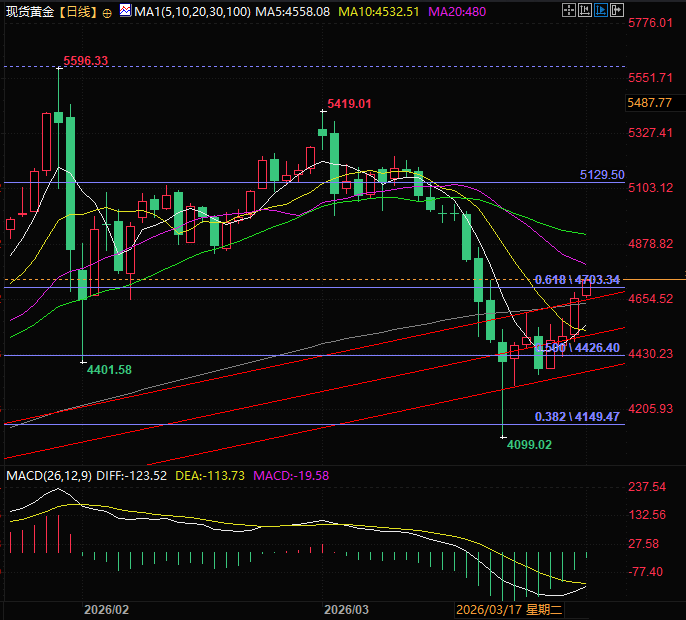
(Spot gold daily chart, source: EasyForex subsidiary)
WTI crude oil futures have pulled back after reaching the resistance level of 105. They have temporarily fallen below the 5-day moving average and the psychological level of 100. If the closing price is below 97, there is a possibility of weakness. Support is around 94.79. Crude oil is still in an uptrend.
Technical indicators suggest that while the conflict has eased, oil prices remain high.
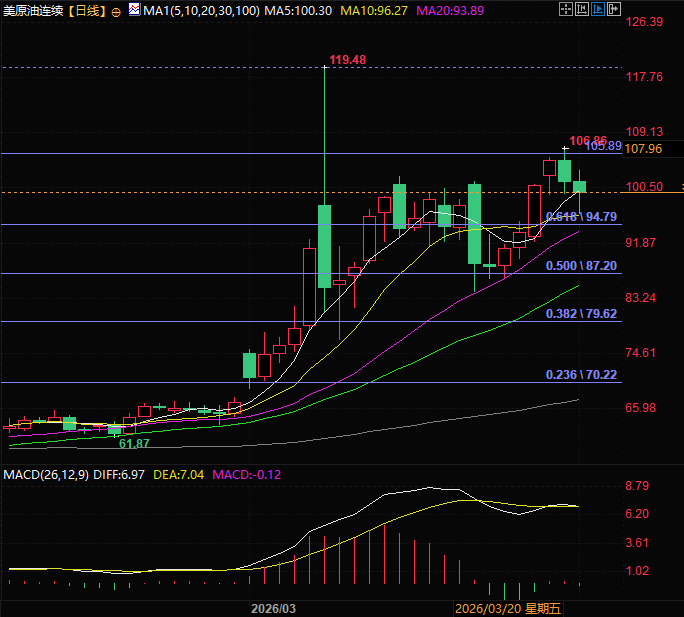
(WTI crude oil futures daily chart, source: FX678's subsidiary EasyFX)
At 20:30 Beijing time, spot gold was trading at $4,738 per ounce, and WTI futures were trading at $99.42 per barrel.
Iran continues its strong offensive: large-scale joint operations escalate, oil market supply risks remain high.
The Iranian Islamic Revolutionary Guard Corps issued a major statement, announcing that in the 89th wave of Operation True Commitment-4, Iranian armed forces and the Resistance Front jointly launched a comprehensive strike across the region.
The operation involved over 100 heavy missiles, attack drones, and 200 rockets, with a strike range covering tens of thousands of kilometers in West Asia and the entire territory of Israel. The missiles accurately hit military targets and areas of high population density in Eilat, Tel Aviv, and Bunnebula, and local reports indicate that the operation has caused "significant casualties."
Iran used its home advantage to expand its gains and continue to accumulate political leverage, causing a sharp rebound in the oil market, with Brent crude oil briefly turning positive.
The US shifts to blaming others and withdrawing troops: Trump says withdrawal in 2-3 weeks, fueling expectations of a short-term oil price correction.
US President Trump has made a crucial shift in his stance, not only publicly complaining that the EU "did not help" on the Iran issue, but also clearly signaling a withdrawal of troops.
He stated bluntly that "all the United States needs to do is withdraw from Iran, and will do so very soon," and promised that gasoline prices would "drop sharply" after the withdrawal, while reiterating that the withdrawal would be completed within 2-3 weeks.
Trump also addressed countries that are unable to obtain fuel due to the Strait of Hormuz blockade (such as the UK), suggesting they purchase it from the US themselves or have the courage to occupy or pass through the Strait, implying that the US would no longer assume responsibility for navigation in the Strait of Hormuz.
In a further statement from the White House, he added that the withdrawal would take two to three weeks, during which time military operations could continue, with the core objective of completely destroying Iran's relevant military capabilities. Operations could be suspended if Iran was willing to negotiate.
This expectation quickly spread in the market, causing crude oil futures to face downward pressure, while gold continued its rebound due to expectations of easing tensions and declining real interest rates.
Middle Eastern allies are panicking: The UAE plans to use force to block the Strait of Hormuz, potentially escalating the geopolitical conflict further.
Amid expectations of a US troop withdrawal, Middle Eastern countries that have turned against Iran are experiencing collective anxiety, with the UAE taking the most aggressive actions.
According to the Wall Street Journal, citing Arab officials, the UAE is preparing to assist the United States and its allies in forcibly opening the Strait of Hormuz, potentially becoming the first Persian Gulf nation to join the conflict.
On the one hand, the UAE lobbied the UN Security Council to pass a resolution authorizing military action and urged the United States and Eurasian military powers to form a coalition.
On the other hand, it is studying the role of mine clearance and logistical support in ensuring the security of the Strait, and even advocates that the US military occupy Abu Musa Island, which has been controlled by Iran for half a century (the UAE has a claim to sovereignty over the island).
In addition, the UAE has made it clear that it will open the strait at all costs, while announcing on its official website that Iranian citizens are prohibited from entering or transiting the country, and disclosing that it was attacked by five Iranian missiles and 35 drones on Wednesday.
In an effort to prevent the withdrawal of US troops, Israel and other Middle Eastern countries are likely to increase the frequency of their offensives in the near future, attempting to create more conflicts and further amplify volatility in global energy and safe-haven markets.
Summary and Technical Analysis:
From the perspective of the core game theory logic, the United States is still unable to formally declare victory at present - its core military objective (Iran's written commitment to abandon nuclear enrichment of uranium) has not yet been achieved;
Iran, on the other hand, sees continued resistance as the optimal solution, leveraging its ample military reserves, the wait-and-see attitude of its allies, and the constraints imposed on the United States by the midterm elections to turn resistance into political leverage.
Current market observations focus on the following key signals: progress in the opening of the Strait of Hormuz (no substantial trade has yet been achieved), the intensity of military operations by Middle Eastern countries, Iran's resilience, and the movements of US military forces.
Technical aspects:
The US dollar index fell sharply, the ongoing pricing war in the market eased, US Treasury yields continued to decline, and spot gold, anticipating the decline in real interest rates, continued to rebound.
(Spot gold daily chart, source: EasyForex subsidiary)
WTI crude oil futures have pulled back after reaching the resistance level of 105. They have temporarily fallen below the 5-day moving average and the psychological level of 100. If the closing price is below 97, there is a possibility of weakness. Support is around 94.79. Crude oil is still in an uptrend.
Technical indicators suggest that while the conflict has eased, oil prices remain high.
(WTI crude oil futures daily chart, source: FX678's subsidiary EasyFX)
At 20:30 Beijing time, spot gold was trading at $4,738 per ounce, and WTI futures were trading at $99.42 per barrel.
- Risk Warning and Disclaimer
- The market involves risk, and trading may not be suitable for all investors. This article is for reference only and does not constitute personal investment advice, nor does it take into account certain users’ specific investment objectives, financial situation, or other needs. Any investment decisions made based on this information are at your own risk.