Job growth is scaring away the dollar? How will the Federal Reserve respond?
2026-04-01 20:48:17
On Wednesday, April 1st, after the release of US private sector employment data, market focus quickly shifted to the true pulse of the labor market. The ADP report showed that private employers added 62,000 jobs in March, far exceeding market expectations of 40,000 and also higher than the revised 66,000 in February. The US dollar index fell to near a five-day low of 99.40, as traders began to reassess the urgency of the Federal Reserve's policy path. Overall, the employment data did not show a sharp deterioration, but industry concentration and wage dynamics revealed structural characteristics of the labor market that have not yet fully recovered.

March's ADP private sector employment change came in at +62,000, 22,000 higher than expected, continuing the rebound momentum following the February revision. Compared to the estimated 398,000 new jobs added by private employers for the whole of 2025, the first three months of this year show signs of stabilization, but are still far below the annual increase of 771,000 in 2024. ADP Chief Economist Nera Richardson noted, "Overall hiring remains stable, but job growth continues to favor specific sectors, including healthcare. In March, this robust performance was also accompanied by increased pay gains for job hoppers." This comment points to the uneven nature of the current employment recovery, rather than a broad-based boom.
The comparison shows that although the March data did not return to a high growth trajectory, it exceeded expectations for the second consecutive month, alleviating market concerns about a sharp slowdown in employment.
Job growth was highly concentrated in a few sectors. Education and healthcare services added 58,000 jobs, accounting for nearly 90% of the monthly increase, continuing to play a leading role. Construction added 30,000, resources and mining added 11,000, information technology added 16,000, leisure and hospitality added 7,000, and financial activities added 4,000. Meanwhile, trade, transportation, and utilities saw a net decrease of 58,000 jobs, manufacturing lost 11,000, and professional and business services continued their contraction. Small businesses added 85,000 jobs, becoming a bright spot, while medium-sized and large businesses recorded net decreases of 20,000 and 4,000 jobs, respectively. Nera Richardson's latest statement reaffirms that "job growth continues to favor specific sectors, including healthcare." This structural bias indicates that the labor market recovery relies on defensive sectors, while cyclical sensitive industries still face pressure. Traders should note that if the non-farm payroll report continues this divergence, the Federal Reserve's assessment of the overall health of the labor market will be more cautious.
Wage data is also noteworthy. Salary growth for those remaining employed remained at 4.5%, unchanged from the previous month; however, wage growth for those changing jobs rose from 6.3% to 6.6%, indicating that labor mobility still brings a premium. This trend contrasts with the overall wage slowdown in 2025, when the job-hopping premium fell to historic lows. Wages are steadily rising, especially in growth-leading sectors like healthcare, suggesting that inflationary pressures have not completely subsided. Combined with the potential impact of the Middle East situation on energy prices and the uncertainty of tariff policies, labor cost transmission may continue to support core inflation. Traders observed that while wage data is not out of control, it has not shown a significant cooling either, adding uncertainty to the Federal Reserve's balancing of employment and price goals. Overall, the combination of employment and wages indicates that the labor market is in a "stable but not overheated" range, neither triggering recession warnings nor providing sufficient justification for aggressive easing.
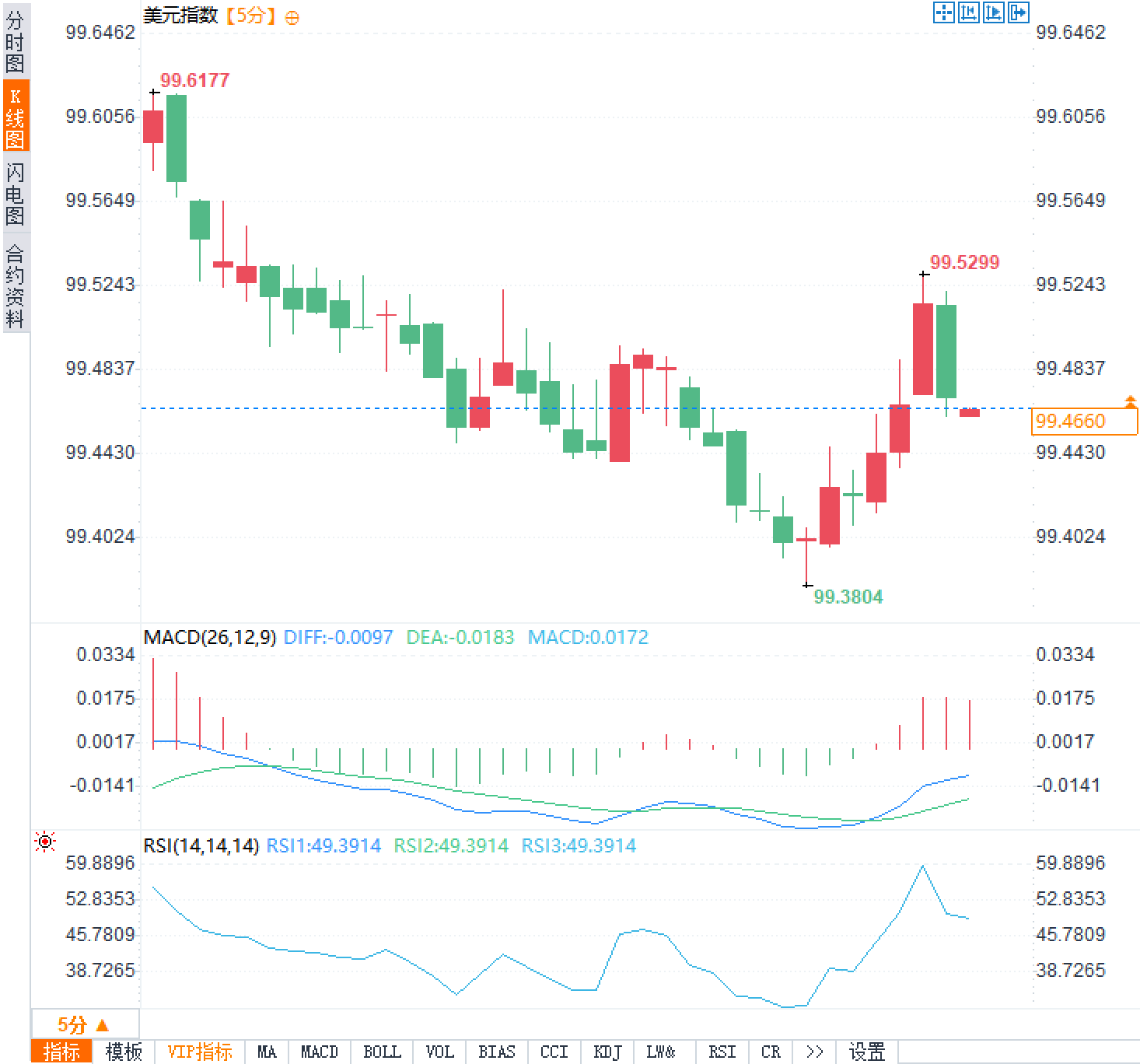
Following its March 18 meeting, the Federal Reserve maintained a hawkish tone, emphasizing that data is crucial for policy decisions. The current federal funds rate range is 3.5%-3.75%. While the March ADP report showed stable hiring, the high concentration of growth and continued contraction in some sectors indicate that the labor market recovery remains fragile. Traders are focused on whether subsequent data will continue this pattern, and whether the Fed will seek a balance between sticky inflation and slowing growth, rather than hastily shifting course. Geopolitical factors and tariff uncertainties further complicate data interpretation. This better-than-expected result has alleviated downward pressure on employment to some extent, but it has not yet changed the market's cautious assessment of the policy pace for the entire year.
ADP employment data exceeded expectations.
March's ADP private sector employment change came in at +62,000, 22,000 higher than expected, continuing the rebound momentum following the February revision. Compared to the estimated 398,000 new jobs added by private employers for the whole of 2025, the first three months of this year show signs of stabilization, but are still far below the annual increase of 771,000 in 2024. ADP Chief Economist Nera Richardson noted, "Overall hiring remains stable, but job growth continues to favor specific sectors, including healthcare. In March, this robust performance was also accompanied by increased pay gains for job hoppers." This comment points to the uneven nature of the current employment recovery, rather than a broad-based boom.
| month | Actual number of newly created jobs (in ten thousand) | Market expectations (in ten thousand) | Previous value (in ten thousand) |
|---|---|---|---|
| March 2026 | 6.2 | 4.0 | 6.6 |
| February 2026 | 6.6 | 5.0 | 1.1 |
| January 2026 | 2.2 | 4.8 | - |
Industry differentiation becomes more pronounced: Healthcare and construction are the core drivers of growth.
Job growth was highly concentrated in a few sectors. Education and healthcare services added 58,000 jobs, accounting for nearly 90% of the monthly increase, continuing to play a leading role. Construction added 30,000, resources and mining added 11,000, information technology added 16,000, leisure and hospitality added 7,000, and financial activities added 4,000. Meanwhile, trade, transportation, and utilities saw a net decrease of 58,000 jobs, manufacturing lost 11,000, and professional and business services continued their contraction. Small businesses added 85,000 jobs, becoming a bright spot, while medium-sized and large businesses recorded net decreases of 20,000 and 4,000 jobs, respectively. Nera Richardson's latest statement reaffirms that "job growth continues to favor specific sectors, including healthcare." This structural bias indicates that the labor market recovery relies on defensive sectors, while cyclical sensitive industries still face pressure. Traders should note that if the non-farm payroll report continues this divergence, the Federal Reserve's assessment of the overall health of the labor market will be more cautious.
Salary dynamics signal inflation stickiness
Wage data is also noteworthy. Salary growth for those remaining employed remained at 4.5%, unchanged from the previous month; however, wage growth for those changing jobs rose from 6.3% to 6.6%, indicating that labor mobility still brings a premium. This trend contrasts with the overall wage slowdown in 2025, when the job-hopping premium fell to historic lows. Wages are steadily rising, especially in growth-leading sectors like healthcare, suggesting that inflationary pressures have not completely subsided. Combined with the potential impact of the Middle East situation on energy prices and the uncertainty of tariff policies, labor cost transmission may continue to support core inflation. Traders observed that while wage data is not out of control, it has not shown a significant cooling either, adding uncertainty to the Federal Reserve's balancing of employment and price goals. Overall, the combination of employment and wages indicates that the labor market is in a "stable but not overheated" range, neither triggering recession warnings nor providing sufficient justification for aggressive easing.
The latest reference for the Fed's policy path
Following its March 18 meeting, the Federal Reserve maintained a hawkish tone, emphasizing that data is crucial for policy decisions. The current federal funds rate range is 3.5%-3.75%. While the March ADP report showed stable hiring, the high concentration of growth and continued contraction in some sectors indicate that the labor market recovery remains fragile. Traders are focused on whether subsequent data will continue this pattern, and whether the Fed will seek a balance between sticky inflation and slowing growth, rather than hastily shifting course. Geopolitical factors and tariff uncertainties further complicate data interpretation. This better-than-expected result has alleviated downward pressure on employment to some extent, but it has not yet changed the market's cautious assessment of the policy pace for the entire year.
- Risk Warning and Disclaimer
- The market involves risk, and trading may not be suitable for all investors. This article is for reference only and does not constitute personal investment advice, nor does it take into account certain users’ specific investment objectives, financial situation, or other needs. Any investment decisions made based on this information are at your own risk.