If natural gas disruptions extend into the summer, demand reduction becomes the only path to rebalancing.
2026-04-02 16:09:51
According to APP, ANZ analysts point out that if gas market supply disruptions related to the Middle East wars continue into the summer, market rebalancing may be achieved through demand cuts rather than supply increases. Daniel Hynes and Soni Kumari stated in their latest research report: "This is an unpleasant but effective 'mitigation' lever: including industrial production cuts, fuel substitution wherever possible, and demand-side response in the electricity market."

The two analysts further emphasized that demand substitution has already begun, with natural gas-intensive users accelerating their shift to alternative energy sources such as coal-fired power to cope with high prices and supply uncertainties. Daniel Hynes recently pointed out, regarding the damage to Middle Eastern energy infrastructure, that the global natural gas market is facing structural restructuring, and new LNG supply is unlikely to quickly fill the gap in the short term; therefore, demand-side adjustments will become the main buffer mechanism. Soni Kumari added that demand response from the power sector is particularly crucial, enabling the rapid release of natural gas resources without sacrificing economic growth.
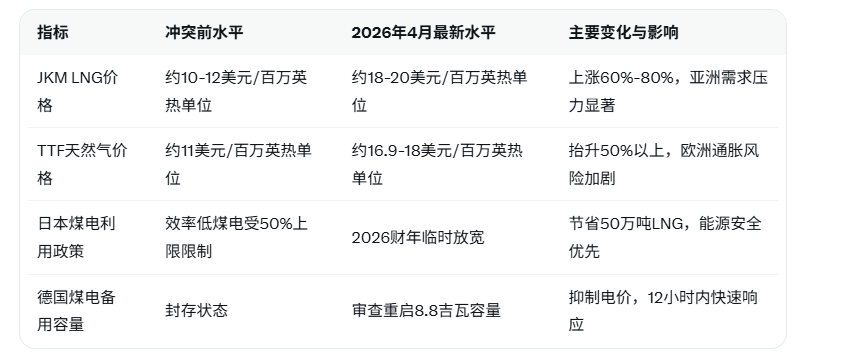
Latest market data shows that the Middle East conflict has significantly disrupted LNG transport through the Strait of Hormuz, damaging facilities in major exporting countries such as Qatar, and posing a long-term risk to approximately 20% of global LNG supply. Asian benchmark JKM LNG spot prices have risen to approximately $18-20 per million British thermal units (MMBtu), an increase of about 60%-80% from pre-conflict highs; European TTF benchmark gas prices remain around $16.9-18 per MMBtu, a significant increase from the lows at the beginning of the year. US Henry Hub gas prices have remained relatively stable at $2.8-3.0 per MMBtu, highlighting the structural advantage of the US as an exporting country benefiting from global price differentials. If supply disruptions continue into the summer, the pressure of reduced demand will further intensify, driving up costs for natural gas-intensive industries.
In response to this situation, Japan has clearly stated its intention to expand the use of coal-fired power plants. Starting in fiscal year 2026 (April), the utilization rate cap for coal-fired power plants with an efficiency below 42% will be temporarily relaxed to 50%, which is expected to save approximately 500,000 tons of LNG, equivalent to more than 10% of imports through the Strait of Hormuz. Germany is also considering reactivating its mothballed coal-fired power plants to curb high electricity prices; related reviews have been included in the parliamentary energy measures package, with a reserve coal-fired power capacity of 8.8 gigawatts, capable of responding to grid demands within 12 hours. These policy adjustments signify a realistic choice prioritizing short-term energy security over long-term emissions reduction targets.
ANZ analysts' reasoning is clear: the rebalancing of the natural gas market depends on demand-side levers, not waiting for supply to recover. Industrial production cuts will directly reduce gas consumption in high-gas-consuming industries such as chemicals and fertilizers, while fuel substitution will optimize the power structure through coal-fired and nuclear power. Demand-side response can further guide users to use gas during off-peak hours through peak-valley pricing. This less-than-ideal path, while incurring short-term economic costs, can effectively stabilize prices and prevent supply shortages from escalating into a systemic crisis.
To visually illustrate the impact of the conflict on the natural gas market and alternative strategies, the following is a comparison of key data:
Overall, if gas disruptions in the Middle East persist, the rebalancing of the natural gas market will primarily rely on demand-side adjustments, with alternative energy sources such as coal-fired power serving as a key buffer. Investors need to closely monitor LNG inventory data before summer and the implementation of policies in various countries to assess price volatility and the risks of transmission across the industry chain.
Editor's Summary : The natural gas supply disruptions caused by the Middle East wars are forcing the global energy market to shift towards demand-side management. The rapid adjustments to coal-fired power policies in Japan and Germany highlight the short-term priority of energy security. The combined effect of high natural gas prices and demand for alternative energy sources will continue to shape the global energy landscape in 2026. Investors should closely monitor the effectiveness of demand response and the evolution of geopolitical risks to seize related asset pricing opportunities.
The two analysts further emphasized that demand substitution has already begun, with natural gas-intensive users accelerating their shift to alternative energy sources such as coal-fired power to cope with high prices and supply uncertainties. Daniel Hynes recently pointed out, regarding the damage to Middle Eastern energy infrastructure, that the global natural gas market is facing structural restructuring, and new LNG supply is unlikely to quickly fill the gap in the short term; therefore, demand-side adjustments will become the main buffer mechanism. Soni Kumari added that demand response from the power sector is particularly crucial, enabling the rapid release of natural gas resources without sacrificing economic growth.
Latest market data shows that the Middle East conflict has significantly disrupted LNG transport through the Strait of Hormuz, damaging facilities in major exporting countries such as Qatar, and posing a long-term risk to approximately 20% of global LNG supply. Asian benchmark JKM LNG spot prices have risen to approximately $18-20 per million British thermal units (MMBtu), an increase of about 60%-80% from pre-conflict highs; European TTF benchmark gas prices remain around $16.9-18 per MMBtu, a significant increase from the lows at the beginning of the year. US Henry Hub gas prices have remained relatively stable at $2.8-3.0 per MMBtu, highlighting the structural advantage of the US as an exporting country benefiting from global price differentials. If supply disruptions continue into the summer, the pressure of reduced demand will further intensify, driving up costs for natural gas-intensive industries.
In response to this situation, Japan has clearly stated its intention to expand the use of coal-fired power plants. Starting in fiscal year 2026 (April), the utilization rate cap for coal-fired power plants with an efficiency below 42% will be temporarily relaxed to 50%, which is expected to save approximately 500,000 tons of LNG, equivalent to more than 10% of imports through the Strait of Hormuz. Germany is also considering reactivating its mothballed coal-fired power plants to curb high electricity prices; related reviews have been included in the parliamentary energy measures package, with a reserve coal-fired power capacity of 8.8 gigawatts, capable of responding to grid demands within 12 hours. These policy adjustments signify a realistic choice prioritizing short-term energy security over long-term emissions reduction targets.
ANZ analysts' reasoning is clear: the rebalancing of the natural gas market depends on demand-side levers, not waiting for supply to recover. Industrial production cuts will directly reduce gas consumption in high-gas-consuming industries such as chemicals and fertilizers, while fuel substitution will optimize the power structure through coal-fired and nuclear power. Demand-side response can further guide users to use gas during off-peak hours through peak-valley pricing. This less-than-ideal path, while incurring short-term economic costs, can effectively stabilize prices and prevent supply shortages from escalating into a systemic crisis.
To visually illustrate the impact of the conflict on the natural gas market and alternative strategies, the following is a comparison of key data:
Overall, if gas disruptions in the Middle East persist, the rebalancing of the natural gas market will primarily rely on demand-side adjustments, with alternative energy sources such as coal-fired power serving as a key buffer. Investors need to closely monitor LNG inventory data before summer and the implementation of policies in various countries to assess price volatility and the risks of transmission across the industry chain.
Editor's Summary : The natural gas supply disruptions caused by the Middle East wars are forcing the global energy market to shift towards demand-side management. The rapid adjustments to coal-fired power policies in Japan and Germany highlight the short-term priority of energy security. The combined effect of high natural gas prices and demand for alternative energy sources will continue to shape the global energy landscape in 2026. Investors should closely monitor the effectiveness of demand response and the evolution of geopolitical risks to seize related asset pricing opportunities.
- Risk Warning and Disclaimer
- The market involves risk, and trading may not be suitable for all investors. This article is for reference only and does not constitute personal investment advice, nor does it take into account certain users’ specific investment objectives, financial situation, or other needs. Any investment decisions made based on this information are at your own risk.