Trump's ambiguous statements send oil prices soaring over 6%.
2026-04-02 15:43:09
On Thursday, April 2nd, international crude oil prices continued to rise following US President Trump's speech on the situation in Iran, while risk asset prices declined further. Trump's speech failed to declare a complete end to the conflict as some markets had expected, instead indicating that while Iran's military capabilities had been severely damaged, the final stages of the conflict might still take at least two to three weeks. This significantly prolonged the de facto closure of the Strait of Hormuz, exacerbating uncertainty surrounding global energy supply.
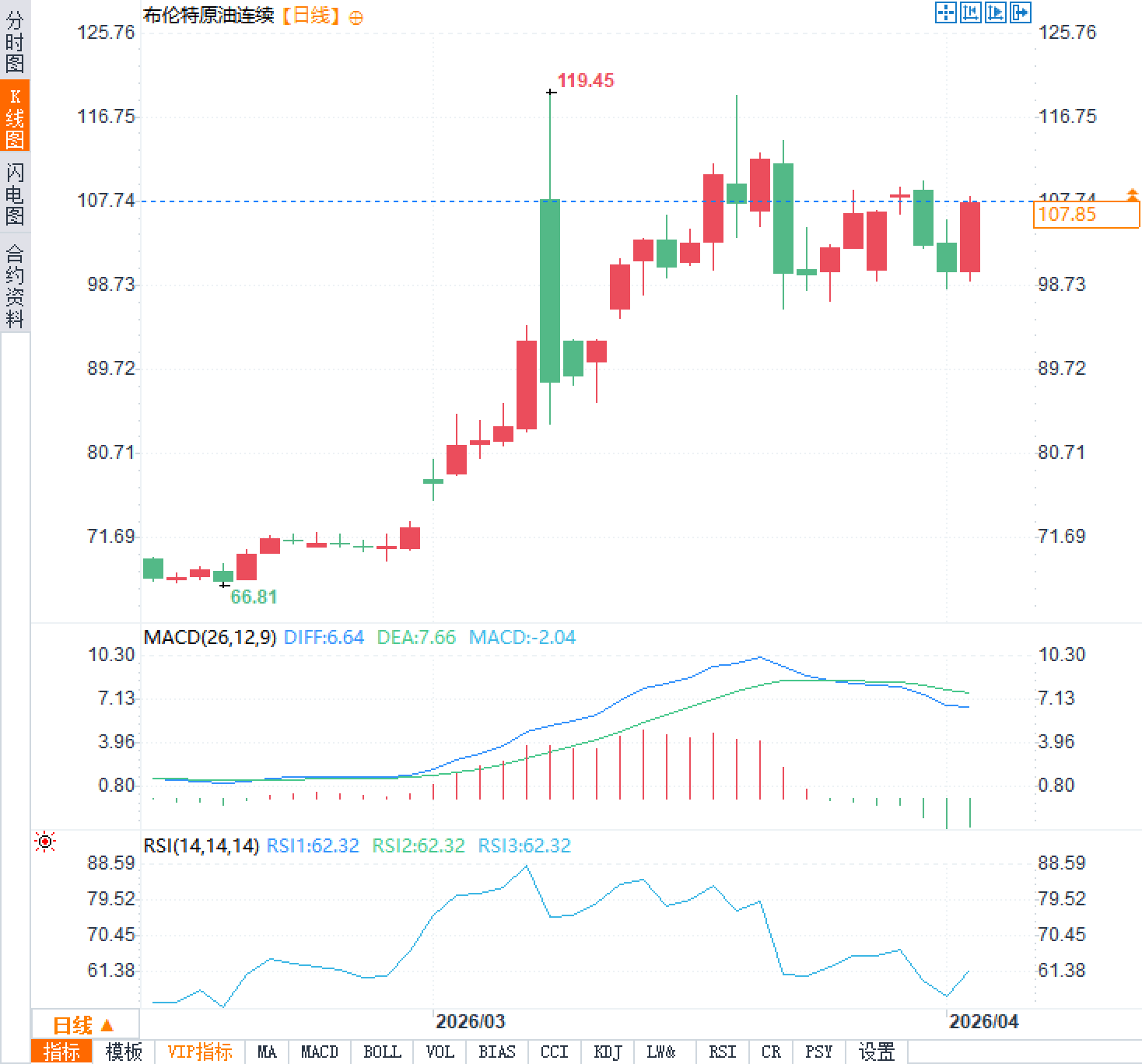
Currently, WTI crude oil futures prices have risen more than 6% to $106.50 per barrel, while Brent crude oil futures prices have jumped more than 7% back to around $108. The yield on the 10-year US Treasury note has climbed 6 basis points to 4.38%. In the foreign exchange market, the US dollar has rebounded, and the euro has fallen from 1.1600 against the dollar to around 1.1530. This market reversal highlights investors' repricing of persistent supply-side shocks.
In his speech, Trump reiterated the effectiveness of the strikes against Iranian military facilities but emphasized that the military operation was not yet fully over. This directly extended the market's expected timeline for the restoration of energy infrastructure. Even if the conflict ends in the short term, it could take weeks or even months for related energy facilities to return to full capacity. Furthermore, there remains significant doubt as to whether Iran will allow shipping in the Strait of Hormuz to quickly return to normal. This geopolitical reality means that the supply-side shock will continue to unfold. The Strait of Hormuz transports approximately 20 million barrels of oil daily, accounting for about 20% of global oil consumption. Prolonged disruptions not only increase the risk premium for global oil prices but could also trigger a chain reaction in the supply chain. Traders need to closely monitor subsequent military developments, as every day of delay could amplify price volatility and alter market assessments of the medium-term supply-demand balance. In the current environment, supply uncertainty has become the core variable dominating oil price movements, far exceeding the impact of seasonal demand factors.
The current surge in oil prices stems primarily from real concerns about supply disruptions, rather than simply a recovery in demand. The closure of the Strait of Hormuz not only impacts immediate supply but also increases shipping insurance costs and logistical expenses for alternative routes. Even if some production capacity recovers, overall market balance will be difficult to restore in the short term. Historically, similar geopolitical shocks have often led to sustained high oil price volatility for weeks. The risk premium rose more rapidly in this instance, reflecting a more cautious market pricing in long-term uncertainty.
Rising oil prices directly triggered increased risk aversion, leading to a significant stock market correction. Increased energy costs will squeeze corporate profit margins, particularly in sectors reliant on transportation and manufacturing. Meanwhile, rising bond yields reflect investors' repricing of inflationary pressures, despite the possibility that central banks like the Federal Reserve may remain on the sidelines. The rebound of the US dollar as a traditional safe-haven asset further exacerbated pressure on other currencies. In the foreign exchange market, the decline in the euro against the US dollar and the Australian dollar reflects this capital flow. Overall, commodity prices rose due to supply concerns, while equities and some currencies came under pressure. The 10-year US Treasury yield rose from around 4.32% to 4.38%, reflecting the market's immediate reaction to the transmission of energy costs to price levels, rather than an indication of optimistic growth expectations.
The prolonged supply shock could have a cumulative effect on the global economic growth path. Persistently high energy prices will increase business operating costs and may be transmitted to consumers through the supply chain, creating mild cost-push pressure. Central banks need to weigh inflation risks against the possibility of slower growth when formulating policies, but current data does not yet indicate an immediate need for a shift. Overall, this event has strengthened the weight of the oil market in macro pricing, and volatility may remain high in the short term until geopolitical uncertainties are clearly alleviated.
Currently, WTI crude oil futures prices have risen more than 6% to $106.50 per barrel, while Brent crude oil futures prices have jumped more than 7% back to around $108. The yield on the 10-year US Treasury note has climbed 6 basis points to 4.38%. In the foreign exchange market, the US dollar has rebounded, and the euro has fallen from 1.1600 against the dollar to around 1.1530. This market reversal highlights investors' repricing of persistent supply-side shocks.
Trump's remarks exacerbate energy supply uncertainty
In his speech, Trump reiterated the effectiveness of the strikes against Iranian military facilities but emphasized that the military operation was not yet fully over. This directly extended the market's expected timeline for the restoration of energy infrastructure. Even if the conflict ends in the short term, it could take weeks or even months for related energy facilities to return to full capacity. Furthermore, there remains significant doubt as to whether Iran will allow shipping in the Strait of Hormuz to quickly return to normal. This geopolitical reality means that the supply-side shock will continue to unfold. The Strait of Hormuz transports approximately 20 million barrels of oil daily, accounting for about 20% of global oil consumption. Prolonged disruptions not only increase the risk premium for global oil prices but could also trigger a chain reaction in the supply chain. Traders need to closely monitor subsequent military developments, as every day of delay could amplify price volatility and alter market assessments of the medium-term supply-demand balance. In the current environment, supply uncertainty has become the core variable dominating oil price movements, far exceeding the impact of seasonal demand factors.
The underlying driving mechanism of rising crude oil prices
The current surge in oil prices stems primarily from real concerns about supply disruptions, rather than simply a recovery in demand. The closure of the Strait of Hormuz not only impacts immediate supply but also increases shipping insurance costs and logistical expenses for alternative routes. Even if some production capacity recovers, overall market balance will be difficult to restore in the short term. Historically, similar geopolitical shocks have often led to sustained high oil price volatility for weeks. The risk premium rose more rapidly in this instance, reflecting a more cautious market pricing in long-term uncertainty.
Analysis of cross-asset linkages in financial markets
Rising oil prices directly triggered increased risk aversion, leading to a significant stock market correction. Increased energy costs will squeeze corporate profit margins, particularly in sectors reliant on transportation and manufacturing. Meanwhile, rising bond yields reflect investors' repricing of inflationary pressures, despite the possibility that central banks like the Federal Reserve may remain on the sidelines. The rebound of the US dollar as a traditional safe-haven asset further exacerbated pressure on other currencies. In the foreign exchange market, the decline in the euro against the US dollar and the Australian dollar reflects this capital flow. Overall, commodity prices rose due to supply concerns, while equities and some currencies came under pressure. The 10-year US Treasury yield rose from around 4.32% to 4.38%, reflecting the market's immediate reaction to the transmission of energy costs to price levels, rather than an indication of optimistic growth expectations.
Long-term outlook for global energy markets
The prolonged supply shock could have a cumulative effect on the global economic growth path. Persistently high energy prices will increase business operating costs and may be transmitted to consumers through the supply chain, creating mild cost-push pressure. Central banks need to weigh inflation risks against the possibility of slower growth when formulating policies, but current data does not yet indicate an immediate need for a shift. Overall, this event has strengthened the weight of the oil market in macro pricing, and volatility may remain high in the short term until geopolitical uncertainties are clearly alleviated.
Frequently Asked Questions
Question 1: Why did Trump's speech fail to calm the oil market and instead exacerbate volatility?
A: While Trump confirmed that Iran's military capabilities had been severely damaged, he clearly stated that the cleanup would take two to three weeks and did not provide a clear path for the rapid reopening of the Strait of Hormuz. This prolonged the expectation of supply disruptions, leading to a rise in risk premiums and a continuation of the upward trend in oil prices rather than a decline. The market thus priced in a longer period of uncertainty.
Question 2: What is the actual impact of the closure of the Strait of Hormuz on global oil supply?
A: The strait carries approximately 20 million barrels of oil daily, accounting for about 20% of global consumption. Disruptions widen the supply gap, and even with short-term relief, infrastructure reconstruction and shipping recovery will take time, pushing up global energy prices and impacting downstream industries, amplifying structural risks on the supply side.
Question 3: Does the current market reaction foreshadow broader economic risks?
A: Yes, rising oil prices could impact inflation expectations and business costs, while stock market declines reflect growth concerns, and a stronger dollar exacerbates global capital flow pressures. However, central bank policy responses will depend on subsequent data developments, and traders will focus on fundamental indicators to assess the medium- to long-term impact.
- Risk Warning and Disclaimer
- The market involves risk, and trading may not be suitable for all investors. This article is for reference only and does not constitute personal investment advice, nor does it take into account certain users’ specific investment objectives, financial situation, or other needs. Any investment decisions made based on this information are at your own risk.