From the Strait of Hormuz to the Federal Reserve, how did oil price shocks reshape the gold price trend?
2026-04-02 20:47:05
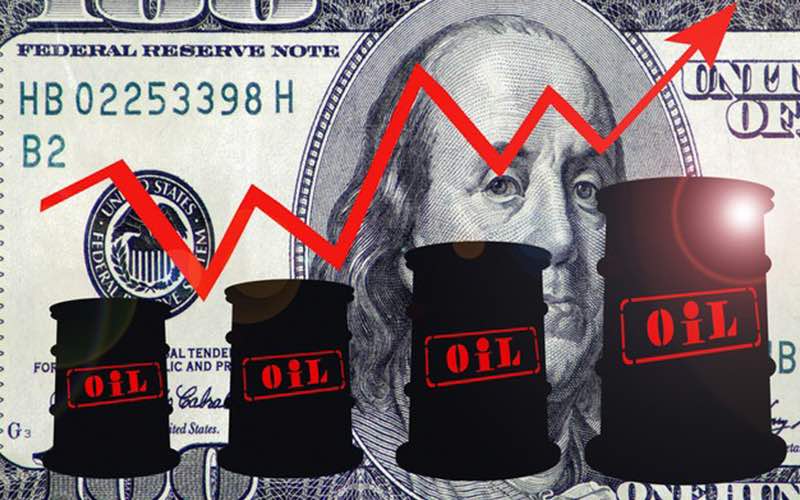
In early April 2026, the conflict with Iran had lasted for over a month, and the disruption of shipping in the Strait of Hormuz had a substantial impact on the global energy market. As the "lifeline" for more than 30% of global crude oil transportation, the disruption of shipping in the strait directly pushed up energy costs: Brent crude oil prices once exceeded $110 per barrel, WTI crude oil stabilized above $100 per barrel, and the average price of gasoline in the United States climbed to over $4.2 per gallon, reaching the highest level since August 2022.
Despite repeated signals from the Trump administration that the conflict might ease in May or June, the energy supply shock has gradually spread throughout the entire industry chain, and inflation data in the coming quarters will likely reflect this. It's worth noting that, unlike previous geopolitical conflicts where gold initially strengthened, the safe-haven effect on gold this time is not only limited but has also faded quickly. The core reason is that this conflict is primarily an energy supply shock and has not triggered systemic financial risks or a credit crisis, leading to relatively restrained market expectations of escalation. Conversely, rising oil prices have fueled inflationary expectations, rapidly pushing up real yields and the dollar index, significantly increasing the opportunity cost of holding gold—after all, gold, as a non-interest-bearing asset, is directly linked to the returns of interest-bearing assets.
Historical experience also confirms this logic: in Middle Eastern conflicts dominated by oil price shocks, the safe-haven premium of gold is often unsustainable, and changes in macroeconomic and financial conditions are the core factor determining price trends.
Oil price transmission to inflation: short-term rapid shocks and long-term lagged effects
The Trump administration has prioritized controlling oil prices to avoid them becoming a political burden before the midterm elections. Multiple institutions predict that if the conflict ends in May or June, oil prices may fall below $100 per barrel, but the inflationary transmission process is already irreversible.
From a transmission mechanism perspective, the prices of gasoline and fuel oil have an extremely rapid impact on overall inflation (CPI/PCE): changes in retail gasoline prices are typically reflected in gas station prices within one or two weeks and directly in the CPI data for the current or following month. This means that the CPI may rebound in March and April, and the overall inflation level will rise temporarily in the second quarter. According to Goldman Sachs' calculation model, a sustained 10% increase in oil prices typically leads to an increase of approximately 0.2 percentage points in the overall PCE.
In contrast, the transmission of core inflation (excluding food and energy) is more moderate and delayed: a 10% increase in oil prices will only push core PCE up by about 0.04 percentage points. It takes 3-6 months for energy costs to penetrate into sectors such as transportation, manufacturing, and food; therefore, the rise in core inflation may gradually become apparent from the summer to the fall of 2026. Even if oil prices subsequently decline, the cost pressures accumulated earlier may continue to affect price levels.
Policy game under the constraints of midterm elections
The November 2026 midterm elections have made inflation a highly sensitive political issue. Polls show rising public discontent over the increasing cost of living, and high oil prices are directly influencing voter intentions. The Trump administration has taken measures such as releasing strategic petroleum reserves and pushing for moderate production increases from OPEC+, but the marginal effects of these measures have been limited.
Against this backdrop, the government faces a policy dilemma: it needs to combat inflation to maintain its approval rating, yet it is reluctant to curb inflation by raising interest rates—after all, high interest rates could exacerbate the economic slowdown and further fuel voter discontent. Therefore, even with persistent inflationary pressures, the probability of an actual interest rate hike remains relatively low. However, discussions surrounding "whether monetary policy needs adjustment" are likely to increase, and this shift in expectations itself will tighten liquidity in the financial markets by pushing up real yields and strengthening the dollar.
Federal Reserve policy stance: temporarily "ignoring" oil prices, but underlying concerns remain.
In his March policy meeting and subsequent statements, Federal Reserve Chairman Jerome Powell made it clear that he would "ignore short-term oil price shocks," believing that the impact could be partially offset by releasing strategic petroleum reserves and strengthening international coordination. He also advocated for patient observation based on more economic data. This stance effectively suppressed market discussions about interest rate hikes: the CME FedWatch tool showed that the probability of a 25 basis point rate hike in April was extremely low, and a rate hike before the end of the year was not a mainstream market expectation.
However, this policy framework faces potential challenges. If inflation data continues to exceed expectations, Powell's "observation" strategy may face more scrutiny. Dallas Fed President Logan has clearly stated that if oil prices continue to push up inflation and core inflation falls more slowly than expected, the policy path needs to be reassessed; former Cleveland Fed President Mester also mentioned that the possibility of taking further measures to control inflation cannot be ruled out.
It's worth noting that even if actual interest rate hikes are unlikely to materialize due to political factors, the intensification of policy discussions will still affect market pricing. Historical data shows that for every 25 basis point increase in FOMC rate hike expectations, gold prices typically experience short-term downward pressure of 1%-2%. Currently, rate hike discussions are at a low level, but in a scenario of high inflation, the renewed activity in these discussions will further increase the pressure on gold prices.
The logic behind gold price fluctuations and key investment considerations
Gold pricing is highly dependent on real interest rates and the US dollar's performance: rising real interest rates increase the opportunity cost of holding gold, while a stronger dollar increases the purchasing costs for non-US investors, both of which put downward pressure on gold prices. The recent oil price shock indirectly pushed up real yields and the US dollar index by increasing inflation expectations, thus exerting substantial pressure on gold prices. Although short-term safe-haven demand may provide some support, the dominant effects of yield curve adjustments and a stronger dollar are more significant. Furthermore, adjustments to gold reserves by some sovereign nations due to fiscal or exchange rate pressures have also exacerbated price volatility.
Key tracking phase
April-June: A period of rapid response to overall inflation: If CPI/PCE data exceed expectations, it will directly test the Federal Reserve's stance of "ignoring the impact of oil prices," and market volatility may intensify.
July-September: The period of lagging core inflation: If core inflation data remains stubbornly high, discussions about interest rate hikes may intensify, and gold prices will face greater downward pressure.
September-November: Policy Sensitive Period as Elections Approach: Policy uncertainty before the midterm elections will reach a temporary high, and market expectation fluctuations may amplify gold price volatility.
Investment advice
In the long term, global central bank gold-buying trends and geopolitical uncertainties continue to provide structural support for gold. However, in the short term, investors should focus on changes in the 10-year US Treasury real yield, the US dollar index, and the yield curve, rather than solely relying on geopolitical conflicts or oil price fluctuations to predict market trends. In terms of trading strategy, a cautious approach is advised, avoiding chasing highs and lows driven by short-term sentiment, and prioritizing diversified portfolio allocation to manage market volatility.
Despite repeated signals from the Trump administration that the conflict might ease in May or June, the energy supply shock has gradually spread throughout the entire industry chain, and inflation data in the coming quarters will likely reflect this. It's worth noting that, unlike previous geopolitical conflicts where gold initially strengthened, the safe-haven effect on gold this time is not only limited but has also faded quickly. The core reason is that this conflict is primarily an energy supply shock and has not triggered systemic financial risks or a credit crisis, leading to relatively restrained market expectations of escalation. Conversely, rising oil prices have fueled inflationary expectations, rapidly pushing up real yields and the dollar index, significantly increasing the opportunity cost of holding gold—after all, gold, as a non-interest-bearing asset, is directly linked to the returns of interest-bearing assets.
Historical experience also confirms this logic: in Middle Eastern conflicts dominated by oil price shocks, the safe-haven premium of gold is often unsustainable, and changes in macroeconomic and financial conditions are the core factor determining price trends.
Oil price transmission to inflation: short-term rapid shocks and long-term lagged effects
The Trump administration has prioritized controlling oil prices to avoid them becoming a political burden before the midterm elections. Multiple institutions predict that if the conflict ends in May or June, oil prices may fall below $100 per barrel, but the inflationary transmission process is already irreversible.
From a transmission mechanism perspective, the prices of gasoline and fuel oil have an extremely rapid impact on overall inflation (CPI/PCE): changes in retail gasoline prices are typically reflected in gas station prices within one or two weeks and directly in the CPI data for the current or following month. This means that the CPI may rebound in March and April, and the overall inflation level will rise temporarily in the second quarter. According to Goldman Sachs' calculation model, a sustained 10% increase in oil prices typically leads to an increase of approximately 0.2 percentage points in the overall PCE.
In contrast, the transmission of core inflation (excluding food and energy) is more moderate and delayed: a 10% increase in oil prices will only push core PCE up by about 0.04 percentage points. It takes 3-6 months for energy costs to penetrate into sectors such as transportation, manufacturing, and food; therefore, the rise in core inflation may gradually become apparent from the summer to the fall of 2026. Even if oil prices subsequently decline, the cost pressures accumulated earlier may continue to affect price levels.
Policy game under the constraints of midterm elections
The November 2026 midterm elections have made inflation a highly sensitive political issue. Polls show rising public discontent over the increasing cost of living, and high oil prices are directly influencing voter intentions. The Trump administration has taken measures such as releasing strategic petroleum reserves and pushing for moderate production increases from OPEC+, but the marginal effects of these measures have been limited.
Against this backdrop, the government faces a policy dilemma: it needs to combat inflation to maintain its approval rating, yet it is reluctant to curb inflation by raising interest rates—after all, high interest rates could exacerbate the economic slowdown and further fuel voter discontent. Therefore, even with persistent inflationary pressures, the probability of an actual interest rate hike remains relatively low. However, discussions surrounding "whether monetary policy needs adjustment" are likely to increase, and this shift in expectations itself will tighten liquidity in the financial markets by pushing up real yields and strengthening the dollar.
Federal Reserve policy stance: temporarily "ignoring" oil prices, but underlying concerns remain.
In his March policy meeting and subsequent statements, Federal Reserve Chairman Jerome Powell made it clear that he would "ignore short-term oil price shocks," believing that the impact could be partially offset by releasing strategic petroleum reserves and strengthening international coordination. He also advocated for patient observation based on more economic data. This stance effectively suppressed market discussions about interest rate hikes: the CME FedWatch tool showed that the probability of a 25 basis point rate hike in April was extremely low, and a rate hike before the end of the year was not a mainstream market expectation.
However, this policy framework faces potential challenges. If inflation data continues to exceed expectations, Powell's "observation" strategy may face more scrutiny. Dallas Fed President Logan has clearly stated that if oil prices continue to push up inflation and core inflation falls more slowly than expected, the policy path needs to be reassessed; former Cleveland Fed President Mester also mentioned that the possibility of taking further measures to control inflation cannot be ruled out.
It's worth noting that even if actual interest rate hikes are unlikely to materialize due to political factors, the intensification of policy discussions will still affect market pricing. Historical data shows that for every 25 basis point increase in FOMC rate hike expectations, gold prices typically experience short-term downward pressure of 1%-2%. Currently, rate hike discussions are at a low level, but in a scenario of high inflation, the renewed activity in these discussions will further increase the pressure on gold prices.
The logic behind gold price fluctuations and key investment considerations
Gold pricing is highly dependent on real interest rates and the US dollar's performance: rising real interest rates increase the opportunity cost of holding gold, while a stronger dollar increases the purchasing costs for non-US investors, both of which put downward pressure on gold prices. The recent oil price shock indirectly pushed up real yields and the US dollar index by increasing inflation expectations, thus exerting substantial pressure on gold prices. Although short-term safe-haven demand may provide some support, the dominant effects of yield curve adjustments and a stronger dollar are more significant. Furthermore, adjustments to gold reserves by some sovereign nations due to fiscal or exchange rate pressures have also exacerbated price volatility.
Key tracking phase
April-June: A period of rapid response to overall inflation: If CPI/PCE data exceed expectations, it will directly test the Federal Reserve's stance of "ignoring the impact of oil prices," and market volatility may intensify.
July-September: The period of lagging core inflation: If core inflation data remains stubbornly high, discussions about interest rate hikes may intensify, and gold prices will face greater downward pressure.
September-November: Policy Sensitive Period as Elections Approach: Policy uncertainty before the midterm elections will reach a temporary high, and market expectation fluctuations may amplify gold price volatility.
Investment advice
In the long term, global central bank gold-buying trends and geopolitical uncertainties continue to provide structural support for gold. However, in the short term, investors should focus on changes in the 10-year US Treasury real yield, the US dollar index, and the yield curve, rather than solely relying on geopolitical conflicts or oil price fluctuations to predict market trends. In terms of trading strategy, a cautious approach is advised, avoiding chasing highs and lows driven by short-term sentiment, and prioritizing diversified portfolio allocation to manage market volatility.
- Risk Warning and Disclaimer
- The market involves risk, and trading may not be suitable for all investors. This article is for reference only and does not constitute personal investment advice, nor does it take into account certain users’ specific investment objectives, financial situation, or other needs. Any investment decisions made based on this information are at your own risk.