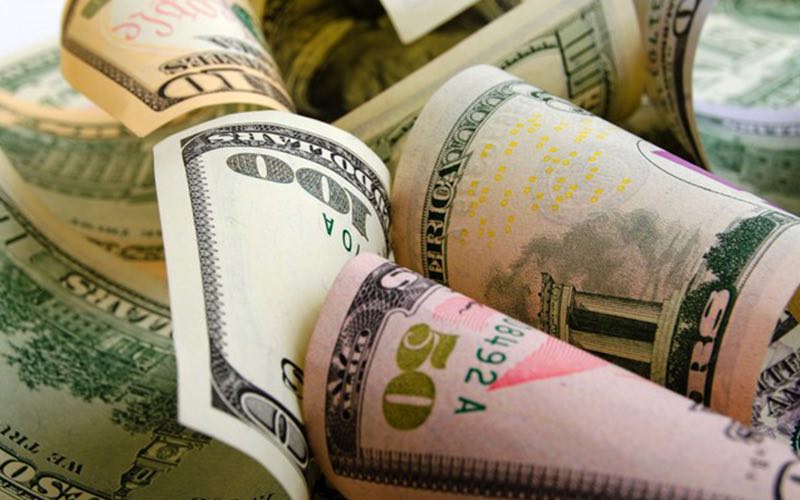
The Iraq War began to impact American businesses and consumers, and was seen as a form of taxation.
2026-04-06 10:30:33
Currently, the US economy is being swept by a sudden energy storm.
Small business owners are finding it incredibly difficult to stay afloat, while large companies can easily pass the burden onto consumers through surcharges. The co-founder of a moving company comprised mainly of college students has personally experienced the harshness of this crisis.
Nick Friedman, co-founder of College Hunks Hauling Junk and Moving, a Tampa, Florida-based company, bluntly stated that his business is facing multiple headwinds.
High mortgage rates severely dampened real estate market transactions, while soaring insurance costs significantly eroded daily operating costs. To make matters worse, the outbreak of the Iraq War led to a sharp rise in diesel fuel prices, directly squeezing profit margins. Despite these pressures, Friedman stated that he could not arbitrarily raise service prices.

Friedman stated, "We're in a dilemma right now; we're worried that if we start raising prices, it will hurt our customers." He further explained that larger companies might be able to cope with rising costs by increasing various fees, and some businesses have indeed done so as fuel prices rapidly impact the entire U.S. economy.
Friedman added that the decision to raise prices was far from easy for his moving company. Customers could easily switch to cheaper moving services with potentially less protection, or even ask friends to help with the move in pickup trucks, leaving a significant amount of the company's 2,000-truck fleet idle. However, filling those trucks with diesel is also a hefty expense.
According to Friedman, fuel costs historically accounted for only 3% to 5% of the company's revenue, but since the outbreak of the Iraq War, this percentage has more than doubled to 6% to 10%. He emphasized, "From a business perspective, this is very difficult."
The company uses a franchise model with over 200 franchise locations nationwide, leaving many franchisees in a precarious situation.
In stark contrast to small businesses, some large corporations have already begun taking action. Last week, United Airlines and JetBlue both raised their baggage fees, while Amazon announced a 3.5% fuel surcharge for sellers.
In its statement, Amazon noted that the surcharge was "significantly lower than what other major carriers charge." JetBlue stated that as operating costs continue to rise, the company regularly assesses how to manage these costs while maintaining competitive base fares and continues to invest in the experiences that customers value.
Friedman remarked, "If you have to fly, you have to fly." But for moving companies, customers have many more alternatives, making price increases particularly sensitive.
Daken Vanderburg, chief investment officer at MassMutual Wealth, points out that discretionary spending is often the starting point for economic cycle fluctuations, with consumers initially reducing non-essential consumption. He states that higher energy prices are equivalent to a tax on consumers, as their impact quickly spreads to numerous goods and services.
Van der Berger added that if the Iraq War and its disruptions are short-lived, consumers may draw on their savings to cover higher costs. However, if the conflict drags on, consumers will begin to cut back on spending significantly.
He said, "This will quickly slow economic growth and hit consumption." He emphasized that President Trump's speech to the nation earlier last week had initially raised hopes that the war would end, but his final statement left the timeline unclear, causing market sentiment to become uneasy.
Unlike previous major recessions or economic shocks such as the COVID-19 pandemic, the government has significantly fewer policy tools available to cushion the burden on businesses and consumers this time. Van der Berg stated, "Policies are unlikely to save everyone like they did during the COVID era."
Federal Reserve Chairman Jerome Powell made it clear last week that there was no reason to consider raising interest rates. He pointed out that short-term oil price shocks are often overlooked by central banks when analyzing inflation, while long-term inflation expectations remain stable. The market had previously bet that the Fed might raise rates due to soaring oil prices, but this expectation has not materialized.
Herman Nieuwoudt, president of IFS Energy & Resources, warned that this is not a single price shock, but rather "the result of the largest energy supply disruption in modern history, combined with structural volatility over the past six years." These disruptions will cascade through manufacturing, packaging, agriculture, transportation, and retail, often taking several months to fully manifest.
Nivot stated, "This is evolving into a continuous, compound cost pressure on every industry that involves fuel, in fact, all industries." Companies that can anticipate disruptions, adjust operations in real time, and quickly allocate resources will weather the storm more easily than those still operating on quarterly plans. However, he also cautioned that companies relying solely on surcharges without improving their operational efficiency may only have two to three quarters left to survive.
For ordinary consumers, the immediate pain of rising oil prices is just the beginning. Higher costs will gradually be reflected in airfares, groceries, logistics expenses, and various manufactured goods.
Economists have observed that the existing "K-shaped economy" pattern is about to be superimposed with new differentiation phenomena: essential services such as aviation and auto repair, as well as giants such as JetBlue and Amazon, have more room to raise prices; while small businesses and discretionary services are caught in a dilemma, raising prices may lead to the loss of customers, while maintaining low prices will sacrifice profit margins.
Delta Air Lines CEO Ed Bastian previously pointed out that even against the backdrop of war, the company's revenue and bookings were still up 25% year-over-year, thus leaving room to raise fares to cope with rising oil prices. United Airlines CEO Scott Kirby also stated in early March that higher ticket prices were likely imminent.
Federico Bandi, professor of economics and finance at Johns Hopkins University's Carey School of Business, believes that "American consumers are resilient, and the current situation is no exception." However, he also observes that consumption is rapidly shifting from discretionary spending to necessities, and within necessities, from branded products to unbranded products.
Professor Bandi further analyzed: "If companies attempt to pass on the unusually high energy costs to consumers, this long-term balance will be unsustainable. The duration of the current shock, and companies' willingness to readjust prices when costs return to normal, will directly affect consumer confidence and their future decisions."
Fernando Lozano, an economics professor at Pomona College, pointed out that policy changes such as import tariffs, government shutdowns, and rising healthcare costs have exacerbated economic vulnerability, leading to "very short-lived consumer patience" and extremely low tolerance for new charges.
“We are witnessing the end of an era where fast and free delivery was the default expectation,” said Josh Steinitz, chief strategy officer at shipping and fulfillment software company Auctane. “The current disruptions are forcing the industry to reset, and the new model will be based on choice and value.” He believes the current crisis is prompting businesses and consumers to rethink the true cost and value of getting products delivered to their doorsteps.
The U.S. Postal Service has mandated an 8% surcharge on parcels and couriers. Steinitz described the fuel surcharge as a “fluctuation tax” for the shipping industry. He explained, “It’s how carriers manage unpredictable oil prices, but for small businesses, it feels like a new, unavoidable cost appearing on every shipment they send.” When small business owners see this charge on their invoices, it feels more like a direct, uncontrollable financial shock than a buffer.
Nick Friedman recalls the company's early days in the Great Recession. They started with just an old truck and a few friends, and the circumstances forced the team to be resourceful and resilient. He says the company must rely on that resilience again today, but with 2,000 trucks needing fuel and less room for profit adjustments, the situation is very different.
Friedman concluded, "It's squeezing everyone."
This energy price storm triggered by the Iraq War is not only testing the survival wisdom of businesses, but also quietly reshaping the consumption pattern and competitive landscape of the entire US economy.
Small business owners are finding it incredibly difficult to stay afloat, while large companies can easily pass the burden onto consumers through surcharges. The co-founder of a moving company comprised mainly of college students has personally experienced the harshness of this crisis.
Small moving companies face multiple pressures
Nick Friedman, co-founder of College Hunks Hauling Junk and Moving, a Tampa, Florida-based company, bluntly stated that his business is facing multiple headwinds.
High mortgage rates severely dampened real estate market transactions, while soaring insurance costs significantly eroded daily operating costs. To make matters worse, the outbreak of the Iraq War led to a sharp rise in diesel fuel prices, directly squeezing profit margins. Despite these pressures, Friedman stated that he could not arbitrarily raise service prices.
Friedman stated, "We're in a dilemma right now; we're worried that if we start raising prices, it will hurt our customers." He further explained that larger companies might be able to cope with rising costs by increasing various fees, and some businesses have indeed done so as fuel prices rapidly impact the entire U.S. economy.
Consumer choice makes it difficult for small businesses to survive.
Friedman added that the decision to raise prices was far from easy for his moving company. Customers could easily switch to cheaper moving services with potentially less protection, or even ask friends to help with the move in pickup trucks, leaving a significant amount of the company's 2,000-truck fleet idle. However, filling those trucks with diesel is also a hefty expense.
According to Friedman, fuel costs historically accounted for only 3% to 5% of the company's revenue, but since the outbreak of the Iraq War, this percentage has more than doubled to 6% to 10%. He emphasized, "From a business perspective, this is very difficult."
The company uses a franchise model with over 200 franchise locations nationwide, leaving many franchisees in a precarious situation.
Airlines and e-commerce giants are the first to pass on costs.
In stark contrast to small businesses, some large corporations have already begun taking action. Last week, United Airlines and JetBlue both raised their baggage fees, while Amazon announced a 3.5% fuel surcharge for sellers.
In its statement, Amazon noted that the surcharge was "significantly lower than what other major carriers charge." JetBlue stated that as operating costs continue to rise, the company regularly assesses how to manage these costs while maintaining competitive base fares and continues to invest in the experiences that customers value.
Friedman remarked, "If you have to fly, you have to fly." But for moving companies, customers have many more alternatives, making price increases particularly sensitive.
Rising energy prices are tantamount to a hidden tax on consumers.
Daken Vanderburg, chief investment officer at MassMutual Wealth, points out that discretionary spending is often the starting point for economic cycle fluctuations, with consumers initially reducing non-essential consumption. He states that higher energy prices are equivalent to a tax on consumers, as their impact quickly spreads to numerous goods and services.
Van der Berger added that if the Iraq War and its disruptions are short-lived, consumers may draw on their savings to cover higher costs. However, if the conflict drags on, consumers will begin to cut back on spending significantly.
He said, "This will quickly slow economic growth and hit consumption." He emphasized that President Trump's speech to the nation earlier last week had initially raised hopes that the war would end, but his final statement left the timeline unclear, causing market sentiment to become uneasy.
Unlike previous major recessions or economic shocks such as the COVID-19 pandemic, the government has significantly fewer policy tools available to cushion the burden on businesses and consumers this time. Van der Berg stated, "Policies are unlikely to save everyone like they did during the COVID era."
The Federal Reserve is caught in a policy dilemma.
Federal Reserve Chairman Jerome Powell made it clear last week that there was no reason to consider raising interest rates. He pointed out that short-term oil price shocks are often overlooked by central banks when analyzing inflation, while long-term inflation expectations remain stable. The market had previously bet that the Fed might raise rates due to soaring oil prices, but this expectation has not materialized.
A comprehensive price shock is quietly spreading.
Herman Nieuwoudt, president of IFS Energy & Resources, warned that this is not a single price shock, but rather "the result of the largest energy supply disruption in modern history, combined with structural volatility over the past six years." These disruptions will cascade through manufacturing, packaging, agriculture, transportation, and retail, often taking several months to fully manifest.
Nivot stated, "This is evolving into a continuous, compound cost pressure on every industry that involves fuel, in fact, all industries." Companies that can anticipate disruptions, adjust operations in real time, and quickly allocate resources will weather the storm more easily than those still operating on quarterly plans. However, he also cautioned that companies relying solely on surcharges without improving their operational efficiency may only have two to three quarters left to survive.
For ordinary consumers, the immediate pain of rising oil prices is just the beginning. Higher costs will gradually be reflected in airfares, groceries, logistics expenses, and various manufactured goods.
The K-shaped economy will experience a dual differentiation.
Economists have observed that the existing "K-shaped economy" pattern is about to be superimposed with new differentiation phenomena: essential services such as aviation and auto repair, as well as giants such as JetBlue and Amazon, have more room to raise prices; while small businesses and discretionary services are caught in a dilemma, raising prices may lead to the loss of customers, while maintaining low prices will sacrifice profit margins.
Delta Air Lines CEO Ed Bastian previously pointed out that even against the backdrop of war, the company's revenue and bookings were still up 25% year-over-year, thus leaving room to raise fares to cope with rising oil prices. United Airlines CEO Scott Kirby also stated in early March that higher ticket prices were likely imminent.
Federico Bandi, professor of economics and finance at Johns Hopkins University's Carey School of Business, believes that "American consumers are resilient, and the current situation is no exception." However, he also observes that consumption is rapidly shifting from discretionary spending to necessities, and within necessities, from branded products to unbranded products.
Professor Bandi further analyzed: "If companies attempt to pass on the unusually high energy costs to consumers, this long-term balance will be unsustainable. The duration of the current shock, and companies' willingness to readjust prices when costs return to normal, will directly affect consumer confidence and their future decisions."
Fernando Lozano, an economics professor at Pomona College, pointed out that policy changes such as import tariffs, government shutdowns, and rising healthcare costs have exacerbated economic vulnerability, leading to "very short-lived consumer patience" and extremely low tolerance for new charges.
The shipping industry is seeing the end of the "fast and free" era.
“We are witnessing the end of an era where fast and free delivery was the default expectation,” said Josh Steinitz, chief strategy officer at shipping and fulfillment software company Auctane. “The current disruptions are forcing the industry to reset, and the new model will be based on choice and value.” He believes the current crisis is prompting businesses and consumers to rethink the true cost and value of getting products delivered to their doorsteps.
The U.S. Postal Service has mandated an 8% surcharge on parcels and couriers. Steinitz described the fuel surcharge as a “fluctuation tax” for the shipping industry. He explained, “It’s how carriers manage unpredictable oil prices, but for small businesses, it feels like a new, unavoidable cost appearing on every shipment they send.” When small business owners see this charge on their invoices, it feels more like a direct, uncontrollable financial shock than a buffer.
Crisis forces companies to rediscover their original entrepreneurial spirit
Nick Friedman recalls the company's early days in the Great Recession. They started with just an old truck and a few friends, and the circumstances forced the team to be resourceful and resilient. He says the company must rely on that resilience again today, but with 2,000 trucks needing fuel and less room for profit adjustments, the situation is very different.
Friedman concluded, "It's squeezing everyone."
This energy price storm triggered by the Iraq War is not only testing the survival wisdom of businesses, but also quietly reshaping the consumption pattern and competitive landscape of the entire US economy.
- Risk Warning and Disclaimer
- The market involves risk, and trading may not be suitable for all investors. This article is for reference only and does not constitute personal investment advice, nor does it take into account certain users’ specific investment objectives, financial situation, or other needs. Any investment decisions made based on this information are at your own risk.