Risk sentiment improved, and the pound sterling quickly breached the dollar's defenses!
2026-04-06 17:49:13
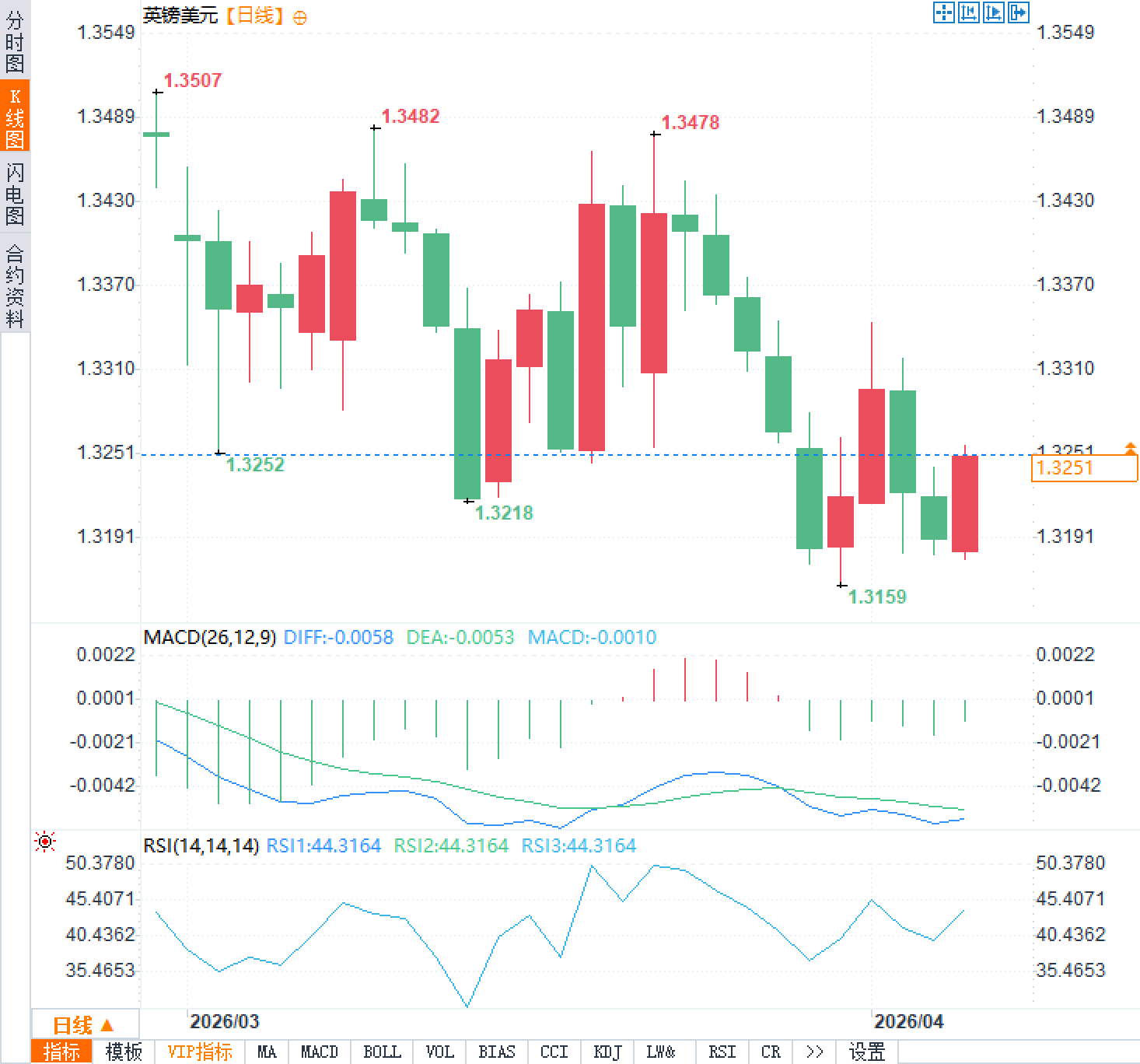
On Monday, April 6, the British pound rebounded against the US dollar during the European trading session, reaching around 1.3255, a daily increase of 0.45%. This movement occurred amid a significant improvement in market risk appetite. Iran confirmed receiving the US ceasefire proposal but remained cautious about exchanging a temporary ceasefire for the opening of the Strait of Hormuz, directly weakening the safe-haven appeal of the US dollar. The US dollar index fell 0.35% to around 99.85 during the same period, having risen slightly during the Asian session but subsequently coming under pressure, reflecting the rapid transmission of geopolitical signals to capital flows.
Market sentiment shifted in favor of risk assets, leading to a significant decline in demand for the US dollar as a traditional safe-haven currency. Traders noted that news of Iran reviewing the ceasefire framework signaled a short-term easing, prompting funds to shift from defensive positions to higher-yielding currencies. As a typical risk-sensitive asset, the pound sterling quickly attracted buying in this environment, rising 0.45% from its intraday low. This rebound was not an isolated event but rather echoed the synchronized recovery of global risk assets, reflecting the foreign exchange market's immediate pricing mechanism for easing uncertainty. Compared to the cautious wait-and-see approach during the Asian session, buying surged after the European open, increasing trading activity and indicating accelerated institutional position adjustments. The pound sterling's intraday high against the dollar approached its recent resistance level, highlighting the amplifying effect of rising risk appetite on exchange rate volatility.
Iran confirmed receiving the US proposal but refused to exchange a temporary ceasefire for the opening of the Strait of Hormuz. While this statement did not completely eliminate uncertainty, it was enough to alleviate market concerns about an immediate escalation. As a crucial global energy transport route, the potential opening of the Strait of Hormuz directly impacts commodity pricing expectations, thereby boosting risk appetite. The US dollar index consequently lost some safe-haven support, weakening from its relative strength during the Asian session. The market remains highly sensitive to the progress of subsequent negotiations. If further confirmation of easing tensions is achieved, the dollar's safe-haven premium may continue to compress; conversely, if Iran's stance hardens, the dollar may regain support.
The Bank of England's current benchmark interest rate remains at 3.75%, with the market pricing in concerns about a moderate slowdown in economic growth, while inflation fluctuates around 3.0%. The Federal Reserve's federal funds rate ranges from 3.5% to 3.75%, with inflationary pressures also present but exhibiting a sticky characteristic. The interest rate gap between the two is relatively stable and has not yet shown significant divergence, but traders need to pay attention to the interaction between UK economic growth expectations and energy price fluctuations. The pound's fundamentals remain driven by domestic data, while the dollar reflects more of a combination of global risk aversion and policy expectations. Recent UK GDP growth forecasts remain around 1.1%, indicating economic resilience but limited growth, providing structural support for the pound but also limiting its upward momentum. The comparison of policy rates shows that both sides face the dual constraints of inflation and growth, making it difficult to establish a clear unilateral direction for the exchange rate in the short term.
The data in the table shows that the divergence in monetary policies is not yet significant, but with the combination of geopolitical factors, the relative performance of the pound is more easily driven by risk sentiment.
The pound strengthened against the dollar as risk appetite rebounded.
Market sentiment shifted in favor of risk assets, leading to a significant decline in demand for the US dollar as a traditional safe-haven currency. Traders noted that news of Iran reviewing the ceasefire framework signaled a short-term easing, prompting funds to shift from defensive positions to higher-yielding currencies. As a typical risk-sensitive asset, the pound sterling quickly attracted buying in this environment, rising 0.45% from its intraday low. This rebound was not an isolated event but rather echoed the synchronized recovery of global risk assets, reflecting the foreign exchange market's immediate pricing mechanism for easing uncertainty. Compared to the cautious wait-and-see approach during the Asian session, buying surged after the European open, increasing trading activity and indicating accelerated institutional position adjustments. The pound sterling's intraday high against the dollar approached its recent resistance level, highlighting the amplifying effect of rising risk appetite on exchange rate volatility.
Geopolitical dynamics weaken the dollar's safe-haven status
Iran confirmed receiving the US proposal but refused to exchange a temporary ceasefire for the opening of the Strait of Hormuz. While this statement did not completely eliminate uncertainty, it was enough to alleviate market concerns about an immediate escalation. As a crucial global energy transport route, the potential opening of the Strait of Hormuz directly impacts commodity pricing expectations, thereby boosting risk appetite. The US dollar index consequently lost some safe-haven support, weakening from its relative strength during the Asian session. The market remains highly sensitive to the progress of subsequent negotiations. If further confirmation of easing tensions is achieved, the dollar's safe-haven premium may continue to compress; conversely, if Iran's stance hardens, the dollar may regain support.
Divergence between UK and US monetary policy paths and fundamentals
The Bank of England's current benchmark interest rate remains at 3.75%, with the market pricing in concerns about a moderate slowdown in economic growth, while inflation fluctuates around 3.0%. The Federal Reserve's federal funds rate ranges from 3.5% to 3.75%, with inflationary pressures also present but exhibiting a sticky characteristic. The interest rate gap between the two is relatively stable and has not yet shown significant divergence, but traders need to pay attention to the interaction between UK economic growth expectations and energy price fluctuations. The pound's fundamentals remain driven by domestic data, while the dollar reflects more of a combination of global risk aversion and policy expectations. Recent UK GDP growth forecasts remain around 1.1%, indicating economic resilience but limited growth, providing structural support for the pound but also limiting its upward momentum. The comparison of policy rates shows that both sides face the dual constraints of inflation and growth, making it difficult to establish a clear unilateral direction for the exchange rate in the short term.
| project | Bank of England | Fed |
|---|---|---|
| Benchmark interest rate | 3.75% | 3.5%-3.75% |
| Inflation level | Approximately 3.0% | Approximately 3% |
| Growth expectations | Approximately 1.1% | Mild slowdown |
Frequently Asked Questions
Question 1: Why did Iran's review of the US ceasefire proposal directly drive the rebound of the pound against the dollar?
A: While Iran's statement was cautious, its confirmation of receiving the proposal itself eased market panic about an immediate deterioration in the Middle East, prompting a rapid recovery in risk appetite. Demand for the US dollar as a safe haven subsequently decreased, with funds flowing into higher-yielding currencies such as the British pound, causing the exchange rate to rise rapidly by 0.45% during the European session. This mechanism demonstrates the strong transmission of geopolitical signals to short-term capital flows; traders can pay attention to subsequent negotiation details to assess their sustainability.
Question 2: What is the logical connection between the 0.35% drop in the US dollar index and the improvement in risk sentiment?
A: The decline in the US dollar index, which reflects the dollar's weighted performance against a basket of currencies, stems directly from the unwinding of safe-haven positions. Increased risk appetite reduced defensive demand, thus benefiting the pound against the dollar. Currently, the index is hovering around 99.85, below its Asian session high, reflecting that the market has partially priced in expectations of easing tensions. However, if Iran hardens its stance, the index may rebound. The core issue lies in the zero-sum game between safe-haven assets and risk assets.
- Risk Warning and Disclaimer
- The market involves risk, and trading may not be suitable for all investors. This article is for reference only and does not constitute personal investment advice, nor does it take into account certain users’ specific investment objectives, financial situation, or other needs. Any investment decisions made based on this information are at your own risk.