Iran proposes a 10-point plan! Each ship must pay a 2 million rupee toll; oil prices briefly hit a one-month high.
2026-04-07 11:17:51
Iran delivered a ten-point peace proposal to the US and Israel through Pakistan on Monday (April 6), aiming to end the current conflict. The proposal came just before Trump's deadline for launching a new round of strikes against Iran on Tuesday evening, but the core differences between the two sides remain difficult to bridge.
Iranian state media stated that the proposal "rejected a ceasefire," emphasizing "the necessity of a permanent end to the war based on Iran's demands," and indicating that Iran has demonstrated its superiority in the war, especially after blocking the Strait of Hormuz and shooting down a US F-15E fighter jet, which significantly boosted the confidence of Iranian leaders.
On Tuesday in Asian trading, US crude oil prices fluctuated upwards, currently trading around $115.20 per barrel, up about 2.5% on the day, after previously touching a near one-month high of $115.50.
In exchange, Iran promised to lift its de facto blockade of the Strait of Hormuz and collect a toll of approximately $2 million from each vessel passing through. This fee would be split 50/50 with Oman on the other side of the strait.
Iran stated that all proceeds will be used to rebuild infrastructure destroyed by US and Israeli attacks, rather than directly demanding war reparations. This mechanism is seen as an important arrangement for Iran to obtain reconstruction funds while maintaining control of the Straits.
A senior Iranian official revealed that the ten-point plan mainly includes the following core demands:
Guarantee that Iran will not suffer any further attacks;
End Israel's military strikes against Hezbollah in Lebanon;
Completely lift sanctions against Iran;
Establish an agreement on safe passage through the Strait of Hormuz.
Previously, the United States had submitted a 15-point ceasefire proposal through Pakistan on March 24, but it was rejected by Iran. Iran subsequently submitted a counter-proposal, some of the points of which were reiterated in this 10-point proposal.
The Trump administration has not yet issued a formal response to Iran's latest ten-point proposal. Previously, Trump repeatedly stated that the United States could end the war without a formal agreement and complete its military objectives within two to three weeks, while insisting that any ceasefire must include the unconditional reopening of the Strait of Hormuz.
Israel's continued strikes against Iranian targets demonstrate that significant differences remain between the two sides on key security issues .
The current conflict has lasted for over a month, with the de facto blockade of the Strait of Hormuz causing a severe disruption to global oil supplies and keeping oil prices volatile at high levels. Iranian state media emphasizes that the proposed solution reflects Iran's "advantageous position" in the war, while the United States insists on using military pressure to force Iran to make concessions.
Pakistan, as the main mediator, continues to relay messages between the two sides, but core differences—including the lifting of sanctions, control of the Straits, and regional proxy conflicts—remain difficult to resolve in the short term .
Iran's latest ten-point peace roadmap, with the lifting of the blockade of the Strait of Hormuz as a key condition, proposes a $2 million toll for each vessel passing through, to be split 50/50 with Oman. It also demands the complete lifting of sanctions, a cessation of attacks on Iran, and an end to Israel's attacks on Hezbollah. This proposal was put forward before Trump's deadline, but fundamental differences between the two sides on security guarantees and sanctions remain prominent. Future progress in negotiations may directly impact the stability of global energy supplies and the trajectory of regional conflicts .
Q: What potential impact will Iran's ten-point plan have on the global energy market?
A: If the proposal is accepted and the Straits blockade is lifted, 20% of global oil transportation is expected to resume, and oil prices may see a significant drop. However, the toll mechanism will substantially increase shipping costs, potentially pushing up global energy prices. At the same time, whether or not sanctions are lifted will directly affect Iran's oil export capacity, thereby influencing market supply expectations.
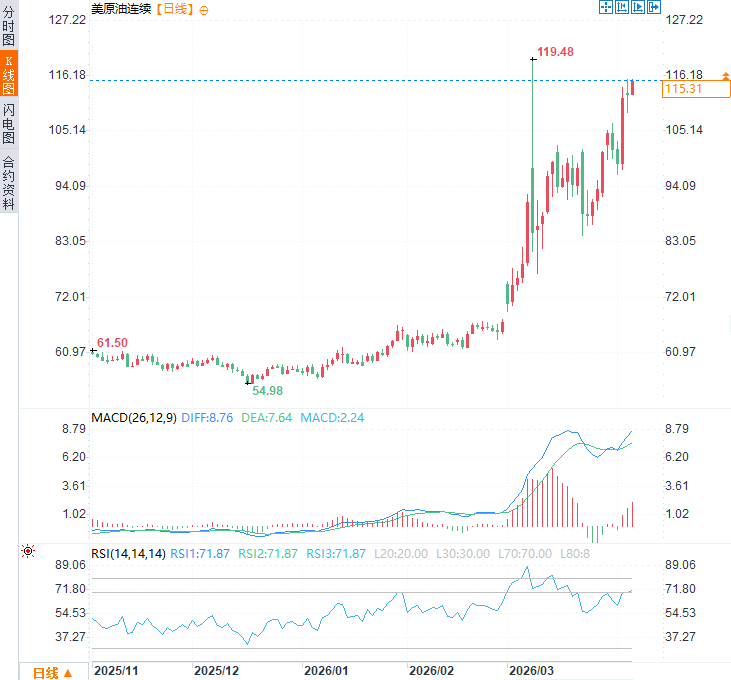
(US crude oil daily chart, source: FX678)
Q: What are the main obstacles currently facing the negotiations?
A: The core differences lie in security guarantees, the lifting of sanctions, and regional proxy conflicts (especially Israel's attacks on Hezbollah). Iran "rejects a ceasefire" and emphasizes the necessity of a permanent end to the war, while the United States insists on military pressure and a rapid conclusion. The significant differences in their positions make it difficult to reach a consensus in the short term.
At 11:17 Beijing time, US crude oil futures were trading at $115.20 per barrel.
Iranian state media stated that the proposal "rejected a ceasefire," emphasizing "the necessity of a permanent end to the war based on Iran's demands," and indicating that Iran has demonstrated its superiority in the war, especially after blocking the Strait of Hormuz and shooting down a US F-15E fighter jet, which significantly boosted the confidence of Iranian leaders.
On Tuesday in Asian trading, US crude oil prices fluctuated upwards, currently trading around $115.20 per barrel, up about 2.5% on the day, after previously touching a near one-month high of $115.50.
Strait of Hormuz passage fee mechanism
In exchange, Iran promised to lift its de facto blockade of the Strait of Hormuz and collect a toll of approximately $2 million from each vessel passing through. This fee would be split 50/50 with Oman on the other side of the strait.
Iran stated that all proceeds will be used to rebuild infrastructure destroyed by US and Israeli attacks, rather than directly demanding war reparations. This mechanism is seen as an important arrangement for Iran to obtain reconstruction funds while maintaining control of the Straits.
Iran's main demands
A senior Iranian official revealed that the ten-point plan mainly includes the following core demands:
Guarantee that Iran will not suffer any further attacks;
End Israel's military strikes against Hezbollah in Lebanon;
Completely lift sanctions against Iran;
Establish an agreement on safe passage through the Strait of Hormuz.
Previously, the United States had submitted a 15-point ceasefire proposal through Pakistan on March 24, but it was rejected by Iran. Iran subsequently submitted a counter-proposal, some of the points of which were reiterated in this 10-point proposal.
The position of the United States and Israel
The Trump administration has not yet issued a formal response to Iran's latest ten-point proposal. Previously, Trump repeatedly stated that the United States could end the war without a formal agreement and complete its military objectives within two to three weeks, while insisting that any ceasefire must include the unconditional reopening of the Strait of Hormuz.
Israel's continued strikes against Iranian targets demonstrate that significant differences remain between the two sides on key security issues .
Negotiation Background and Disagreements
The current conflict has lasted for over a month, with the de facto blockade of the Strait of Hormuz causing a severe disruption to global oil supplies and keeping oil prices volatile at high levels. Iranian state media emphasizes that the proposed solution reflects Iran's "advantageous position" in the war, while the United States insists on using military pressure to force Iran to make concessions.
Pakistan, as the main mediator, continues to relay messages between the two sides, but core differences—including the lifting of sanctions, control of the Straits, and regional proxy conflicts—remain difficult to resolve in the short term .
Editor's Summary
Iran's latest ten-point peace roadmap, with the lifting of the blockade of the Strait of Hormuz as a key condition, proposes a $2 million toll for each vessel passing through, to be split 50/50 with Oman. It also demands the complete lifting of sanctions, a cessation of attacks on Iran, and an end to Israel's attacks on Hezbollah. This proposal was put forward before Trump's deadline, but fundamental differences between the two sides on security guarantees and sanctions remain prominent. Future progress in negotiations may directly impact the stability of global energy supplies and the trajectory of regional conflicts .
Frequently Asked Questions
Q: What potential impact will Iran's ten-point plan have on the global energy market?
A: If the proposal is accepted and the Straits blockade is lifted, 20% of global oil transportation is expected to resume, and oil prices may see a significant drop. However, the toll mechanism will substantially increase shipping costs, potentially pushing up global energy prices. At the same time, whether or not sanctions are lifted will directly affect Iran's oil export capacity, thereby influencing market supply expectations.
(US crude oil daily chart, source: FX678)
Q: What are the main obstacles currently facing the negotiations?
A: The core differences lie in security guarantees, the lifting of sanctions, and regional proxy conflicts (especially Israel's attacks on Hezbollah). Iran "rejects a ceasefire" and emphasizes the necessity of a permanent end to the war, while the United States insists on military pressure and a rapid conclusion. The significant differences in their positions make it difficult to reach a consensus in the short term.
At 11:17 Beijing time, US crude oil futures were trading at $115.20 per barrel.
- Risk Warning and Disclaimer
- The market involves risk, and trading may not be suitable for all investors. This article is for reference only and does not constitute personal investment advice, nor does it take into account certain users’ specific investment objectives, financial situation, or other needs. Any investment decisions made based on this information are at your own risk.