Trump may be gambling on seizing Abu Musa Island to control the Strait of Hormuz and escape the energy crisis.
2026-04-07 13:17:05
US President Trump has always prided himself on his negotiating prowess and securing favorable deals, but his latest move on Iran looks more like a desperate gamble, a gamble he's made in his favor, even though he initially believed the dice were in his favor. Just as his friend, Russian President Putin, believed the "special military operation" in Ukraine could be completed smoothly within seven days, Trump seems to think his military action against Iran can be largely accomplished in a similarly short time. Unlike Putin, Trump has reason to be optimistic: the perfect combination of US intelligence and military power, which helped Bashar al-Assad in Syria and Nicolás Maduro in Venezuela step down quietly, he believes the same conditions apply to Iran.
A senior source working closely with the EU's energy security agency revealed last week: "Trump has not fully grasped that the Iranian Islamic regime has far broader and deeper roots than Venezuela and Syria." The source emphasized: "But given the current situation, he still has an exit strategy."
This exit strategy is closely linked to the four objectives for action against Iran that Trump clearly outlined at the outset of the conflict. His objectives, in order, were: first, to prevent Iran from developing nuclear weapons; second, to weaken and destroy its ballistic missile stockpile and production capabilities; third, to promote regime change; and fourth, to cut off Iranian funding and arming of its proxy forces. These objectives all received unanimous support from cabinet members.
The aforementioned EU source stated, "Trump can currently say that the US and Israeli strikes have, for the foreseeable future, weakened Iran's ability to manufacture nuclear weapons, destroyed a large stockpile of ballistic missiles, significantly delayed its production capacity, achieved some regime change, and substantially reduced the threat posed by Iranian regional proxies." However, he added, "There are many constraints, and Trump himself is aware that many will consider any declaration of mission completion hollow and weak, and may even be seen as a de facto failure."
Regarding the first objective, US intelligence reports as of April 5, 2026, only confirmed the destruction of approximately one-third of Iran's missile stockpile, while about two-thirds of Iran's missile, drone, and naval production facilities and shipyards had been damaged or destroyed. Regarding nuclear facilities, the US Department of Defense stated that the Fordow fuel enrichment plant had been "completely paralyzed," the Natanz above-ground fuel enrichment facility had been "completely destroyed," and its underground laboratory had suffered "very serious damage." The Isfahan nuclear technology center, a crucial hub for converting uranium into the enrichment gases needed for enrichment, was also severely damaged. However, the approximately 400 to 440 kilograms of 60% enriched uranium that the International Atomic Energy Agency (IAEA) lost tracking last year has still not been found, and the agency acknowledges that the full scope of Iran's current activities, particularly the situation at its clandestine sites, remains unknown.
Trump could also claim regime change, but in reality, this is limited to removing virtually the entire top leadership in Iran, including Supreme Leader Ali Khamenei, Commander-in-Chief of the Islamic Revolutionary Guard Corps Mohammad Pakpour, and Secretary of the Supreme National Security Council Ali Larijani. The core structure of the Iranian Islamic regime remains intact. He could also argue that he has removed key figures from Iran's major proxy forces and severely weakened their operational capabilities.
What worries Trump even more is not only the significant unfulfilled aspects of his four main objectives, but also the fact that Iran is now playing several high-value cards that have not been effectively utilized before. One of these cards directly challenges the core of Trump's strategy to rebuild American dominance in the Middle East.
"Trump originally intended to achieve this by expanding the Abraham Accords (a U.S.-brokered agreement between Israel and Arab states), backed by U.S. economic and military security guarantees," a senior Washington legal source who works closely with the U.S. Treasury Department said last week. "But this plan cannot be implemented as long as the current Iranian regime remains in power and missile and drone attacks continue to target these countries."
Another significant difference lies in the persistently high global energy prices, with Iran still firmly holding the power to further drive up oil prices. Regardless of whether Trump plans a third term, sources confirm he is extremely concerned about his presidential legacy. If gasoline prices remain high ahead of the crucial November midterm elections, it will almost certainly be an electoral disaster for Trump and the Republican Party.
A Washington source noted, "Trump is absolutely unwilling to spend the next two years as a lame-duck president doing nothing and have the failure of the Iran operation become his most memorable achievement, like Jimmy Carter did. Therefore, if there's one more thing he can do before declaring victory and withdrawing, I'm sure he'll try to address the energy price issue."
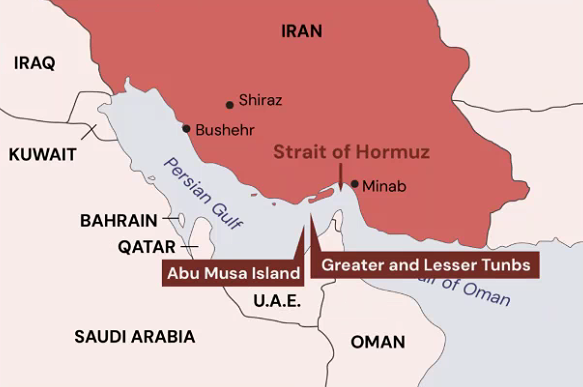
A strategy that has been thoroughly analyzed and assessed favorably by sources in Washington and the EU is becoming a possible “clean exit” option for Trump, with the core of which is Abu Musa Island, which is only 4.9 square miles in size.
The island is located 40 miles east of Sharjah, United Arab Emirates, and 42 miles south of Bandar Langag, a port city on the Iranian mainland. Its importance lies not in its size, but in its strategic location: Abu Musa Island lies precisely behind the Strait of Hormuz, through which approximately one-third of the world's crude oil and one-fifth of its liquefied natural gas pass.
Until Britain withdrew from the Gulf region in 1971, Abu Musa Island was under British administration. Although the United Arab Emirates subsequently claimed sovereignty over it, it was effectively controlled by Iran. This legal ambiguity was seen as an opportunity rather than an obstacle by Washington planners. More attractively, the island possessed a runway long enough to accommodate multiple types of American bombers and fighter jets, militarily equivalent to an "unsinkable" forward operating base.
According to a plan circulating among senior U.S. planners, the U.S. Marine Corps could seize Abu Musa Island during current theater operations. Once in control, the island could be rapidly transformed into a transit point for U.S. air and naval operations behind the Strait of Hormuz. Combined with nearby Greater and Lesser Tunbu Islands, this would create an island chain capable of effectively monitoring, deterring, or eliminating Iranian threats to oil tanker traffic, including missile sites, drone launch sites, fast attack craft, and mine-laying operations.
Trump could describe this action as restoring territory claimed by the United Arab Emirates, rather than invading Iran, thus avoiding accusations of "deploying ground troops in hostile territory."
For Trump, controlling Abu Musa Island would allow him to claim that the United States has regained control of the world's most important energy chokepoint, breaking Iran's ability to weaponize oil prices and achieving a strategic victory that previous administrations never accomplished. It would also provide him with political cover to declare the mission accomplished and withdraw U.S. troops before the conflict drags into the midterm election cycle.
Overall , while Trump's military action in Iran has yielded some results, it falls far short of the initial comprehensive objectives, and Iran still holds significant leverage in countermeasures. If the Abu Musa Island strategy is implemented, it could be a crucial step for Trump to gracefully withdraw and reverse the passive situation regarding energy prices. This development not only relates to the trajectory of the Middle East but will also profoundly impact the stability of the global energy market and the domestic political landscape in the United States, warranting continued close monitoring.
A senior source working closely with the EU's energy security agency revealed last week: "Trump has not fully grasped that the Iranian Islamic regime has far broader and deeper roots than Venezuela and Syria." The source emphasized: "But given the current situation, he still has an exit strategy."
Trump's four goals: Some achieved but significant gaps remain.
This exit strategy is closely linked to the four objectives for action against Iran that Trump clearly outlined at the outset of the conflict. His objectives, in order, were: first, to prevent Iran from developing nuclear weapons; second, to weaken and destroy its ballistic missile stockpile and production capabilities; third, to promote regime change; and fourth, to cut off Iranian funding and arming of its proxy forces. These objectives all received unanimous support from cabinet members.
The aforementioned EU source stated, "Trump can currently say that the US and Israeli strikes have, for the foreseeable future, weakened Iran's ability to manufacture nuclear weapons, destroyed a large stockpile of ballistic missiles, significantly delayed its production capacity, achieved some regime change, and substantially reduced the threat posed by Iranian regional proxies." However, he added, "There are many constraints, and Trump himself is aware that many will consider any declaration of mission completion hollow and weak, and may even be seen as a de facto failure."
Regarding the first objective, US intelligence reports as of April 5, 2026, only confirmed the destruction of approximately one-third of Iran's missile stockpile, while about two-thirds of Iran's missile, drone, and naval production facilities and shipyards had been damaged or destroyed. Regarding nuclear facilities, the US Department of Defense stated that the Fordow fuel enrichment plant had been "completely paralyzed," the Natanz above-ground fuel enrichment facility had been "completely destroyed," and its underground laboratory had suffered "very serious damage." The Isfahan nuclear technology center, a crucial hub for converting uranium into the enrichment gases needed for enrichment, was also severely damaged. However, the approximately 400 to 440 kilograms of 60% enriched uranium that the International Atomic Energy Agency (IAEA) lost tracking last year has still not been found, and the agency acknowledges that the full scope of Iran's current activities, particularly the situation at its clandestine sites, remains unknown.
Trump could also claim regime change, but in reality, this is limited to removing virtually the entire top leadership in Iran, including Supreme Leader Ali Khamenei, Commander-in-Chief of the Islamic Revolutionary Guard Corps Mohammad Pakpour, and Secretary of the Supreme National Security Council Ali Larijani. The core structure of the Iranian Islamic regime remains intact. He could also argue that he has removed key figures from Iran's major proxy forces and severely weakened their operational capabilities.
Iran still holds valuable leverage as global energy prices remain high.
What worries Trump even more is not only the significant unfulfilled aspects of his four main objectives, but also the fact that Iran is now playing several high-value cards that have not been effectively utilized before. One of these cards directly challenges the core of Trump's strategy to rebuild American dominance in the Middle East.
"Trump originally intended to achieve this by expanding the Abraham Accords (a U.S.-brokered agreement between Israel and Arab states), backed by U.S. economic and military security guarantees," a senior Washington legal source who works closely with the U.S. Treasury Department said last week. "But this plan cannot be implemented as long as the current Iranian regime remains in power and missile and drone attacks continue to target these countries."
Another significant difference lies in the persistently high global energy prices, with Iran still firmly holding the power to further drive up oil prices. Regardless of whether Trump plans a third term, sources confirm he is extremely concerned about his presidential legacy. If gasoline prices remain high ahead of the crucial November midterm elections, it will almost certainly be an electoral disaster for Trump and the Republican Party.
A Washington source noted, "Trump is absolutely unwilling to spend the next two years as a lame-duck president doing nothing and have the failure of the Iran operation become his most memorable achievement, like Jimmy Carter did. Therefore, if there's one more thing he can do before declaring victory and withdrawing, I'm sure he'll try to address the energy price issue."
US military may seize Abu Musa Island to regain control of the Strait of Hormuz
A strategy that has been thoroughly analyzed and assessed favorably by sources in Washington and the EU is becoming a possible “clean exit” option for Trump, with the core of which is Abu Musa Island, which is only 4.9 square miles in size.
The island is located 40 miles east of Sharjah, United Arab Emirates, and 42 miles south of Bandar Langag, a port city on the Iranian mainland. Its importance lies not in its size, but in its strategic location: Abu Musa Island lies precisely behind the Strait of Hormuz, through which approximately one-third of the world's crude oil and one-fifth of its liquefied natural gas pass.
Until Britain withdrew from the Gulf region in 1971, Abu Musa Island was under British administration. Although the United Arab Emirates subsequently claimed sovereignty over it, it was effectively controlled by Iran. This legal ambiguity was seen as an opportunity rather than an obstacle by Washington planners. More attractively, the island possessed a runway long enough to accommodate multiple types of American bombers and fighter jets, militarily equivalent to an "unsinkable" forward operating base.
According to a plan circulating among senior U.S. planners, the U.S. Marine Corps could seize Abu Musa Island during current theater operations. Once in control, the island could be rapidly transformed into a transit point for U.S. air and naval operations behind the Strait of Hormuz. Combined with nearby Greater and Lesser Tunbu Islands, this would create an island chain capable of effectively monitoring, deterring, or eliminating Iranian threats to oil tanker traffic, including missile sites, drone launch sites, fast attack craft, and mine-laying operations.
Trump could describe this action as restoring territory claimed by the United Arab Emirates, rather than invading Iran, thus avoiding accusations of "deploying ground troops in hostile territory."
For Trump, controlling Abu Musa Island would allow him to claim that the United States has regained control of the world's most important energy chokepoint, breaking Iran's ability to weaponize oil prices and achieving a strategic victory that previous administrations never accomplished. It would also provide him with political cover to declare the mission accomplished and withdraw U.S. troops before the conflict drags into the midterm election cycle.
Overall , while Trump's military action in Iran has yielded some results, it falls far short of the initial comprehensive objectives, and Iran still holds significant leverage in countermeasures. If the Abu Musa Island strategy is implemented, it could be a crucial step for Trump to gracefully withdraw and reverse the passive situation regarding energy prices. This development not only relates to the trajectory of the Middle East but will also profoundly impact the stability of the global energy market and the domestic political landscape in the United States, warranting continued close monitoring.
- Risk Warning and Disclaimer
- The market involves risk, and trading may not be suitable for all investors. This article is for reference only and does not constitute personal investment advice, nor does it take into account certain users’ specific investment objectives, financial situation, or other needs. Any investment decisions made based on this information are at your own risk.