Crude oil trading alert: Has oil price peaked due to easing geopolitical tensions?
2026-04-08 09:22:03
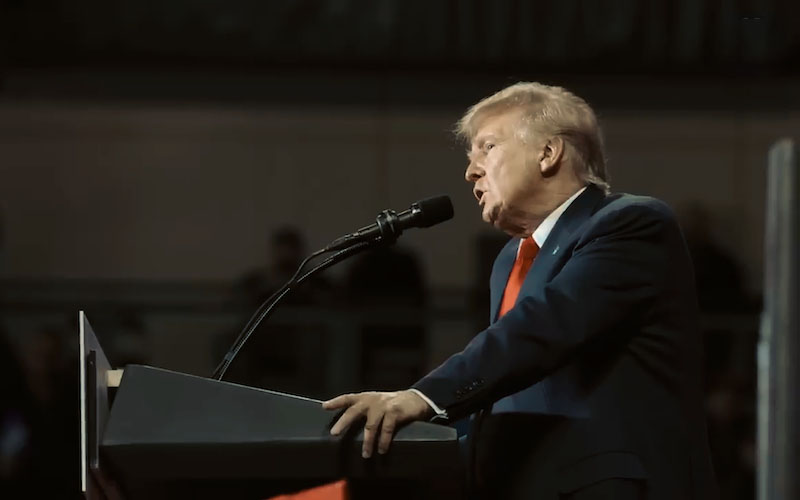
International crude oil markets experienced significant volatility during Asian trading hours on Wednesday, with WTI crude oil prices plunging from their intraday highs, quickly falling below the $100 mark from above $108 , marking the largest single-day drop since the start of the current conflict. The core trigger for this sharp price adjustment was US President Trump's announcement of a two-week suspension of military action against Iran, a decision that significantly eased previously heightened geopolitical risk sentiment in the market.

Some energy market analysts pointed out: "The market had already priced in the expectation of a suspension of operations, so when the news was released, oil prices fell more rapidly than they experienced a one-sided shock."
In fact, oil prices had already been declining throughout the day before the official announcement. Market participants gradually reached a consensus that the policy stance might again involve an "extension of the deadline." In previous similar events, strong statements were often accompanied by policy easing near the deadline, which led to funds positioning themselves in risky assets in advance, pushing energy prices back up their previous gains.
At the same time, risk appetite rebounded significantly, with US stock futures rising in tandem, including S&P 500 and Nasdaq futures, reflecting a marked decrease in market concerns about escalating conflict. This cross-asset correlation further amplified the downward pressure on the crude oil market.
From a supply and demand perspective, the core of this round of oil price increases lies in the supply-side shock. During periods of tension in the Middle East, shipping through the Strait of Hormuz was disrupted, significantly impacting the global energy market. The Strait of Hormuz handles approximately 20% of global seaborne crude oil transport , and its temporary restrictions are considered by the market as one of the most severe supply shocks in recent years. Some institutions estimate that by the end of April, the world may have lost nearly 1 billion barrels of crude oil and refined product supply .
Although prices have fallen significantly, WTI crude oil is still up about 55% compared to pre-conflict levels, indicating that the market still retains a certain risk premium. This is mainly due to two factors: first, the ceasefire is only a temporary arrangement, and significant differences remain between the two sides; second, infrastructure has been severely damaged, and even if a long-term agreement is reached, supply recovery will take time.
An energy agency analysis pointed out: "Even if the ceasefire proceeds smoothly, the recovery of production capacity may lag by several months, and the short-term supply gap will be difficult to fully fill."
From a market expectation perspective, the current forward price structure already reflects a certain degree of downward pressure. The market generally anticipates that if the ceasefire continues, the central oil price may gradually decline. However, at the same time, the market remains highly dependent on the actual recovery of shipping, not just policy signals. If shipping in the Strait of Hormuz cannot return to near-normal levels, oil prices will continue to be supported.
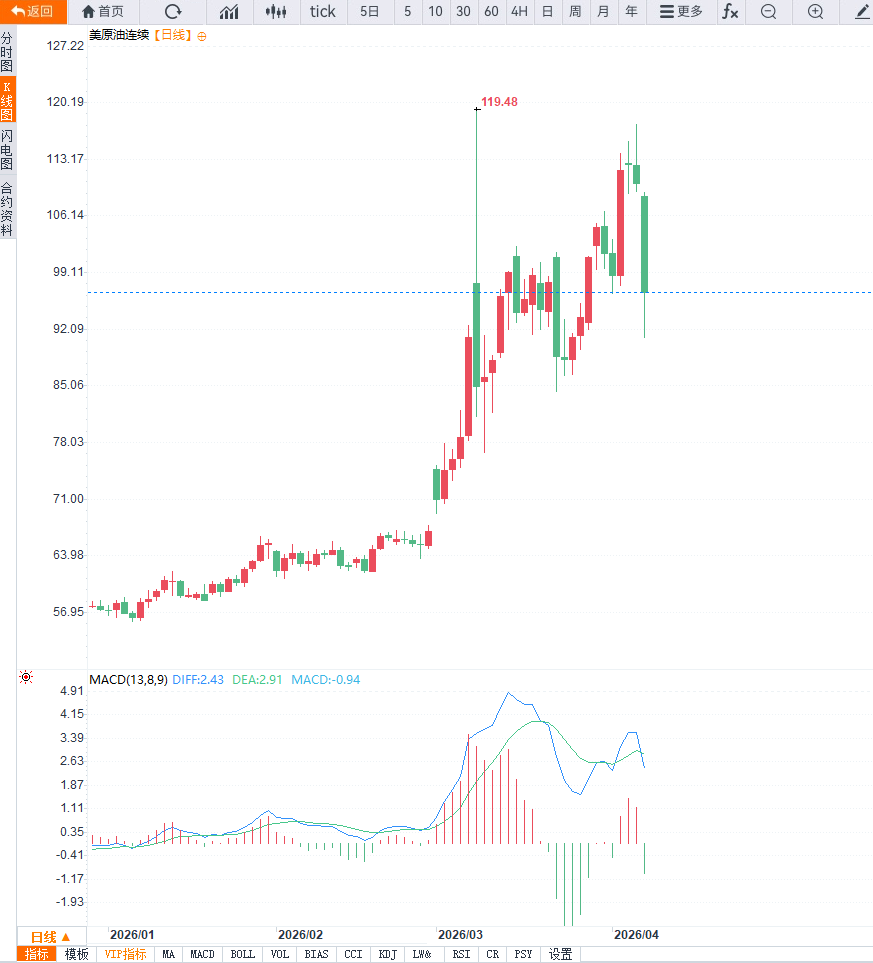
From a technical perspective, the daily chart shows that oil prices have entered a high-level consolidation phase after a rapid rise, and have now fallen back to near a key support area. The $90 level is a significant support level ; a decisive break below this level could trigger a trend-driven sell-off, further opening up downside potential. Resistance is concentrated around the $108 area , a level that has previously suppressed price rebounds multiple times. From a momentum perspective, upward momentum has clearly weakened, and the market has entered a rebalancing phase after the release of pent-up emotions. Observing the 4-hour chart, prices are showing a technical consolidation pattern after an accelerated decline in the short term. If the rebound fails to break through $108, the market will likely remain in a weak consolidation phase; once it regains a foothold above this level, it may retest the previous high resistance area of $116 .
The core contradiction in the current market lies in the interplay between sentiment and fundamentals. On the one hand, the short-term ceasefire has eased risk premiums; on the other hand, the uncertainty surrounding supply recovery limits the potential for a deeper decline in oil prices. Therefore, after sentiment gradually dissipates, the market will return to the logic of supply and demand fundamentals, and volatility may remain high in the short term.
Editor's Summary : Overall, the recent sharp decline in oil prices was primarily driven by a temporary easing of geopolitical risks, essentially representing a rapid release of risk premiums. However, from a medium- to long-term perspective, uncertainties surrounding supply disruptions and the recovery of key transportation routes will continue to provide significant support for oil prices. In the short term, oil price movements will fluctuate repeatedly around the progress of ceasefire negotiations. If negotiations break down or transportation recovery falls short of expectations, the market may re-evaluate risks, pushing prices upward again. Going forward, investors should focus on the actual recovery of supply and changes in inventory levels, as these will determine whether oil prices enter a downward cycle or maintain a high-level consolidation pattern.
Some energy market analysts pointed out: "The market had already priced in the expectation of a suspension of operations, so when the news was released, oil prices fell more rapidly than they experienced a one-sided shock."
In fact, oil prices had already been declining throughout the day before the official announcement. Market participants gradually reached a consensus that the policy stance might again involve an "extension of the deadline." In previous similar events, strong statements were often accompanied by policy easing near the deadline, which led to funds positioning themselves in risky assets in advance, pushing energy prices back up their previous gains.
At the same time, risk appetite rebounded significantly, with US stock futures rising in tandem, including S&P 500 and Nasdaq futures, reflecting a marked decrease in market concerns about escalating conflict. This cross-asset correlation further amplified the downward pressure on the crude oil market.
From a supply and demand perspective, the core of this round of oil price increases lies in the supply-side shock. During periods of tension in the Middle East, shipping through the Strait of Hormuz was disrupted, significantly impacting the global energy market. The Strait of Hormuz handles approximately 20% of global seaborne crude oil transport , and its temporary restrictions are considered by the market as one of the most severe supply shocks in recent years. Some institutions estimate that by the end of April, the world may have lost nearly 1 billion barrels of crude oil and refined product supply .
Although prices have fallen significantly, WTI crude oil is still up about 55% compared to pre-conflict levels, indicating that the market still retains a certain risk premium. This is mainly due to two factors: first, the ceasefire is only a temporary arrangement, and significant differences remain between the two sides; second, infrastructure has been severely damaged, and even if a long-term agreement is reached, supply recovery will take time.
An energy agency analysis pointed out: "Even if the ceasefire proceeds smoothly, the recovery of production capacity may lag by several months, and the short-term supply gap will be difficult to fully fill."
From a market expectation perspective, the current forward price structure already reflects a certain degree of downward pressure. The market generally anticipates that if the ceasefire continues, the central oil price may gradually decline. However, at the same time, the market remains highly dependent on the actual recovery of shipping, not just policy signals. If shipping in the Strait of Hormuz cannot return to near-normal levels, oil prices will continue to be supported.
From a technical perspective, the daily chart shows that oil prices have entered a high-level consolidation phase after a rapid rise, and have now fallen back to near a key support area. The $90 level is a significant support level ; a decisive break below this level could trigger a trend-driven sell-off, further opening up downside potential. Resistance is concentrated around the $108 area , a level that has previously suppressed price rebounds multiple times. From a momentum perspective, upward momentum has clearly weakened, and the market has entered a rebalancing phase after the release of pent-up emotions. Observing the 4-hour chart, prices are showing a technical consolidation pattern after an accelerated decline in the short term. If the rebound fails to break through $108, the market will likely remain in a weak consolidation phase; once it regains a foothold above this level, it may retest the previous high resistance area of $116 .
The core contradiction in the current market lies in the interplay between sentiment and fundamentals. On the one hand, the short-term ceasefire has eased risk premiums; on the other hand, the uncertainty surrounding supply recovery limits the potential for a deeper decline in oil prices. Therefore, after sentiment gradually dissipates, the market will return to the logic of supply and demand fundamentals, and volatility may remain high in the short term.
Editor's Summary : Overall, the recent sharp decline in oil prices was primarily driven by a temporary easing of geopolitical risks, essentially representing a rapid release of risk premiums. However, from a medium- to long-term perspective, uncertainties surrounding supply disruptions and the recovery of key transportation routes will continue to provide significant support for oil prices. In the short term, oil price movements will fluctuate repeatedly around the progress of ceasefire negotiations. If negotiations break down or transportation recovery falls short of expectations, the market may re-evaluate risks, pushing prices upward again. Going forward, investors should focus on the actual recovery of supply and changes in inventory levels, as these will determine whether oil prices enter a downward cycle or maintain a high-level consolidation pattern.
- Risk Warning and Disclaimer
- The market involves risk, and trading may not be suitable for all investors. This article is for reference only and does not constitute personal investment advice, nor does it take into account certain users’ specific investment objectives, financial situation, or other needs. Any investment decisions made based on this information are at your own risk.